
Contents
- What is a meta description and how does it affect clicks
- How to define an “attention-grabbing” meta description in the right search context
- How to write attention-grabbing meta descriptions for different page types
- Common mistakes that make meta descriptions ineffective
- How to review and optimize a meta description after publishing
- Good and weak meta description examples for easy comparison
- When to seek deeper support for meta description optimization
- Frequently asked questions about how to write an attention-grabbing meta description
Many pages have decent titles but weak meta descriptions, so users scroll past without clicking. A meta description is the short summary shown under the title in search results; it is not a direct ranking factor, but it clearly affects organic CTR.
For shop owners, marketers, or anyone managing a website, how to write an attention-grabbing meta description matters because it helps readers quickly understand what the page is about, whether it matches their needs, and why they should choose your page.
This section focuses on how to write, how to check, and how to adjust descriptions for different page types so they are concise while still matching search intent.
What is a meta description and how does it affect clicks
A meta description is the page’s short description, usually displayed under the title in search results. It helps users quickly understand what the page is about and decide whether to click, so its main impact is on organic CTR.

A meta description differs from an automatically generated snippet in that you can write the desired content in advance, while Google may still change the description if the user’s query matches another part of the page better. Therefore, how to write an attention-grabbing meta description should prioritize search intent, not keyword stuffing.
How is a meta description different from a title tag
A title tag is the page’s identity, while a meta description is the invitation to click. Titles are usually short, contain the main keyword, and must be clear enough for users to recognize the topic immediately on the search results page; the meta description’s job is to add context, benefits, and reasons to click.
For example, if a product page has the title “Men’s Office Shirts,” the description can highlight the fabric, style, or return policy. The two should not be mechanically repetitive, because the title identifies while the description persuades.
- Title: answers “what page is this?”
- Meta description: answers “why should I open this page?”
- Snippet: the part Google displays, which may come from your description or be assembled from the page content.
Why meta descriptions are still worth optimizing even if they are not a direct ranking factor
Meta descriptions do not directly boost rankings, but they affect clicks by making search results clearer and more appealing. When the description matches the user’s need, readers have less to guess about the page content, so organic CTR is often better.
The most effective way to write a short but compelling meta description is to include the right benefit, the right context, and the right differentiator in 1–2 sentences. If a page targets multiple query types, prioritize the main information searchers need to see immediately instead of trying to cram in every keyword.
How to define an “attention-grabbing” meta description in the right search context
An attention-grabbing meta description is one that quickly answers three questions: what is this page about, what does the reader get, and why should they click now. With how to write an attention-grabbing meta description, the goal is to match search intent, not to sound flashy.
Quick checklist to evaluate description quality:
- Does it include the main keyword naturally, without forcing it to the start of the sentence?
- Does it clearly state the benefit or result the reader will get?
- Does it match the page type: guide, service page, product page, or category page?
- Is it concise, usually centered on one main idea rather than 2–3 separate ones?
- Is it different from the title, so the title and description complement each other?
A good description often helps users decide within the first 2–3 seconds. For example, for an SEO article, “Learn how to write a standard, compelling meta description to increase click-through rates, avoid keyword stuffing, and prevent context mistakes” is more useful than a sentence that only repeats the topic. For a product page, the description should emphasize the differentiator, use case, or reason to view it now, rather than simply naming the product.
Signs that a meta description is weak and needs rewriting include being too generic, lacking a specific benefit, or reading like a string of keywords. Another sign is that it is too similar to the title, leaving searchers with no additional reason to click. When you look at it in search results and still cannot tell what problem the page solves, the description is not good enough.
Signs that a meta description is weak and needs rewriting
A weak meta description shows up quickly when compared with the actual page. Just open the page and look at the current description, and you will see whether it is empty, repetitive, or off-topic.
Signs it needs immediate revision:
- Too generic, with no clear explanation of what the page helps with.
- No specific benefit, only a topic description.
- Nearly identical to the title.
- Too long or too short, making it feel cut off.
- Contains keywords but feels stuffed, with broken and stiff phrasing.
A quick check is to compare the description with the page content. If the page has three main points but the description does not touch any of them, it does not match search context. For a product page, the description should highlight one differentiator; for a blog post, it should clearly state the problem being solved. This is the easiest step in optimizing meta description content before rewriting at scale.

A meta description formula that is easy for beginners to use
An effective formula is: state the search intent, add the main benefit, include one differentiator, then end with a light action context. This approach helps how to write a compelling search description without resorting to clickbait.
You can write it in 4 steps:
- Step 1: Identify whether the searcher wants to learn, compare, or buy.
- Step 2: Write one clear benefit that can be felt in practice.
- Step 3: Add one supporting point such as how-to guidance, a mistake to avoid, or a selection criterion.
- Step 4: Tighten the sentence so it sounds natural, removing filler words and repeated keywords.
A simple framework is: “[Topic] + [benefit] + [differentiator] + [action context].” For a guide page, the description can emphasize how to reduce writing errors and help readers choose the right context. For a service page, it should clarify who should view the page and what they will get. This is a compelling meta description formula that is still safe, because it prioritizes the user’s need before optimizing for clicks.
How to write attention-grabbing meta descriptions for different page types
Meta descriptions should change by page type because each page serves a different search goal: learning, evaluating, or buying. If you use the same template for every page, descriptions often become generic, fail to match search intent, and can reduce click-through rates. How to write an attention-grabbing meta description is about choosing the right core message for each context, then packaging it into one short sentence that is clear, benefit-driven, and aligned with what the user needs.
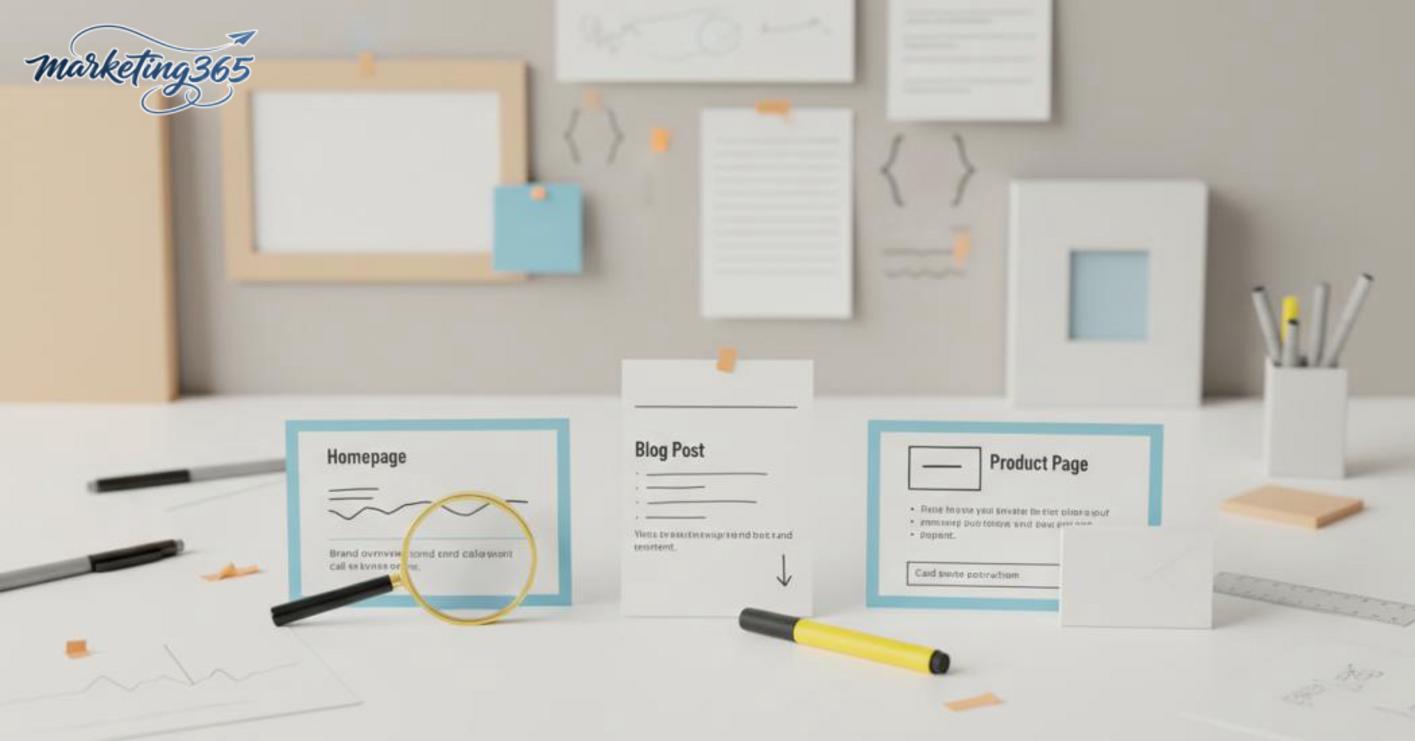
What should a homepage meta description prioritize
A homepage meta description should quickly answer three things: who you are, what you do, and what users gain. A website homepage is often the first touchpoint, so the description should be concise, clearly position the brand, and emphasize the main service group or topic instead of telling the company’s history. With how to write meta descriptions for each website page, the homepage should be treated like a signpost, not a long introduction.
Easy-to-use checklist:
- State the main field or solution in one sentence.
- Add one short differentiator, such as speed, depth, or service coverage.
- End with the benefit users get, such as saving time, choosing a service more easily, or finding the right information.
For example, an e-commerce homepage may prioritize the main product categories and support promise, while a consulting service homepage should emphasize problem-solving capability and the right customer segment. Do not cram too many business areas into one description; readers only need a reason to click.
How meta descriptions differ for blog posts and product pages
A blog post meta description should spark an answer, while a product page description should encourage purchase consideration through specific benefits and usage context. For SEO articles, readers are usually looking for how-to guidance, causes, or comparisons; therefore, the description should address the problem they want to solve. By contrast, a product description must clearly state the standout features, usage benefits, and why the product is worth choosing now.
A standard, compelling meta description for a blog post should state the question, the result, or a common mistake. For example, this type of description fits instructional content: “How to optimize meta description content to increase click-through rates while keeping the sentence short and aligned with search intent.” For a product page, the description should read more like a conditional invitation: state the product type, its strengths, and a real-world use case. This is also how to write a short but compelling meta description when building a sales website that attracts the right customers.
One tip for writing a meta description that increases click-through rates is to always ask: is the reader trying to learn or trying to buy? Answering that question incorrectly makes the description look right on the page but wrong in purpose.
Common mistakes that make meta descriptions ineffective
A meta description becomes ineffective when it does not give searchers a clear reason to click. How to write an attention-grabbing meta description must align with search intent, state a specific benefit, and avoid mistakes that make the snippet feel awkward, cut off, or ignored.
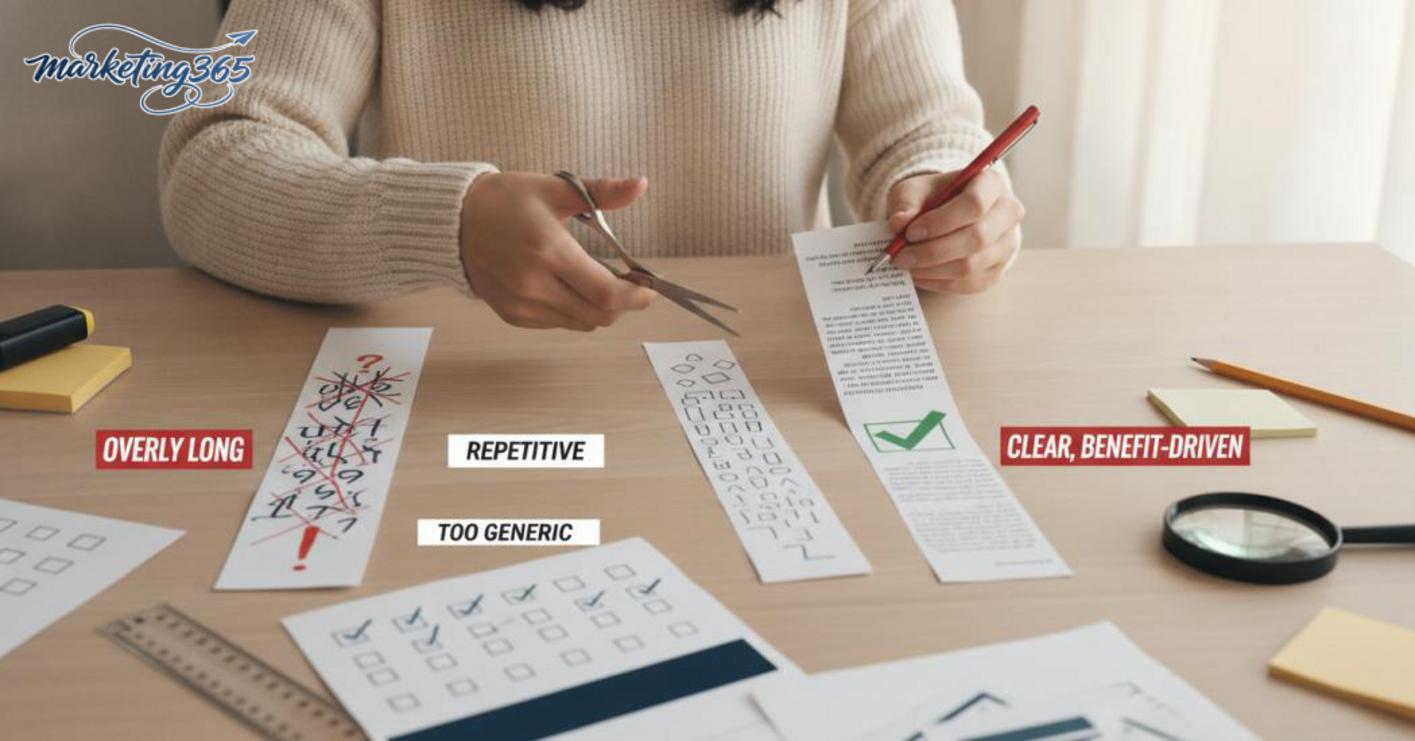
Keyword stuffing or repeating the title makes the description feel unnatural
Keyword-stuffed descriptions often repeat the main phrase too many times, change a few words around the title, and stop there. Snippets like this read like mechanical sentence fragments, add no new information, and are easy for users to skip. When writing a description, read it back and ask whether it says anything beyond the title; if not, remove some keywords, keep one main phrase, and move the rest into benefits or context. For example, if the title already says “how to write an attention-grabbing meta description,” the description should explain what the page helps with, for whom, and in what situation.
Writing too generally leaves readers unsure what makes the page different
Generic descriptions weaken a page because they do not show specific value. Phrases like “providing quality, reputable services” or “an optimal solution for every need” do not help readers picture what is inside. The quick fix is to replace promotional language with concrete benefits: saving time, reducing unnecessary steps, avoiding errors, or supporting the right context such as an e-commerce site, service page, or technical guide. With a standard, compelling meta description, readers should immediately see how this page differs from the other results on the SERP.
Wrong length, punctuation, or missing the main point
A meta description that is too long is often cut off, while one that is too short does not give enough reason to click. In addition, exclamation marks, special characters, or excessive capitalization can make the snippet look less trustworthy, especially on small business websites. When optimizing a snippet, check the character count for each page, keep to one main idea, and favor concise sentences. If the description is already clear but still gets cut off, trim adjectives and move the most important information to the beginning of the sentence.
How to review and optimize a meta description after publishing
Read more: How to Optimize Alt Text for Images for SEO
A meta description still needs review and adjustment after publishing based on real data. The right process is to check, in order: intent match, accuracy, length, tone, and whether there is a clear enough differentiator to improve click-through rates.
7-step checklist before publishing
A good meta description checklist helps you catch errors quickly before the page goes live and reduces repeated edits. When checking a meta description, go through the 7 steps below in order:

- Read the target query again to make sure the description answers what the searcher wants.
- Include how to write an attention-grabbing meta description naturally, without keyword stuffing.
- State one specific benefit or clear result.
- Compare it with the title so the message is not repeated verbatim.
- Keep it concise, ideally one to two easy-to-read sentences.
- Check spelling, punctuation, and overly promotional wording.
- Read it on a small screen to see whether the sentence breaks awkwardly.
In SEO on-page, this part is often overlooked because people write it and publish immediately. But if the description is too generic, the page may still get impressions while CTR stays low, especially when the title is stronger than the description.
When should you revise a meta description after tracking performance
You should adjust the description when data shows it is not supporting organic performance well. The clearest sign is low CTR despite stable impressions.
Cases where it should be revised include:
- The title has changed, but the description still uses the old message.
- The page content has expanded into a different angle, but the meta description does not reflect it.
- There is a competing page on the same topic, but its description is more specific.
- The current description is too similar to the title, reducing persuasion in search results.
When optimizing again, change only one variable at a time so the effect is easier to read: add a benefit, rephrase, or clarify the audience. How to write an attention-grabbing meta description usually improves most when the new content matches search intent more closely, not when you simply add more words.
Good and weak meta description examples for easy comparison
A good meta description is short, matches search intent, and gives users a clear reason to click. When drafting how to write an attention-grabbing meta description, compare each example against three points: does it state the right problem, does it offer a specific benefit, and does it avoid vague language?
Examples for service pages or product pages
A service page meta description should clearly state the customer’s problem, the solution, and the result they can expect. For e-commerce sites, the closer the description is to the buying context, the more likely it is to improve conversions, as long as it does not become overly promotional.
Good example: “At-home air conditioner cleaning service, fast cleaning, clear pricing before work begins, suitable for apartments and offices.”
Weak example: “High-quality, reputable, professional air conditioner cleaning service, great price, contact now.”
Why the good example works:
- It matches the exact need: at-home air conditioner cleaning.
- It includes specific benefits: fast cleaning, clear pricing.
- It gives usage context: apartments and offices.
Why the weak example is easy to ignore:
- It is full of praise but shows no difference.
- It does not say what the customer gets.
- It feels like every other service description on the search results page.
When writing how to write a standard SEO meta description for a service page, quickly check whether readers can tell who the service is for, what problem it solves, and why they should click now.

Examples for instructional blog posts
A blog post meta description should tell readers what they will learn or solve after clicking. For SEO articles, a good description usually states the exact topic, the learning outcome, or a very specific benefit.
Good example: “How to write a short but compelling meta description: see correct and incorrect examples plus a 3-part formula to increase click-through rates for blog posts.”
Weak example: “Learn about meta descriptions and the things you need to know to optimize content most effectively.”
Why the good example works:
- It matches the search intent: wanting to learn how to write.
- It gives a clear result: see correct and incorrect examples.
- It promises a specific structure: a 3-part formula.
Why the weak example is easy to skip:
- It is too broad and does not say what the reader gets.
- It lacks action-oriented wording, making the subheading less appealing.
- It does not feel like a direct answer to the question.
If you need a quick check, read the meta description as if you were browsing search results: is the topic clear, is there a benefit, and is there a reason to choose this page over another?
When to seek deeper support for meta description optimization
When a website has many page templates, many product pages, or needs descriptions aligned to a system, it is worth seeking deeper support for meta description optimization. At that point, the goal is no longer just writing well for individual pages, but maintaining a consistent standard for on-page SEO and website management.

The clearest sign is that traffic exists but CTR remains low, even though the title and ranking are not bad. When you open Google Search Console, you often see a group of URLs with stable impressions but low clicks. If each team member writes in a different style, descriptions will vary in tone and length, making it hard to optimize meta description content with one consistent formula.
Consider deeper support when:
- There are dozens or hundreds of product pages that need template-based writing.
- The website has many landing pages, categories, filter pages, and variant pages.
- The description content needs to align with structured data, sales messaging, and brand positioning.
- The team does not yet have a process for review, testing, and regular updates.
In this case, an experienced person can help determine which description patterns should be kept, which should be removed, and where a page needs a custom description instead of a shared one. For a small website, you can still do it yourself using a standard, compelling meta description approach; for a larger system, deeper support helps reduce inconsistencies and saves time on page-by-page edits.
Frequently asked questions about how to write an attention-grabbing meta description
A meta description of about 150–160 characters is the easiest to control when writing for search results. If it is longer, the description may be cut off for some queries; if it is too short, you lose the chance to state the benefit more clearly.
Should the main keyword be included in the meta description? Yes, but only naturally within one sentence. With how to write an attention-grabbing meta description, the keyword helps readers recognize relevance faster, while Google still prioritizes context match and search intent.
Will Google always display the description you wrote? No. Google may pull another passage from the page content if it thinks that passage matches the query better. That is why the description should be concise, on-topic, and free of keyword stuffing or overly generic wording.
When writing a description for a product or service page, use a simple formula: main benefit + differentiator + soft call to action. For example, instead of only writing “High-quality service,” state clearly what the reader gets, such as saving time, comparing options more easily, or ordering more conveniently.
Quick checklist for self-review:
- Read the description aloud: does it sound natural?
- Does it match the search intent?
- Is it short enough not to be cut off too early?
- Does it give readers a reason to click?
If you have to choose one principle, prioritize how to write a short but compelling meta description over trying to cram every detail into one sentence. A good description helps readers understand quickly and want to keep going.
For the latest official guidance, you can also refer to Google Search Central.
You can also find more practical marketing guides at https://marketing365.vn.
Content from marketing365 is created for SMEs, online shop owners, and new marketers.