
Contents
- Social media is moving into ecosystem control, not just chasing views
- The shifts inside social platforms are forcing marketing teams to work differently
- Data risk, copyright and transparency will decide how much social media is trusted
- How Vietnam will judge social media by audience retention and trust
- What Vietnamese businesses should do now to keep social media effective
- References
Social media is no longer a race to win more impressions. As major platforms push harder on content creation tools, hardware experiments, ecosystem expansion and the fight for user attention, marketers have to see social media as a market where control over distribution and trust are the variables that decide the outcome.
Key points
- Meta, Threads, YouTube and Google are showing that social media is entering a phase of ecosystem-based competition rather than competition based only on individual features.
- For marketers, the question is no longer “which new channel is there?”, but “which channel can keep the data, voice and relationship with the audience?”.
- The biggest risk is becoming too dependent on a platform: reach may rise, but accountability and autonomy decline.
- Vietnam’s market will be pulled by the same logic: whoever keeps trust and a clear content path will have the advantage.
Social media is moving into ecosystem control, not just chasing views
Looking at developments around Threads, Meta, YouTube, Google and even Automattic, the common thread is not any single new feature, but the way tech companies want to take back control of content flow and user relationships. Threads being described by Mark Zuckerberg as potentially bigger than X shows that the social media race is now not only about app growth, but about expanding the space a platform can use to keep a community engaged. At the same time, Meta is pushing content creation tools for AI glasses and its next-generation VR device, meaning social media is being tied to devices, cameras, experiences and content creation behavior beyond the phone screen.
On the other side of the ecosystem, YouTube continues to position itself as a platform shaping mainstream culture, while Google’s Data Manager update shows that the data and measurement layer remains central to a platform’s commercial advantage. Even the story of Matt Mullenweg returning to control at Automattic reminds marketers that platform control is always tied to the ability to direct product, data and content distribution strategy. Put together, all of this leads to one conclusion: social media is shifting from a place where people “post to get reach” to one where platforms build their own control loops around content, data and community.
The shifts inside social platforms are forcing marketing teams to work differently
For marketers, the most important change is not that a platform adds another feature, but that each platform is pulling content creators into a different kind of dependency. Meta’s AI glasses content creation tools are not just a technology demo; they show that content production can be tied directly to device usage behavior. That forces social teams to rethink format, angle and even how content assets are recorded. Meta’s next-generation VR device opens another front: social experiences are no longer just feeds, but immersive environments.
AI glasses and VR: social teams need content ready for less text-heavy environments
When Meta emphasizes content creation tools for AI glasses and shows its next-generation VR device, social media is no longer limited to posts, stories or reels. Content can move through cameras, voice, hand gestures and spatial experiences. That does not mean every brand needs to rush into VR or wearables, but it does force marketing teams to think more broadly about content assets: what can be scanned quickly, what can be heard, and what can be reused across multiple screens. For Vietnamese marketers, this is a reason to prepare modular editorial workflows instead of producing one post for one channel.

Threads and YouTube: distribution only lasts when the community stays intact
Threads is being positioned in a direct contest with X, while YouTube continues to be described as a mainstream cultural space. These two signals point to the same thing: social media only remains durable when a platform keeps its community long enough for content to keep spreading on its own. As every platform tries to keep users inside its own ecosystem, marketers will have to rethink how they build communities, how they nurture comments and how they pull audiences back to owned assets such as websites, email or CRM. That is the difference between “following reach” and “keeping the relationship”.
Data Manager and platform control: measurement has to come with accountability
Google’s Data Manager update is a reminder that data remains the deciding layer in how platforms and advertisers work together. But from a marketing perspective, data is not only for measuring performance; it is also what helps explain why a channel deserves budget. As social media becomes more dependent on algorithms and platform-built ecosystems, marketing teams cannot stop at reach numbers or engagement. They have to be able to answer which data belongs to them, which data is held by the platform, and how trustworthy each metric is.
Data risk, copyright and transparency will decide how much social media is trusted
The risk side of social media is no longer just about whether a post performs or not, but about who is responsible when content passes through too many layers of tools and platforms. AI content tools, VR environments and data layers like Data Manager all speed up production and distribution, but they also raise questions about ownership, content provenance and accountability to clients or legal teams. When Matt Mullenweg returned to control at Automattic, the issue of platform control became even clearer: whoever controls the system has major influence over what gets prioritized, what gets retained and what gets pushed out.
AI-assisted content: who is responsible when the tone drifts
Meta’s emphasis on content creation tools for AI glasses makes the responsibility question more complex than simply “who clicked publish”. Content can be created, edited, attributed or reused through multiple steps. For marketers, the risk is that brand tone can drift if the workflow does not include a final review layer. When content moves faster than approval, teams need a clear checklist for brand voice, legal issues and image rights, especially in campaigns involving real people, real locations or community-sourced material.

Platforms hold the data: a polished report is not enough, it must be explainable
Google’s Data Manager upgrade is a reminder that marketing data will increasingly be packaged by platforms in their own way. That is useful for execution, but it also makes businesses more dependent on prebuilt dashboards. Social media is therefore not only a creative channel but also a place where accountability is created: why did the metric rise, where did the data come from, and what can still be carried over when switching platforms. Companies that do not standardize data storage and set their own measurement benchmarks will find it harder to compare results across channels.

Ecosystem control: the deeper the dependency, the higher the switching cost
The Automattic story and Mullenweg’s return to control show how quickly control over product, data and platform direction can change. For marketers, the lesson is not the internal drama, but this: the more social media is allowed to hold the entire relationship with an audience, the higher the cost of moving to another channel. In that case, owning part of the content path through a website, email, community or CRM is not a secondary option, but a safety buffer.
How Vietnam will judge social media by audience retention and trust
In Vietnam, social media is still a major battlefield for brands, but the way performance is read has to change. Many teams are still used to measuring reach, views or the number of interactions on each post. That approach is still useful, but it is not enough to decide long-term budget. As major platforms tighten their ecosystems and data layers, Vietnamese marketers need to pay more attention to audience retention, distribution stability and whether content creates reusable assets. This is also the moment when brands with strong CRM, community or owned media systems will be more resilient when algorithms change.
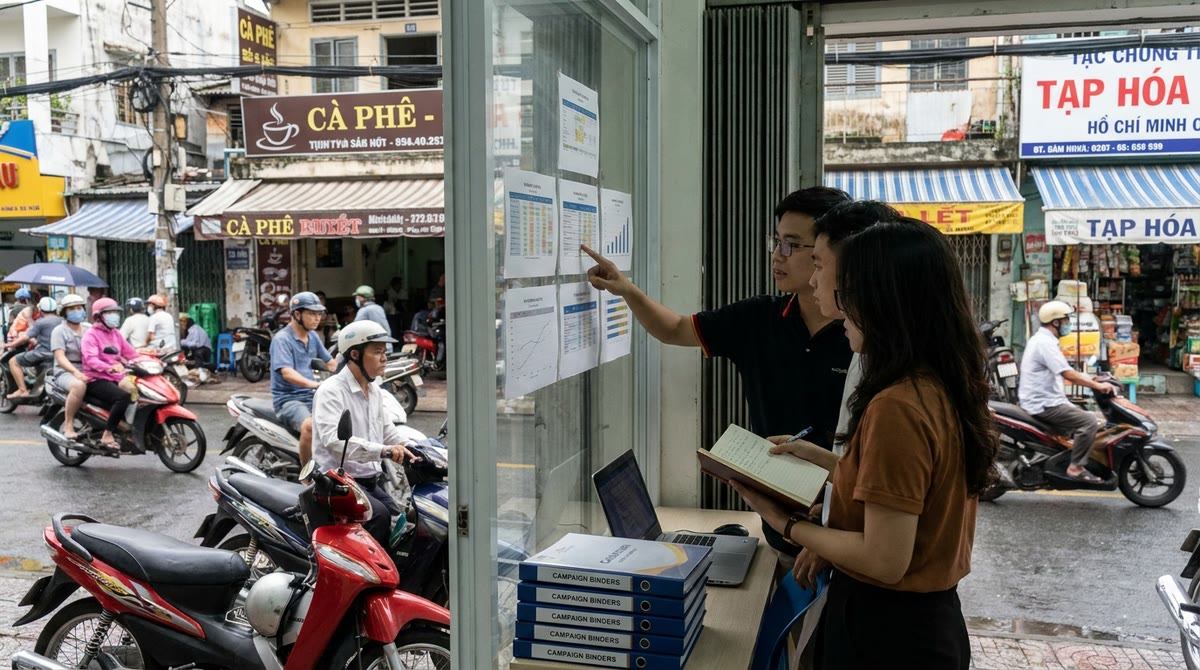
In the Vietnamese market, another reality is that users move quickly between Facebook, TikTok, YouTube, Threads and private groups. That means social media is no longer a single channel but a chain of touchpoints. Brands that only optimize each post will struggle to maintain long-term connection. Brands with a clear content process, clear data and strong owned channels will find it easier to turn social media into a more durable source of demand.
What Vietnamese businesses should do now to keep social media effective
- Standardize a separate set of social media evaluation criteria, not relying only on platform reach or engagement.
- Attach each campaign to an owned asset such as a website, email, CRM or community to reduce dependence on algorithms.
- Review the AI content approval process to avoid tone drift, rights misuse and a lack of transparency with customers.
- Track how major platforms change their data layers, content creation tools and user experiences so you can adjust formats earlier than competitors.
See more marketing analysis and guides at https://marketing365.vn.
Follow more analysis articles from Marketing365 to stay updated on the latest marketing trends.
Read more articles in the Digital Trends category.
References
- Social Media Today — Meta highlights creation tools for AI glasses
- Social Media Today — New images show Meta’s next-gen virtual reality device
- Social Media Today — Threads might be bigger than X, says Zuckerberg
- Social Media Today — YouTube report examines mainstream culture
- Social Media Today — Google updates Data Manager platform
- Search Engine Journal — Matt Mullenweg Apparently Back In Charge At Automattic via @sejournal, @martinibuster