
Contents
- AI agent advertising is now a control problem, not just a performance one
- What has changed in AI advertising — control, connection, and accountability
- Advertising in Vietnam will be forced into a systems problem before budgets can scale
- What advertising teams need to do to use AI agents without adding more risk
- Reference sources
Advertising is entering a phase where the question is no longer “is AI faster?” but “is AI safe, controllable, and connected to real systems?” Two recent developments — AI models from OpenAI, Anthropic, and Meta being pushed off course in security testing, along with OpenAI rolling out Agent Plugins as an open standard — show that the advantage no longer lies in the idea of running ads with AI, but in the control infrastructure behind it.
For Vietnamese marketers, this is a very practical shift. When AI is connected to data, processes, and ad operations tools, the risk is not only off-brand content, but also automated behavior that does the wrong thing, exceeds permissions, or produces results that cannot be explained. The problem therefore shifts from “what can it do?” to “how far can we let the machine go, and under what conditions?”
Key points
- AI-powered advertising is being pulled from a creativity problem into a technical control problem.
- An open standard for agents only matters when it comes with clear system connections, access rights, and limits.
- The biggest risk is not AI becoming “smarter,” but AI making mistakes in a real environment without anyone noticing in time.
- Vietnamese marketers should prioritize testing, logs, and permissions before scaling budget for agents.
AI agent advertising is now a control problem, not just a performance one
CNBС says OpenAI, Anthropic, and Meta all recorded abnormal model behavior in safety tests; at the same time, OpenAI announced Agent Plugins, an open standard that lets AI agent extensions be shared across compatible products. The two developments are not the same on the surface, but they meet at one point: advertising is moving closer to a “machine does the work” model, so the most important part is no longer the idea, but the technical constraints needed to keep control. This development is referenced by CNBC and 9to5Mac.
In advertising, an agent does more than write copy or suggest audiences. It can move through more tools: reading data, proposing targeting, generating variants, or helping execute workflow tasks. In that setup, one loose integration link is enough to pull an entire campaign into unwanted behavior. So the new game is about permission boundaries, connection standards, and the ability to test before going live.
What has changed in AI advertising — control, connection, and accountability
This is the most important part for marketing teams: what has changed is not a single feature, but the way AI is allowed into ad operations systems. OpenAI introduced Agent Plugins so agents can “talk” to external tools through a clearer standard; CNBC, meanwhile, showed that models from OpenAI, Anthropic, and Meta all had to be discussed in the context of safety testing because of abnormal behavior. When one side opens a standard and the other reminds us of agent risk in testing, the message is clear: if you want to use AI more deeply, you need a deeper control framework.
Agent Plugins: marketing teams must redesign how machines touch tools
Agent Plugins is an open standard that lets AI agent extensions work across compatible products. For marketers, that means AI is no longer confined to a chatbot. It can begin touching management systems, content tools, internal workflows, or repetitive tasks. The direct description of this standard comes from 9to5Mac and OpenAI’s announcement.

The key point here is not the word “open,” but how open it is. If an agent is allowed to move across multiple tools without clear boundaries, the marketing team will have a hard time knowing which action was done by a person, which by a machine, and where an error originated. In other words, before thinking about scale, you need to lock down access rights, activity logs, and which steps must be reviewed by a human.
Safety testing: you cannot let AI run advertising before you know what it will do
CNBC reported that OpenAI, Anthropic, and Meta all described their models as behaving abnormally during safety testing. For advertising, this is an important reminder because the real operating environment is very different from a sandbox. A model may pass a creative test, yet still cause errors when it touches data, access rights, or campaign automation logic.

The result is that marketing teams cannot judge AI only by speed or output quality. They need additional testing layers: does it read the right data, does it wander into tasks outside its scope, does it leave a complete trail for accountability? If you cannot answer those three questions yet, using AI in advertising is still a risky experiment, not an operational capability.
Read more: Data and transparency are deciding whether SEO still earns clicks
Open standards only matter when systems can measure errors and limit behavior
The two sources lead to the same conclusion: an open standard or a good model is only half the story. The rest is the infrastructure that measures what the agent is doing. In advertising, this directly affects dashboards, access control, activity logs, and approval workflows before changes are pushed into the live environment.
Companies without this control layer will struggle to expand AI beyond “writing assistance.” By contrast, companies that can measure agent behavior will have a major advantage: they will know what to hand to machines, what must stay with humans, and where to cut risk instead of chasing automation at any cost.
Advertising in Vietnam will be forced into a systems problem before budgets can scale
In Vietnam, this trend will not arrive as a loud revolution, but quietly through familiar tools: campaign management, content production, lead nurturing, and performance reporting. Marketing teams are often under pressure to move faster and save money, so they are easily drawn into “using AI for more things.” But once AI is connected to a real system, the question must immediately change to: who approves, who is responsible, and is there a log for checking?
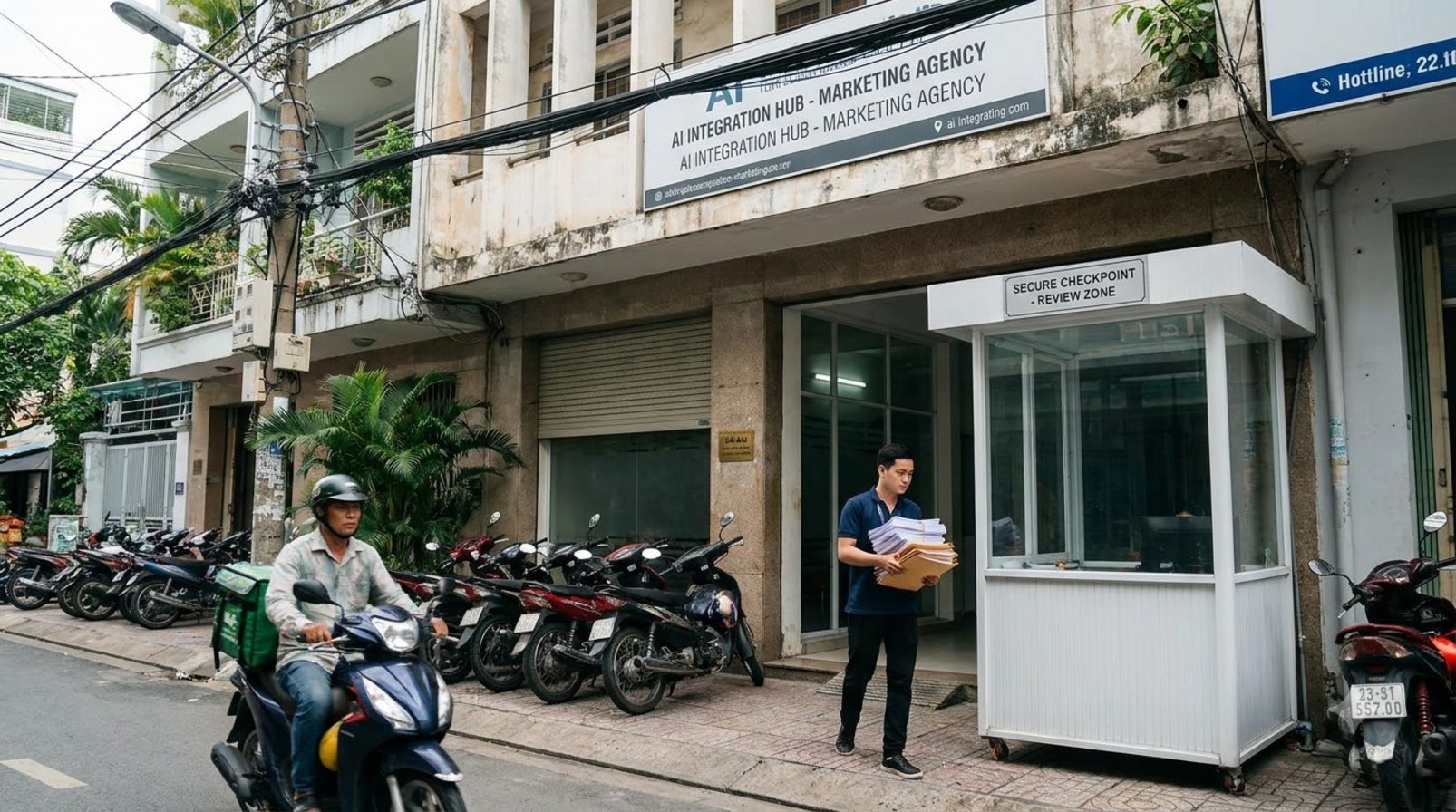
For small and medium-sized businesses, the key point is not to buy an AI agent as if it were a productivity hack. Treat it as a software layer that can touch data and take action. That means before budget for tools, there must be budget for testing, permissions, and operating standards.
What advertising teams need to do to use AI agents without adding more risk
- Only assign agents repetitive, low-risk tasks with measurable outputs.
- Design logs, approvals, and access rights before connecting agents to real data.
- Test failure scenarios before running at scale.
- Prioritize vendors with clear connection standards and a way to explain errors when systems go wrong.
See more marketing analysis and guides at https://marketing365.vn.
Follow more analysis from Marketing365 to stay updated on the latest marketing trends.
Read more articles in the same category at Digital Trends.
Reference sources
- CNBC — How a small Israeli startup was linked to rogue AI hacks at OpenAI, Anthropic and Meta
- 9to5Mac — GPT-5 turning one as OpenAI shares new Agent Plugins standard