
Contents
- SEO and user language: when one control layer is handed over to automation
- What is changing in language targeting — and why SEO and ads teams must work differently
- Control, data, and transparency risks: SEO is being pulled closer to compliance standards
- Vietnam and multilingual SEO: Vietnamese, English, and hybrid audiences are easy for systems to misread
- What should businesses do to avoid losing control as tools choose more on their own?
- References
Google is removing language targeting at the campaign level for Search and Search inventory in Performance Max. For marketers, this is not just a settings change; it is a sign that the part of “deciding who gets to see the ad” continues to be pushed into the system’s automated signals, while marketing teams must rely more heavily on account structure, landing page and clean data.
What stands out is that this change directly affects multilingual campaigns, markets with multiple ways of speaking, and businesses that have long used language targeting to control reach more tightly than geography alone. As that control layer thins out, the practical question is no longer “should we change or not,” but what evidence the business can provide so the system can choose correctly on its own.
- Key point:
- Google Ads will remove campaign-level language targeting for Search, while expanding how Google infers a user’s language on its own.
- This brings SEO and paid search closer to a data, signal, and transparency problem rather than just a manual settings issue.
- Multilingual businesses may lose a familiar layer of control, so account structure and landing pages need to be tighter.
- In Vietnam, the biggest risk is misreading language, misreading intent, and diluting performance across Vietnamese, English, and hybrid audiences.
SEO and user language: when one control layer is handed over to automation
This change arrives in a context where search engines and advertising platforms increasingly rely on behavioral signals, context, and AI to decide distribution. Search Engine Journal says Google Ads will remove campaign-level language targeting for Search campaigns and Search inventory in Performance Max, while Search Engine Land also confirms the same change in its own coverage of Search campaigns. In short: Google is trusting the system’s ability to infer language more than the settings entered manually by users.
That is the point where marketers need to look beyond SEO. When tools understand language through more signals, the line between “what the user searched for” and “what the system thinks the user understands” becomes blurred. From there, SEO is no longer just about optimizing content in the right language, but about making the entire context around that content clean enough for machines not to misread it.
What is changing in language targeting — and why SEO and ads teams must work differently
Google will shift more of the responsibility for language recognition to automated systems. For Search campaigns, advertisers will no longer rely on a campaign-level setting to limit language as before. Instead, Google uses signals such as query language, user settings, and other signals it says are inferred by AI. This information is stated in Search Engine Journal’s article at https://www.searchenginejournal.com/google-is-removing-language-targeting-from-search-campaigns/585592/ and repeated by Search Engine Land at https://searchengineland.com/google-ads-is-removing-language-targeting-from-search-campaigns-484831.
Campaign-level language targeting: marketing teams must rethink the role of account structure
The change is not about “removing a feature” so much as losing a filtering layer that once gave marketers confidence in limiting distribution. When language is no longer hard-coded at campaign level, account structure, ad groups, landing pages, and landing-page content have to carry the remaining control. For SEO teams, this also means page titles, body copy, internal links, and schema need to be more consistent so language signals do not get muddled.

In practice, this affects both SEO and paid search because both rely on the same content infrastructure. If a website has multiple languages, regional variants, or mixed-language landing pages, the automated system gets more chances to choose the wrong audience. Source: Search Engine Journal and Search Engine Land.
AI language signals: clean content and clear intent matter more than manual settings
Google says the system will rely on signals such as query language and user settings to understand a user’s language. That makes the quality of signals around the page more important: consistent tone, clearly labeled language versions, correct hreflang, and landing pages that do not mix languages carelessly. For SEO, this is the kind of work that does not show up immediately in the dashboard, but it determines whether the system understands correctly.

That is why marketing teams should not treat this as a purely paid media change. It is a reminder that language on the web is not only for readers, but also for machines. When systems make more decisions on their own, small language-data errors can turn into audience mismatches. Source: Google Ads Help, as cited by SEJ in its article, and Search Engine Land’s coverage.
Control, data, and transparency risks: SEO is being pulled closer to compliance standards
The language-targeting change does not stand alone. It fits into a larger trend in search: marketers demand clearer data, while platforms become more automated. Duane Forrester’s article on Search Engine Journal shows that even in AI visibility, the SEO community wants data but does not fully trust the platforms selling that data. On another front, Search Engine Land reports that Shopify said AI referrals rose 197% while organic search still leads traffic, and Microsoft Clarity published an AI scrape-to-referral report to make the path of behavior clearer. Together, these signals show that the question is no longer which metric is higher, but which path is transparent enough to trust.
Measuring language and referrals: there is no room left for blind data
As systems infer more on their own, marketers have to check more carefully where traffic comes from, which language it is in, and which landing page actually converts. Shopify says AI referrals rose 197% while organic search remains the main traffic source; that is a reminder that growth in one channel does not mean the other has lost its role. Microsoft Clarity is also pushing harder into the relationship between AI scrape and referral, which means the path data takes is no longer a side issue.
SEO therefore has to make internal attribution clearer: which page is for Vietnamese, which is for English, which query should go to which page, and which result counts as correct. Without that, the system will optimize on top of noisy data. Source: Search Engine Land on Shopify and Microsoft Clarity.
Trust in platforms: the more automated the data, the higher the need to verify it
A survey published by Search Engine Journal on the “GEO Trust Gap” shows that people working in AI search visibility want data but still have a trust gap with measurement platforms. This is very close to SEO: when platforms hold more decision-making power, marketers will ask more questions about how data is created, the margin of error, and whether it can be checked again.

In that environment, businesses without internal logs, without a clear naming convention, and without a standardized way to separate languages and markets will struggle to explain themselves. In other words, the issue is not only performance, but governance. Source: Search Engine Journal.
Vietnam and multilingual SEO: Vietnamese, English, and hybrid audiences are easy for systems to misread
In Vietnam, this change matters because many websites run Vietnamese and English side by side, or use mixed-language content to serve both local search and international audiences. When campaign-level language targeting is removed, these audiences face two risks: language mixing in delivery and difficulty explaining why a Vietnamese page is attracting clicks from the wrong audience, or vice versa.
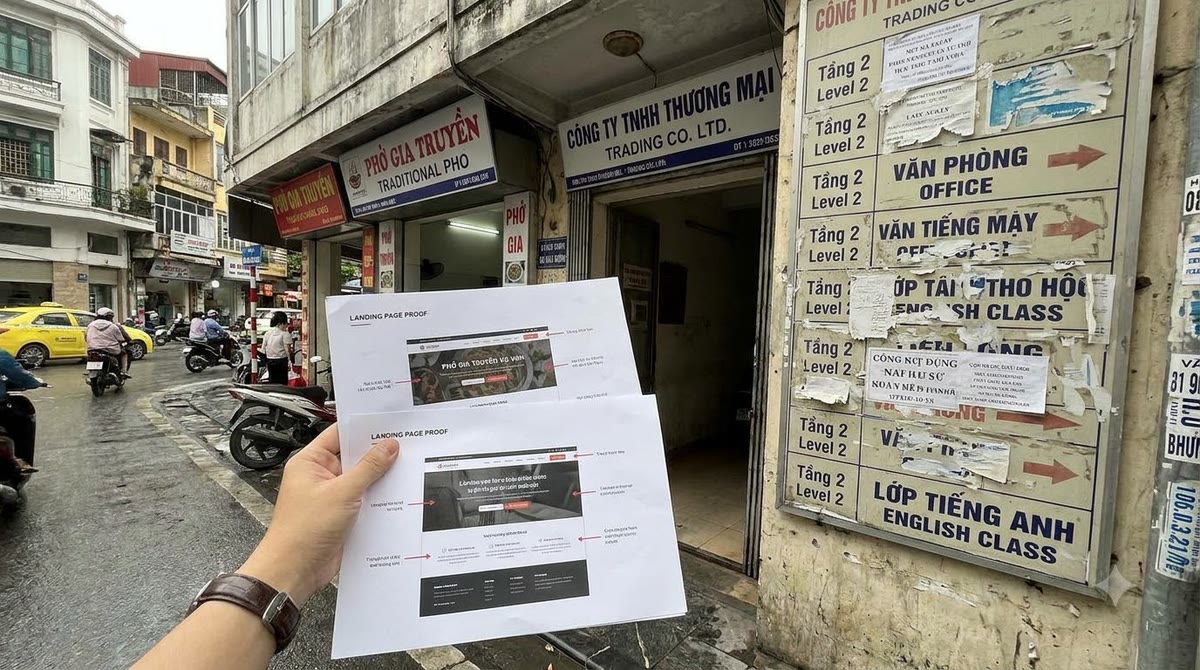
The first thing to do is review hreflang, URL structure, metadata, and landing-page content. If the market is segmented by regions such as Vietnam, Singapore, or expat audiences, using the right language at each step of the journey will matter more than simply placing a few bilingual keywords. In Vietnamese SEO, the question is no longer just “write in the right language,” but “make sure the machine recognizes the right language, the right market, and the right intent.”
What should businesses do to avoid losing control as tools choose more on their own?
- Review all multilingual landing pages, especially title, H1, meta description, and hreflang.
- Separate each market clearly in account structure, naming convention, and internal reporting.
- Recheck real queries and compare them with the language of the page receiving traffic.
- Prioritize clean data and explanatory logs instead of looking only at CPA or total traffic.
Seen from an SEO angle, this change is another step in the process of tools taking decision-making power away from marketers. The remaining task is not to complain about automation, but to raise the quality of data and context to a level where the system is less likely to misread them. Whoever can control evidence better will do better in an environment with fewer manual buttons.
See more marketing analysis and guides at https://marketing365.vn.
Follow more analysis from Marketing365 to stay updated on the latest marketing trends.
Read more articles in the same category at Digital Trends.
References
- Search Engine Journal — Google Is Removing Language Targeting From Search Campaigns via @sejournal, @brookeosmundson
- Search Engine Land — Google Ads is removing language targeting from Search campaigns
- Search Engine Journal — The GEO Trust Gap: SEOs Want The Data, But Not The Platforms Selling It via @sejournal, @DuaneForrester
- Search Engine Land — Shopify: AI referrals up 197%, but organic search still leads traffic
- Search Engine Land — Microsoft Clarity AI Scrape-to-Referral insights report