Contents
- AI in games only becomes controversial when it takes over real human roles
- The AI shift is about speeding up workflows, not cutting creative staff
- A studio’s bargaining power changes when AI becomes an internal tool instead of a replacement machine
- What AI in games suggests for Vietnamese businesses using generative tools
- What to do now so AI does not turn creativity into a headcount-cutting exercise
- Reference sources
AI in games is not automatically a problem. The problem is whether studios use it to help people work faster, or to push people out of the creative process. For Vietnamese marketers, this is not just a gaming-industry story; it is a very clear test of whether businesses see AI as a productivity tool or as a headcount replacement.
The view laid out by Guided.news is quite direct: AI should only have value when the final decision remains in human hands, especially for artists, programmers, and creative teams. When that control shifts to automated systems, debates over quality, copyright, and jobs become bigger than the benefits the tool brings.
Key points
- AI is more acceptable when it helps artists and programmers work faster, not when it replaces them.
- The biggest controversy is not AI itself, but who still holds final control.
- Large and small studios will see AI differently: one side is optimizing costs, the other needs to survive to finish the project.
- The Vietnamese market can learn from games: use AI to speed up workflows, but be clear about what the machine does and what humans remain responsible for.
AI in games only becomes controversial when it takes over real human roles
The original article is not anti-AI. It only objects to using AI to replace people. That distinction matters, because it determines both how the community reacts and how studios design their workflows.
The author accepts a concept artist using AI to generate multiple options from their own sketch, test compositions faster, or present several directions to an art director within a few hours. Similarly, AI can support coding, bug finding, automated testing, and repetitive tasks. The key point is that the expert still has to review the result, and the final decision still belongs to a real person, not the model.
The article also draws a very clear ethical line: if a studio uses another artist’s work to train a model or generate similar-looking images, or deliberately imitates a voice, character, or style, that is when AI crosses the acceptable boundary.
The AI shift is about speeding up workflows, not cutting creative staff
What the author supports is AI making small teams work faster, not making them smaller. In this sense, AI is like Photoshop, Blender, or a modern engine: it removes manual steps, but it does not erase the role of the professional. What remains is creative control.

Unlike the way many businesses tend to view technology through a cost-cutting lens, the article argues that the real benefit is when a 5-person team finishes work in 1 month instead of 2 months. That means the game ships faster, more content gets produced, or the next project starts sooner. That is productivity.
By contrast, if a studio uses AI to turn 3 people into a replacement for 5, then cuts 2 roles while the timeline stays the same, players do not get any extra value. The business only reduces labor costs. For the author, that is the most worrying way to use AI. The original article cites the case of Larian Studios and Guided.news analysis to show that this debate is far from simple: a studio may test AI in ideation, presentation, or visual exploration, but the community may still reject it if AI enters the final product without clear control.
A studio’s bargaining power changes when AI becomes an internal tool instead of a replacement machine
This is the most notable part for marketers: AI does not just change work speed, it changes the bargaining structure inside a company. When AI helps a small team do more, the company can choose to expand output instead of shrinking headcount. That is the healthy scenario.
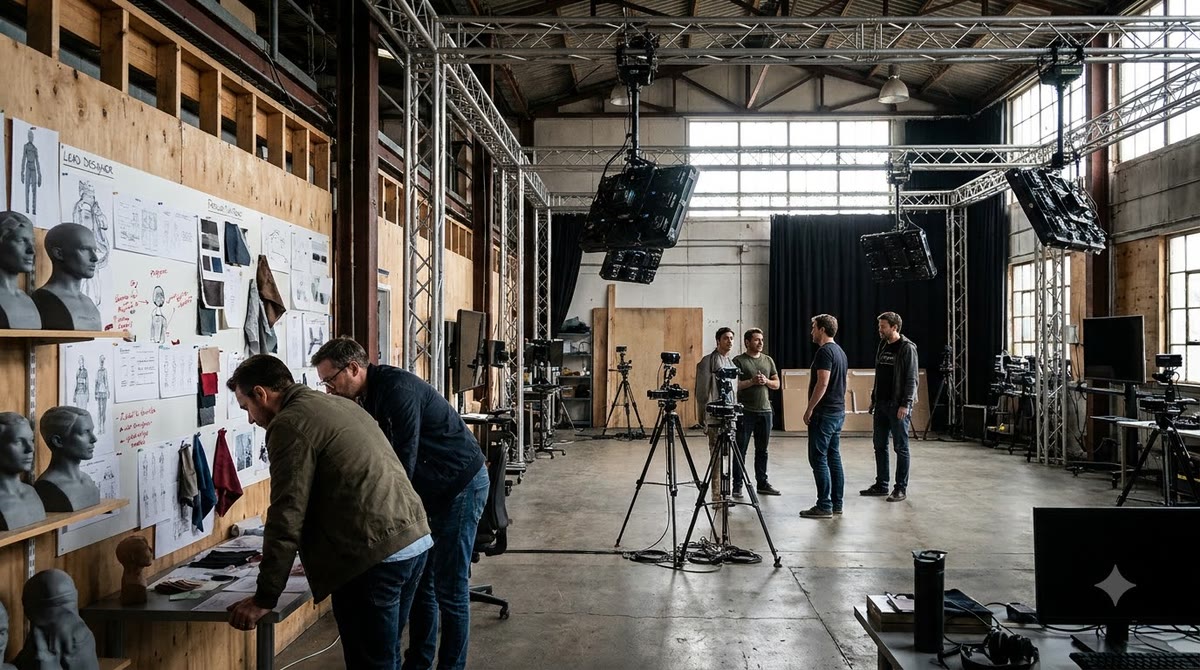
But if leadership sees AI as a way to replace large numbers of creative workers with a very small team and a software subscription, power shifts heavily toward the tool owner. At that point, AI’s benefit is no longer a better product but a leaner cost sheet. Following the logic of the original article, this is the point that triggers the strongest reaction from the community.
The Larian case mentioned in the article points to a softer path: the studio tested AI for ideation, presentation, visual exploration, and placeholder text, but then drew clearer boundaries, not using AI for concept art or actual writing in Divinity, while also discussing the possibility of using only clearly sourced and consented data if it ever used AI for final assets. For Vietnamese businesses, the lesson is not whether to use AI or not, but which parts AI is allowed to touch, and to say that openly.
What AI in games suggests for Vietnamese businesses using generative tools
The Vietnamese market will face pressure very similar to games: using AI to work faster is far easier to accept than using AI to replace people. For content, design, social, or performance teams, the standard should be that AI helps create drafts, variations, test ideas, and catch errors, while real people keep the final approval step.
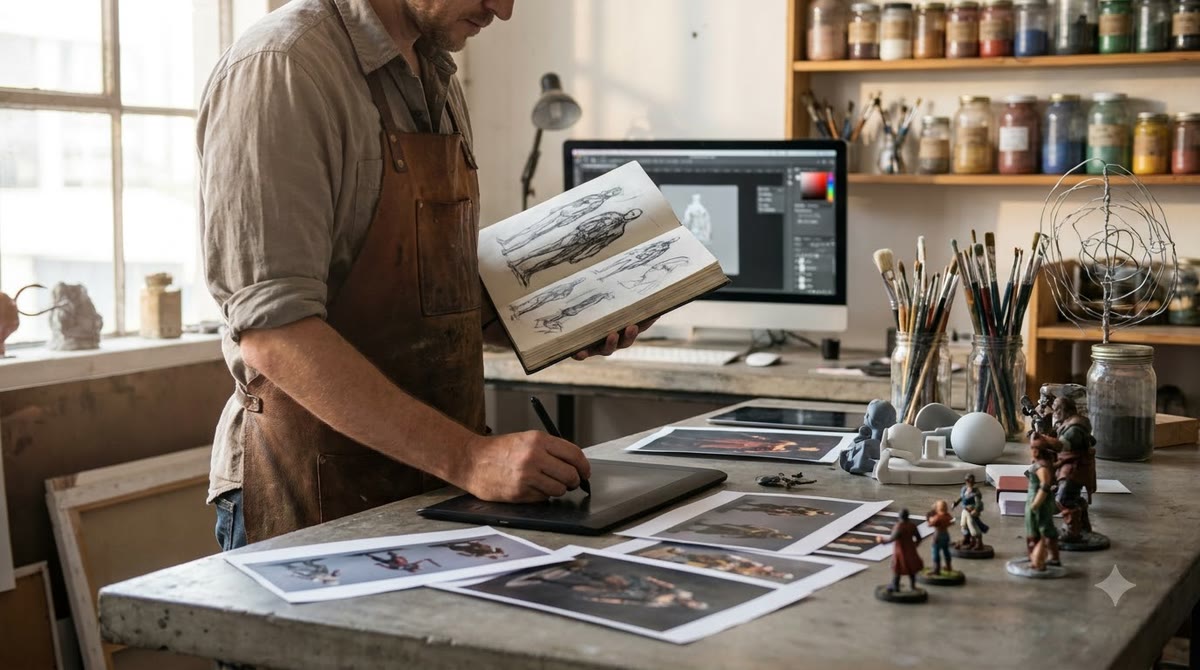
This is especially important for small and medium-sized businesses. If there is not enough budget to hire enough people for concept, voice, or technical support, AI can help a project move forward. But once AI is used, the business should clearly state its role and should not let the final product feel like “the machine did everything.” Vietnamese users are very sensitive to anything that feels rushed or careless, especially in branded content.
For marketers, the way to read this article is: AI is not a license to cut humans out of the workflow. It is a tool for shortening repetitive work, expanding options, and keeping the team focused on judgment, taste, and accountability. If that happens, AI makes the marketing team stronger; if not, it is just a cost-cutting move that sacrifices trust.
What to do now so AI does not turn creativity into a headcount-cutting exercise
- Review each creative step and clearly define which steps AI may support and which must be decided by a real person.
- Do not use AI to imitate another person’s work, voice, or style unless you have clear rights to do so.
- If AI is used for experimental content, label it internally and always keep a human final review loop.
- For small teams, prioritize AI for repetitive tasks to speed things up, rather than using it as an excuse to cut professionals.
In short, the lesson from games is this: AI only creates an advantage when it stands behind people, not in place of them. Businesses that keep that principle will find it easier to go further, because they save time without sacrificing trust.
See more marketing analysis and how-to content at https://marketing365.vn.
Follow more analysis from Marketing365 to stay updated on the latest marketing trends.
Read more articles in the Digital Trends category.