
Contents
Google has just published a fairly easy-to-understand explanation of the concept of “full-stack AI” — an approach the company sees as the foundation of its AI strategy for many years now. For marketers and businesses in Vietnam, this story is noteworthy because it shows that AI is not just about choosing a powerful model, but about the synchronized connection between infrastructure, platforms, and end-user experience.
In a context where many teams are trying to combine AI tools from different providers, Google’s “end-to-end” view suggests a different direction: reducing operational complexity, increasing reliability, and shortening time to market. These are factors that directly affect marketing performance, customer service, and internal automation.
What is “full-stack AI” and why does Google emphasize it?
In the article on the Google AI Blog, expert Richard Seroter explains that “full-stack” originally comes from the world of software development: a person or system can handle multiple layers of work, from the interface and operational logic to data, rather than breaking tasks apart and handing them off across many specialized teams. When applied to AI, this idea expands into a unified system where every component is designed to work together.
The key point is: instead of buying each piece separately and assembling them yourself, a business can choose a platform that already integrates the necessary layers. According to Google, this approach makes AI development more seamless and reduces the risks that arise when tools do not “fit” together.
What layers make up a complete AI stack?
Google describes a complete AI stack as consisting of four main layers: compute infrastructure, AI models, orchestration platforms, and user interfaces. At each layer, Google says it has invested deliberately so the components support one another rather than exist in isolation.

Specifically, the article cites examples such as TPU for hardware infrastructure, Gemini models developed by Google DeepMind, the Gemini Enterprise Agent Platform for agent and automation use cases, along with familiar interfaces people use every day such as Maps and Gmail. Google’s message is that businesses do not need to go looking for each “piece” from many different providers if they can start from an ecosystem designed to work together.
For marketers, this is especially important at the implementation stage: a good AI system does not just need a model that answers well, but also an orchestration layer, suitable data, and strong enough user touchpoints to deliver business results.
Why does Google see full-stack as a long-term strategic advantage?
Read more: Google Explains “Full-Stack AI” and Why It Matters
Google says this is not a new decision but a strategy pursued for many years. The article emphasizes that investment in TPU has lasted for more than a decade, reflecting a proactive mindset of owning the core technology chain rather than relying entirely on outside providers.

According to Google’s argument, controlling multiple layers within the same stack helps improve performance, reliability, and service quality. When a system runs on a technology chain designed by the company itself, the business is less dependent on changes from different providers — something that can increase costs, lengthen integration time, and make the final experience less stable.
This is also why Google repeatedly emphasizes “cost-efficient products” in its AI approach: efficiency does not come only from a smarter model, but from the system architecture behind it.
Does full-stack mean a closed ecosystem?
Read more: Google Images at 25: AI’s Next Leap in Visual Search
This is a question Google raises proactively in the article. A common market concern is that when a platform is too “all-in-one,” users may become locked into the provider’s ecosystem. However, Google says that does not align with the company’s philosophy.
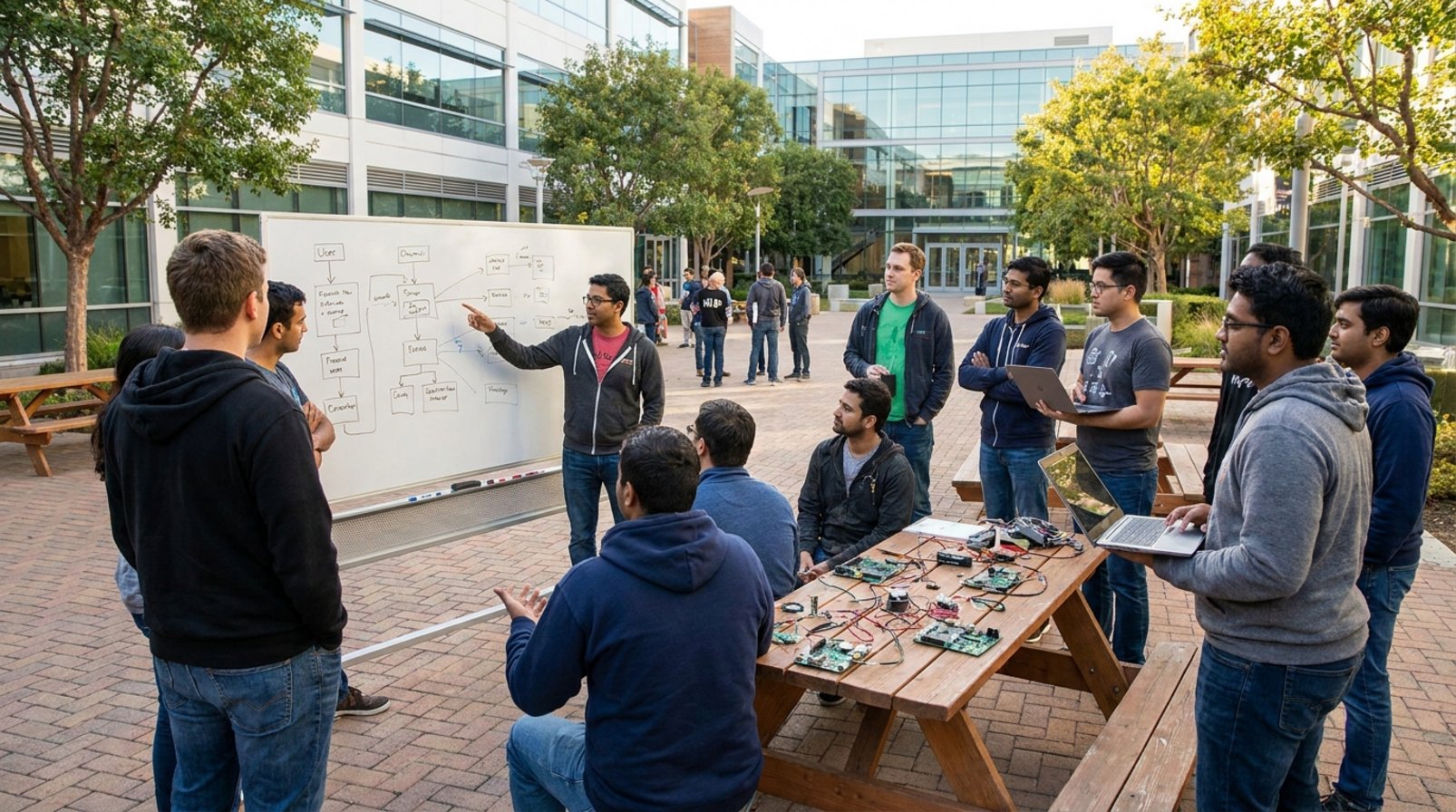
The article says Google regularly shares foundational technology and open-source code with the community. From this perspective, full-stack does not necessarily mean closed; rather, it creates a platform that is seamless enough for fast deployment while still remaining open enough for developers to choose how they build.
For businesses, the important question is not whether there is “lock-in” in an absolute sense, but whether the system allows expansion, change, and integration according to real needs. A strong stack is only truly useful when it both simplifies operations and does not eliminate customization.
AI only works well when it is designed as a complete system
Read more: Microsoft vs Alphabet: Who Controls AI’s Future Better?
For Vietnamese businesses, especially brands experimenting with AI in marketing, customer service, and sales, the lesson from Google is to view AI as a complete architecture rather than just a standalone tool. Many projects fail not because the model is weak, but because the data is fragmented, the process is loose, and the user experience has not been properly designed.
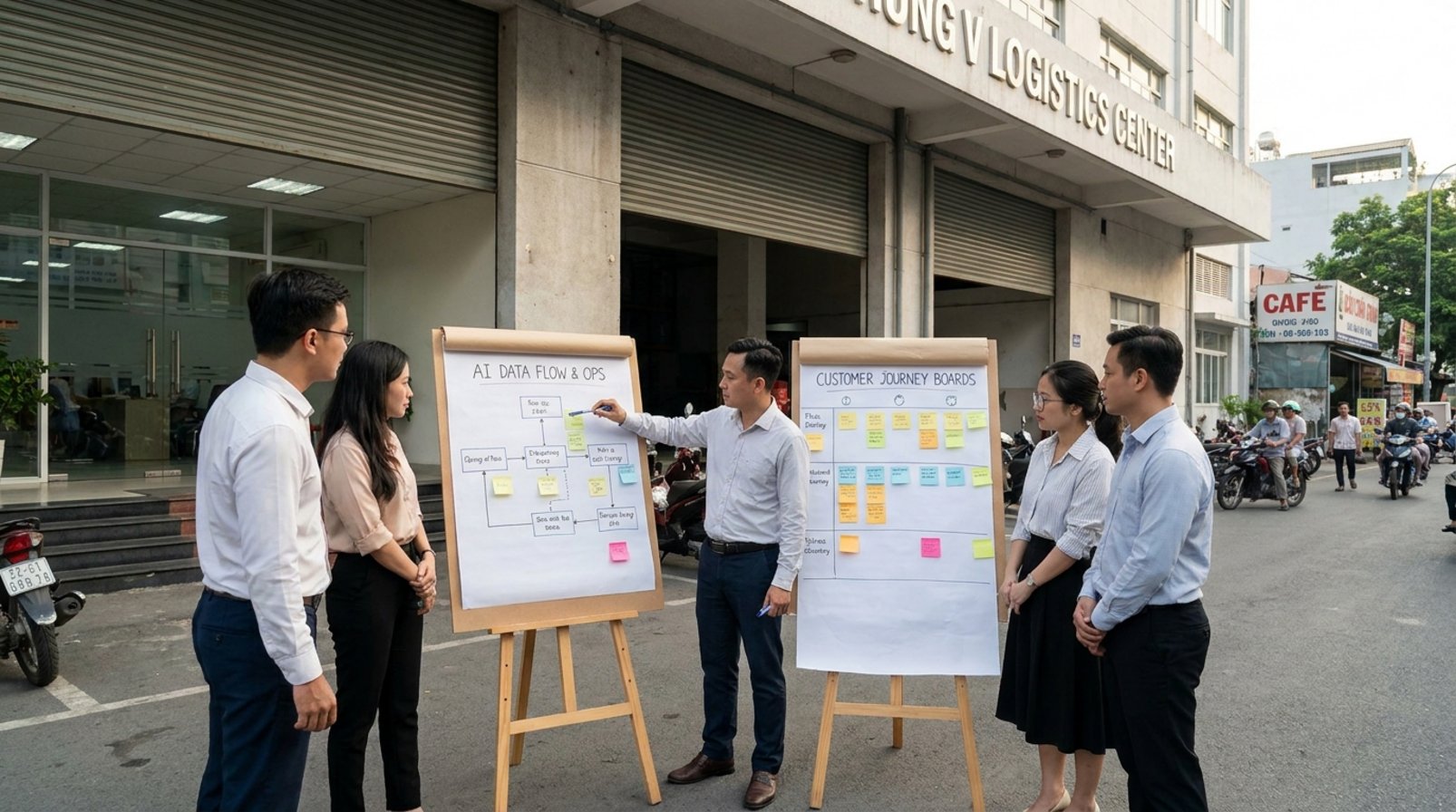
In the short term, businesses can start with small use cases such as content creation, insight synthesis support, response automation, or building internal assistants. But in the long term, if AI is to create real impact, teams need to think in a synchronized way about infrastructure, data, operations, and the user interface — true to the “full-stack” spirit Google is pursuing.
This is also a reminder for Vietnamese marketers: in the AI era, competitive advantage lies not only in which tool you use, but in how you design the entire operating system behind that tool.
Source: Google AI Blog, “Ask an AI expert: What exactly is the full stack?”
See more marketing news and guides at https://marketing365.vn.
Follow more updates from Marketing365 to stay up to date with the latest marketing trends.
Read more articles in the same category Digital Trends.