
Contents
- AI is fueling a new wave of startups in the US
- Qwen3.8 keeps improving during preview
- Sarah Guo and Conviction’s bet on AI
- Anthropic faces more pressure as the frontier race heats up
- Chinese AI labs are launching models in rapid succession
- Injective wants to become the execution layer for automated finance
- NeoCloud benefits as AI becomes more widespread and compute-hungry
- AI is not just for saving time, but for creating assets
- CUDA Graphs and the challenge of optimizing LLM inference
- Free resources for learning Claude instead of buying expensive courses
- AI appchains and the infrastructure race underneath
- ChatGPT Sites turns internal communication into a creative playground
- Anthropic and the possibility of becoming an AMD customer
- CPX Visa Physical Card and the push to bring digital assets into everyday life
- The open-source debate: not just China vs. the US
- Kimi K3: a massive open model with 2.8 trillion parameters
- AI’s “skillful hands”: those who know how to use it will win
- Harvard makes a series of AI lessons free to the public
- Model competition is far from over
- OKX tests Exchange OS at scale with a World Cup prediction campaign
- Alibaba launches Qwen3.8 Max preview, underscoring flagship ambitions
- AI is moving across four layers at once: models, infrastructure, applications, and education
- References
The AI wave is entering a new phase: not just a race between models, but a race around enterprise adoption, compute infrastructure, inference costs, and how AI is commercialized. For Vietnamese marketers, this is a notable moment as AI moves from a productivity tool to a driver of new products, services, and business models.
The roundup below brings together 21 of the most notable signals from the global market, from US startups and Chinese labs to the AI infrastructure and education ecosystem.
Key points
- AI is driving new business formation in the US, especially in professional services.
- Chinese AI models continue to accelerate, adding pressure to the global frontier model race.
- Compute infrastructure, NeoCloud, and inference optimization remain the market’s critical runway.
- The real value of AI is increasingly found in applications, skills, and the ability to turn tools into revenue.
AI is fueling a new wave of startups in the US
The Kobeissi Letter says the number of businesses in AI-related industries, including professional services, science, and engineering, has risen 45% since ChatGPT launched in November 2022. Over the same period, construction businesses increased only 10%, while the overall US economy grew 20%.
More notably, the US Census Bureau now forecasts around 29,700 new businesses will be formed each month over the next 12 months, up 17% year over year. Professional services alone are expected to generate more than 5,000 new businesses per month, a record high for the sector.
For marketers, this shows that AI is not only changing work tools but also expanding the startup landscape, driving greater demand for branding, content, growth, and go-to-market support for new companies.
Qwen3.8 keeps improving during preview
Alibaba Qwen says Qwen3.8 is being updated daily during the preview phase, with broad improvements and significant progress in the web frontend. The team also emphasized that feedback for Qwen3.8-Max-Preview has far exceeded expectations, while inviting the community to test it and surface bugs.
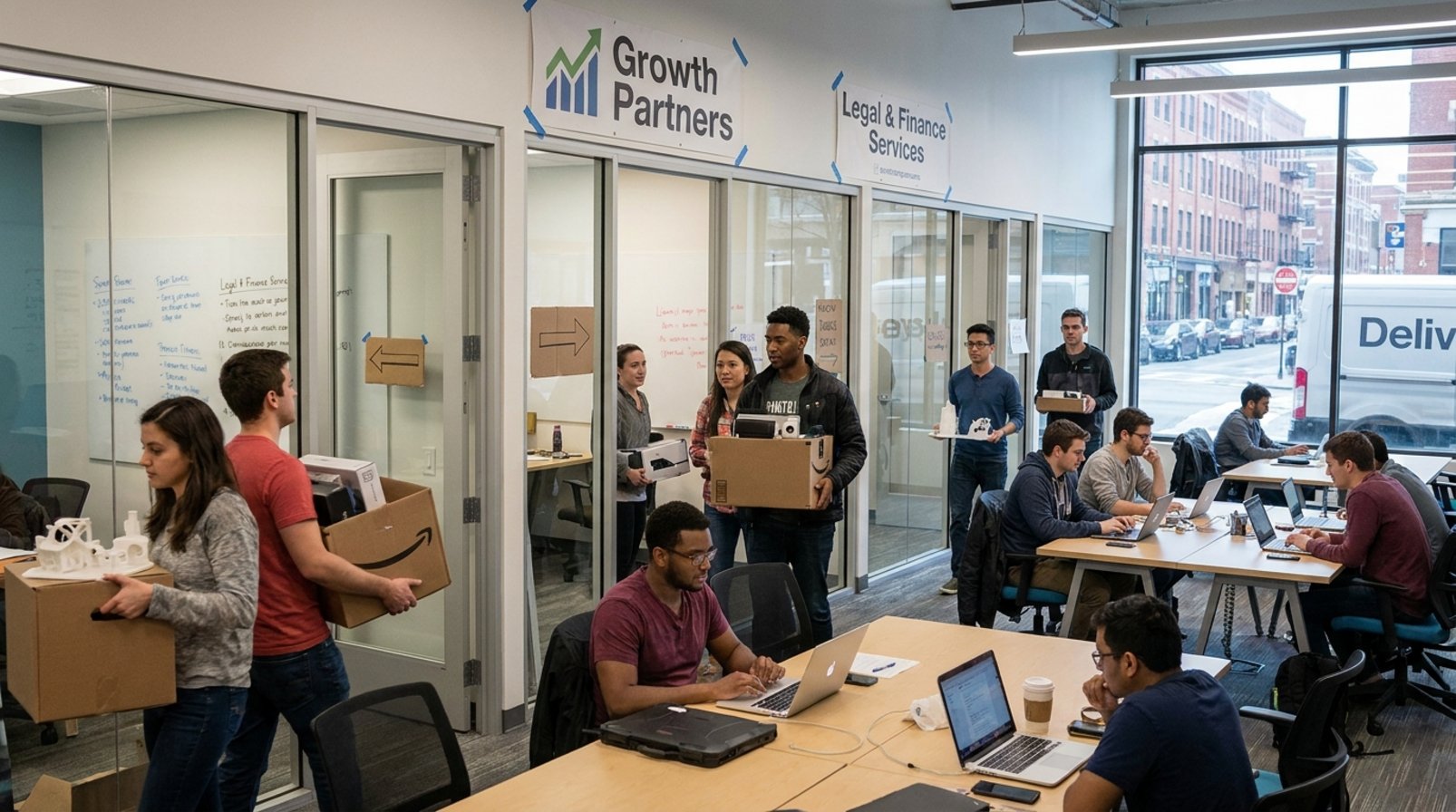
The key signal here is not just model quality, but the very fast pace of development. When a model is continuously refined based on user feedback, the competitive edge no longer lies in “launching first,” but in the ability to listen, fix quickly, and expand the ecosystem.
Sarah Guo and Conviction’s bet on AI
The story of Sarah Guo points to an important trend: investors closest to the AI frontier are no longer betting only on large labs, but also on the application layer around them. According to the source material, Conviction invested early in Baseten and Harvey before ChatGPT launched; it later backed Sierra, Cognition, and Mistral early as well.
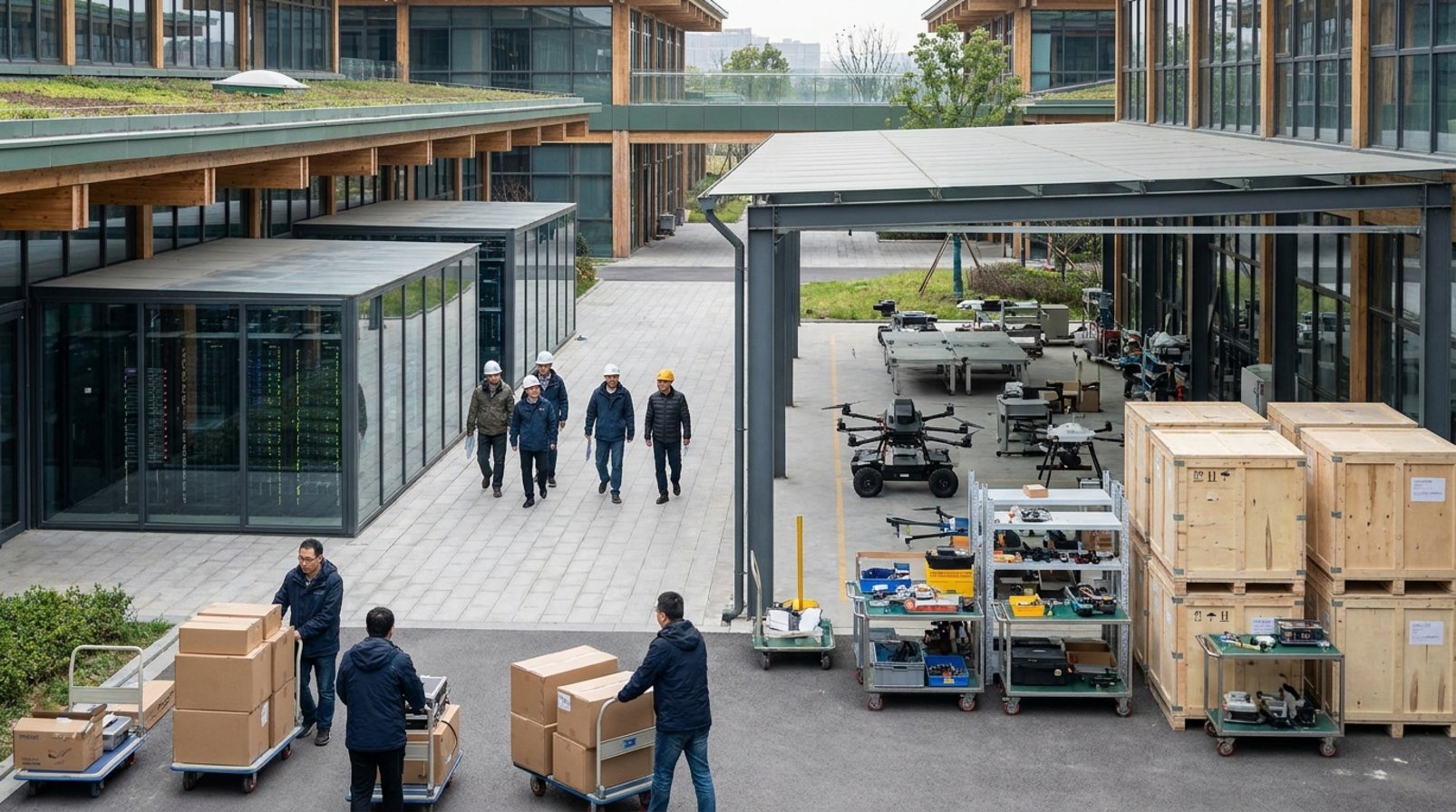
The notable point is Guo’s belief that foundation models still cannot “do everything.” That implies there is still significant opportunity for startups building product layers, workflows, and infrastructure for AI, rather than chasing core models alone.
Anthropic faces more pressure as the frontier race heats up
Many market observers say Anthropic is under growing pressure as OpenAI has caught up in some areas, while open-source models from China are moving even closer to the SOTA group. Source comments suggest July will be a “very hot” month if Opus 5 and competing updates arrive around the same time.

For marketers and product teams, the takeaway is that the premium AI market is now on a much shorter competitive cycle. Choosing a platform, integrating APIs, or building a product roadmap will need to account for the continuous pace of model quality changes.
Chinese AI labs are launching models in rapid succession
DeepSeek V4 Pro, Minimax M3, GLM 5.2, Kimi K3, and soon Qwen 3.8 Max are among the release sequence highlighted in the sources. The overall picture is that model launches in China are happening at a dense pace, creating clear pressure on both Western labs and user expectations.

This shows the game is no longer centered on just a few US names. At a strategic level, international businesses will have more model options, but they will also face the challenge of evaluating quality, cost, and production readiness.
Injective wants to become the execution layer for automated finance
Some views in the source argue that Injective is leaning strongly toward “AI-first finance,” with the ambition to let users build agents, launch apps in natural language, and connect every AI model to the onchain market. The core message is that blockchain is not just a place to trade, but can also become the execution layer for automated finance.

This is a classic example of how AI is spreading into narrower verticals. When AI combines with financial markets, the value is not in simply “adding an AI label,” but in reducing operational friction and speeding up execution.
NeoCloud benefits as AI becomes more widespread and compute-hungry
The source argues that even if models become cheaper or more efficient, total compute demand may still rise. One example cited is Kimi K3 attracting so much usage that Moonshot AI had to restrict new sign-ups because GPUs were nearing capacity, before later increasing compute to reopen access.

This message matters a great deal for the infrastructure market: the cost per task may fall, but a sharp rise in total tasks can drive higher demand for GPUs, memory, networking, and data centers. For B2B marketers, that is why stories about infrastructure capacity, reliability, and scalability will remain major sales themes.
AI is not just for saving time, but for creating assets
One standout perspective in the source is that most AI users only use it to save time, while the top group uses AI to create assets. They do not just ask chatbots questions; they use AI to produce content, automate repetitive work, learn high-income skills, launch digital products, and build businesses with fewer resources.

For marketers, this is a reminder that the best way to use AI is not to “do one task faster,” but to redesign workflows so they produce outputs that can be sold, measured, and scaled.
CUDA Graphs and the challenge of optimizing LLM inference
The source goes deep into why CUDA Graphs are especially useful for LLM inference, particularly during decoding, when many small repeated GPU tasks can be bottlenecked by CPU call latency. The article also mentions how systems such as vLLM and SGLang use CUDA Graphs, along with technical limits related to memory and KV cache.

This is an important piece of the AI market: as users stop seeing models as “magic” and start treating them as production infrastructure, technical optimization at the inference layer will directly affect cost, speed, and the ability to deploy at scale.
Free resources for learning Claude instead of buying expensive courses
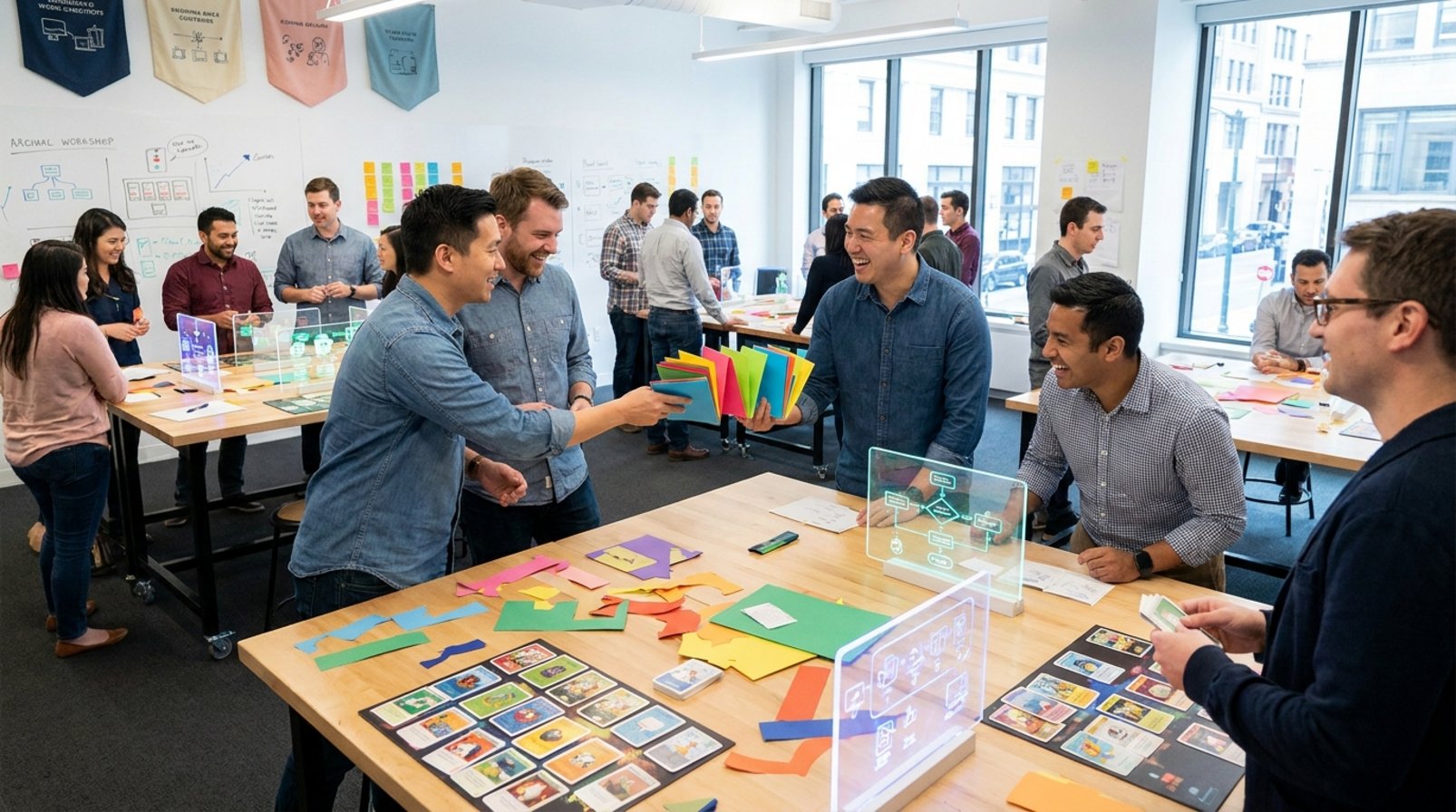
A list of more than 50 free resources on Claude is organized into modules such as Claude Code, Claude Cowork, and Claude Design. Instead of paying for expensive courses, learners can start with official documentation, tutorials, hands-on guides, and real-world workflows.
For Vietnamese marketers, this is a very relevant AI learning trend: high-quality learning resources are shifting from closed courses to public, short, practical, and fast-updating materials. Those who know how to filter resources will learn faster and at a much lower cost.
AI appchains and the infrastructure race underneath
Another perspective in the source highlights CNPY Network as infrastructure for AI appchains with shared security. The logic is clear: as agents and AI applications explode, the coordination, sequencer, and validator layers will become the foundation for lowering deployment costs and improving reliability.

For product communications, this is a reminder that infrastructure does not need to be flashy to win if it solves the market’s real problem.
ChatGPT Sites turns internal communication into a creative playground
According to the source, ChatGPT Sites is unintentionally creating an internal customization race similar to “MySpace” inside teams. Departments are no longer just making slides; they can send interactive apps, 8-bit game-style recaps, or space-themed summaries.

The interesting part is that AI is not only boosting productivity, but also changing communication standards inside companies. When tools are flexible enough, the way ideas are presented becomes a competitive advantage too.
Anthropic and the possibility of becoming an AMD customer
Some posts suggest Anthropic has effectively become a public customer of AMD, based on clues from the public GitHub of AMD’s AI leadership. While this is not yet an official business confirmation, the market sees it as a meaningful signal for the relationship between AI labs and chip suppliers.
Strategically, this is a reminder that the AI race is not happening only at the model layer. Chipmakers, cloud providers, and infrastructure partners all stand to benefit or come under pressure depending on the purchasing decisions of major labs.
CPX Visa Physical Card and the push to bring digital assets into everyday life
CoinUp says the CPX Visa physical card has been approved after six months of development. The product is aimed at global payments, ATM withdrawals, mobile wallet support, and everyday needs such as online shopping, hotel bookings, and digital service payments.
Although this is not a purely AI news item, it shows the trend of integrating new technology into mainstream consumer experiences. For marketers, the lesson is that technology only becomes truly valuable when it narrows the gap between “can do” and “easy to use every day.”
The open-source debate: not just China vs. the US
The source emphasizes that the open-source story should not be simplified into a China-versus-US confrontation. Beyond security risks and export controls, there are still many open-source labs in the US working hard to catch up, from Gemma to Arcee and NemoTron.

The implication for the industry is clear: if US open-source labs are not allowed to scale appropriately, they could be squeezed out from the start. The AI race is therefore not only about model quality, but also about room for the domestic ecosystem to grow.
Kimi K3: a massive open model with 2.8 trillion parameters
Moonshot AI has released Kimi K3 with 2.8 trillion parameters, presented as the world’s largest open-source model by the company’s own announcement. The model supports image understanding, has a 1 million token context window, and is optimized for coding, deep research, knowledge-heavy tasks, and multimodal use.
This deepens the competition between open and closed models. For businesses, what matters is not only parameter scale, but real-world usability, cost, and deployment stability.
AI’s “skillful hands”: those who know how to use it will win
A short but powerful message in the source is that AI does not fully replace users; it amplifies those who know how to use it. This view treats AI as a tool for producing content, building digital services, automating work, and making money more efficiently.

For Vietnamese readers, this is a far more practical way to think about AI than seeing it as magic. Skills, product thinking, and execution capability still determine the outcome.
Harvard makes a series of AI lessons free to the public
Harvard is said to have made six high-quality lectures on AI and prompt engineering available for free, covering topics such as generative AI, prompt techniques, RAG, AI in education, and foundational knowledge about generative AI. The source also points to additional lessons from CS50 and videos explaining how GPT-4 works.
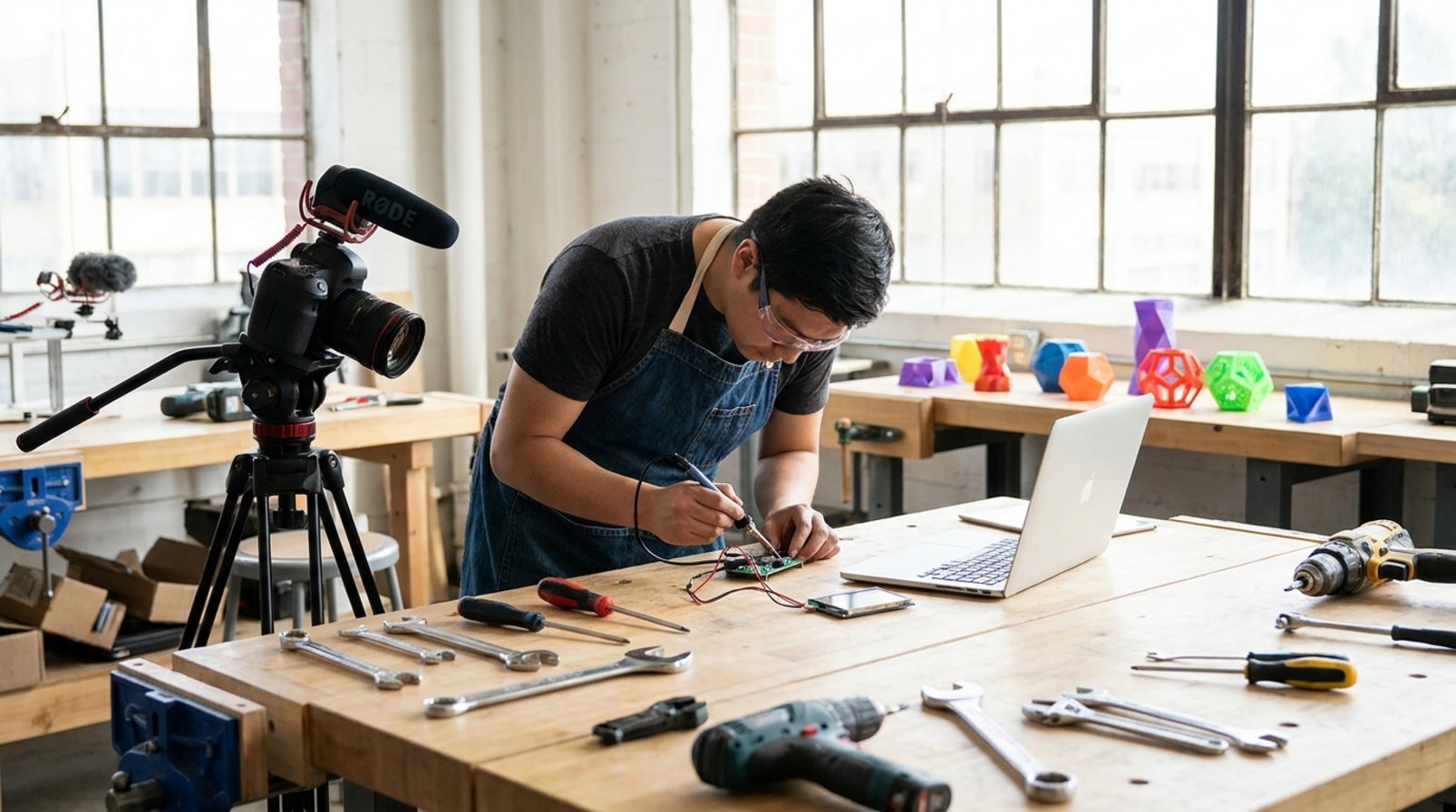
The key point is that high-quality AI knowledge is becoming more accessible. For marketers and content creators, this is a great time to build a stronger foundation instead of only learning tool shortcuts.
Model competition is far from over
According to the source, in just a short period the market has moved from the feeling that “everything is over” with Fable, to GPT 5.6 Sol, and now Kimi K3. Anthropic even had to allow Fable to be used in monthly subscriptions to reduce user churn.
The lesson here is very clear: in AI, leadership is far more temporary than initially imagined. Businesses using AI need to be prepared for constant tool changes and design systems that are flexible enough to adapt.
OKX tests Exchange OS at scale with a World Cup prediction campaign
OKX says its World Cup prediction campaign was not just a user-acquisition activity, but the first large-scale production deployment of X Layer Exchange OS. The company says the system processed hundreds of millions of onchain transactions, while preparing to expand into RWAs, stock tokenization, derivatives, stablecoin payments, and even the AI agent economy.

Although the focus remains on blockchain, this news shows that AI agents are increasingly being seen as a service layer that can communicate directly with new financial infrastructure. This is an important piece if the market moves further into transaction automation and digital services.
Alibaba launches Qwen3.8 Max preview, underscoring flagship ambitions
Alibaba has released a preview of Qwen3.8 Max, a flagship model with 2.4 trillion parameters according to Bloomberg-cited sources. The company says the model competes with frontier systems and ranks just behind Anthropic’s Fable 5, while allowing developers to access it through Alibaba’s coding platforms, with plans to expand open-weight availability in the near future.

This is a sign that major Asian conglomerates are investing seriously in top-tier AI, not only to keep pace but also to shape their own developer ecosystems.
AI is moving across four layers at once: models, infrastructure, applications, and education
For Vietnamese businesses and marketers, these 21 signals show that AI is no longer just a one-off experiment. The market is shifting across four layers at once: models, infrastructure, applications, and education. That opens up two major opportunities: first, using AI to accelerate content production, sales, and operations; second, building new products based on AI workflows tailored to each industry.

In the short term, businesses should prioritize three things: choose a few models/tools that can be changed flexibly, invest in prompt skills and AI usage workflows for the team, and closely track compute costs if you are building products that call APIs or run inference frequently. The winner is not necessarily the one who uses AI the most, but the one who turns AI into the most durable competitive advantage.
See more marketing news and guides at https://marketing365.vn.
Follow more updates from Marketing365 to stay on top of the latest marketing trends.
Read more articles in the same category AI Developments.
References
- AI is accelerating US business formation
- During Preview, Qwen3.8 is getting better by the day
- Sarah Guo and Conviction on AI investing
- Pressure mounting on Anthropic and Opus 5 speculation
- Chinese AI labs launching models in rapid succession
- Injective leaning fully into AI-first finance
- NeoCloud demand and Kimi K3 compute constraints
- Top 1% use AI to build wealth
- CUDA Graphs for LLM inference
- Free Claude learning resources
- AI appchains and shared security infrastructure
- ChatGPT Sites customization race
- Anthropic may become an AMD customer
- CPX Visa Physical Card approved
- Open source AI is not only China vs the US
- Kimi K3 launch details
- Harvard AI course free
- Competition among frontier AI models
- OKX Exchange OS and prediction campaign
- Alibaba launches Qwen3.8 Max preview