
Contents
By mid-2026, AI agents have moved beyond the role of “content creation tools” to become a layer of operational assistants capable of handling repetitive tasks in the marketing workflow. The notable point is not a universal chatbot, but how systems are designed to fit a business’s real processes. For Vietnamese marketers — where teams are often lean but must cover multiple channels at once — this is a direction worth trying, as long as you understand that agents are only useful when they are given enough context and humans remain in the decision-making stages.
The rise of AI agents is drawing marketers’ attention not only for their content-generation capabilities, but also because they can replace repetitive tasks in operational workflows. For the Vietnamese market, this is a noteworthy signal because marketing teams often have to handle many tasks at once while resources remain limited.
A recent article from Social Media Examiner shows how an entrepreneur built a set of AI agents tailored to his own workflow, automating much of the workload. The key point is not using a universal chatbot, but designing a system that matches the business’s actual way of working.
AI agents are not “plug and play”
The article emphasizes a truth many people often overlook: building an effective AI agent is far from as simple as the short guides online make it seem. If you want an agent to perform a task correctly in the way you expect, users must provide enough context, clearly describe the process, and continuously refine the output.
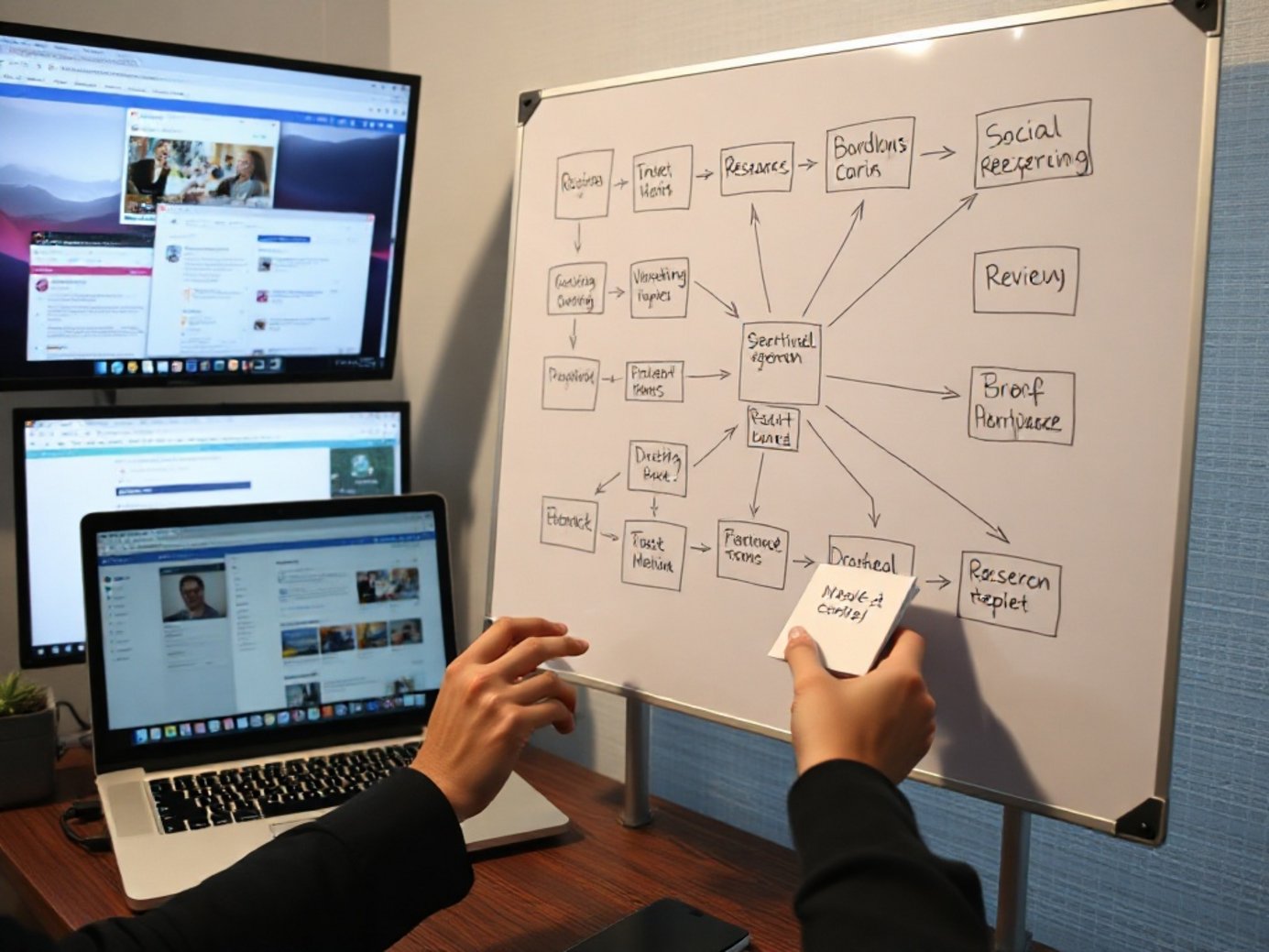
In other words, the value of an AI agent does not come from being “smart by default,” but from being built correctly around the business’s own context, processes, and standards. This is a major difference from the approach of using one generic tool for everything.
Build systems around real processes, not pre-made templates
According to the source, what matters is that the AI system belongs to the user, rather than copying someone else’s workflow template. With this approach, businesses can design agents around each specific step in the process instead of forcing their workflow into a generic tool.
This approach is especially well suited to social media marketing, where steps such as idea research, content drafting, comment responses, report standardization, or customer request classification can all be broken down to automate each part. When the right tasks are separated, AI agents can support most repetitive operations while still keeping humans in control of the important steps.
The best automation is controlled automation
The key point of the article is that AI agents are not meant to fully replace humans, but to handle highly repetitive tasks. When an agent can take care of about 80% of a task, the rest—usually the decision-making, moderation, or exception-handling stage—still remains in human hands.
For marketers, this mindset is very important. Instead of expecting one tool to do everything perfectly, businesses should clearly identify where machine speed is needed and where marketing judgment is required. This division of roles is what makes AI a sustainable productivity lever, rather than a source of added risk to quality and brand consistency.
AI agents should start with the most time-consuming part of social media operations
Read more: AI Moves Into Marketing Operations: Agents, Automation and a New Measurement Problem
In Vietnam, many marketing teams operate with lean staffing but must cover multiple channels at the same time. That makes AI agents a direction worth trying, especially for tasks such as consolidating insights, reminding teams about posting schedules, filtering customer requests, or preparing initial content drafts.
However, the lesson is not to start by asking, “Can AI do everything?” but rather, “Which process is taking the most time and can be safely broken down for automation?” If approached this way, Vietnamese businesses can use AI agents as a layer of operational assistants, saving time while still preserving brand voice and quality control.
Source: Social Media Examiner, “Building AI Agents: The System That Automates 60% of One Entrepreneur’s Workload” (16/06/2026).
See more marketing news & guides at https://marketing365.vn.
Follow more updates from Marketing365 to stay up to date with the latest marketing trends.
Read more articles in the Digital Trends category.
This article focuses on AI agents for social media with a perspective for the Vietnamese market.
Ask which step is slow, not whether AI can do everything
- Start by asking, “Which process takes the most time and can be safely broken down for automation?” rather than “Can AI do everything?”
- Build agents around specific steps (idea research, drafting, comment responses, report standardization), instead of forcing the workflow into one generic tool.
- Provide enough context, clearly describe the process, and continuously refine the output instead of expecting it to be “plug and play.”
- Keep humans in the decision-making, moderation, and exception-handling stages — the roughly 20% that the agent should not decide on its own.
- Measure benefits by the time saved on repetitive tasks, while also controlling brand voice and consistency.
Overall, the value of AI agents does not come from being “smart by default,” but from being built correctly around the business’s context, processes, and standards. For Vietnamese marketers, the sustainable approach is to treat agents as a controlled layer of operational assistance — boosting productivity without sacrificing brand quality.
References
? Related concept: What is an AI Agent