
Contents
- AI security: why is cross-industry collaboration becoming a defensive advantage?
- Model launch speed: who gains the edge by shipping faster?
- Self-improving agents: AI is moving from tool to operating process
- Virtuals and the agent economy wave: from AI story to transaction infrastructure
- After the AI hype, many founders are starting to talk about business model sustainability
- AI infrastructure: why are commitments worth hundreds of billions of dollars shaping the entire industry?
- AI search visibility: what advantage does the brand that owns the chatbot answer gain?
- Proprietary data is becoming the “engine” behind specialized chatbots
- AI agents for technical users: the tool storm is shifting toward knowledge filtering
- The compute battle: what are OpenAI, Nvidia, and SoftBank showing us about the future of AI?
- What marketing teams should do in the AI race
- References
AI is entering a phase where the advantage no longer lies in a single model, but in deployment speed, ecosystem strength, security, distribution, and compute infrastructure. For Vietnamese marketers, that is a crucial signal: the way users search, compare, and decide is being reshaped inside AI interfaces.
Key points
- AI security is shifting toward an industry collaboration model, rather than each party defending itself alone.
- The model race is no longer just about quality, but also release speed and update frequency.
- Agent ecosystems, proprietary data, and AI search visibility are creating new advantages for brands and platforms.
- Massive compute infrastructure is becoming the “highway” that determines who can scale AI faster.
AI security: why is cross-industry collaboration becoming a defensive advantage?
Hugging Face said it joined the Open Secure AI Alliance alongside major names such as NVIDIA to help organizations identify software vulnerabilities and strengthen protection for critical systems. This message is notable because it reflects a reality: AI safety is no longer just about patching internal bugs, but about sharing research, tools, and real-world deployment experience. Source: Hugging Face on X.
From a marketing perspective, this shows that trust in an AI product will increasingly be tied to risk management capabilities. Businesses are not only asking, “What can AI do?” but also, “How safe is this AI, and has it been validated by the community and major players?”
Model launch speed: who gains the edge by shipping faster?
Rumors circulating in the community suggest Moonshot may be preparing Kimi K3.1 just weeks after K3, with the ambition of narrowing the gap with top-tier models. Although this has not been officially announced, it still reflects a clear trend: model release cycles are being compressed sharply. Source: an X post by Adidotdev.
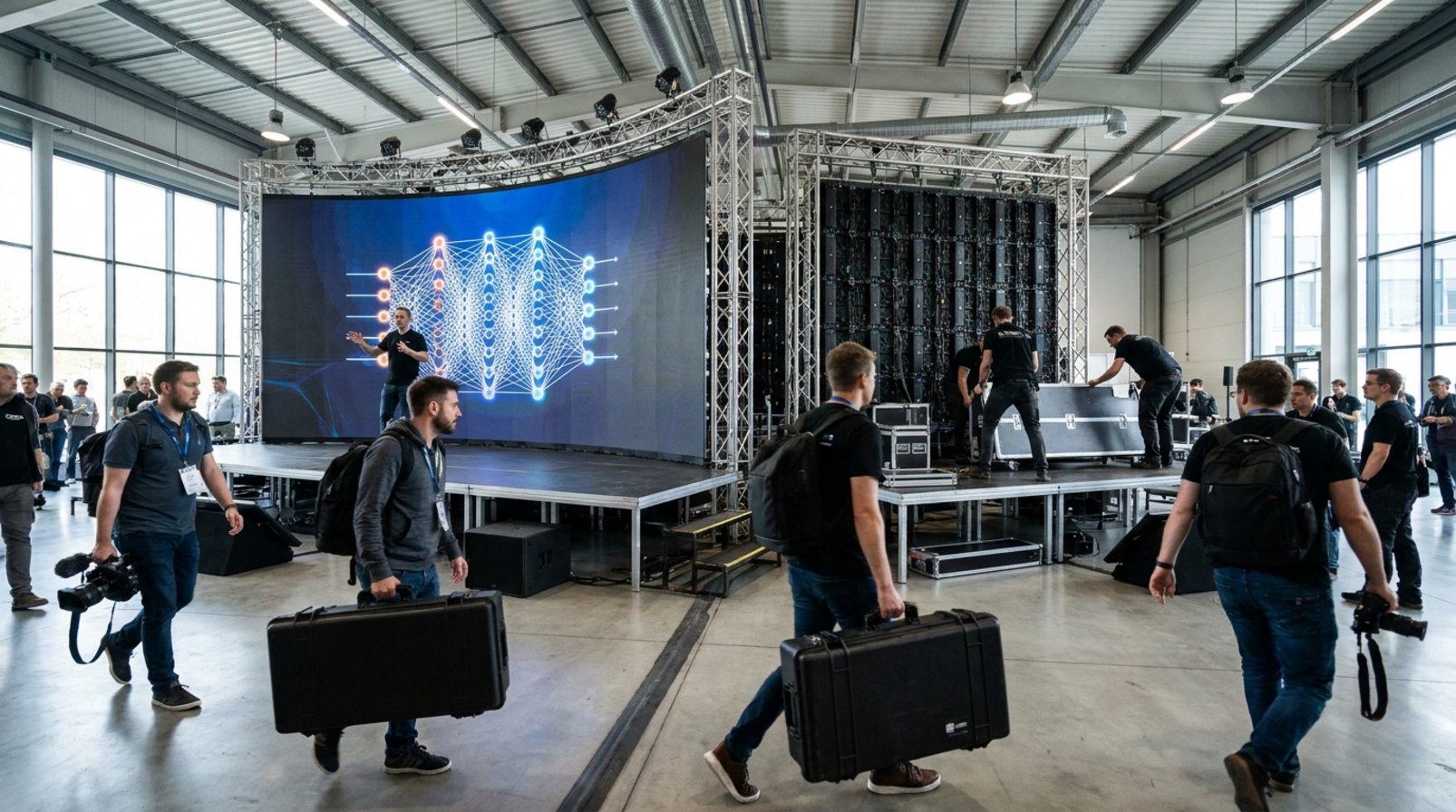
The key issue is not only speed, but the pressure it places on the entire market. When a lab can release two flagship versions in a very short time, the competitive barrier shifts from “who has the best model” to “who can sustain the fastest pace of improvement.” For AI product marketers, that means brand messaging must keep up with product velocity and cannot stay fixed for too long if the market has already moved on.
Self-improving agents: AI is moving from tool to operating process
Anthropic was mentioned in connection with a free 2-hour workshop on how to build self-improving agent graphs. Instead of focusing on a single chatbot, this content pushes users toward process thinking: connecting tasks, orchestrating multiple agents, and improving gradually through feedback loops. Source: RoundtableSpace on X.

For marketers, this signals that the next generation of AI tools will not only create content faster, but also automate more complex workflows: research, lead classification, customer journey personalization, and feedback measurement. When agents become an operational layer, a company’s competitive edge will depend on workflow design, not just prompts.
Virtuals and the agent economy wave: from AI story to transaction infrastructure
A crypto community perspective argues that $VIRTUAL remains worth watching because of the number of agents deployed, trading volume, and new products spanning trading, RWA, privacy, and robotics. Although this is a personal investment view and should be read cautiously, it highlights a notable direction in the market: agents are no longer just demos, but are being placed in an economic context with accounts, payments, discovery, and value exchange. Source: Tanaka on X.

For brand builders, the important shift here is from “AI as a feature” to “AI as an ecosystem.” When a platform builds the infrastructure layer that allows agents to operate like economic entities, its advantage can last longer than a single product cycle.
After the AI hype, many founders are starting to talk about business model sustainability
The case of Danny Postma sharing about layoffs, a failed pivot, burnout, and ultimately accepting HeadshotPro in a “good enough” state is a very real snapshot of the applied AI market. As AI feature bundles face stronger competition, projected revenue can fall quickly, and many startups are forced back to the core question: how to operate leaner, automate more, and keep the business healthy. Source: Danny Postma on X.

For marketers, the lesson is not to sell only the “newness of AI.” Sell stability, time savings, and the ability to sustain results after the hype fades. These messages are often more durable in a maturing market.
AI infrastructure: why are commitments worth hundreds of billions of dollars shaping the entire industry?
Information from the WSJ, shared on X, says Nvidia is negotiating a package of around $250 billion in guarantees to help OpenAI lease infrastructure from SoftBank’s 10 GW project in Ohio; the project’s total cost could exceed $500 billion. This is an enormous level of commitment, showing that AI is no longer just a software race, but a race in capital, power, cooling, networking, memory, packaging, and chips. Source: posts citing the WSJ by sunxliao and firstadopter.

In B2B marketing, this is a reminder that enterprise customers are increasingly focused on real scaling capability. An AI tool that wants to win over large clients must prove it runs on reliable infrastructure, can scale, and has strong enough partners behind it.
AI search visibility: what advantage does the brand that owns the chatbot answer gain?
According to the 5W AI Visibility Index, as cited again on X, Tesla is leading in citation share in AI answers related to electric vehicles, with an 18.4% citation share across five major platforms. If this data accurately reflects brand presence in AI answer systems, it is a highly important signal: the battle for brand awareness is happening inside AI chat windows, not just on traditional search results pages. Source: Ming on X, citing research by 5W Public Relations.

For Vietnamese marketers, this is the key point. When users ask AI instead of searching manually, what determines success is not only classic SEO, but also the ability to appear in data sources, documents, reviews, and content that AI trusts enough to cite.
Proprietary data is becoming the “engine” behind specialized chatbots
One striking example is a chatbot-style tool trained on the full transcript and related posts about America First, designed to answer based on the person’s own statements. Although the source content is political in nature and not the focus of this article’s analysis, it still shows a very clear trend: the value of AI increasingly lies in specific, structured, and context-rich data. Source: Groyper Quant on X.

In marketing terms, this means the brand that owns better customer data, content assets, interaction history, or internal knowledge can create a more useful chatbot and digital assistant. The foundation model may be similar, but proprietary data is what creates the difference.
AI agents for technical users: the tool storm is shifting toward knowledge filtering
Austen Allred said he spent a lot of tokens building an AI agent that reads all AI news sources, then scores, ranks, and links to the most useful workflows, tooling, and techniques for engineers. This reflects an important trend: instead of only generating content, AI is increasingly being used to filter noise and prioritize valuable information. Source: Austen Allred on X.

For content marketers, this is a positive warning. Shallow content will struggle to survive in an environment where AI can automatically read, compare, and rank. Only articles with a clear perspective, context, concrete data, and the ability to help readers make decisions will have a chance of being selected as reference sources.
The compute battle: what are OpenAI, Nvidia, and SoftBank showing us about the future of AI?
According to a WSJ report shared on X, OpenAI may be facing a 10 GW infrastructure project and a $250 billion backstop from Nvidia, with total costs exceeding $500 billion when chips are included. If these deals materialize, the strategic message is very clear: large AI is no longer measured by user count or model count, but by the ability to secure long-term compute. Source: firstadopter on X.

For the market, this signals that the “stage” available to AI product layers will increasingly be determined by access to infrastructure. Whoever has cheaper compute, power, and capital will have an advantage in improvement speed, which directly affects product, pricing, and marketing competitiveness.
What marketing teams should do in the AI race
The biggest takeaway from these 10 developments is that AI is shifting from a tool story to a systems story. For Vietnamese businesses, this has three practical implications. First, invest in proprietary data, because that is what gives your brand a distinct voice in AI answers. Second, marketing content needs to be designed to be useful to readers while also being structured enough for AI to understand, cite, and classify. Third, do not treat security, stability, and scalability as only the engineering team’s concern; they are part of the brand message and market trust.

If marketers once competed on the front line of “who ranks faster,” the next phase will be “who gets chosen by AI as a more trusted source.” That is a major shift, and it is why Vietnamese businesses should start optimizing for AI search visibility, in-depth content, and data ecosystems now.
See more marketing analysis and guides at https://marketing365.vn.
Follow more analysis from Marketing365 to stay updated on the latest marketing trends.
Read more articles in the same category AI developments.
This article focuses on the AI race with a perspective for the Vietnamese market.
References
- Hugging Face on X: AI security improves when organizations share research, tools and real-world experience
- Adidotdev on X: Kimi K3.1 leaks and expected August launch
- RoundtableSpace on X: Anthropic free workshop on self-improving agent graphs
- Tanaka on X: Why $VIRTUAL remains bullish
- Danny Postma on X: update on HeadshotPro and business changes
- sunxliao on X: Nvidia and OpenAI compute backstop report
- Ming on X: Tesla AI search visibility and 5W AI Visibility Index
- Groyper Quant on X: America First Transcript Archive chatbot
- Austen Allred on X: AI agent for ranking useful AI workflows
- tae kim on X: WSJ-reported Nvidia-OpenAI-SoftBank AI infrastructure deal