
Contents
- As Google tightens AI content, SEO must shift from “production” to “verification”
- Google expands review guidance: transparency is becoming mandatory
- SEO and PPC only truly work together when designed from the organizational structure
- Ecommerce cannot stand outside Google Ads bidding changes
- Google Business Profile and review snippets show local SEO still depends on operational quality
- Peak ecommerce season repeats one truth: SEO only works when tied to operations
- AI is pushing martech from software composability to organizational composability
- AI review workflows can fail if they only check whether something “looks right”
- SEO tied to quality means marketers must do three things now
- References
Recent developments suggest SEO is no longer a game of “publish content and wait for rankings.” From how Google handles AI content, reviews, and Google Business Profile to the overlap between SEO and PPC, the new picture is search ecosystem optimization built around quality, authenticity, and coordination across teams.
For Vietnamese marketers, this matters because most performance issues do not come from a single article, but from the operating structure: goals, review processes, data, and how SEO, paid search, content, and website operations work together.
Key points
- Google is sending stronger signals about content quality, authenticity, and usefulness, especially for AI content and reviews.
- SEO works better when placed in a “total search” model rather than letting SEO and PPC operate separately.
- Google Ads continues to change how goal-based bidding is distributed, forcing ecommerce teams to review bidding strategy and budgets proactively.
- For the Vietnamese market, the issue is not just ranking higher, but building a sustainable, scalable, and controllable search system.
As Google tightens AI content, SEO must shift from “production” to “verification”
Search Engine Journal suggests Google may be treating AI-generated content as a form of “thin content” if it lacks depth and real value. The key point is not the word “AI,” but how Google may assess usefulness: content that looks fine on the surface is not necessarily good enough if it cannot demonstrate experience, expertise, and originality.
For SEO professionals, this is a reminder that content production cannot stop at drafting. It needs another layer of editing, verification, real-world insight, and clear signs of expertise. AI content is only raw material; SEO value comes from turning that material into a trustworthy answer for users.
Source: Search Engine Journal — Google May Be Penalizing AI-Generated Content As Thin Content.
Google expands review guidance: transparency is becoming mandatory
Google is said to have expanded guidance related to review snippets and warned about fake reviews or incentivized reviews that are not disclosed. This reflects a familiar trend: Google does not just want content that “looks trustworthy,” but wants trust signals to be proven through transparent behavior.

For ecommerce SEO, reviews are one of the factors that strongly affect CTR and conversion. But if the review system is manipulated, short-term gains can lead to long-term risks in visibility and brand reputation. Instead of trying to “polish” ratings, businesses should invest in a process for collecting genuine feedback, publishing clear policies, and optimizing the post-purchase experience to generate organic reviews.
Source: Search Engine Journal — Google Expands Review Guidelines And Warns Of Manual Actions; Search Engine Roundtable — Google Review Snippets Prohibits Fake or Undisclosed Incentivized Reviews.
SEO and PPC only truly work together when designed from the organizational structure
Search Engine Land argues that alignment between SEO and PPC starts with the org chart, not with a keyword-sharing meeting. This is a very practical point: if two teams have different KPIs, different management, and different operating rhythms, then sharing data will still struggle to create joint action.

A “total search” model or a shared governance structure helps businesses see the full picture: which topics should be prioritized organically, which keywords should be closed with paid media, where the content gaps are, and which SERP positions need to be defended. When the organizational structure changes, SEO performance is no longer measured only by rankings, but by its contribution to total search revenue.
Source: Search Engine Land — SEO and PPC alignment starts with your org chart.
Ecommerce cannot stand outside Google Ads bidding changes
Google Ads is adjusting how it operates for target CPA or target ROAS campaigns that are budget constrained: from mid-August, the system will distribute more evenly according to the set target instead of “exceeding” the target as before. For many accounts that have been benefiting from exceeding target, this change could raise CPA or reduce ROAS if not addressed early.

The important point here is that Google will not adjust your target or budget for you. That means ecommerce campaigns need to be reviewed by product group, margin level, and budget tolerance. This is a clear example of how SEO and paid search increasingly need to work closely together, because performance is no longer just a matter of organic or paid alone.
Source: Search Engine Journal — Google Ads’ Target-Based Bidding Update For Ecommerce; Search Engine Roundtable — Google Ads Household Income Exclusions For PMax.
Google Business Profile and review snippets show local SEO still depends on operational quality
Changes to the Google Business Profile dashboard interface or signals related to review snippets may seem minor, but for local SEO they are a very important front. Users searching for locations, services, and stores do not just look at web results; they also rely on maps, business information, and reviews.
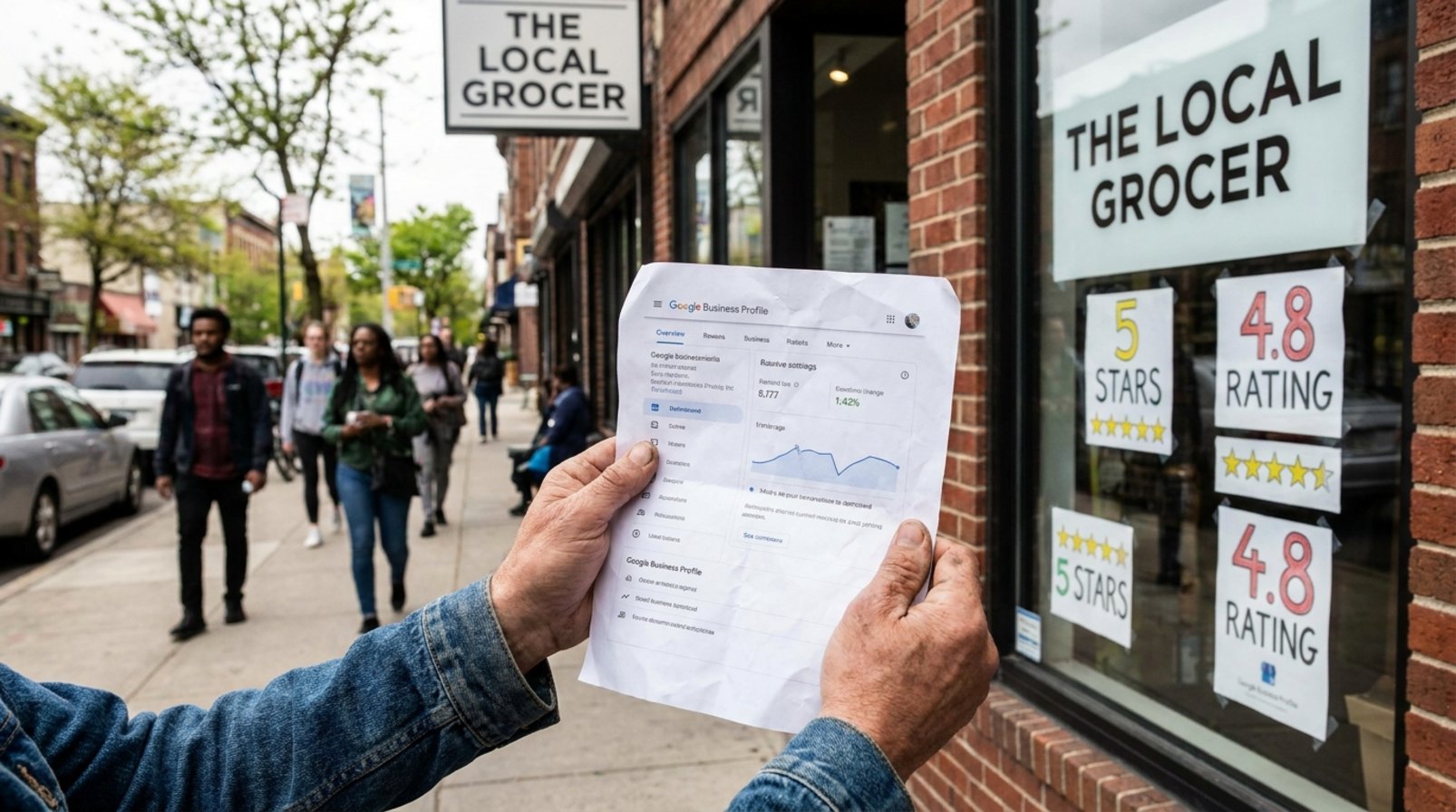
That means local SEO cannot be optimized only through NAP, schema, or landing pages. It requires continuous operations: updating business information, responding to reviews, controlling consistency, and ensuring the real-world experience matches the expectations reflected in the business profile on the SERP.
Source: Search Engine Roundtable — Google Business Profile Dashboard In Blue; Search Engine Roundtable — Google Review Snippets Prohibits Fake or Undisclosed Incentivized Reviews.
Read more: When SEO Is Pulled Into Platform Instability
Peak ecommerce season repeats one truth: SEO only works when tied to operations
MarTech emphasizes that to get through peak retail season, businesses need “structural readiness” — readiness in structure, not just higher budgets. This is a very fitting perspective for SEO: if traffic surges but the website, tracking, inventory, content, and after-sales service are not ready, search performance will still be undermined.

For marketers, preparing for peak season is not about writing a few more blog posts. It is about optimizing the landing page for intent, checking speed, updating content based on search behavior, ensuring structured data is in place, and coordinating with the operations team so the conversion chain does not break.
Source: MarTech — Optimizing for the holiday ecommerce surge.
AI is pushing martech from software composability to organizational composability
MarTech argues that AI is expanding the concept of composability: previously we combined software, but now we are combining capabilities and the way work is organized. For SEO, this means tools are only one part; the rest is how people, data, and processes work together to make fast and accurate decisions.

Businesses that can quickly assemble modules such as keyword research, content creation, review, measurement, and conversion optimization will have a major advantage. In this context, SEO becomes a configurable system, not a fixed set of tasks handled by one person.
Source: MarTech — AI is pushing composability beyond software.
AI review workflows can fail if they only check whether something “looks right”
MarTech warns that human-in-the-loop review often evaluates AI output based on plausibility, while what needs to be checked is accuracy. This is the core problem in many content workflows today: reviewers see an article that “sounds reasonable” and approve it, but the information may still be wrong, outdated, or unhelpful.

In SEO, this is especially dangerous because small errors can accumulate into major risks: lower content credibility, more post-publication edits, and even damage to the site’s overall E-E-A-T. To use AI effectively, businesses need a validation process with clear criteria that prioritizes evidence over intuition.
Source: MarTech — Why your AI-review process is going to fail.
SEO tied to quality means marketers must do three things now
For Vietnamese businesses, all of these signals point to one conclusion: SEO is shifting from optimizing individual pages to optimizing the search system. This is especially important in highly competitive sectors such as ecommerce, education, finance, healthcare, and local services.

The three priorities to put first are: first, raise the standard of content editing and verification; second, coordinate SEO with PPC and CRM to understand the full funnel; third, run Google Business Profile, reviews, and landing pages as one continuous chain rather than separate items. Businesses that build strong structure will be less dependent on short-term algorithm fluctuations.
In other words, SEO in Vietnam is no longer just about “optimizing articles.” It is the capability to organize growth on search — where content, data, advertising, and operations all move in the same direction.
See more marketing analysis and guides at https://marketing365.vn.
Follow more analysis from Marketing365 to stay updated on the latest marketing trends.
Read more articles in the same category Digital Trends.
This article focuses on system SEO with a perspective for the Vietnamese market.
References
- Google Ads’ Target-Based Bidding Update For Ecommerce
- SEO and PPC alignment starts with your org chart
- Google May Be Penalizing AI-Generated Content As Thin Content
- Google Expands Review Guidelines And Warns Of Manual Actions
- Why your AI-review process is going to fail
- Optimizing for the holiday ecommerce surge
- AI is pushing composability beyond software
- Google Review Snippets Prohibits Fake or Undisclosed Incentivized Reviews
- Google Business Profile Dashboard In Blue
- Google Ads Household Income Exclusions For PMax