
Contents
Consumers are changing much faster than many brands realize. For Vietnamese marketers, this is especially important: AI is no longer a question of whether to use it, but how to deploy it in a way that meets customer expectations for speed, transparency, and seamless experiences.
New data from Invoca shows a growing gap between buyers’ willingness to engage with AI and businesses’ ability to deliver the experience that AI has already “shaped” for them.
Consumers are more open to AI in the buying journey
According to Invoca’s “B2C Buyers Experience Report,” consumers are becoming increasingly comfortable with genAI and AI “agents” at various touchpoints throughout the shopping process. Notably, AI is no longer seen as a barrier like first-generation chatbots were, and in some situations it is even preferred over humans.

The main driver is speed. Nearly three-quarters of respondents said they prefer interacting with AI over staff if AI can answer questions or solve problems faster. This reflects a familiar reality for today’s users: they do not just want a response, they want it immediately.
However, this acceptance comes with one very clear condition: transparency. More than 80% of consumers say they value a brand’s AI clearly identifying itself as AI. In other words, users are not opposed to machines, but they do not want the human-and-technology experience to be blurred together.
Source: MarTech, citing Invoca’s report.
Brands are under pressure on experience and operations
Read more: CAC Is Rising, but Sales Aren’t Improving: a MarTech Lesson on AI in B2B
If consumers are ready, the issue lies with businesses. MarTech says the gap today is no longer “whether to use AI,” but “whether businesses have enough capability to support the new expectations AI has created.”

In reality, many brands still send customers through slow processes, broken touchpoints, and poorly designed layers of automation. As AI raises expectations for instant responses, any delay or clumsy handoff between bots, call centers, and real employees can easily make the experience feel worse than before.
The key point here is that AI is not only an engagement tool, but is also becoming a new benchmark for service quality. If a business implements AI halfway, customers will not see it as “innovation,” but as another obstacle.
Source: MarTech, based on Invoca’s “B2C Buyers Experience Report.”
AI only creates value when designed in the right context
The lesson from this research is not “replace people with machines,” but identify the right context for AI to be effective. Consumers are willing to use AI when they need quick answers, simple issue resolution, or instant support. By contrast, touchpoints that are sensitive, complex, or require a high level of understanding still need a smooth handoff to humans.
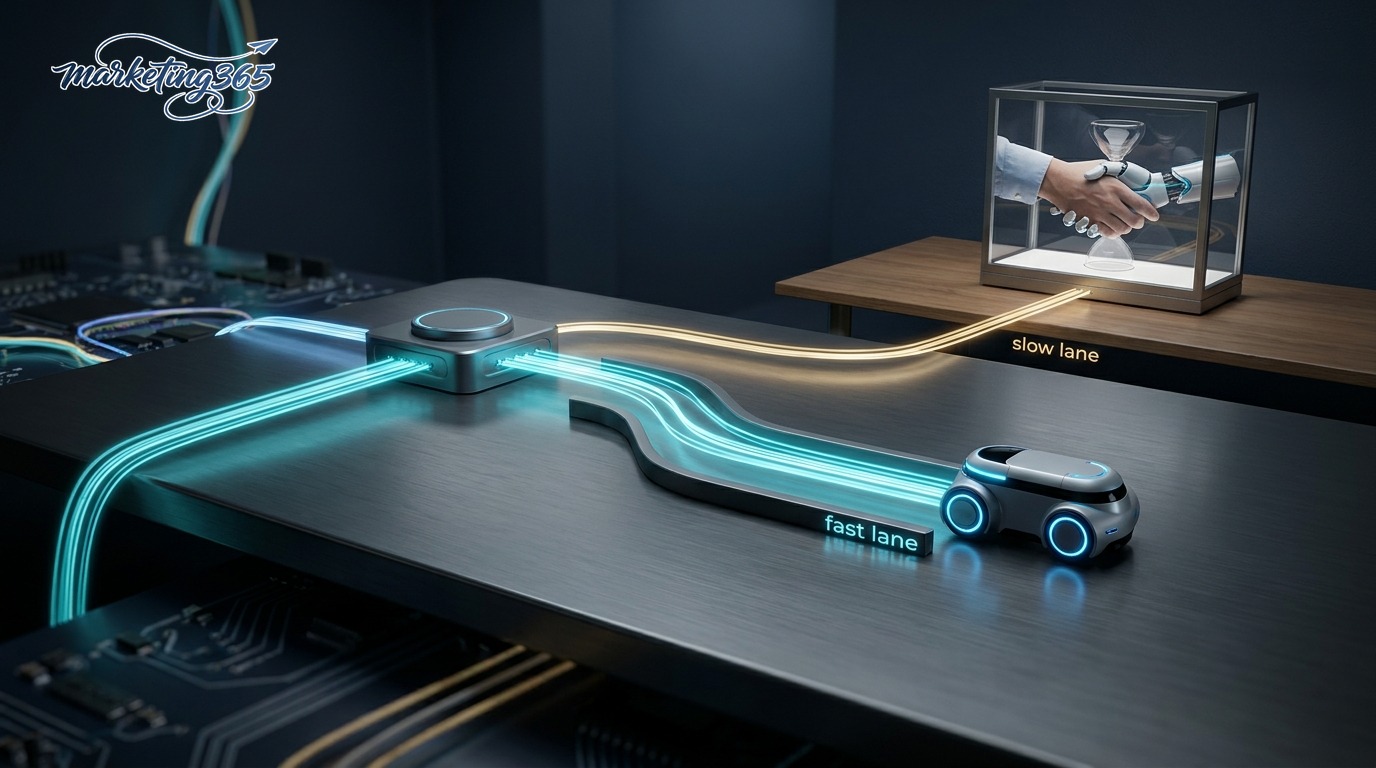
For marketers, that means viewing AI as part of the entire customer experience, not as a standalone layer of technology. Done well, it can reduce friction, speed up responses, and create the feeling that the brand “knows how to serve.” Done poorly, it can quickly erode trust.
Read more: AI Speeds Content, but Demands Verification and Transparency
Source: MarTech.
AI in CX only works when answers are fast and handoff is smooth
In Vietnam, users are also gradually getting used to chatbots, automated call centers, and AI assistants in e-commerce, banking, telecommunications, and retail. However, their expectations are usually very practical: fast answers, correct solutions, no need to repeat information, and access to a real person when needed.
This creates three priorities for marketers and CX teams: first, AI must be clearly disclosed to avoid a sense of being “tricked”; second, automation must be tied to processes that are genuinely faster; third, there needs to be a smooth path to a real employee, especially for complaints or complex advisory situations.
In short, the lesson is not about chasing AI for the sake of it, but using AI to deliver a better customer experience. In the Vietnamese market, brands that can do this will have a clear advantage in an increasingly speed- and convenience-driven competitive landscape.
Reference source: MarTech (12/06/2026), Invoca “B2C Buyers Experience Report”.