
Contents
- AI moves from conversation to an action orchestration layer
- Why the advantage is shifting toward ecosystems rather than standalone models
- Treating AI as a side tool is the bigger risk
- What challenge does this kind of AI pose for Vietnamese marketers?
- Pick one workflow AI can shorten in the next 30 days
- References
AI is no longer just a tool for answering questions. From in-conversation payments, coding, task execution to direct participation in digital infrastructure, recent developments show AI moving into an “action” phase rather than simply “responding.” For Vietnamese marketers, this is an important signal because it is changing how users make decisions, how products are distributed, and how businesses build competitive advantage.
Key points
- AI is being deeply embedded into execution workflows: payments, product operations, programming, and work support.
- Competitive advantage is shifting from standalone models to ecosystems, integration, and operational reliability.
- Lower costs, more accessible tools, and better guides will bring AI into the mass market faster.
- Marketers need to prepare for an AI era that not only “writes content” but also directly influences conversion and customer experience.
AI moves from conversation to an action orchestration layer
The big picture is that AI is moving from a “conversational assistant” to an “action orchestration layer.” MoonPay is mentioned with PayBox, a non-custodial wallet that lets ChatGPT and Claude users trade tokens, make payments, and perform actions through conversation; at the same time, Google India has also brought Gemini into Google Pay to analyze spending and suggest financial actions directly inside the app. These two examples show that AI is no longer standing outside the flow of money, but is entering the place where real transactions happen.
At the work-tool layer, SuperCmd v2 shows a local launcher that is lighter, more private, yet integrates ChatGPT, AI agents, terminal commands, web search, and voice. At the same time, Anthropic has released a prompting guide and a free workshop for Claude, while many users are still struggling with how to get the most out of models. That reflects a reality: value does not lie only in the model, but in the ability to package it into an easy-to-use workflow.
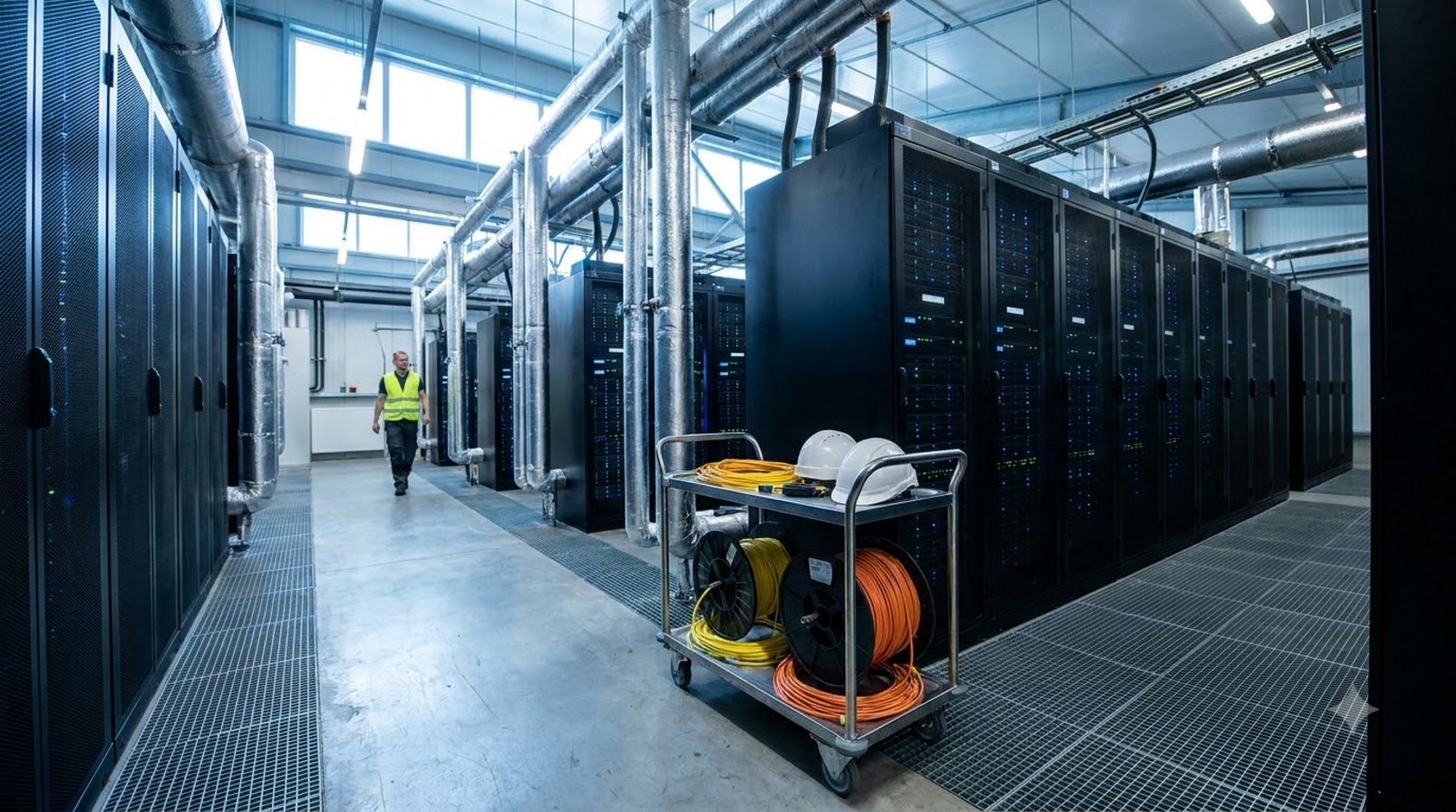
At the infrastructure and operational capacity layer, statements about Microsoft, Meta and OpenAI show that compute demand is rising sharply; data centers, GPUs and AI capacity continue to be scaled up to meet usage momentum. At the same time, newer models such as Agnes 2.5 Pro Alpha emphasize the opposite direction: lower cost, while still offering enough reasoning and coding capability to broaden access. In other words, the AI race is no longer about “who has the better chatbot,” but “who can turn AI into a system that creates real value in real workflows.”
Why the advantage is shifting toward ecosystems rather than standalone models
If people used to compare AI by benchmarks or the smoothness of its answers, recent developments show that the advantage increasingly lies in the integration layer. MoonPay did not just launch a new tool; it brought AI into the payment and wallet flow. Google Pay did not just add a chatbot; it turned AI into a financial tool built into everyday usage. This is the kind of integration that means users do not need to “decide to use AI,” yet still use AI naturally.

On the work-tool side, SuperCmd v2 shows that a product can win through a combined experience: launcher, search, terminal, chat, voice, privacy, and task assistant in one interface. Meanwhile, Anthropic is investing in a prompting guide and a free workshop, expanding the “ability to use Claude correctly” rather than just promoting the model. Two different approaches, but the same message: whoever controls the user experience and deployment context will hold a more durable advantage.
This also explains why many new models or tools do not necessarily win on absolute specs. Agnes 2.5 Pro Alpha is mentioned as a low-cost reasoning model, while discussions around Gemini focus on reliability and the ability not to hallucinate when it does not know. Enterprise users do not just need “smart”; they need systems trustworthy enough to delegate tasks to. For marketers, this is a reminder that AI messaging should shift from “most powerful” to “usable, safe, and integrated into workflows.”
Treating AI as a side tool is the bigger risk
The biggest risk is not that AI is moving too fast, but that businesses see AI only as a supporting tool layer. As OpenAI, Anthropic and other platforms continue to push guides, real-world applications and integrations, the gap between “knowing AI exists” and “knowing how to deploy AI” will become a real competitive gap. Users will get used to paying, searching, summarizing, coding or analyzing directly inside AI environments.

If adaptation is slow, a brand may lose not only traffic but also the first touchpoint with customers. Some experiences will no longer begin with a website or landing page, but with a chatbot, an in-app assistant, or an AI-orchestrated workflow. At that point, marketing is no longer just about optimizing content or ads, but about optimizing visibility in interfaces and journeys led by AI.
This pressure is even greater because infrastructure is booming. Statements about data center expansion and accelerating GPU deployment show that the industry is preparing for even higher AI consumption. As compute capacity and cheaper models gradually become normal, the advantage is no longer about “having AI or not,” but about “where AI is embedded in the customer journey.”
What challenge does this kind of AI pose for Vietnamese marketers?
For the Vietnamese market, the most notable change is that AI will move very quickly into common behaviors: payments, messaging, search, content creation, sales support, and work management. This is especially important for fintech, e-commerce, education, SaaS, and digital services, where speed and reduced friction often determine conversion rates.
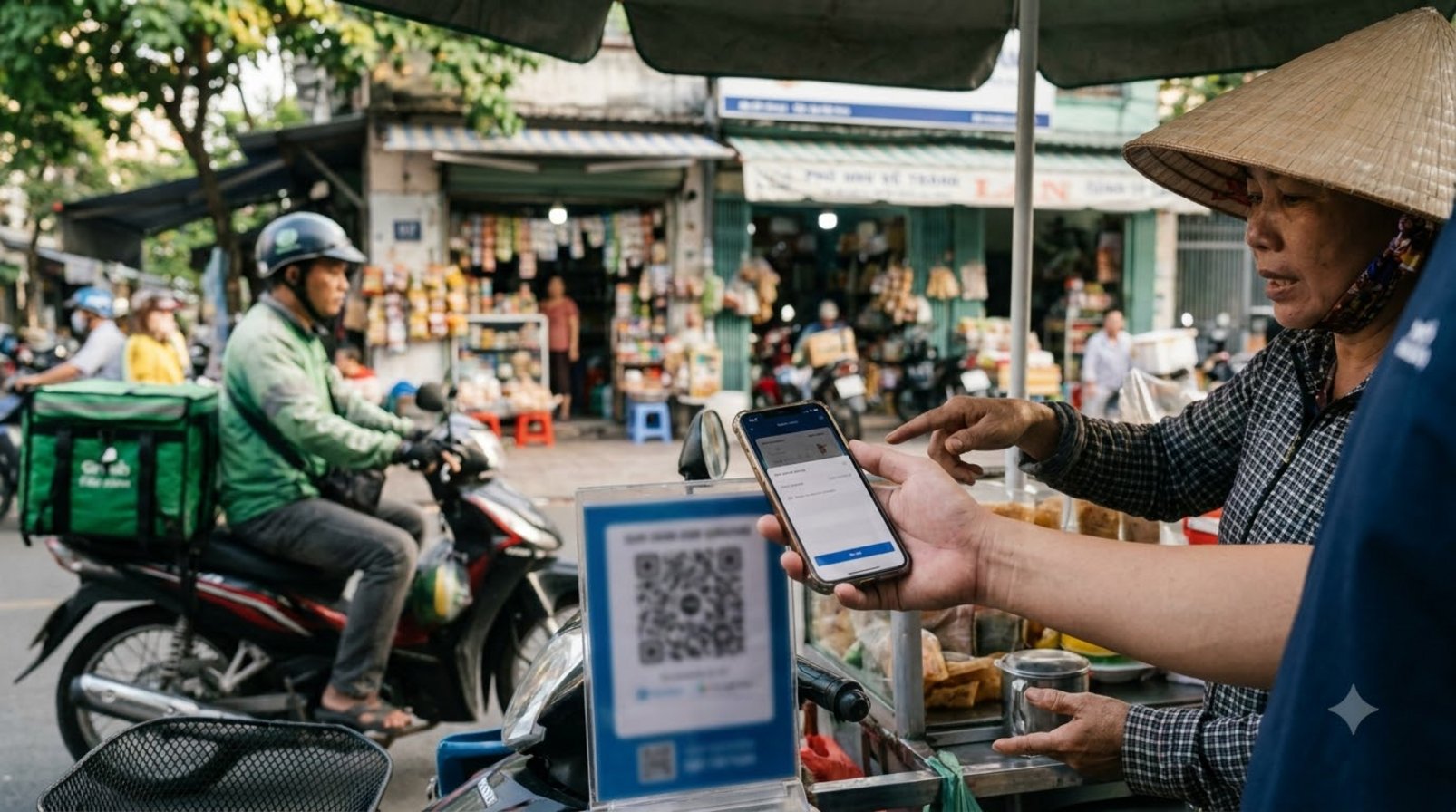
Vietnamese businesses do not necessarily need to build their own models. A more practical path is to choose a clear application layer: for example, AI for customer support, AI for purchase consultation, AI for spending analysis, AI for internal sales/marketing support, or AI that helps users complete a specific task directly inside the product. Examples from MoonPay, Google Pay and SuperCmd show that the value lies in AI doing something useful in an existing context, not in the technology claim itself.
Another point to note is trust. Discussions around Gemini show that users are increasingly sensitive to errors, hallucinations and loss of context. Therefore, in Vietnam, where brand trust and after-sales support remain very important, businesses should prioritize output quality control, transparency about AI limitations, and always have a mechanism to hand off to a human when needed.
Pick one workflow AI can shorten in the next 30 days
- Identify one specific workflow where AI can reduce time or increase conversion within the next 30 days.
- Design the AI experience around real usage contexts: payments, consultation, search, customer support, or internal assistance.
- Standardize output quality control principles, especially for content, financial advice, and product information.
- Train marketing and operations teams to write prompts, evaluate outputs, and work with AI as a workflow layer, not just a content-generation tool.
The AI race today is no longer a race to see who speaks better, but who integrates more deeply into real user behavior. For Vietnamese marketers, that is a signal to move from fragmented experiments to designing an experience ecosystem with AI at the center.
See more marketing analysis and guides at https://marketing365.vn.
Follow more analyses from Marketing365 to stay updated on the latest marketing trends.
Read more articles in the same category AI Developments.
References
- MoonPay PayBox via Tokens on Solana
- Google Pay turns into financial hub with Gemini-powered Ask GPay
- SuperCmd v2 launch announcement
- Anthropic Claude prompting workshop
- Agnes AI 2.5 Pro Alpha benchmark summary
- OpenAI trajectory discussion and revenue note
- Microsoft, Meta and OpenAI infrastructure comments
- Gemini reliability concerns discussion