

Contents
The AI race is moving away from the question of “which model is bigger” and toward a more practical one: who can turn AI into an ecosystem that can be deployed, automated, and trusted in operations. Recent developments from Qwen3.8-Max, toolkits for AI agent, and experiments with verification mechanisms show that the advantage no longer lies solely in reasoning power, but in the ability to bring AI into real work.
For Vietnamese marketers, this is especially noteworthy because AI is no longer just a tool for generating content or answering questions. It is moving closer to the role of a “digital colleague” that can plan, write code, research, make decisions, and connect with payment infrastructure, data, or internal processes. Those who understand this shift early will gain an advantage in cost optimization, testing speed, and personalization capabilities.
Key points
- AI is being positioned as a deployment ecosystem, not just a standalone model.
- Open weights, lower prices, and the ability to run long-duration tasks are reducing barriers to experimentation.
- Operational trust is becoming the central question as AI agents grow more autonomous.
- Vietnamese marketers need to prepare for the era of “AI at work,” not just “AI writing for us.”
Alibaba's Qwen3.8-Max targets coding and long-duration work
The most notable development is Alibaba’s announcement of Qwen3.8-Max as its new flagship model, with messaging that emphasizes coding ability, long-duration work, and multimodal task support. Multiple independent sources and voices from the AI community also say the model is very large, will soon open its weights, and is being brought into practical platforms immediately after launch. Reuters described it as Alibaba’s most powerful model to date, while Alibaba itself and the Qwen account emphasized scenarios such as autonomous coding over many days, long-horizon planning, and competitive usage costs.
At the same time, the story does not stop at the model. VeChain and VeWorldAI launched an Academy to guide users from “zero” to launching a business AI agent on AgentSuite. Bullshot is promoting Agentic AI as an infrastructure layer for creating autonomous agents on-chain. RunePool also raises the question of an “AI Agent economy,” showing that the community is viewing AI as a new economy where agents can interact with liquidity, transactions, and automation mechanisms.
At a deeper level, GenLayer has been described by some observers as a different approach: the core issue is not just AI or smart contracts, but who decides when AI disagrees. At the same time, a personal story about a user improving communication through chatting with 4o is a reminder of something very real: AI has entered daily life as a tool for changing behavior, not just a demo product.
Why the advantage is shifting toward deployment ecosystems
What Qwen3.8-Max, VeWorldAI Academy, and agent platforms like Bullshot have in common is that they all aim to make AI usable immediately within workflows. Alibaba is not only talking about the size of the model; it is talking about long-horizon work, open weights, and pricing. VeWorldAI is not only talking about AI; it is teaching users how to build a business around agents. This is a signal that competitive value is shifting toward a trio of model + tools + distribution.
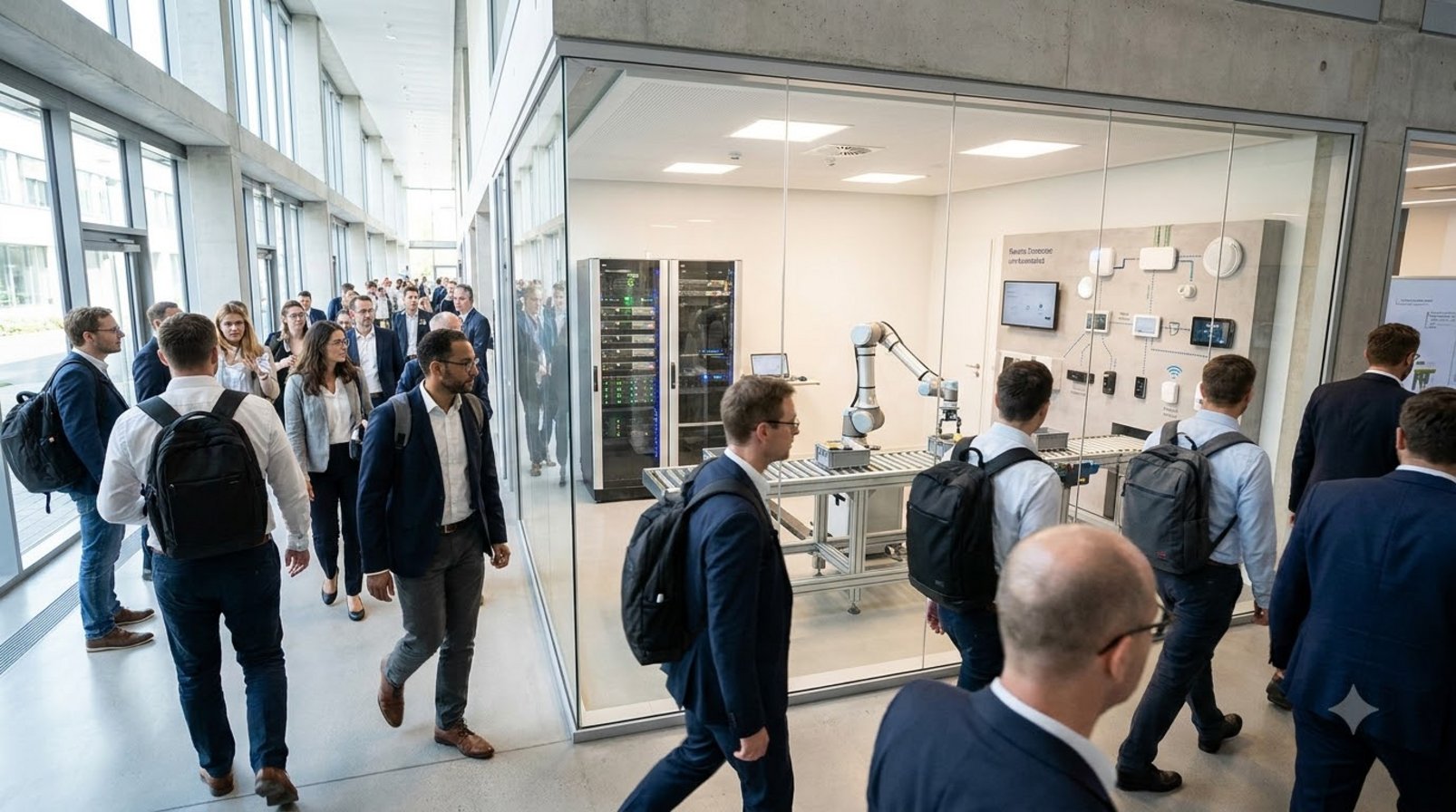
For marketers, this has major implications. As models become better and cheaper, the advantage is no longer about “whether you use AI,” but about which company integrates AI more deeply into operations: analyzing insights, generating content variations, running market research, testing messaging, and even automating steps that previously required multiple people. What the Qwen community calls “real work, real results” is in fact a new pressure on every marketing team: AI must affect business outcomes.
The upcoming release of open weights also opens another layer of competition. When powerful models become more accessible, the barrier to experimentation drops. This is especially important for small teams, startups, or agencies that want to quickly build specialized solutions instead of only buying packaged software. But in return, those who implement better, have better data, and define clearer workflows will win. The model is only the foundation; integration capability is what creates differentiation.
Price is visible, trust and control are not
On the surface, people are easily drawn into the price race. Qwen3.8-Max is mentioned with clear input and output pricing, plus the advantage of open weights coming soon. Some comments compare it with competitors on benchmarks, highlighting the pressure to deliver “more for less.” DeepSeek, meanwhile, is praised by the community in the opposite direction: an open model for everyday users that can even run on consumer devices, sharply reducing the cost of access.

But the real cost of AI in a work environment is not limited to the API bill. When agents begin to carry out long-duration tasks, write code on their own, make decisions, or interact with wallets and smart contracts, the big question shifts to control: who is responsible when AI goes off track, uses the wrong data, or acts outside the intended context. The discussions around GenLayer and “Optimistic Democracy” reflect a very real need in the agent era: mechanisms for consensus and verification are necessary; confidence in the model alone is not enough.
This is exactly the point marketers often overlook. More powerful AI does not automatically mean safer AI. When a brand uses AI to respond to customers, generate content, or trigger automated workflows, the risks around tone, context errors, compliance drift, and reputational impact rise very quickly. Therefore, investment in AI should not be understood as buying more output tools, but as building an output control system: checklists, human review, layered access rights, and emergency stop rules.
Read more: ChatGPT Work, Long-Task Benchmarks, and the AI Trust Question for Marketers
How AI ecosystems will affect the Vietnamese market
For the Vietnamese market, this wave has two direct effects. First, experimentation costs will continue to fall thanks to stronger models, open weights, and increasingly accessible agent platforms. That creates opportunities for small and medium-sized businesses, which often lack large data or engineering teams, to start with narrow but high-value use cases: customer insight synthesis, sales assistants, lead classification, internal customer support, or channel-specific content variations.
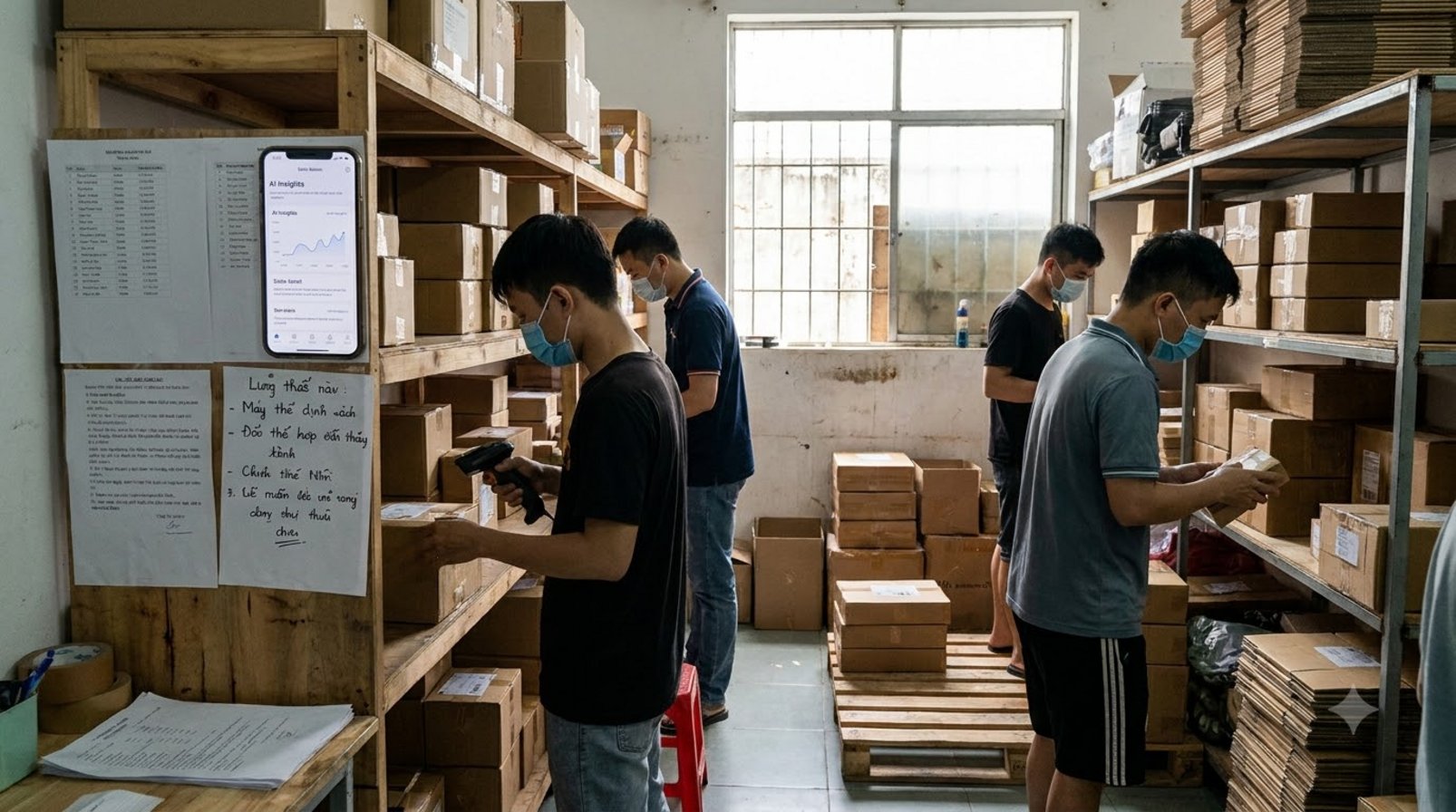
Second, the competitive gap will lie in process design capability, not just in “good prompts.” Vietnamese businesses often have the advantage of flexibility and fast decision-making, but they are weak in data standardization and measurement. In the AI agent era, that is a major bottleneck. If input data is messy, there is no operating standard, and no one is ultimately accountable, then the stronger the model, the easier it is to create chaos that only appears efficient.
Therefore, Vietnamese marketers should view AI as an operational layer for content, data, and customer experience. Those who build controlled workflows with AI early will not only save costs, but also accelerate testing and improve decision quality.
One or two repetitive processes are enough to judge an agent

- Choose 1–2 highly repetitive marketing processes to test AI agents, instead of rolling them out broadly.
- Set up a review framework for outputs: tone, legal issues, sensitive data, and human approval steps.
- Evaluate AI by business impact, not just by how “good” the generated content sounds.
- Track open-weight models and agent platforms to take advantage when costs and customization improve.
In short, the AI race is shifting from “who has the biggest model” to “who can build the most trustworthy and useful ecosystem.” For marketers, this is the time to learn how to use AI as an operational force, not just as a tool for writing faster.
See more marketing analysis and guides at https://marketing365.vn.
Follow more analysis from Marketing365 to stay updated on the latest marketing trends.
Read more articles in the same category AI Developments.
This article focuses on the AI ecosystem race with a perspective for the Vietnamese market.
References
- The @VeWorldAI Academy is here, ready to move you from zero to launching your first AI agent business running…
- Alibaba released Qwen3.8-Max, a new 2.4T parameters model that is capable of running 10+ days of autonomous…
- Alibaba unveils its most capable AI model to date, not far behind Moonshot’s in size
- Introducing Qwen3.8-Max, the largest and most capable flagship model to date!
- Meet Qwen3.8-Max: A New Bar for Coding and Cowork.
- Agentic AI is Now Live on Bullshot @BNBCHAIN
- When people hear about GenLayer, they usually focus on the AI. I think the real product is something else.
- Deepseek-V4-Flash: Released a frontier-level small model as Open Weight



