Contents
- AI and TikTok trends: why viral speed is no longer enough to create an edge
- AI in short-form content: what marketing teams must check before posting
- Copyright and transparency risks when brands ride AI trends
- AI in Vietnam: the advantage will go to the team with verification processes before scaling
- What AI can do now so Vietnamese marketers do not pay for speed over verification
- Reference sources
AI is making content creation, transformation, and distribution faster than ever. But the easier it becomes, the more the challenge for Vietnamese marketers is no longer “whether to use it,” but who is responsible for provenance, accuracy, and verification when content passes through multiple layers of tools.
Looking at developments on TikTok and the way brands and celebrities join short-lived trends, one common point stands out: the speed of attention always comes with risks around context and authenticity. This is where AI is not just a production tool, but also a test of marketing operations discipline.
Key points
- AI helps content move faster, but it does not solve questions of provenance and verification on its own.
- Short-lived trends on TikTok show that brands can benefit from viral speed, but they can also easily lose control of context.
- When content is created or edited with AI, marketers need a verification process before publishing and before expanding distribution.
- In Vietnam, the advantage will favor the team that ties AI to clear accountability rather than using it only to increase output.
AI and TikTok trends: why viral speed is no longer enough to create an edge
Examples from PureWow about Reese Witherspoon joining a TikTok trend and from The Tab about how to do a rapidly spreading eye trend show something very familiar to marketing: what first draws viewers in is usually not depth, but visual appeal and the ability to imitate quickly. PureWow noted how a celebrity joined the trend to amplify its appeal, while The Tab went straight into the how-to, turning the trend into something anyone could recreate. Both show that short-form content thrives on the loop of “see it, want to try it.”
For marketers, AI sits right in the middle of that loop. It helps create variations quickly, test multiple storytelling angles, and push content to market at a lower cost than fully manual human work. But the faster it moves, the greater the risk: content edited with AI can drift away from its original context, or make viewers misunderstand how authentic it really is. Once content has been optimized for reach, the rest is no longer a creative question — it becomes a control question.
AI in short-form content: what marketing teams must check before posting
AI tools do more than help write or generate ideas. They also shape how marketers condense messages, change tone, build variations, and distribute different versions to different audiences. That makes pre-publication review more important, because a small wording error can travel very far in a short-video environment.
Content variations: AI makes them faster, but it also distorts brand voice faster
PureWow shows that a trend can be amplified simply through a familiar face and a platform-appropriate interpretation. The Tab shows that the same trend can be turned into a step-by-step guide so everyone can follow it. When AI is added to this process, marketers gain the advantage of faster variation creation, but they also have to accept a very real risk: mass-generated versions can lose a shared voice, come across as shallow, or be pushed into a context that no longer fits the brand.
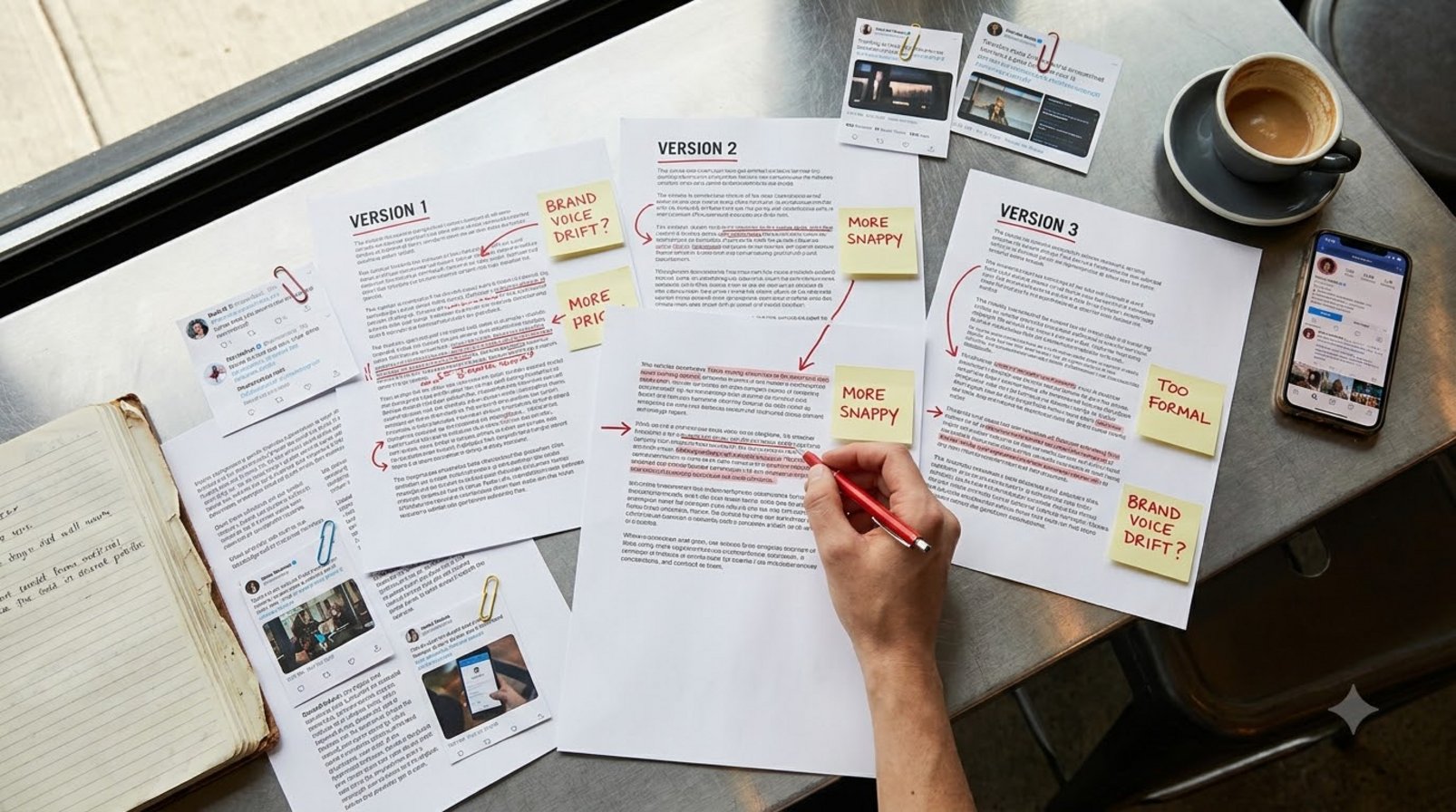
The goal is not to abandon AI, but to tightly define what is allowed to be automated. Prompts need clear limits. Banned wording needs to be explicit. Approvers need the authority to stop the process. Otherwise, AI will turn one concise message into many distorted ones.
Source verification: who said it matters less than whether it can be traced back
In the PureWow example, the lesson is that a trend only truly has marketing value when it is placed in the right context for the audience. With The Tab, the value lies in the ability to replicate behavior. Both place the same requirement on AI: every output must be traceable to where it came from, how it was edited, and who signed off on the final version.

This is where many marketing teams in Vietnam are still weak. They care more about output than provenance, meaning the origin and path of the content. Once AI enters the process, a lack of provenance becomes an operational risk: it is harder to explain when disputes arise, harder to fix when errors appear, and harder to prove that the brand did not intentionally publish misleading information.
Copyright and transparency risks when brands ride AI trends
Not every trend is safe for a brand to join. DesignRush describes how Burger King Belgium tapped into a TikTok trend related to “tanmaxxing” for outdoor signage and messaging. The approach is highly appealing creatively because it connects to a cultural signal that is already being discussed, but it also reminds marketers that the closer they follow a trend, the more they need to know where their own boundaries end and where the original creative community’s boundaries begin.
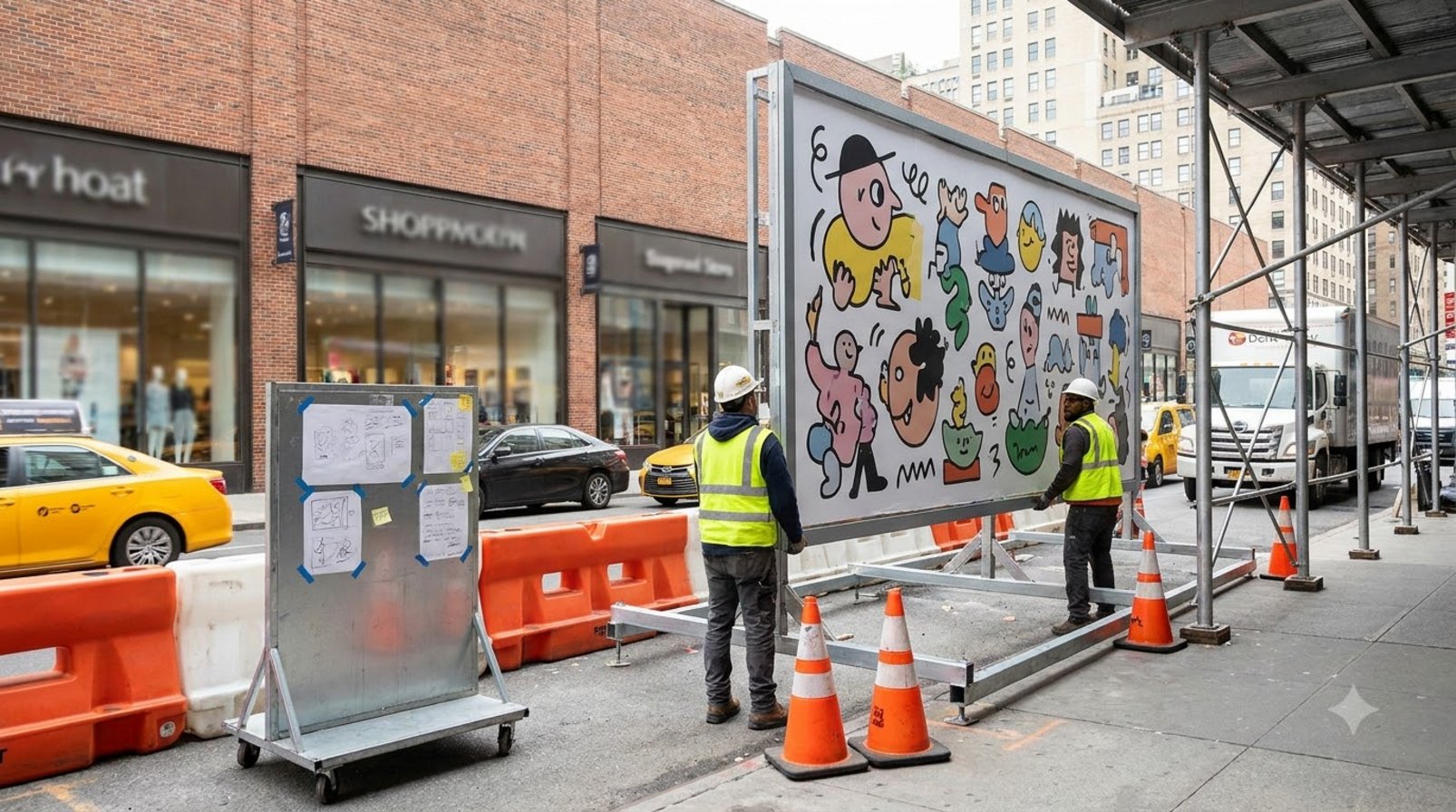
When AI is used to turn a trend into dozens of versions, the copyright and transparency issue becomes even harder. Machine-generated content is not automatically legal, and something that merely “looks new” is not enough to make it safe. Brands need to know what data, images, audio, or wording they are using, and whether permission has been obtained if those assets belong to someone else.
This is where AI forces marketing to mature. Instead of only chasing reach, teams must also answer: could this content be mistaken for copying, is there any source that needs to be credited, and if a dispute arises, what records prove the process was handled correctly?
AI in Vietnam: the advantage will go to the team with verification processes before scaling
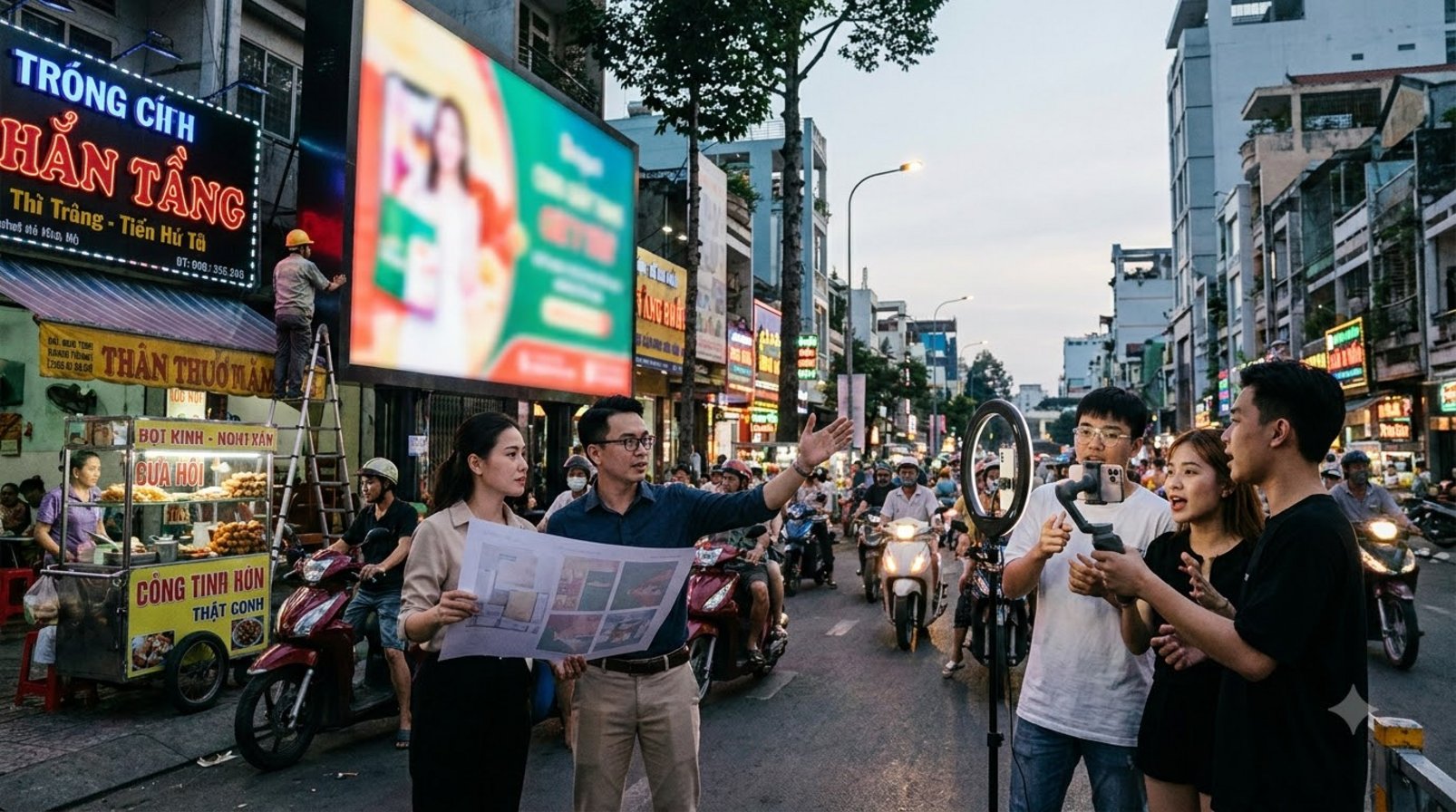
In Vietnam, the habit of moving fast is often stronger than the habit of documenting process. But once AI starts entering content creation, the lack of process becomes a weakness more clearly than ever. Vietnamese brands are already used to social content, KOLs, short video, and short-lived trends. That makes AI very easy to see as a tool for increasing output. That view is only half right.
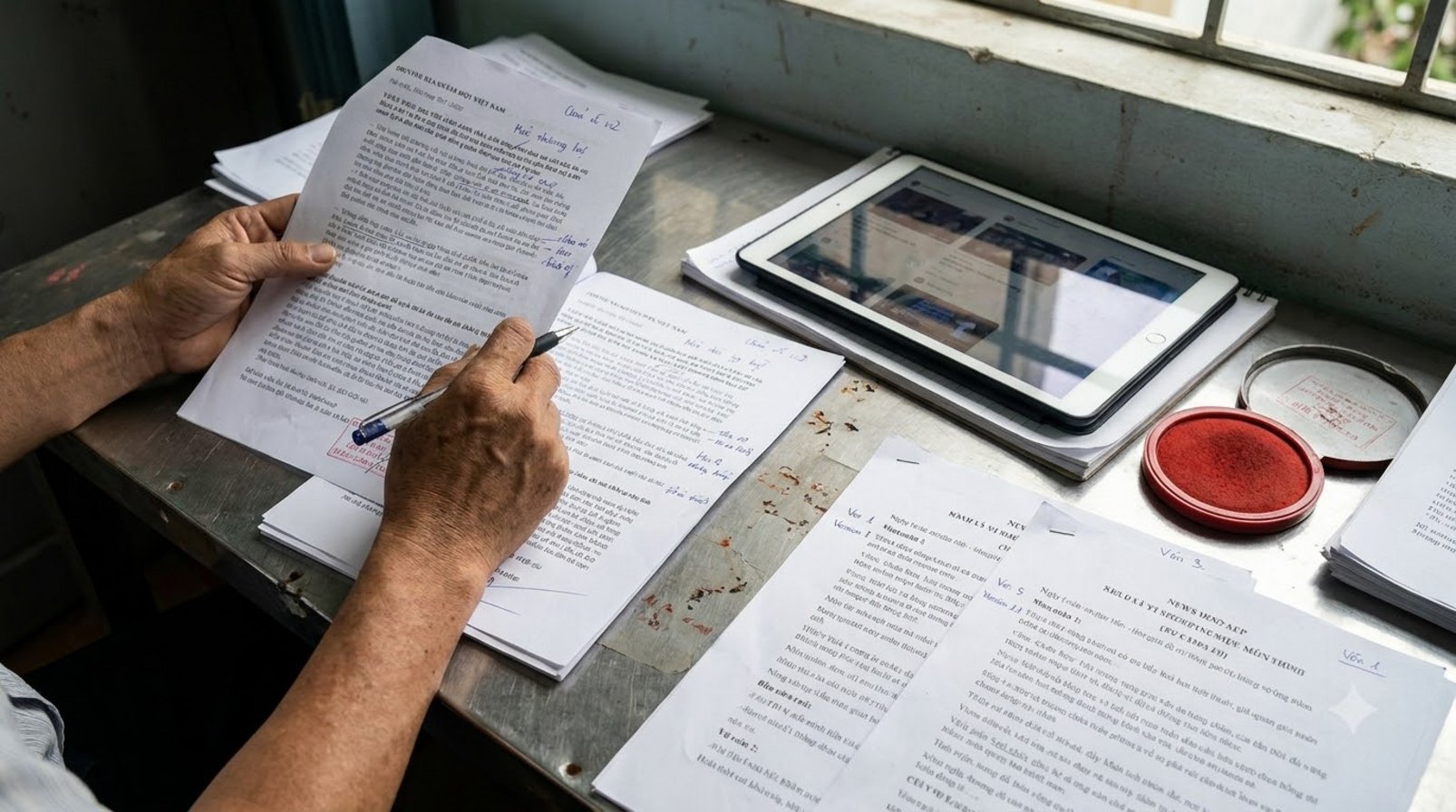
The other half is responsibility. If AI-generated content has no review step, marketers face three risks at once: inaccurate information, a distorted brand voice, and difficulty explaining themselves when questioned. The brands that do well in Vietnam are usually not the ones using AI the most, but the ones that define input standards, specify who approves, and keep enough traceability to go back and check when needed.
Given that marketing budgets are always closely scrutinized, AI in Vietnam will not win by promising to be “faster,” but by proving it is “safer at scale.” That is the difference between a content tool and an operating system that can take responsibility.
What AI can do now so Vietnamese marketers do not pay for speed over verification
- Set up a pre-publication verification checklist for every piece of content involving AI, even if it only edits a headline or shortens a caption.
- Clearly record the source of the data, images, audio, and prompts used so you can explain them when needed.
- Separate approval rights by risk level: trend content, sales content, and brand content should not follow the same process.
- Only scale after a small test cycle has run long enough to identify where AI is likely to distort the message.
AI does not make marketing easier. It only shifts the difficulty from production to control. Whoever solves that problem sooner will gain a real advantage, not just one that shows up in the numbers.
Reference sources used: PureWow, The Tab, DesignRush.
See more marketing analysis and how-to content at https://marketing365.vn.
Follow more analysis from Marketing365 to stay updated on the latest marketing trends.
Read more articles in the Digital Trends category.
Reference sources
- PureWow — Reese Witherspoon Joined This Viral TikTok Trend and Her Take Is So Inspiring
- The Tab — Here’s exactly how to do the viral TikTok eye trend that’s everywhere right now
- DesignRush — Burger King Basks in TikTok’s ‘Tanmaxxing’ With Belgian Beach Ads