Contents
- Social media has become a multi-platform environment, so the real question is no longer “should we do it?”
- What is changing in social media — and why marketing teams must work differently
- In Vietnam, social media will win when marketing teams build verification processes instead of just pushing volume
- Before increasing social media budget, do these 4 things to avoid burning effort on gut feeling
- Reference sources
Social media is no longer a place where you simply post regularly and wait for views. As users operate across multiple platforms at once and proving effectiveness becomes harder, Vietnamese marketers must move from intuition to verification, from reach to real impact on behavior and business results.
Today’s question is not whether social media is big or not. The issue is whether businesses are using it as a communications channel, or as a system that needs measurement, verification, and a clear division of roles between content, distribution, and measurement.
Key points
- Social media users operate across multiple platforms each month, so the “one channel is enough” mindset no longer fits.
- Measuring social media performance is harder because signals are fragmented, while trust in AI-assisted content has become a new variable.
- Marketers need to change their process: check resources, measurement standards, and team roles before increasing budget.
- In Vietnam, the advantage will belong to teams that can prove social media creates value, not just engagement.
Social media has become a multi-platform environment, so the real question is no longer “should we do it?”
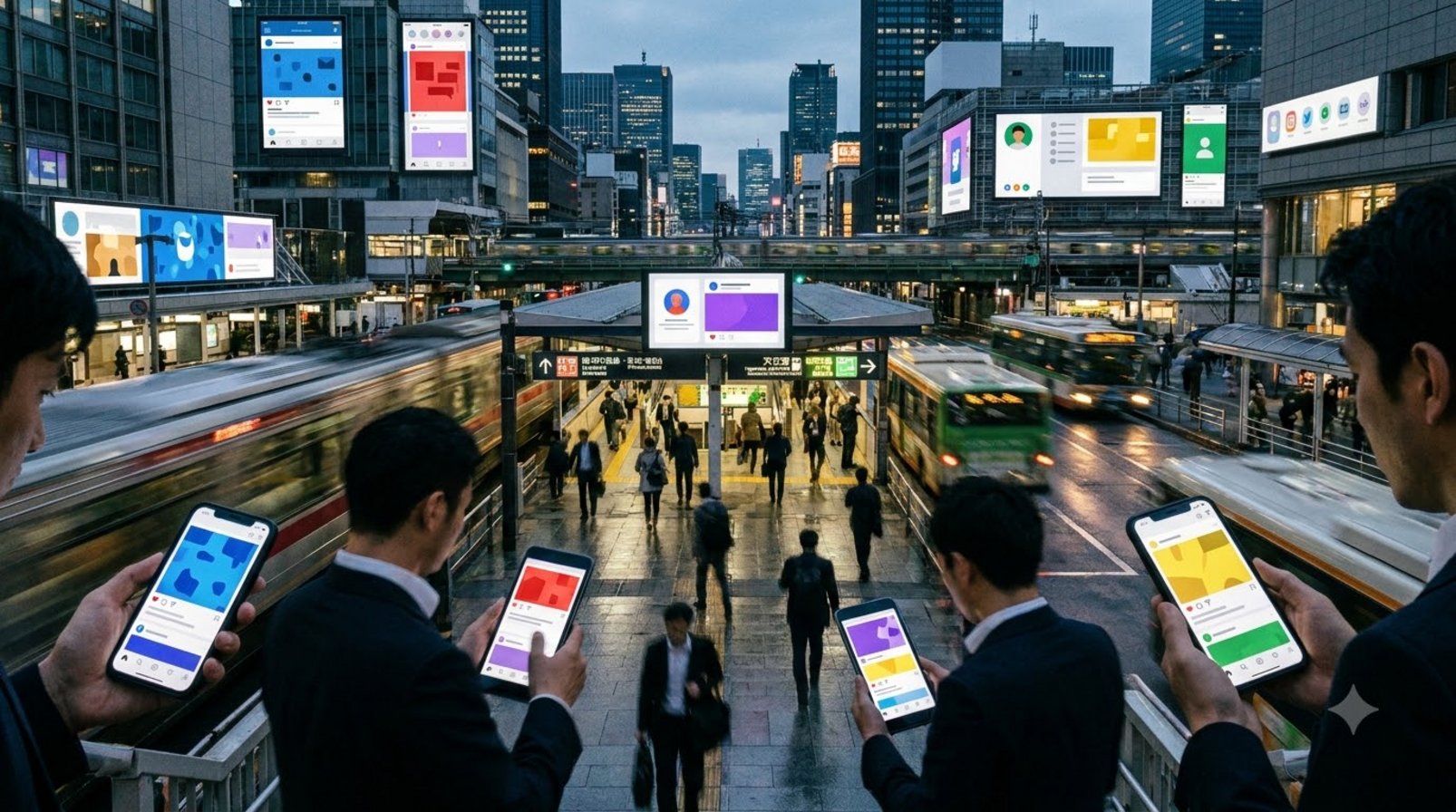
Forbes Advisor says there are 5.79 billion social media users worldwide, and a typical user is active on an average of 6.5 platforms each month. This shows that social media no longer works as a single “destination,” but as a network of content-consumption habits spread across channels. Source: Forbes.
This perspective aligns with Coursera’s view of social media marketing as part of a broader digital marketing skill set, alongside SEO, email marketing, content marketing, and paid advertising. In other words, social media cannot be evaluated separately from the wider marketing system. Source: Coursera.
The key point here is this: when users move across multiple platforms, businesses no longer win by “being very strong in one place,” but by understanding their fragmented journey. That pulls social media out of the role of a standalone posting channel and pushes it into the role of customer-relationship infrastructure.
What is changing in social media — and why marketing teams must work differently
The data changing is not just the number of users. It is also changing how marketing teams build systems, divide roles, and verify results. Forbes shows that users are active on multiple platforms each month; Coursera places social media in the same capability set as SEO, email, and content. Together, these two sources point to one thing: if social media is handled as a separate task for the content team, its results will be hard to connect to business goals.
Users move across multiple platforms: the posting calendar is no longer the center
The fact that an average user touches 6.5 platforms each month makes per-channel posting schedules a secondary problem. What matters more is designing messages that can travel across multiple touchpoints while still preserving measurement goals. Forbes provides evidence of that fragmentation, while Coursera emphasizes that social media is only one piece of the broader digital marketing whole. Source: Forbes; Coursera.

Read more: Why Is Social Media Entering a Quality-First Era?
This forces marketers to rethink how work is divided. A team that only focuses on posting content will struggle to keep up with users moving between platforms. There needs to be someone responsible for messaging, someone tracking distribution, and someone reading the data to connect social to conversion.
Social media is part of digital marketing: it cannot be measured by each channel’s own gut feeling
Coursera describes digital marketing as a combination of multiple branches such as SEO, email, content, display ads, and social media marketing. When social media sits inside that system, measurement must change too: not just asking how many likes a post got, but whether it helped generate leads, nurture audiences, or reduce customer-acquisition costs at a specific stage. Source: Coursera; Forbes.

For businesses, this is where mistakes happen most easily. If each channel reports in its own way, social media gets stuck with attractive numbers that are hard to prove as value. What marketing teams need is a shared set of metrics so content, media, and performance all move in the same direction.
Trust and verification: what social media must carry when users are everywhere
When users are not staying on one platform, they also do not consume content in just one way. They compare, cross-check, and switch channels constantly. Forbes’ multi-platform context combined with Coursera’s digital marketing framework shows that social media must not only be “seen,” but also “trusted” and “used.” Source: Forbes; Coursera.
This is why marketing teams should reduce their dependence on purely intuitive content. A post may drive engagement, but if it is not tied to a clear journey, it only creates noise. Social media now needs to be designed as a place that creates proof: proof of capability, consistency, and real value.
In Vietnam, social media will win when marketing teams build verification processes instead of just pushing volume
In Vietnam, social media is often oversimplified: if there is a channel, a post, and engagement, that is enough. But with users spread across multiple platforms and digital marketing becoming increasingly interconnected, the advantage no longer belongs to the team that posts more. The advantage belongs to the team that can connect social media to sales, customer service, lead generation, and retention goals.

Read more: Why UGC and TikTok Are Driving Social Media Marketing Into the Performance Era
What is notable is that many Vietnamese businesses still assign social media to a small team that does everything: writing, design, inbox replies, ads, and reporting. This approach can create speed, but it is hard to verify. Without a clear process, social media gets pushed into a state of “being active” rather than “being effective.”
For Vietnamese marketers, the practical lesson is to treat social media as a system that needs standardization. Content must have a role, metrics must be consistent, and the team must know what is creative work, what is distribution, and what is conversion optimization.
Before increasing social media budget, do these 4 things to avoid burning effort on gut feeling
- Lock in a shared set of metrics so social media is not reported through scattered attractive numbers.
- Clearly divide roles between content, media, and measurement; do not let one person carry the entire process.
- Design messaging for a multi-platform journey instead of optimizing for just one feed.
- Attach each social media campaign to a specific business goal before expanding the budget.
Social media does not lack opportunity. What is lacking is the way work is organized to turn that opportunity into verifiable results. When users move across multiple platforms, marketers must also move through more layers of measurement and responsibility.
See more marketing analysis and how-to guides at https://marketing365.vn.
Follow more analysis from Marketing365 to stay updated on the latest marketing trends.
Read more articles in the Digital Trends category.
Reference sources
- Forbes — Top Social Media Statistics and Trends of 2026
- Coursera — 8 Industry-Recognized Digital Marketing Certificates + How to Get One