Contents
- Why a product description can determine whether a buyer clicks or scrolls past
- Before writing, understand who is buying and what they want
- Turn features into benefits so customers see why it is worth buying
- What product description structure is easiest to read and convert on Shopee and TikTok Shop?
- Optimize wording, length, and formatting so the description does not get lost on the page
- Mistakes that make a description full of words but unable to sell
- When should you add customer reviews, proof, and notes to increase trust?
- Examples of benefit-led best-selling product descriptions for different categories
- How to review the description before publishing
Shop owners often think a product description only needs to be informative, but on Shopee or TikTok Shop, it has to help customers understand quickly, trust quickly, and decide quickly. How to write best-selling product descriptions is therefore not about fancy wording, but about three very specific things: understanding what the buyer is worried about, turning features into clear benefits, and presenting information concisely and clearly so shoppers can grasp it at a glance. This content goes straight into how online sales teams can do it: write more compelling product descriptions, make them easier to buy from, and align them with how customers read on e-commerce platforms.
Why a product description can determine whether a buyer clicks or scrolls past
A product description determines whether a buyer clicks or scrolls past because it answers three questions very quickly: does this product fit the need, is it trustworthy, and is there enough reason to buy now? Great images create attention, but a persuasive product description reduces uncertainty and carries the customer through the final comparison step.
When do real buyers actually read the description?
Customers open the description when they do not fully understand the use case, are comparing two similar models, or need to confirm size, material, and how to use it before adding to cart. On Shopee or TikTok Shop, they usually scan very quickly, so the first sentence of a detailed product description must address the main concern directly, such as “suitable for sensitive skin” or “easy-to-choose size based on weight.”

Signs your description is making customers leave the page
A weak description often has a lot of words but no main point, only lists features, lacks decision-making information, and is hard to read on mobile. If customers still have to scroll up and down to find material, size, warranty, or usage instructions, that concise product description is driving them away. A compelling product description must show customers right away what they need to feel confident enough to buy.
Before writing, understand who is buying and what they want
To write best-selling product descriptions, you first need to know who is buying and what they need from the purchase decision. A strong description always follows the main customer group, purchase purpose, product familiarity, and pain points to solve, instead of trying to speak to everyone at once.
To gather insights quickly, read four sources before writing: chats/inbox messages, reviews, repeated questions, and return feedback. If customers often ask “Will the size fit?”, the problem is not the wording but missing information. If comments mention “smell,” “durability,” or “packaging,” those are signals to frame the product description around benefits and reduce perceived risk.
Which customer persona should be prioritized when writing the description?
In Shopee product content, first-time buyers need a clear opening that explains the use and how to use it. Customers who already know the product care more about differentiation, specifications, and why they should choose you. Bargain hunters want to see a bundle of benefits, while safety- or quality-focused buyers need information about materials, origin, certifications, or usage notes. If it is a gift, the description should emphasize appearance, suitability, and the gift-receiving experience.
Do not cram every group into one concise product description. Choose one primary buyer group and, if needed, one secondary group, then prioritize them in the opening paragraph. For example, the same water bottle will need different wording for a child, a gym-goer, and someone buying a gift.
What product information do you need before writing?
Before writing a detailed product description, you need enough background data to avoid inventing uses or specifications. At minimum, you should have: a clear product name, main function, variants, material, size/specs, usage instructions, notes, and related conditions such as warranty or returns if applicable.

Checklist to confirm before writing:
- What is the exact product name?
- What problem does the product solve?
- How many variants, colors, or sizes are there?
- Which material or specifications must be stated?
- What are the usage instructions and safety notes?
- Are there any policies or conditions that need to be stated clearly?
If any of these items are missing, a standard SEO product description can easily become inaccurate or confuse customers.
Turn features into benefits so customers see why it is worth buying
Benefits are what make customers decide to buy; features are only the facts that prove them. When writing best-selling product descriptions, you need to move from characteristics to effects, then connect them to real usage situations and the results customers can feel.
How to turn features into benefits without overclaiming
A persuasive product description must state what the product can actually do, then translate that into a concrete benefit for the buyer. For example, “95% cotton fabric” is a feature; the benefit is “more breathable for all-day wear at work.” Likewise, “two-way zipper” is not enough to sell, but saying “opens quickly when you need to grab something while on the move” makes the value immediately clear.

A safe writing approach is to follow three questions: what does it do, in what situation is it used, and what inconvenience does it reduce? For compelling product descriptions, do not add absolute promises like “the softest,” “lasts forever,” or “fits everyone.” Keep the description verifiable, because the clearer the product description is for customers, the easier it is to build trust.
Quick checklist:
- Feature: material, structure, size, mechanism.
- Effect: more breathable, more compact, easier to use, fewer errors.
- Situation: work, daily carry, packing, storage.
- Perceived result: saves time, less cumbersome, easier to decide.
A concise formula: customers see it fast, understand it fast, decide fast
Start with the main benefit, then add specifications and notes. This is how to write concise product descriptions that still persuade, especially on category pages or in standard product descriptions for e-commerce platforms.
An easy formula to apply is: main benefit + one proving feature + one usage situation + one safety note. For example: “This bag helps you carry personal items neatly to work, thanks to its clearly divided compartments and sturdy strap. It is suitable for everyday use, but if you need to carry a large laptop, please double-check the size.” This keeps the product description detailed without overwhelming the reader.
When you need a product description that is easy to buy from, prioritize a very clear first sentence, a very specific second sentence, and only keep the information that helps customers answer for themselves: does it fit my needs, is there any risk, and is it worth the money?
What product description structure is easiest to read and convert on Shopee and TikTok Shop?
A product description that is easy to read and convert on Shopee and TikTok Shop should follow this order: benefits first, decision-making information in the middle, and notes at the end. How to write best-selling product descriptions works best when read the way customers scroll on their phones: they need to see immediately that the product fits them, then consider the specs, usage, and purchase conditions.
What should the opening of the description say to keep readers engaged?
The opening of a compelling product description needs to lock in one clear reason to buy. Write one sentence stating the main benefit, then add one or two sentences identifying who it is suitable for, such as work, school, gifting, or everyday use. If the product has multiple features, turn them into short bullets so readers can scan quickly on mobile.
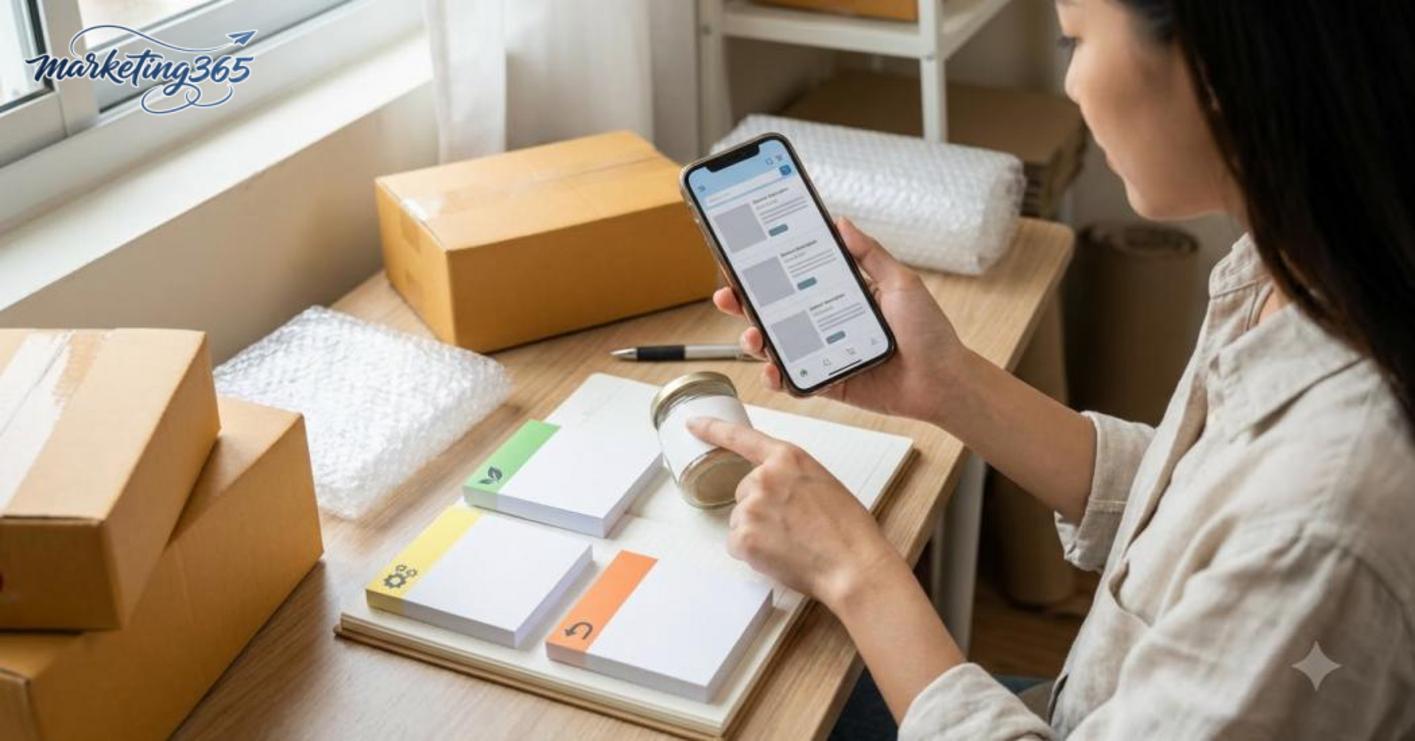
Good opening checklist:
- State the main benefit in one sentence.
- Address the right customer group.
- Avoid greetings, slogans, or rambling brand introductions.
Read more: How to Use AI to Write Effective YouTube Video Descriptions
A standard e-commerce product description usually opens with the product’s value, not with a story about the shop. When customers immediately think, “I need this,” they stay to read more.
What information should the middle of the description include to help customers decide?
The middle of a detailed product description must follow the logic of buying, not the shop’s internal logic. Include what customers need to decide: function, differentiators, size or specifications, material, quantity included, usage instructions, and compatibility notes if any.
The recommended order is:
- Function or usage result.
- What makes it different from common alternatives.
- Specifications, dimensions, material.
- How to use or install it.
- Quantity, set contents, included accessories.
For example, in Shopee product content for electronics accessories, the most important details are usually size, connection standard, and compatibility; the polished introduction should come later. Writing this way makes the product description easier for customers to read and reduces repeated questions in chat.
Should the description end with notes, warranty, or commitments?
The final part of a persuasive product description should be used to remove the last doubts, not to cram in more information. Add return conditions, care instructions, compatibility limits, and support contact guidance if these items truly affect the purchase decision.
Concise and effective closing approach:
- State usage or care notes.
- Clearly mention cases where it is not suitable.
- Summarize return conditions if applicable.
- Remind customers to check the specifications before ordering.
A concise product description with enough conditions often converts better than a long but diluted one. If the product has strong customer reviews, only lightly reference them with one confirming sentence, without exaggerating the promise. What matters is that the reader makes the decision in the final few seconds with a clear sense of purchase and low risk.
Optimize wording, length, and formatting so the description does not get lost on the page
The wording in the description must be short, easy to scan, and rhythmical so buyers can read it immediately on mobile. The goal of how to write best-selling product descriptions is to keep important information at the top, separate ideas clearly, and avoid dense blocks of text that make the page feel endless.
Should you use bullet lists or paragraphs?
Bullet lists are best when you need to list specifications, benefits, sizes, materials, or differences between versions. Paragraphs are better when you need to briefly describe the usage context, such as buying for work, school, or everyday use.
A concise product description is often more effective if it opens with a two-sentence paragraph, then moves to bullets for the 3–5 main points. This makes the product description easier to buy from because even quick mobile readers can still catch the key highlights.
Formatting mistakes that make descriptions hard to read on mobile
The most common mistake is cramming too many ideas into one paragraph, adding too many emojis or decorative characters, and pushing the strongest points to the end. On a phone screen, buyers usually scan only the first three seconds, so the opening must be as clear as a persuasive product description.
If you write as one long block of text, readers will skip it before reaching the main benefit. Good product description writing means breaking ideas into separate lines, with each paragraph carrying only one message.

Read more: How to Sell on TikTok Shop for Beginners
Description formatting checklist before publishing
Before publishing, quickly review these five steps to make the product description suitable for e-commerce platforms:
- The title states the exact product name and main variant.
- The first three lines already contain a benefit or differentiator.
- Each paragraph covers only one idea.
- The bullets include enough specifications or key benefits.
- There are no extra characters, overly long sentences, or important information buried at the end.
If a quick scan still makes the product understandable, shows who it is for, and explains why it should be chosen, the description has reached a usable level of detail.
Mistakes that make a description full of words but unable to sell
A product description can be long, grammatically correct, and still fail to convert if it is factually wrong, lacks benefits, or misses the buyer’s expectations. With best-selling product description writing, the biggest mistake is usually saying a lot without helping the reader decide faster.
Writing too generically because it is applied to every product
Product descriptions for customers need to speak to the actual usage context, not use sentences that could apply to any item. When a reader can replace the product name with any other and it still sounds right, the buyer will not see a reason to choose it.
The fix is straightforward: add three layers of information—who uses it, when they use it, and what problem it solves. For example, instead of only writing “convenient design, easy to use,” write in a situation-based way such as “suitable for office workers who need a tidy desk” or “works well for carrying to school or work.” This is the foundation of a compelling product description.
Listing features without explaining why customers should care
A feature list creates a detailed product description, but not necessarily a persuasive one. Buyers do not only ask “what does it have?” They ask “how does it help me more than the alternatives?”
To move from “what it has” to “what it helps,” connect each feature to a specific benefit. For example, a large battery is not just a specification; it reduces the number of times you need to charge during the day. A stain-resistant material is not just a technical plus; it saves cleaning time and keeps the product looking new longer. This is benefit-led product description writing.
Keyword stuffing makes the copy unnatural and hurts conversions
A standard SEO product description only works when keywords appear naturally in readable context. When a phrase is repeated too often, the sentence becomes forced, and buyers can tell it was written for search engines rather than for them.

A clear sign is a paragraph repeating the same phrase two or three times, every sentence trying to force in “how to write best-selling product descriptions,” or prioritizing keywords over the shopping experience. The fix is to keep the main keyword in the title, the opening, and one natural place in the body; the rest can use variations like Shopee product content or easy-to-buy product descriptions so the text flows more smoothly.
When should you add customer reviews, proof, and notes to increase trust?
Adding customer reviews, proof, and the right notes at the right time can help best-selling product descriptions reduce hesitation at checkout, especially for high-value items, products used directly on the body, or new products that are not widely known. But this section should only appear when you have real data, because a product description with customer reviews that are quoted out of context can easily lose credibility.
How should customer feedback be included naturally in the description?
Read more: How to Write SEO-Friendly Content for a Website
Only choose feedback that speaks to one main strength of the product, then place it after the benefit statement instead of turning it into an ad. A short sentence with a real usage situation feels much more natural than a long praise paragraph.

- Choose reviews with specific content: “comfortable all day,” “correct color delivered,” “easy to assemble in 5 minutes.”
- Prefer comments tied to experience, not vague praise like “very good.”
- If you have many reviews, use only 1–2 that match the main strength.
- Keep the original context; do not cut and paste in a way that changes the meaning.
For example, a product description for customers could say: “Many users report that the product is easy to use right from the first time, making it suitable for everyday needs.” This keeps the product description concise while maintaining a neutral tone.
What kinds of proof help customers trust more without overclaiming?
Good proof is something customers can verify themselves, such as real photos, clear specifications, transparent instructions, and notes about usage limits. This is the foundation of a detailed product description and a persuasive product description.
Should include:
- Real photos or close-up shots of the surface, size, and labels.
- Main specifications: material, capacity, dimensions, usage.
- Safety notes or suitability conditions before ordering.
- Short, step-by-step usage instructions.
Should not include:
- Vague proof such as “trusted by many users.”
- Overstated claims such as “suitable for every case.”
- Measurements, certifications, or feedback without verified sources.
When writing a standard e-commerce product description, prioritize real data first and praise second. This makes how to write best-selling product descriptions safer and more likely to build lasting trust.
Examples of benefit-led best-selling product descriptions for different categories
Benefit-led best-selling product descriptions need to shift focus depending on the category. For fashion, readers need to picture the material, fit, and wearing experience; for household goods, cosmetics, or tech products, they prioritize function, convenience, safety, and compatibility conditions. When you write to the key decision point of each category, the product description becomes more compelling, more concise, and easier to buy from.
Example for fashion or accessories
Product descriptions for fashion and accessories must help customers imagine how the item will look on them. How to write best-selling product descriptions usually centers on material, fit, wearing or carrying context, comfort, and size information.
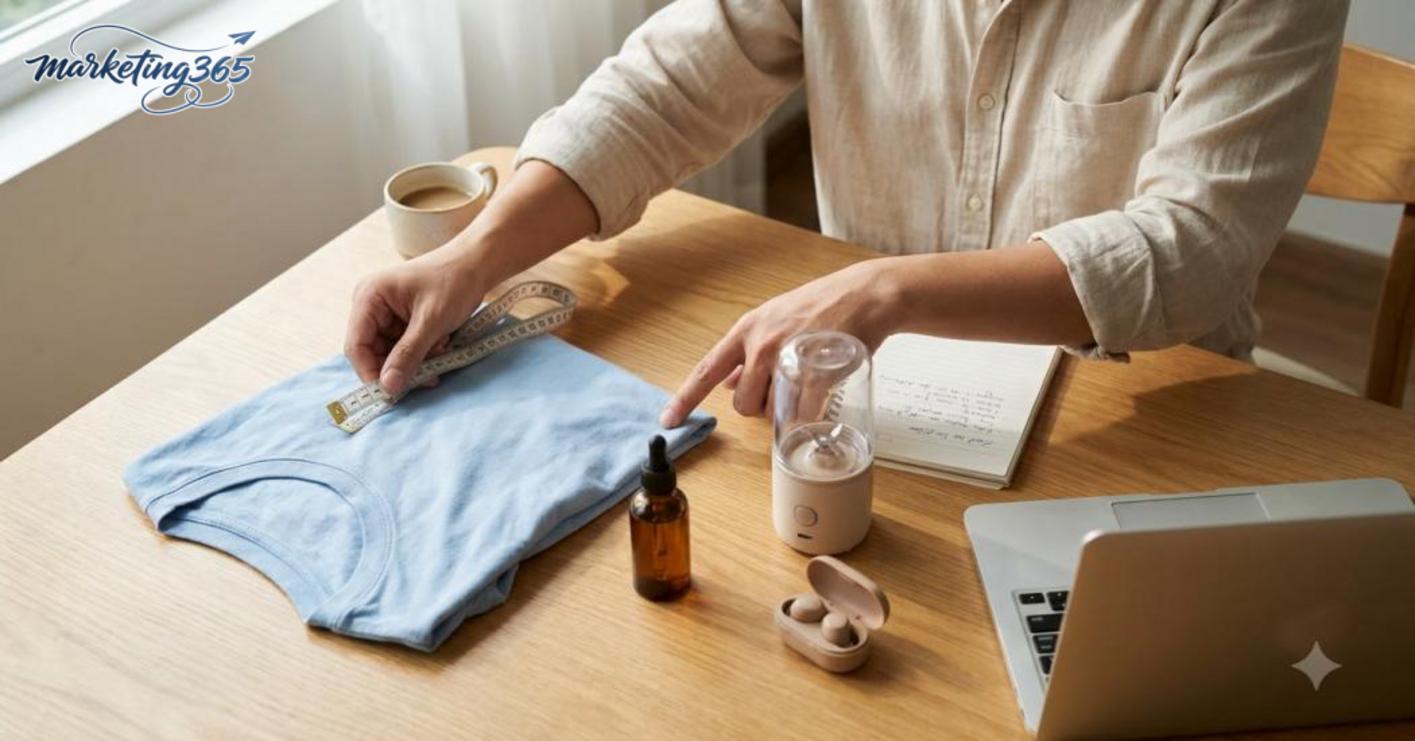
For example, instead of writing “basic T-shirt, easy to match,” write more clearly: “Cotton T-shirt with a straight fit, soft surface, and a non-clingy cut, suitable for work, outings, or layering. Sizes range from M to XL, and you should choose based on shoulder and chest measurements for a cleaner fit.” This version is concise but gives customers enough facts to decide for themselves.
Writing checklist:
- State the material first if it is a strength.
- Describe the fit in terms of real wearing comfort.
- Add usage contexts: work, school, street wear.
- Include size, measurements, or fit notes.
- If it is an accessory, describe lightness, grip, and all-day convenience.
Example for household goods, cosmetics, or tech products
For household goods, cosmetics, and tech products, a detailed product description must emphasize function, usage, convenience, safety, and compatibility conditions. Each category has its own key decision point, so you cannot simply copy the formula from fashion.
For example, with a mini blender, instead of only saying “fast blending, compact,” write: “Suitable for blending soft fruit, soaked nuts, or small portions for one to two servings. The secure locking lid is easy to remove and wash, making it ideal for a small kitchen or for taking to work.” For cosmetics, you need to add skin type, usage method, and pre-purchase notes. For tech products, you must clearly state the connection standard, capacity, battery life, or compatible devices.
When writing Shopee product content, check these three points:
- Can customers understand the function within the first 5 seconds?
- Are usage conditions or purchase notes included?
- Is there enough information for buyers to compare without asking again?
How to review the description before publishing
Reviewing the description before publishing is the final step to ensure the product description is SEO-friendly, clear, accurate, and persuasive on a small screen. Missing even one detail such as capacity, size, material, or usage conditions can immediately reduce the effectiveness of an easy-to-buy product description, no matter how good the wording was before.

5-question checklist before hitting publish
A good description must answer quickly for the reader, because most people are scrolling on mobile and only stop at the first few lines.
- Can customers understand what the product is within the first 3 seconds?
- Is there a clear reason to buy that matches the main need?
- Are all the decision-making details included, such as size, capacity, material, color, and warranty?
- Is there any paragraph that is too long, repetitive, or overloaded with benefits?
- Does this description match the e-commerce platform format and the right customer group?
If you answer “no” to any one of these, fix that part immediately instead of waiting until after publishing. For a standard e-commerce product description, the opening should be concise, the middle should contain enough data, and the end should only keep information that supports the buying decision.
When should you rewrite the description instead of just editing a few sentences?
You need to rewrite almost everything when the description is fundamentally wrong, because line-by-line edits cannot fix a broken structure.
- Wrong customer insight: talking about promotions when buyers care about durability.
- Wrong buyer group: writing for office workers when the product is actually for mothers with young children.
- Wrong main benefit: putting a secondary feature ahead of the deciding one.
- Wrong structure: opening too long, missing specifications, and no closing call to action.
At that point, the best product description writing is to reorder the information first, then refine the wording. If the product description is compelling but does not match the buyer, the result will still be weak.
MARKETING365
📧 Email: lienhe@marketing365.vn
🌐 Website: https://marketing365.vn
👍 Fanpage: https://facebook.com/marketing365.official
For the latest official guidance, you can also refer to materials from Think with Google.
You can also read more articles on the same topic in the Ecommerce Marketing section.