
Contents
- Social media is no longer just a posting channel, but where trust gets tested again
- Changes in tools and the creator ecosystem are forcing social teams to work differently
- The real mechanism is changing: trust, verification, and repeatability
- What will pull social media in Vietnam toward verification and context selection?
- What social media teams need to do so content can keep living in the community
- Reference sources
Social content on social media used to reward speed and reach. But as AI makes content appear faster, marketers no longer just need to “post more”; they have to prove that the content is trustworthy, contextually relevant, and clear enough for others to keep sharing without distorting the message.
For Vietnamese marketers, this is not a distant issue. As content, social, and performance teams increasingly use AI to boost productivity, the real cost is shifting elsewhere: verification, editing, tone control, and choosing the right touchpoint so content can keep living inside the community.
Key points
- Social media is being pulled from a race for virality into a race for verification and contextual fit.
- AI and the creator/event ecosystem make content easier to produce, but also easier to doubt if trust signals are missing.
- Marketing workflows have to change: less obsession with output, more review, sourcing, and publishing standards.
- In Vietnam, the advantage will tilt toward brands that combine speed with editorial discipline and community feedback.
Social media is no longer just a posting channel, but where trust gets tested again
The two sources behind this shift are quite different, yet they meet at the same point: social media is no longer a place where content simply needs to appear and that is enough. The Social Media Examiner article speaks directly about optimizing to use fewer tokens in AI systems, while Net Influencer shows that the creator economy continues to be organized around events, communities, and professional gathering points. Together, those signals point to one reality: content on social media is cheaper to create, but more expensive to make people trust and keep paying attention to.
That is why marketers can no longer view social media as a one-way posting line. A post, a short video, or even a comment now usually passes through several invisible layers of scrutiny: does the community see it as contextually appropriate, is the creator credible enough, does the message read like mass-produced content. As production speed rises, the strictness of evaluation rises with it.
For marketers, this is a shift from “posting just to be present” to “posting to be accepted and repeated.” The same content, when placed inside the right conversation, the right group, or the right event, can deliver far more distribution value than simply pushing it onto a timeline and hoping for the best.
Changes in tools and the creator ecosystem are forcing social teams to work differently
This section is not about a single feature, but about how tools and the distribution environment are changing the demands placed on social teams. The Social Media Examiner piece emphasizes reducing token usage and streamlining AI setup, while the Net Influencer article shows creator economy activity still revolving around conferences, awards, summits, and specialized meetups. Both point to the same pressure: marketers have to produce content more efficiently with less friction, but without losing credibility.
Reducing token usage means social teams have to write less, but more clearly
In AI logic, reducing token usage means cutting fluff, removing repetition, and forcing inputs to be more concise so the system can process them more efficiently. Even though the original article is about AI setup, the lesson for social teams is clear: the more verbose the content, the higher the editing and checking cost. Source: Social Media Examiner.

This pushes social teams back toward short writing, sharper idea selection, and a single-layer message. On social media, the wording has to be clear enough for readers to understand immediately and clean enough not to invite misinterpretation. AI helps draft faster, but the real value still lies with the person who knows what to cut.
The creator economy event calendar shows distribution now depends more on niche communities
Net Influencer describes a dense event calendar centered on gaming, beauty, fashion, podcasting, and influencer marketing. That shows the creator economy no longer lives on a single “general market” level; it lives through clusters of communities with their own language, habits, and trust standards. Source: Net Influencer.
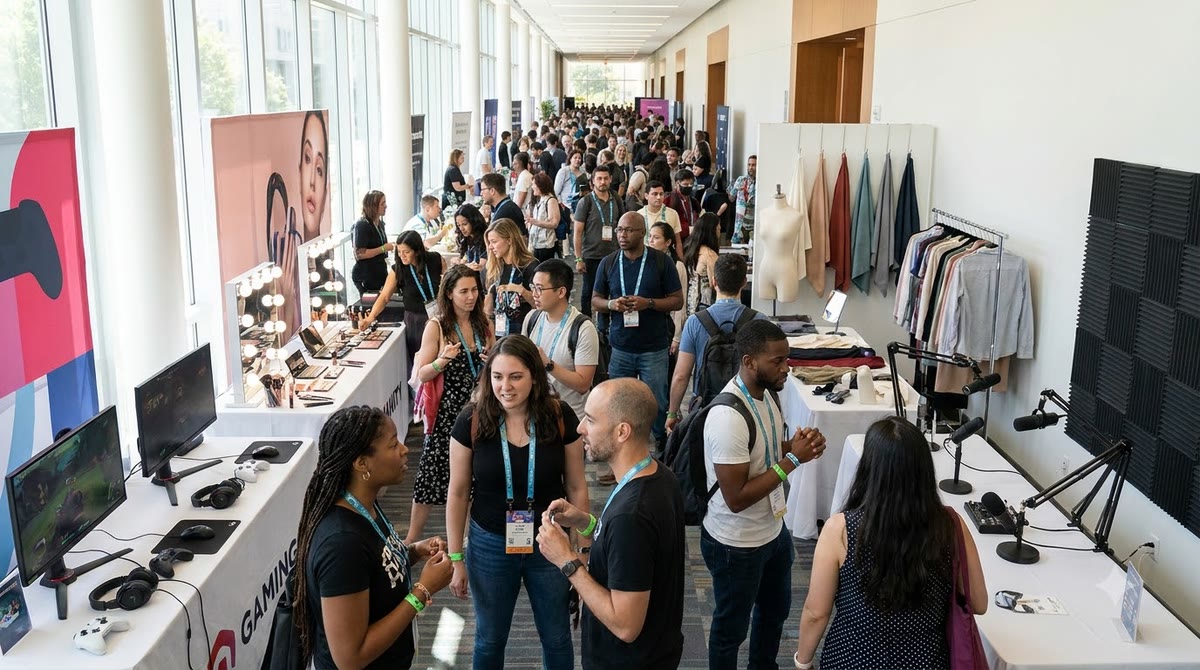
For social teams, that means effective content does not necessarily have to win through mass reach. It has to win by being in the right context and reaching the right people who can carry it forward. If a brand keeps speaking the same way to every audience, the content will disappear quickly in the social media stream.
The real mechanism is changing: trust, verification, and repeatability
What the two sources have in common is that they show social media moving from “post and done” to “post and still has to survive.” Social Media Examiner talks about optimizing AI to reduce waste; Net Influencer describes a creator economy environment where meetups, conferences, and awards create credibility for participants. From that, one very clear mechanism emerges: content only has distribution value when it comes with trust signals and is placed in the right spot.
Verification costs are rising, so approval has to come before speed
When content is created faster with AI, the real cost does not disappear; it shifts into verification. Social teams have to verify sources, recheck data, review tone, and see whether the content fits the target community. If this step is skipped, speed only creates more posts, not more effectiveness. The pressure comes from Social Media Examiner’s own AI setup optimization, where the leaner the system becomes, the cleaner the input needs to be. Source: Social Media Examiner.
Net Influencer adds another angle: creator communities are anchored by events, awards, and industry activities. That means if a brand’s content appears as something off-key, the community will reject it very quickly. Source: Net Influencer.
Distribution context determines the value of a post
Social media no longer rewards good content in the abstract. It rewards content in the right context: the right creator, the right topic, the right timing, and the right community. The events in the creator economy that Net Influencer lists show how clearly these niche clusters are now defined. A beauty message is not automatically equally strong next to gaming or podcasting; it is strong when it enters an existing stream of interest.

So marketers need to treat social media as a context problem, not a volume problem. Choose the wrong context and the content may still get reach, but it will be hard to earn quality engagement or renewed trust from the community.
What will pull social media in Vietnam toward verification and context selection?
In Vietnam, this pressure is even clearer because marketing teams often have to run multiple goals at once: awareness, leads, sales, and community care. When social media is used as a multitasking channel, the biggest temptation is to push as much content out as possible. But the local market is also used to scrutinizing whether content feels real, especially as users become more sensitive to AI-like writing, overly polished captions, and content that lacks signs of real experience.

So the practical lesson is not whether to use AI or not. The lesson is to use AI to produce drafts faster, then let people finalize what is more trustworthy. Brands that keep a distinct voice, have a clear verification process, and understand the language their community uses will have the advantage on Vietnamese social media.
From an operational perspective, social teams should prioritize three things: choose fewer formats but execute them better, tie content to a specific community context, and add a final review layer for message clarity. Otherwise, the brand falls into the familiar loop: posting a lot but being remembered by few, getting many views but little trust.
What social media teams need to do so content can keep living in the community
- Review the publishing workflow so verification comes before speed, especially for content with data, quotes, or product claims.
- Write captions and hooks with fewer words, one main idea, and one clear action, avoiding multiple layers of meaning in a single post.
- Choose the distribution context before choosing the format: which community this content belongs to, which conversation it enters, and who can repeat it.
- In Vietnam, prioritize testing content with signs of real experience, real feedback, and a consistent voice rather than simply increasing posting frequency.
See more marketing analysis and how-to content at https://marketing365.vn.
Follow more analysis from Marketing365 to stay updated on the latest marketing trends.
Read more articles in the Digital Trends category.
Reference sources
- Social Media Examiner — Reduce Token Usage, The Voice-Activated Content System, and Industry News
- Net Influencer — Creator Economy Event Calendar – August 24, 2026 – Gamescom, Glossy Pop NYC, and a Global Influencer Marketing Awards Ceremony in London