
Contents
- Social media is changing its focus: from user growth to ecosystem control
- What is changing on social media: platforms are changing rewards, access, and usage
- Threads is testing rewards for high-performing posts: content must be designed to create signals, not just to be published
- Login with Facebook and free API credits: access is becoming an operating lever
- Instagram is growing faster than Facebook in the EU: resource allocation can no longer rely on old habits
- Risk and compliance on social media: data, login, and copyright are now operational issues
- Social media in Vietnam: the game will favor whoever controls accounts and signals better
- How to run social media to reduce risk and improve results
- Reference sources
Social media is no longer just a race for reach or a place to add features for visual appeal. As platforms tighten access, reward performance, and change how users log in, marketers have to see social media as a system with risk, distribution mechanisms, and clear operating costs.
For Vietnamese marketers, this is the moment to stop asking “which channel is hot?” and start asking “which channel is trustworthy, measurable, and controllable?” The four developments below show that the advantage on social media will tilt toward whoever can control trust, access, and operating standards.
Key points
- Instagram continues to grow in the EU faster than Facebook, showing that the growth axis is no longer sitting still in the older platform group.
- Threads is testing rewards for high-performing posts, meaning distribution is increasingly tied to content incentive mechanisms.
- Meta updates login with Facebook, while X opens free API credits for Grok Bot: access and ecosystem connections are becoming strategic variables.
- For the Vietnamese market, the issue is not running more platforms, but choosing the ones where data, accounts, and long-term measurement can be controlled.
Social media is changing its focus: from user growth to ecosystem control
Looking at each development on its own, it would be easy to think these are just disconnected updates. But when placed side by side, they all say the same thing: social media is shifting from prioritizing expansion to prioritizing control over how users enter the ecosystem, move through content, and connect to which account.
The report on Instagram in the EU shows that the platform is still growing faster than Facebook in the region, so the user balance between platforms within the same product family is no longer standing still. At the same time, Threads is testing a mechanism that recognizes high-performing posts with rewards, while Meta is updating login with Facebook to smooth the sign-in step across products. X is moving in a different direction: opening free API credits for Grok Bot to bring more developers and new use cases into its ecosystem. The sources were respectively reported by Social Media Today in articles on Instagram, Threads, Meta, and X, along with SEJ in the story about Anthropic sessions being stolen. Instagram growth continues to outpace Facebook in EU, Threads experiments with post performance recognition awards, Meta updates login with Facebook, X offers free API credits for its Grok Bot, and Anthropic Warns Hackers Are Stealing Claude Sessions To Hijack Accounts.
The important point is not each individual feature. It is that every platform is trying to keep users, keep traffic flows, and keep behavioral data within its own boundaries. For marketers, that is a sign that social media is becoming less like an “ad bulletin board” and more like an infrastructure with its own rules.
What is changing on social media: platforms are changing rewards, access, and usage
This set of updates matters because it shows what marketers can see and verify right away. Not speculation. Not a feeling. These are changes that have been announced by the platforms or reflected in official documents and source articles.
Threads is testing rewards for high-performing posts: content must be designed to create signals, not just to be published
Threads is testing recognition awards for post performance, according to Social Media Today. If this mechanism is expanded, a post will no longer only need to be good in terms of content; it will also need to generate signals that the platform recognizes as effective. For social teams, that shifts the focus from post volume to signal quality: early engagement, sustained discussion, and the ability to make the algorithm see the post as worth distributing. Source: threads experiments with post performance recognition awards.

Login with Facebook and free API credits: access is becoming an operating lever
Meta is updating login with Facebook, while X is offering free API credits for Grok Bot. The two moves are different in product terms but similar in logic: platforms are intervening more deeply in how users and developers enter their ecosystems. Login is the gate to the account. API credit is the gate to how external tools connect and create value on the platform. For marketers, this is a sign that access is no longer a side technical issue. It directly affects tracking, automation, chatbot testing, and the ability to connect social media to internal workflows. Source: meta updates login with facebook, x offers free api credits for its grok bot.

Instagram is growing faster than Facebook in the EU: resource allocation can no longer rely on old habits
Instagram continues to grow faster than Facebook in the EU. Although the original article does not turn this into an absolute conclusion for every market, the signal is still enough for marketers to understand that user behavior within the Meta family is gradually shifting. If content, media, and team effort are still allocated according to old habits, businesses can easily pour too many resources into the place that has already lost momentum. Source: instagram growth continues to outpace facebook in eu.
Risk and compliance on social media: data, login, and copyright are now operational issues
When social media becomes the place where accounts, interaction history, content, and even automation tools are stored, the question “is security a concern?” is no longer a purely IT question. It touches customer data, admin access, agency operations, and even who is allowed to log in with which account.

The Anthropic story warning that hackers are stealing Claude sessions to hijack accounts shows a very real vulnerability: once a session is exposed, bad actors can bypass multiple layers of protection. Although this is not an incident involving a specific social platform, it is highly relevant to how marketing teams operate social media today, because many teams use AI tools, dashboards, or apps that connect across social accounts. At the same time, Meta tightening login with Facebook and X opening API credits for Grok Bot both remind us that access is an asset that can be managed more tightly, or exploited if a business is careless. Source: Anthropic warns hackers are stealing Claude sessions to hijack accounts, Meta updates login with Facebook, X offers free API credits for its Grok Bot.
From a compliance perspective, marketers should not only ask “can this tool be used?” but also “where does it keep the session, who still has access, and when staff change, are social accounts really revoked?” When social media is tied to API, login, and automation, the risk is no longer just one bad post. It is about who is holding the keys to the brand’s ecosystem.
Social media in Vietnam: the game will favor whoever controls accounts and signals better
The Vietnamese market often moves very quickly on practical grounds. Because of that, platforms with large reach are still prioritized, but marketing teams often expose their weak spots in very everyday ways: shared accounts, fragmented permissions, measurement based on easy-to-see likes, and little control over external connected apps. As social media becomes stricter about login, API, and content distribution, these habits will become real costs.
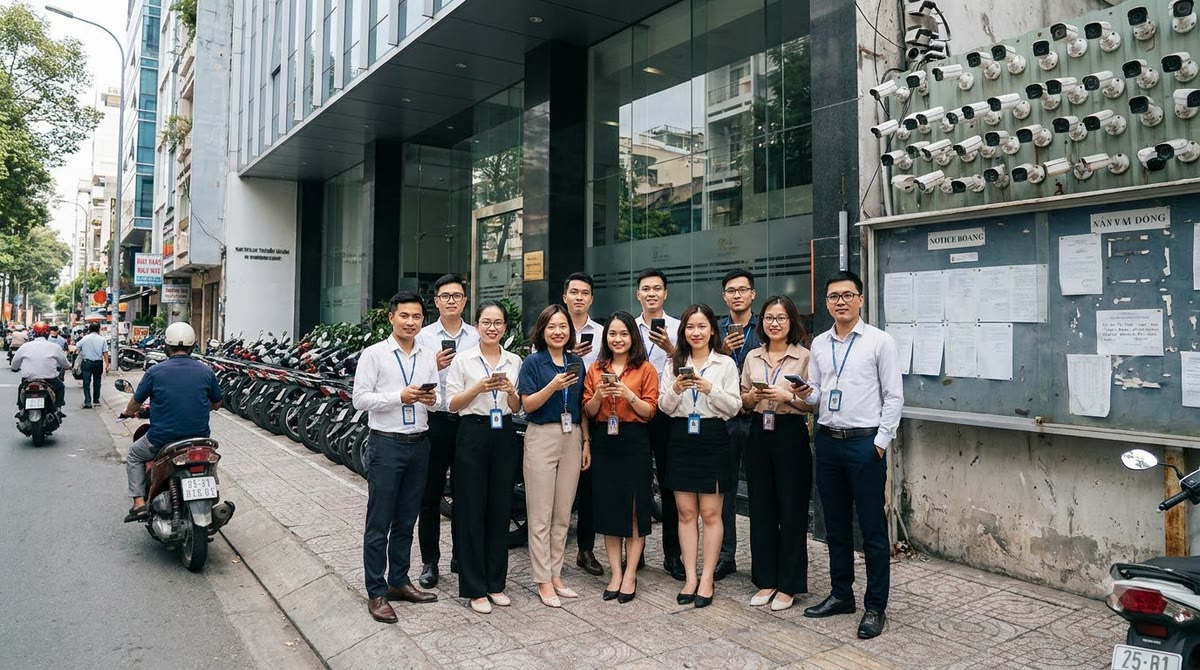
For Vietnamese businesses, Instagram growing faster than Facebook in the EU is not something to copy mechanically. It is only a reminder that social user segments can change faster than internal plans. Threads testing rewards for high-performing posts also suggests that content must be written like an asset that generates signals. And the issue of stolen accounts and sessions reminds marketers not to treat security as something for IT and then stop there. In Vietnam, the advantage will belong to whoever designs permission-sharing processes, controls linked apps, and measures across channels from the start.
How to run social media to reduce risk and improve results
- Review all social access rights, from admins to connected apps, and revoke any accounts that are no longer in use.
- Design content around the signals the platform rewards, instead of only chasing post volume and posting frequency.
- Allocate budget based on real user behavior on each platform, not on old ratios kept out of habit.
- Recheck login processes, session sharing, and AI tool usage to avoid account exposure or privilege overreach.
See more marketing analysis and how-to content at https://marketing365.vn.
Follow more analysis articles from Marketing365 to stay updated on the latest marketing trends.
Read more articles in the Digital Trends category.
Reference sources
- Search Engine Journal — Anthropic Warns Hackers Are Stealing Claude Sessions To Hijack Accounts via @sejournal, @martinibuster
- Social Media Today — Instagram growth continues to outpace Facebook in EU
- Social Media Today — X offers free API credits for its Grok Bot
- Social Media Today — Threads experiments with post performance recognition awards
- Social Media Today — Meta updates login with Facebook