
Contents
- Nano Banana 2 Lite: fast image generation, optimized for content pipeline costs
- Gemini Omni Flash: a new step forward for generative video and conversational editing
- When image and video work together: Google wants to shorten the entire creative loop
- For developers: Google emphasizes scalable pipelines
- NotebookLM gets Short Video Overviews: turning long documents into 60-second vertical videos
- Lower content testing costs, but tighter review processes are needed
- References
At the point of mid-2026, Google’s push to make AI image and video generation faster and cheaper matters less as a product headline than as a shift in how marketing content actually gets produced. For Vietnamese marketers, the real signal is that the advantage is moving from whether a team uses AI to which team builds the better AI workflow — from concept and draft review to producing variations and turning long documents into short-form content.
Nano Banana 2 Lite: fast image generation, optimized for content pipeline costs
Google introduced Nano Banana 2 Lite as the fastest and most cost-efficient Gemini Image model available today, with text-to-image generation in under 4 seconds according to information from Google AI and Google AI Developers accounts. The model is already available on the Gemini API and Google AI Studio, and will soon expand to NotebookLM, Flow by Google, Gemini app, Stitch by Google, Google Search and Google Photos.
The key point for marketers is how Google positions this model for “high-speed images” and high-throughput production workflows. In other words, it is a better fit for teams that need to generate many image variations, quickly test concepts or build moodboards before finalizing the design. Source: Google AI, Google AI Developers, Logan Kilpatrick.
Gemini Omni Flash: a new step forward for generative video and conversational editing
At the same time, Google has moved Gemini Omni Flash into public preview. This is a native multimodal model designed for cost-efficient video generation and editing through conversational language. Google says the model is now available on the Gemini API, Google AI Studio and Gemini Enterprise Agent Platform so teams can integrate it directly into their workflows.
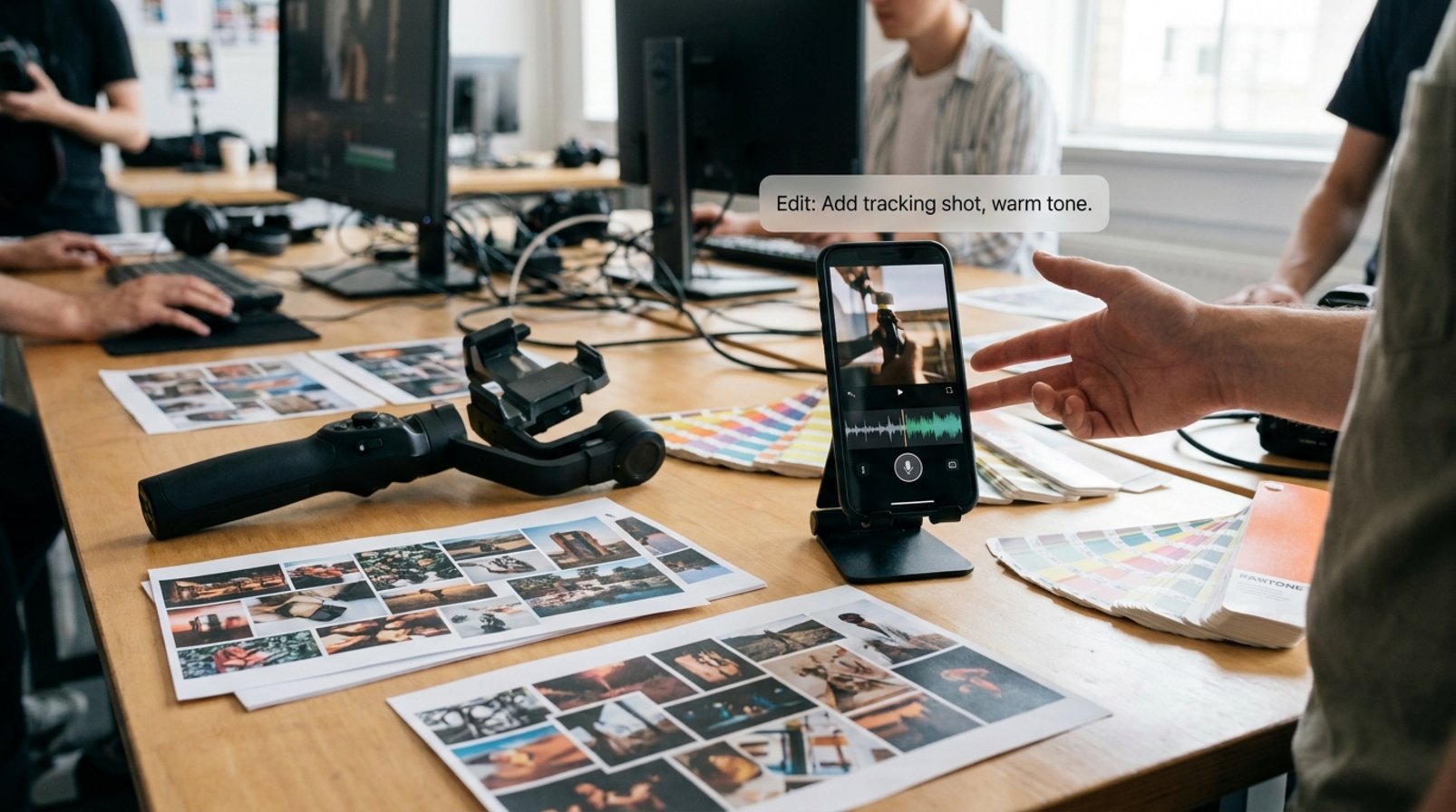
For marketers, the biggest value lies in turning video editing from a technical task into something closer to “commanding by idea.” This could be especially useful for teams producing short ad clips, social videos, product demos or explainer videos, where the speed of testing and feedback often matters more than polish in the first draft. Source: Google AI, Google DeepMind, Google AI Developers, Logan Kilpatrick.
When image and video work together: Google wants to shorten the entire creative loop
The most important point is not each model on its own, but how they work together. Google clearly describes the scenario: generate images quickly with Nano Banana 2 Lite, then use Gemini Omni Flash to “bring the image to life” with near-instant video motion. In the demo mentioned, users can upload an image, view personalized design concepts and then let Omni turn details into cinematic motion.

This is a very noteworthy mindset for modern marketing teams: instead of separating static design and video production, AI is bringing the two processes closer together. The result is that brands can test more visual concepts in the same amount of time, thereby speeding up A/B testing for ads and social content. Source: Google AI, Google DeepMind.
For developers: Google emphasizes scalable pipelines
From a technical perspective, Google AI Developers says Nano Banana 2 Lite is optimized for high-throughput pipelines, while Gemini Omni Flash is ready for developers today through Google AI Studio and the Gemini API. Logan Kilpatrick also shared the published pricing on social media: Nano Banana 2 Lite at USD 0.034 per 1,000 images and Omni Flash at USD 0.10 per second for video editing, matching the same level as Veo 3.1 Fast according to his post.
Read more: New AI Models Shift the Race to Real Run Costs and Control
Even if marketing teams do not always work directly with APIs, the message here is clear: Google is pushing generative AI into an integrated production environment, not just a trial-use one. This opens the door to content personalization, partial workflow automation and connecting AI to existing marketing operations systems. Source: Google AI Developers, Logan Kilpatrick.
NotebookLM gets Short Video Overviews: turning long documents into 60-second vertical videos
Not stopping at image and video creation, Google has also updated NotebookLM with Short Video Overviews. According to the announcement from NotebookLM, users can turn complex source materials into 60-second vertical videos to “go deep into any concept.” The feature is rolling out to Google AI Ultra and Pro users on both mobile and web; free users will get it later.

For marketers, this is a very practical direction for internal training, campaign document summaries, product briefings or turning long research content into a more watchable format for social and internal communities. It also shows NotebookLM taking another step from a smart note-taking tool toward a tool that transforms knowledge into short communication formats. Source: NotebookLM.
Lower content testing costs, but tighter review processes are needed
For Vietnamese businesses, these updates point to two major trends. First, the cost of content experimentation will continue to fall as AI images and video become faster, cheaper and easier to integrate. Second, the competitive advantage will not just be about “whether you use AI,” but which team builds a better AI workflow: from concept generation and draft review to producing variations and turning long documents into short-form content.

In the short term, brands should prioritize testing AI in low-risk areas such as brainstorming, moodboards, video drafts, training content and insight summaries. For external-facing content, however, a strict review process is still needed to avoid image inaccuracies, misinformation or violations of copyright and brand standards. For Vietnamese marketers, this is the right time to move fast while also building a safe operating framework.
Explore more marketing analysis & guides at Marketing365.
Explore more marketing analysis & guides from Marketing365.
Read more articles in the Động thái AI category.
References
- Google AI on X: We’re shipping two major updates to streamline your creative workflow
- Google AI Developers on X: We’re launching Nano Banana 2 Lite
- Logan Kilpatrick on X: Introducing Nano Banana 2 Lite and Gemini Omni Flash
- Google DeepMind on X: We’re shipping 2 major releases
- NotebookLM on X: Introducing Short Video Overviews in NotebookLM