Contents
- Claude Sonnet 5: agentic AI takes another step forward
- OpenAI launches GeneBench-Pro to measure AI performance on complex biological data
- Claude Science: a new app for end-to-end research workflows
- Claude Corps: learn AI on salary, then bring the skills into real work
- nano banana 2 lite: Google’s image model optimized for speed and cost
- AI is automating complex tasks and lowering output production costs
- References
Recent AI releases from Anthropic, OpenAI, and Google point to a clear shift: the race is moving from building “stronger models” to AI that can actually get work done inside specific workflows. For Vietnamese marketers, that directly shapes content creation, data research, campaign operations, and creative production, which is why these moves are worth reading from an applied angle rather than as product announcements.
Claude Sonnet 5: agentic AI takes another step forward
Anthropic introduces Claude Sonnet 5 as a more “agentic” Sonnet version, with the ability to plan, use tools such as a browser and terminal, and operate autonomously at a level that just a few months ago still required larger and more expensive models. The key point is not the name, but the fact that AI is being positioned as an “executor” rather than just a question-answering tool.
For marketers, this direction opens up many practical scenarios: supporting competitor research, reviewing campaign data, generating preliminary reports, or handling repetitive tasks across multiple tools. However, higher automation also requires tighter control processes, especially for sensitive data and content that demands high accuracy.
Source: Claude (@claudeai) on X: https://x.com/claudeai/status/2072017450611142835
OpenAI launches GeneBench-Pro to measure AI performance on complex biological data
OpenAI has just announced GeneBench-Pro, a research-level benchmark designed to evaluate how AI agents handle messy biological data, choose the right analytical direction, and make decisions that real-world computational research often requires. This is a much harder form of measurement than simply checking whether AI answers correctly on a static question set.

The significance of this benchmark lies in the fact that AI is increasingly being evaluated on its ability to “make decisions” in noisy, unstructured environments that require judgment. Although it is not a direct marketing tool, GeneBench-Pro reflects a major trend: future AI systems will be measured by their ability to handle complex situations, not just by scores on standard tests.
Source: OpenAI (@OpenAI) on X: https://x.com/OpenAI/status/2072004836674167294
Claude Science: a new app for end-to-end research workflows
Anthropic also introduces Claude Science, a beta application designed for the full research journey. According to the source description, the “artifacts” are tracked back to their source code, the work environment can be configured as needed, and users can connect to more than 60 optional scientific databases.
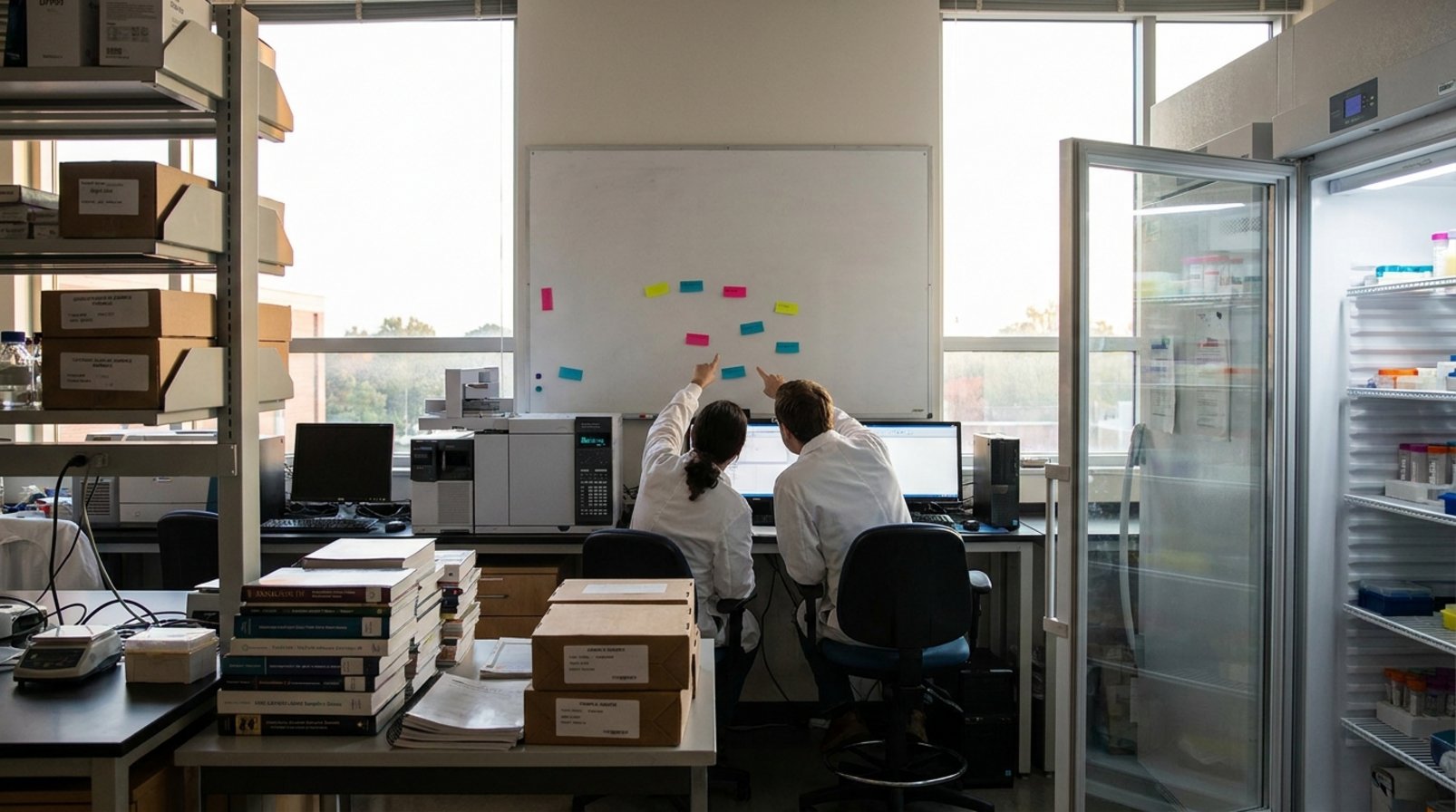
The notable point is that Claude Science is not aimed at a single task, but at embedding AI into the entire research process. For specialized content teams, market analysis teams, or data strategy teams, this approach suggests a new working model: AI does not stand outside the workflow, but participates throughout the process from gathering and processing to synthesizing information.
Source: Claude (@claudeai) on X: https://x.com/claudeai/status/2072002740830842899
Claude Corps: learn AI on salary, then bring the skills into real work
Another notable Anthropic-related update is Claude Corps, a 12-month fellowship program for people at the early stage of their careers. According to the description shared, participants will be trained to use Claude from the ground up, then placed in a nonprofit organization to work in a real-world setting for one year; the stated support is USD 85,000 plus benefits.

This matters because it shows that AI is not only changing products, but also changing how talent is trained and hired. In a context where Vietnamese businesses still lack people who understand AI deeply enough to apply it in operations, “learn by doing” models like this could become a valuable reference for building internal teams.
Source: Reposted from @undefinedKi’s article on X: https://x.com/undefinedKi/status/2071993528884895830
nano banana 2 lite: Google’s image model optimized for speed and cost
Google AI Studio introduces nano banana 2 lite, a Gemini image-generation model positioned as the fastest and most cost-efficient option for high-velocity development pipelines. According to the source, the model can generate images from text in about 4 seconds at a cost of USD 0.034 per 1K-resolution image, and it can be integrated via AI Studio and the Gemini API.

This is a highly relevant update for creative teams, e-commerce, and performance marketing, where deployment speed and cost per creative asset are decisive factors. However, as speed increases, the process for reviewing image quality, brand consistency, and output copyright needs to be standardized even more carefully.
Source: Google AI Studio (@GoogleAIStudio) on X: https://x.com/GoogleAIStudio/status/2071989578672595413
AI is automating complex tasks and lowering output production costs
Overall, these five stories show AI moving in three very clear directions: automating complex tasks, going deeper into specialized industries, and sharply reducing output production costs. For Vietnamese businesses, the important thing is not to chase every update, but to identify which AI tools can be tied to real workflows: market research, customer support, content variation, reporting, and faster image production.

At this point, the advantage belongs to teams that know how to experiment in a controlled way: start with a small workflow, measure the time saved, check output quality, and standardize usage. As AI increasingly “gets the job done,” marketers’ competitive edge will lie in how they organize systems to work with AI, not just in knowing how to write prompts.
Explore more marketing analysis & guides at Marketing365.
Read more articles in the same category Động thái AI.
This article focuses on latest AI news with a perspective for the Vietnamese market.
References
- Claude Sonnet 5 announcement on X
- OpenAI GeneBench-Pro announcement on X
- Claude Science announcement on X
- Claude Corps discussion on X
- nano banana 2 lite announcement on X