Contents
Claude is an AI assistant developed by Anthropic, one of the leading large language models (LLMs) in 2026, known for deep reasoning, natural writing, and a high level of safety. For marketers, Claude is not just a chatbot but an entire ecosystem: a chat app, the Opus/Sonnet/Haiku model families, the Claude Code programming tool, an API, and the MCP connection standard.
Key points
- Claude is developed by Anthropic, first launched in 2023, and trained with the Constitutional AI approach that prioritizes safety.
- The three model families, Opus, Sonnet, and Haiku, balance power, speed, and cost.
- The ecosystem includes a chat app, Claude Code, an API, and MCP for connecting data and tools.
- Strengths for marketers: writing coherent long-form content, reasoning, and handling large documents.
- Read the foundational article What is an AI Agent first to understand the core concept before going deeper.
This article is the hub of the AI Guide topic cluster on Marketing365 — where the full Anthropic Claude ecosystem is collected. If you are new to AI assistants that can reason and act on their own, read the foundational What is an AI Agent article first to grasp the core concept, then come back here to explore this tool in depth.
What is this assistant? Claude is an AI assistant developed by Anthropic — one of the world’s leading large language models (LLMs) in 2026, known for deep reasoning, natural writing, and a high level of safety. For marketers in Vietnam, this model is not just a chatbot but an entire ecosystem of tools: from the chat app and the Opus/Sonnet/Haiku model families to the Claude Code programming tool, API access, and the MCP connection standard. This overview will help you fully understand the platform and how to use it for work.
What is Claude?
This AI assistant is a family of conversational AI models first launched by Anthropic in 2023 and continuously upgraded. Anthropic is an AI safety research company founded by former senior members of OpenAI, with a philosophy that puts safety and controllability first. The name “Claude” was inspired by Claude Shannon — the father of information theory.
Unlike many other AI assistants, it is trained using Constitutional AI — a method in which the model checks its own answers against a set of ethical principles, helping reduce harmful content without too much manual intervention. Three strengths make this tool highly regarded by experts:
- Reasoning: this assistant handles multi-step logic problems, long-document analysis, and structured arguments well — a fit for work that requires critical thinking.
- Writing: Its style is natural, coherent, and less “machine-like,” and it can closely match a brand voice when given clear guidance.
- Safety and honesty: Claude tends to admit when it is unsure rather than making things up, and it politely refuses risky requests.
You can try this model directly at claude.ai — a free web interface that supports document uploads, images, and multi-turn conversations.
Claude models: Opus, Sonnet, Haiku
Anthropic divides this platform into three model families, named after poetic forms — reflecting the balance between power and speed. Understanding these three families helps you choose the right tool for each task and optimize costs.

| Model family | Characteristics | When to use |
|---|---|---|
| Claude Opus | Most powerful, deepest reasoning, handles complex tasks | Strategic analysis, long-form writing, complex programming, in-depth research |
| Claude Sonnet | Balances quality and speed, reasonable cost | Everyday work: content writing, email drafting, summarization, Q&A |
| Claude Haiku | Fastest, lightest, most cost-effective | Classification, data extraction, instant-response chatbots, batch processing |
The practical rule: use Sonnet as the default for 80% of tasks, move up to Opus when you need maximum quality or are solving a difficult problem, and move down to Haiku when you need speed and high volume at low cost. Each new generation of this AI assistant (versioned over time) improves all three families.
Claude Code — programming with an AI agent
Claude Code is a command-line tool (CLI) that lets Claude act as a coding agent right in your terminal. Instead of only suggesting snippets like traditional assistants, Claude Code can read an entire codebase, plan on its own, edit multiple files, run commands, test, and fix bugs in a loop — true to the spirit of a real AI agent.
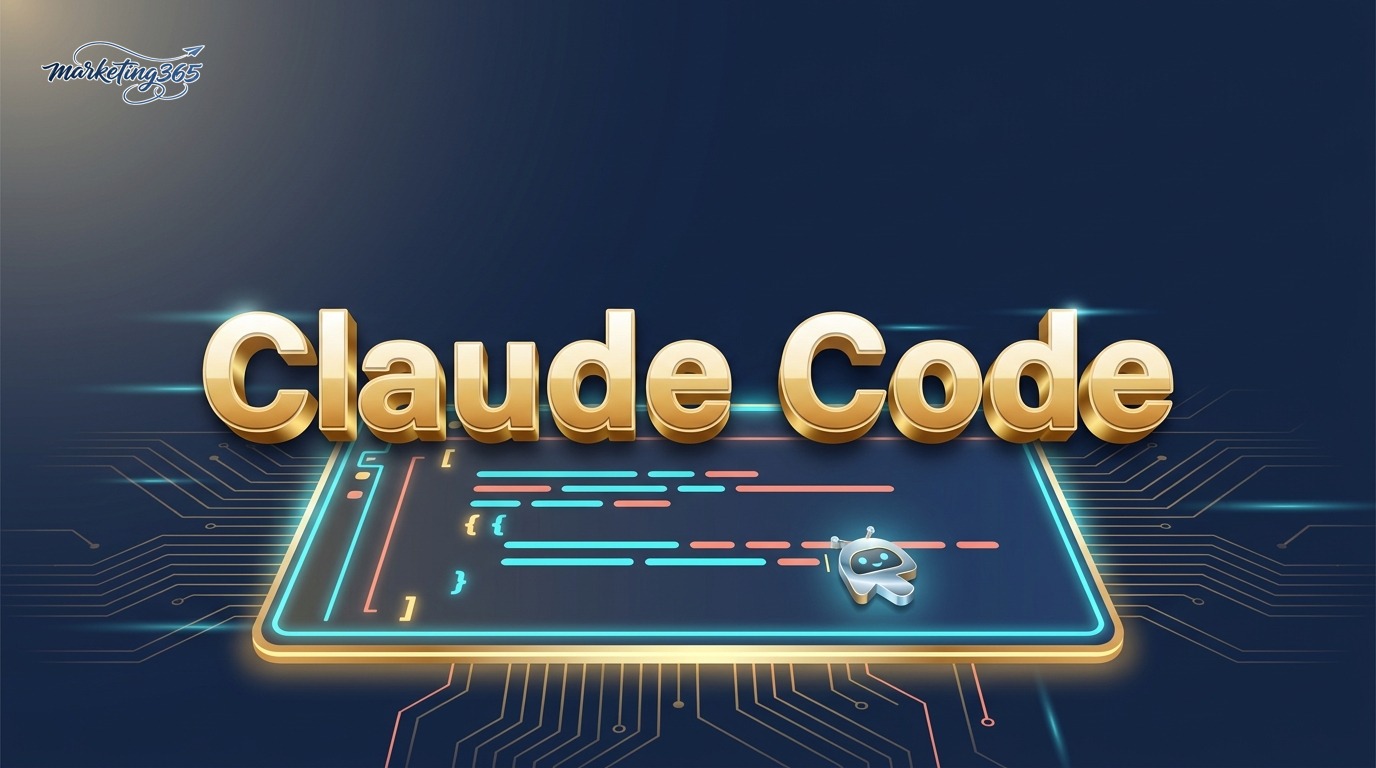
This is the clearest proof that it has moved beyond the role of a “chatbot.” Some standout capabilities:
- Understands large project context thanks to a long context window, automatically finding related files instead of requiring manual code pasting.
- Handles multi-step tasks: creating a git branch, writing features, running tests, and fixing build errors until everything passes.
- Integrates with external tools via MCP (see below), allowing this tool to access databases, APIs, or internal documents.
For marketers with some technical knowledge, Claude Code opens up the ability to build landing pages, write automation scripts, or process data without a dedicated developer. Official documentation is available at Claude documentation.
Claude API and MCP (Model Context Protocol)
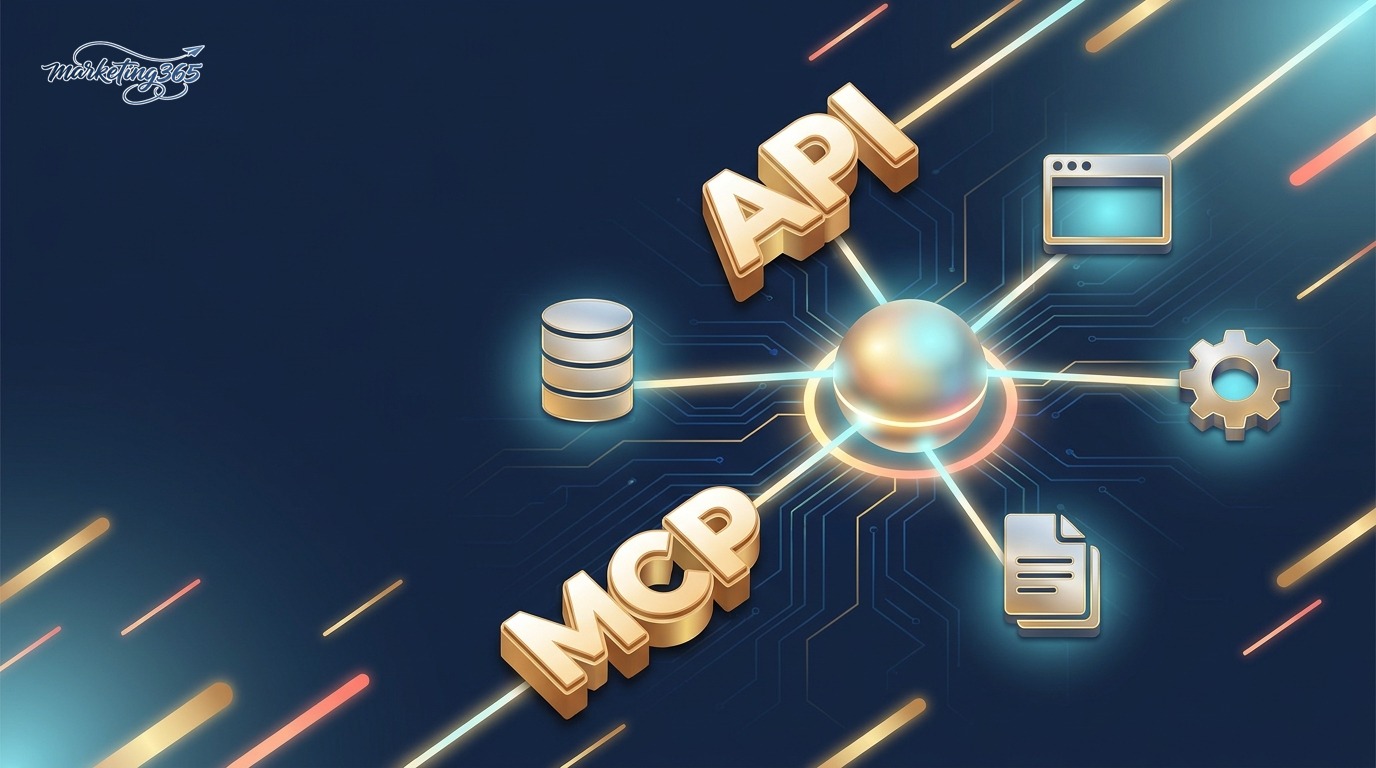
Behind the claude.ai app is the Claude API — the gateway for developers and businesses to integrate this assistant’s power into their products: from customer support chatbots and document summarization tools to content automation workflows. The API is billed by input and output token usage (the unit of text processing), and you choose the Opus/Sonnet/Haiku model family based on your needs.
Read more: What Are Claude Projects? Features and Uses for Marketers
MCP (Model Context Protocol) is an open standard introduced by Anthropic, often described as “USB-C for AI.” MCP defines a standard way for AI models to connect with external data sources and tools — databases, file systems, SEO tools, Google Drive, CRM systems — without having to build a separate integration for each one.
The significance of MCP for marketing is huge: instead of copy-pasting data into a chatbot, you can let Claude read campaign spreadsheets, query website data, or check keyword rankings in real time. This standard is being widely adopted by the community and many platforms; learn more on the official MCP site. When combined with an automation tool like n8n, you can build AI workflows that run continuously with almost no manual intervention.
Claude for marketing work
This is the most practical part. Below are the use cases that the Marketing365 team and many agencies use this model for every day:

- Writing and editing content: Draft SEO blog posts, short-video scripts, social media captions, and marketing emails. The platform’s strength is maintaining brand voice and writing long-form content that stays coherent and avoids repetition.
- Research and analysis: Summarize market reports dozens of pages long, analyze competitors, and extract insights from customer surveys or comments. The large context window lets you “load” entire documents for Q&A.
- Data analysis: Interpret ad campaign numbers, suggest budget optimizations, and spot trends in data. This AI assistant can read CSV tables and provide insights in natural language.
- Workflow automation: Through Claude API and MCP, Claude becomes the “brain” behind automated flows — lead classification, large-scale content personalization, or running a 24/7 advisory chatbot. This is the real-world application of AI Agent in marketing.
Important tip: it delivers the best results when you provide full context — brand information, target audience, sample examples, and the desired format. The clearer the input, the higher the output quality.
Claude vs ChatGPT — which should you choose?
This is the most common question. this tool (Anthropic) and ChatGPT (OpenAI) are both leading AI assistants, but they have different strengths. There is no absolutely “correct” choice — it depends on your needs.
| Criteria | this assistant (Anthropic) | ChatGPT (OpenAI) |
|---|---|---|
| Long-form writing, natural style | Very strong, less clichéd | Strong, sometimes more machine-like |
| Reasoning, long-document analysis | Standout strength | Good |
| Agent-based programming | Claude Code is very popular with developers | Has Codex/its own tools |
| Image generation, voice, broad ecosystem | Focused on text and code | Richer multimedia capabilities |
| Safety, honesty | Top priority | Good |
In short: if your work leans toward writing, analysis, reasoning, and programming, Claude is often an excellent choice. If you need a broader multimedia ecosystem (image generation, voice, plugins), ChatGPT has the advantage. Many professional marketers use both in parallel.
How to get started with Claude
Getting started with this model is very simple, even if you are not technical:

- Visit claude.ai: Open claude.ai and sign up with your email or Google account. The interface supports chat directly in the browser and on mobile apps.
- Choose the right plan: The Free plan is enough to try it out and handle light tasks with daily usage limits. Paid plans (Pro/Max) unlock stronger models, higher limits, and advanced features such as Claude Code. Businesses can use Team plans or integrate via API.
- Write clear prompts: Be explicit about the role (for example, “You are an SEO expert”), context (brand, audience), the specific task, and the desired output format. Provide sample examples if available.
- Iterate and refine: Don’t expect perfection on the first try. Give feedback to this platform (“shorter,” “friendlier tone,” “add data”) to improve it step by step.
Take advantage of file upload: you can upload PDF files, spreadsheets, or images for this AI assistant to analyze directly — extremely useful when working with reports or client briefs.
Frequently asked questions
Is Claude free?
Yes. Claude has a Free plan available right away at claude.ai with daily usage limits. To use it more heavily and access the strongest model family, you need to upgrade to a paid plan.

How is Claude different from ChatGPT?
It (Anthropic) stands out for natural writing, deep reasoning, safety, and agent-based programming; ChatGPT (OpenAI) has a broader multimedia ecosystem. Choose based on your needs, or use both. See the comparison table above.
What is Claude Code?
Claude Code is a command-line tool that turns this assistant into a coding AI agent: it reads the codebase, edits files, runs commands, and fixes bugs in a loop right in the terminal — instead of only suggesting isolated code snippets.
Does Claude support Vietnamese?
Yes. This assistant understands and writes Vietnamese quite well, making it suitable for content work and analysis in Vietnamese. For the smoothest results, give clear instructions and provide sample examples in Vietnamese.
What is MCP?
MCP (Model Context Protocol) is an open standard introduced by Anthropic that helps Claude connect in a standard way with external data and tools (databases, files, APIs) — like “USB-C for AI,” reducing the effort of one-off integrations.
Is Claude safe?
Safety is a core priority at Anthropic. this model is trained with Constitutional AI, tends to be honest, admits when it is unsure, and refuses risky requests. Even so, you should still verify important information before using it.
In short, what is this platform? It is a complete AI ecosystem from Anthropic — from the chat app and the three Opus/Sonnet/Haiku model families to Claude Code, the API, and MCP — powerful enough to become a valuable assistant for Vietnamese marketers in content writing, research, analysis, and automation. To better understand how assistants like this AI assistant reason and act on their own, read the foundational What is an AI Agent article, and explore more guides in Marketing365’s AI Guide cluster.
Updated: June 2026. AI tools change quickly — please refer to the provider’s official documentation for the latest information.