Contents
- Japan announces a $2.3 trillion investment plan for AI and semiconductors
- Qwen-AgentWorld: Alibaba wants to teach AI to understand environments like humans do
- Kimi API is now on AWS Marketplace, targeting enterprise customers directly
- Anthropic brings Claude into Slack as an “always-on assistant”
- AI costs are rising, and access barriers are tightening
- Canopy and the blockchain incubator model: lowering barriers for developers
- Financial markets continue to be shaped by the AI wave and tech stocks
- Design AI marketing workflows and choose the right cost controls
- References
AI in 2026 is entering a new phase: not just a technology race, but a contest over infrastructure, access costs, and platform ownership. For Vietnamese marketers, recent signals from Japan, Anthropic, Alibaba, and AWS show AI embedding deeper into workflows and directly affecting productivity, operating costs, and how businesses choose their tools.
Japan announces a $2.3 trillion investment plan for AI and semiconductors
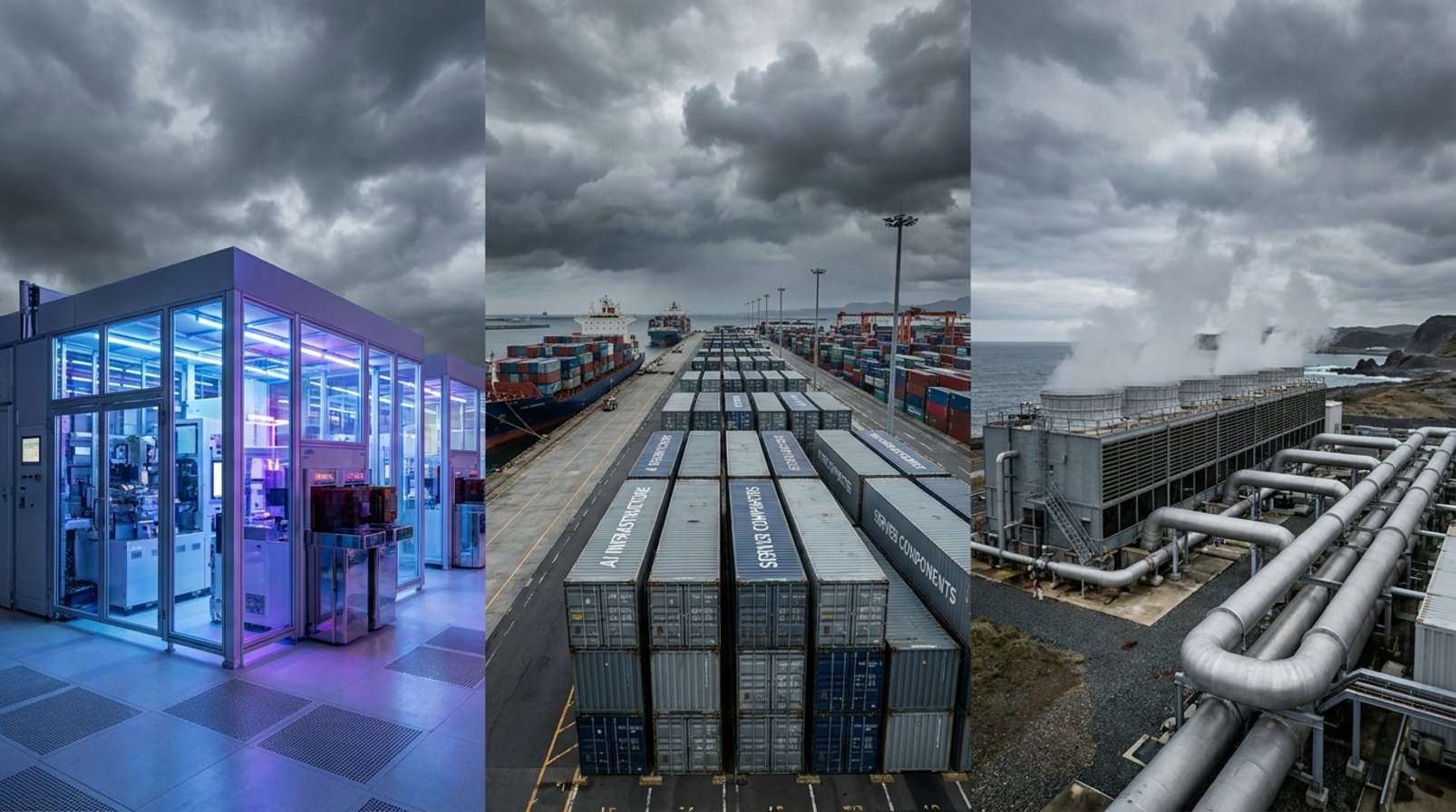
According to a Bloomberg source shared on X, Prime Minister Sanae Takaichi introduced an investment roadmap running through fiscal 2040, with a total scale of about $2.3 trillion for AI and semiconductors. Spending will focus on semiconductors and “vertical AI” – AI systems designed specifically for each industry.
The projected economic impact is also massive: semiconductor investment could generate $2.8 trillion in economic impact; “physical AI” investment could reach $895 billion; and vertical AI investment could hit $1.4 trillion by fiscal 2040. Notably, Japan is placing AI on the same strategic track as the U.S. and China as a pillar of national strategy.
For businesses, the message is not just “more money for AI,” but that the market is shifting from experimentation to industrialization. Industries such as manufacturing, logistics, retail, finance, and healthcare are likely to be where specialized AI accelerates the fastest.
Qwen-AgentWorld: Alibaba wants to teach AI to understand environments like humans do
Alibaba Qwen introduced Qwen-AgentWorld, a “native language world model” that can simulate 7 task environments, including MCP, Search, Terminal, SWE, Web, OS, and Android, within a single model. According to the development team’s description, modeling the environment is a training objective from the start, not just a later adaptation step.

The core idea is that instead of simply making AI “able to answer,” the model also needs to understand how environments work in order to become a more useful agent. Alibaba also says it is pursuing two directions: building foundation models for environment simulation and using world modeling to strengthen agent training. Performance claims are compared with Claude Opus 4.8 and GPT-5.4 on AgentWorldBench.
For marketers, this is a clear signal that future AI agents will do more than write content or summarize documents. They may learn processes, interact with systems, and operate within real-world business context – something highly relevant to CRM, marketing ops, and automation.
Kimi API is now on AWS Marketplace, targeting enterprise customers directly
Kimi.ai says the Kimi API is now available on AWS Marketplace. For teams already using AWS infrastructure, this makes it easier to access the service through centralized billing, while eligible customers can also count Kimi API usage toward their AWS EDP commitment.

This is a move with more commercial significance than simple publicity. When AI models are sold through cloud infrastructure marketplaces, enterprise purchasing barriers come down: approval processes are simpler, accounting is easier to track, and integration into existing systems becomes more convenient.
From a market perspective, AI providers are increasingly realizing that winning is not only about model quality, but also about the ability to “enter procurement” inside enterprises. That is why models, APIs, and AI services are appearing more and more within familiar cloud ecosystems.
Anthropic brings Claude into Slack as an “always-on assistant”
Anthropic has just launched Claude Tag, a persistent AI agent that works inside Slack instead of using Claude as a standalone app. Users simply tag Claude in a channel, assign a task, and the AI handles it in the background using approved tools, data, and even codebases before returning the result to the conversation thread.

According to information circulating from shared sources, Anthropic says 65% of its internal product team’s code is now generated through the company’s Claude Tag version. Staff also use it to analyze metrics, handle support tickets, and debug issues.
The major shift is that AI is no longer a “tool you open when needed” but a capability layer built directly into the place where daily work happens. This puts pressure on SaaS products that only summarize, draft, research, or coordinate workflows. If AI can handle tasks directly in Slack, the value of many intermediary workflow tools will be redefined.
AI costs are rising, and access barriers are tightening
A source shared on X claims the “cheap era” of state-of-the-art models is over, citing several signs such as Chat GPT 5.6 being pushed back to mid-July, Fable 5 being absent for nearly two weeks, government-level pre-launch review requirements, and the possibility that ID/KYC, including face scans, will be applied more broadly.

The source also argues that model costs are rising sharply, for example Fable becoming twice as expensive and Grok usage limits increasing significantly. While this is an observation that still needs confirmation from official sources, it reflects a real concern in the industry: advanced AI is trending toward being more expensive and harder to access.
For startups, especially in marketing, edtech, legaltech, or enterprise software, rising API costs could make unit economics more difficult. If input costs rise faster than revenue, smaller teams will face more pressure than large corporations with stronger budgets.
Canopy and the blockchain incubator model: lowering barriers for developers
A post about Canopy highlights the ecosystem’s “Blockchain Incubator” model: new appchains are launched quickly on the security foundation of the root chain, then can gradually move toward full independence without losing history, code, or momentum.

The appeal lies in the concept of “progressive sovereignty” – increasing autonomy over time. Teams do not have to choose between building from scratch or renting infrastructure forever. Canopy is also described as supporting AI-native templates and familiar languages such as Python and TypeScript, making it easier for product developers to adopt.
This is not a purely AI model story, but it shows an important trend: AI is driving demand for more flexible infrastructure, where products and communities can scale in stages without being locked into a fixed structure.
Financial markets continue to be shaped by the AI wave and tech stocks
In a shared market recap, tech stocks and AI-related narratives continued to strongly influence trading sentiment. The S&P 500 fell about 1.5%, while South Korean markets sold off sharply and the KOSPI dropped 9.9% – its worst level since March.

On the other hand, Google is said to replace Verizon in the Dow Jones Industrial Average, joining the “Mag 7” presence in the Dow alongside Amazon, Apple, Microsoft, and Nvidia. At the same time, Meta is reportedly developing its own market prediction app called Arena.
This picture shows that AI is no longer just a topic for labs or engineering teams. It has become a variable affecting market indices, valuations, and risk appetite – where AI communication strategies, brand positioning, and products will also face closer scrutiny.
Design AI marketing workflows and choose the right cost controls
For Vietnamese businesses, these updates point to three practical implications. First, AI is shifting from a support tool to operational infrastructure, so marketing teams need to prepare new workflows rather than just test a few isolated prompts. Second, AI costs are likely to become more tiered, so businesses should carefully assess the ROI trade-off between paid models, APIs, and cloud-integrated solutions. Third, the rise of agents and AI embedded in the workplace, such as Slack, suggests future competition will depend on the ability to integrate into existing processes, not just on output quality.

For Vietnamese brands, now is a good time to review the marketing stack: which data can be automated, which steps still require human oversight, and which tools are flexible enough to scale as AI becomes more expensive, more powerful, and more deeply embedded in business operations.
Explore more marketing analysis & guides at Marketing365.
Follow Marketing365 for in-depth marketing analysis and practical guides.
Read more articles in the same category Động thái AI.
This article focuses on the latest AI news with a perspective for the Vietnamese market.
References
- Japan just announced a $2.3 trillion investment plan for AI and semiconductors over the next 14 years
- Meet Qwen-AgentWorld
- The Kimi API is now live on AWS Marketplace
- Anthropic launched Claude Tag
- The era of cheap state of the art access to model is over
- Good morning Canopy
- A ton of things happened in the stock market today