
Contents
AI agents and chatbots differ in purpose and capability: chatbots focus on answering and conversing one message at a time, while AI agents can plan on their own, call tools, and run multiple steps to complete a goal. In short, chatbots are good at “talking,” while AI agents are good at “doing”; all AI agents can converse, but not every chatbot is an AI agent.
Key points
- Chatbots are conversational software, with the main goal of responding to messages based on predefined scripts or language models.
- AI agents self-plan, call tools, query data, and run multiple steps in sequence, then evaluate results and adjust.
- The core differences lie in purpose, ability to act, proactivity, memory/context, level of autonomy, and implementation complexity.
- Use chatbots for repetitive Q&A with a low budget; use AI agents for multi-step workflows across multiple systems; combine both when you need a seamless experience.
- SMEs should start with a basic chatbot to address urgent needs, then gradually upgrade to AI agents once processes are clear and data is available.
What is the difference between AI agents and chatbots? That is a question many marketers and small business owners (SMEs) ask when they begin applying artificial intelligence to their work. These two concepts are often used interchangeably, but in essence they solve very different problems: one focuses on answering and conversing, while the other can reason and act autonomously to achieve a goal. Understanding the difference helps you choose the right tool and avoid wasted budget and misplaced expectations.
What is a chatbot?
A chatbot is software that simulates conversation with humans through text or voice. Most chatbots operate based on predefined rules (rule-based) or language models to understand questions and provide appropriate answers. A chatbot’s main goal is response: receive a message, process it, and return an answer.

Common examples include customer service chatbots on fan pages, bots that answer frequently asked questions on websites, or Q&A assistants in banking apps. Large language model platforms such as OpenAI’s ChatGPT or Anthropic’s Claude in a basic chat interface can also be considered intelligent chatbots: they respond very well, but a conversation session by itself does not carry out actions outside the chat. You can learn more in the article what is a chatbot.
What is an AI agent?
An AI agent is an AI system capable of self-planning, making decisions, and carrying out a sequence of actions to achieve a goal, often with very little human intervention. Unlike a chatbot that only responds, an AI agent can call tools, query data, send emails, update CRM, or run multiple steps in sequence, then evaluate results and adjust.
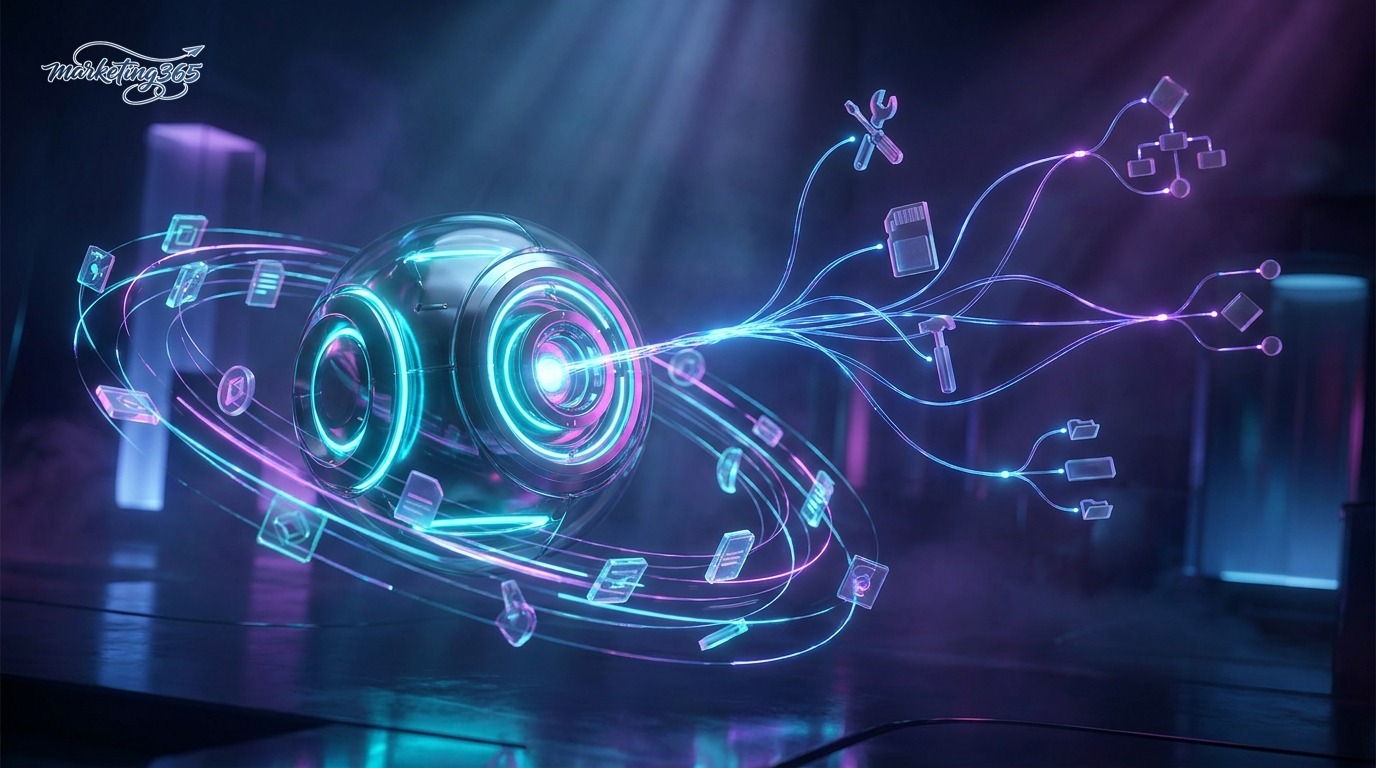
In other words, chatbots are good at “talking,” while AI agents are good at “doing.” An AI agent typically consists of four components: a reasoning engine (the language model), memory (to retain context and history), a toolset (APIs, databases, software), and a planning loop that breaks a large goal into smaller steps. To better understand this architecture, read more about what is an AI agent.
AI agent vs chatbot: comparison table
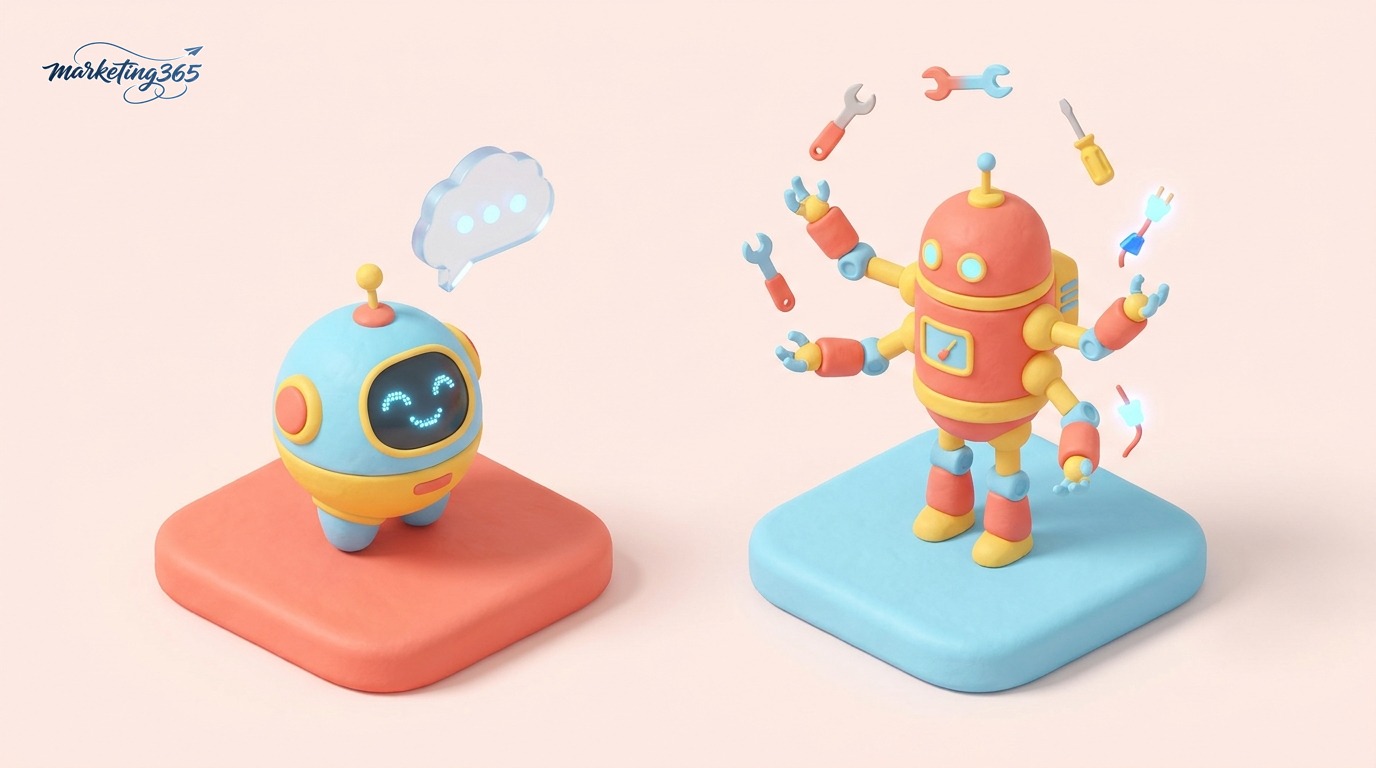
The fastest way to see the difference is to place the two concepts side by side by criteria. The table below summarizes the core distinctions between AI agents and chatbots:
| Criteria | Chatbot | AI agent |
|---|---|---|
| Main goal | Answer, converse | Complete tasks, achieve goals |
| Ability to act | Mainly text responses | Call tools, operate software, run multiple steps |
| Proactivity | Passive, waits for user input | Proactively plans and self-adjusts |
| Memory & context | Usually limited to a session | Stores long context, stateful |
| Level of autonomy | Low | High, requires little human intervention |
| Implementation complexity | Simple, fast | More complex, requires system integration |
A simple way to think about it: all AI agents can converse like chatbots, but not every chatbot is an AI agent. An AI agent is the next evolution when you give a chatbot multi-step reasoning and the ability to execute actions.
When should you use a chatbot, and when should you use an AI agent?
The choice depends on the complexity of the problem and the level of automation you need. Here are practical suggestions for SMEs and marketers:

- Use a chatbot when: the main need is answering repetitive questions (opening hours, return policies, basic product advice), the budget is limited, and you want a quick launch on a fan page or website.
- Use an AI agent when: the process involves multiple steps and requires actions across several systems, such as automatically qualifying leads, updating CRM, drafting and sending emails based on a scenario, or consolidating reports from multiple data sources.
- Combine both when: you want the chatbot to serve as the conversational front end for customers, while the AI agent handles the heavy lifting behind the scenes, such as checking inventory, creating orders, or booking appointments.
A simple rule: if the problem only needs “question and answer,” a chatbot is enough; if it needs to “do the work for humans” across multiple steps, only an AI agent can handle it. You can also learn more about building an AI agent that fits your business scale.
Examples in marketing
In real-world marketing, the boundary between the two tools becomes very clear in specific scenarios:

- Chatbot: replies to fan page inbox messages 24/7, suggests products based on keywords customers send, and collects emails in exchange for an ebook. Every interaction revolves around conversation.
- AI agent: automatically reads a list of new leads, scores them by criteria, segments them, drafts personalized email content for each group, schedules sending, and logs results into a tracking sheet — all running automatically toward the goal of “increasing conversion rates.”
- Combine: the chatbot receives a customer’s quote request, then activates an AI agent to check pricing policies, generate the quote, and send it back — a seamless customer experience.
For marketers, AI agents are especially powerful for repetitive but multi-step tasks such as sales funnel automation. Learn more in the article AI agents for marketing automation, or explore more AI guides for beginners. According to analysis from IBM and Google Cloud, AI agents are gradually becoming an intelligent automation layer on top of traditional tools.
Frequently asked questions
Will AI agents completely replace chatbots?
Not exactly. Chatbots are still the optimal choice for simple Q&A needs thanks to low cost and fast deployment. AI agents complement more complex tasks that require action; they do not eliminate chatbots. Many businesses use both in parallel to optimize cost and efficiency.

Should small SMEs invest in AI agents right away?
It is best to start with a basic chatbot to address urgent needs, then gradually upgrade to an AI agent once processes are clear and there is data to automate. This step-by-step approach helps control costs and reduce implementation risk.
Is the cost of an AI agent higher than a chatbot?
Usually yes, because AI agents require integrating multiple systems, calling models more often, and more complex maintenance. However, if they can replace many hours of manual labor, AI agents still deliver strong ROI for large-scale repetitive workflows.
In short, understanding the difference between AI agents and chatbots helps you choose the right tool for each stage: chatbots for conversation and quick support, AI agents for automating multi-step tasks. Starting from real needs, measuring results, and then expanding gradually is the smart way for SMEs to harness the power of AI without wasting resources.