
Contents
- Qwen launches multilingual TTS, emphasizing natural voice control
- GPT-6 rumors show rising competitive pressure on OpenAI
- A roadmap for building a $1 million ARR AI startup: solve the right problem, ship MVP fast, choose the right channel
- AMD, Claude Code, and the race to close the gap with CUDA
- Samsung speeds up with foldables and smart glasses powered by Gemini
- Grok Imagine is used to create a cinematic trailer, signaling AI’s deeper move into creativity
- X API is positioned as a layer of “real-time intelligence” for businesses
- Qwen 3.8 Max shows growing strength in generating complex web apps
- Claude Opus 5 is expected to launch, and the benchmark race remains hot
- Binance offers a reward for trading agents, heating up the agentic finance market
- OpenAI is reportedly about to bring GPT-5.6 Sol to Cerebras infrastructure
- The debate over blocking Kimi reflects the global AI policy challenge
- Questions over whether Kimi K3 was “distilled” from Fable: an unresolved debate
- Robinhood Chain turns wallets into a workplace for AI agents
- Claude Opus 5 is still rumored to be “on schedule,” but there is no confirmation
- Cursor Router shows the trend toward “model orchestration” rather than choosing just one model
- Tesla shifts its focus strongly toward AI infrastructure, robots, and autonomy
- AI is no longer just a content tool: three things Vietnamese businesses should do now
- References
The global AI market continues to heat up with new model launches, infrastructure competition, debates over distillation, and a wave of AI applications in consumer products. For Vietnamese marketers, this is not just a technology story but a signal for how content, campaigns, cost optimization, and product building will evolve next year.
Key points
- Qwen, OpenAI and Anthropic are all mentioned around new model launches or leaks, showing that the frontier AI race remains intense.
- AI is spreading into hardware, from foldable phones and smart glasses to robots and autonomous vehicles.
- Businesses are beginning to use AI in practical operations: model routers, trading agents, social media monitoring, wallet assistants, and chip design optimization.
- For the Vietnamese market, the opportunity lies in rapid productization, language localization, and choosing the right AI use cases with clear value.
Qwen launches multilingual TTS, emphasizing natural voice control
Qwen introduced Qwen-Audio-3.0-TTS with two versions: Flash for real-time interaction and Plus for higher-quality voice generation. The notable point is that the model supports inline tags to control vocal nuance such as whispering, anger, breathing pauses, or laughter; it also allows natural-language control like “read slowly like a bedtime story.”
According to the published information, the model supports 16 languages, can handle noisy reference input better, and can generate voice up to 3 minutes in a single pass. Qwen also said the product is ranked No. 1 on the Artificial Analysis TTS Leaderboard. For content marketers, this is a clear signal that voice AI is moving from “can read” to “can read with intent,” serving audio ads, voice branding, and omnichannel customer experiences. Source: Qwen (@Alibaba_Qwen)
GPT-6 rumors show rising competitive pressure on OpenAI
In social media discussions, some opinions suggest that “leaks” about GPT-6 appeared right after Kimi K3 and Qwen 3.8 launched, fueling speculation that OpenAI may be preparing a new release. Although this is not official information, it reflects an important reality: the gap between leading models is narrowing, and product announcement cycles are being accelerated by competition.

For businesses, the lesson is not to chase rumors, but to build systems that can switch models quickly as the market shifts. Source: Haider (@haider1)
A roadmap for building a $1 million ARR AI startup: solve the right problem, ship MVP fast, choose the right channel
One widely shared framework is how to build an AI business that reaches $1 million ARR in 2026: start with a real problem worth solving, identify a customer segment with clear demand and budget, build an MVP in 1–2 weeks, then focus distribution on 1–2 suitable channels.

The suggested list of places to find problems is quite practical: from personal experience, complaints on X/Reddit, spreadsheet “workarounds,” negative reviews on rating platforms, to emerging trends that create new demand. For Vietnamese marketers, this is a reminder that AI startups do not win because of model “intelligence,” but because they understand the pain point, have a clear message, and distribute effectively. Source: Okara (@askOkara)
AMD, Claude Code, and the race to close the gap with CUDA
One notable argument is that advances in coding AI could help AMD accelerate ROCm development and narrow the gap with CUDA. According to the cited content, AMD said it would use Claude Code for chip design and software engineering after its recent investment in Anthropic.
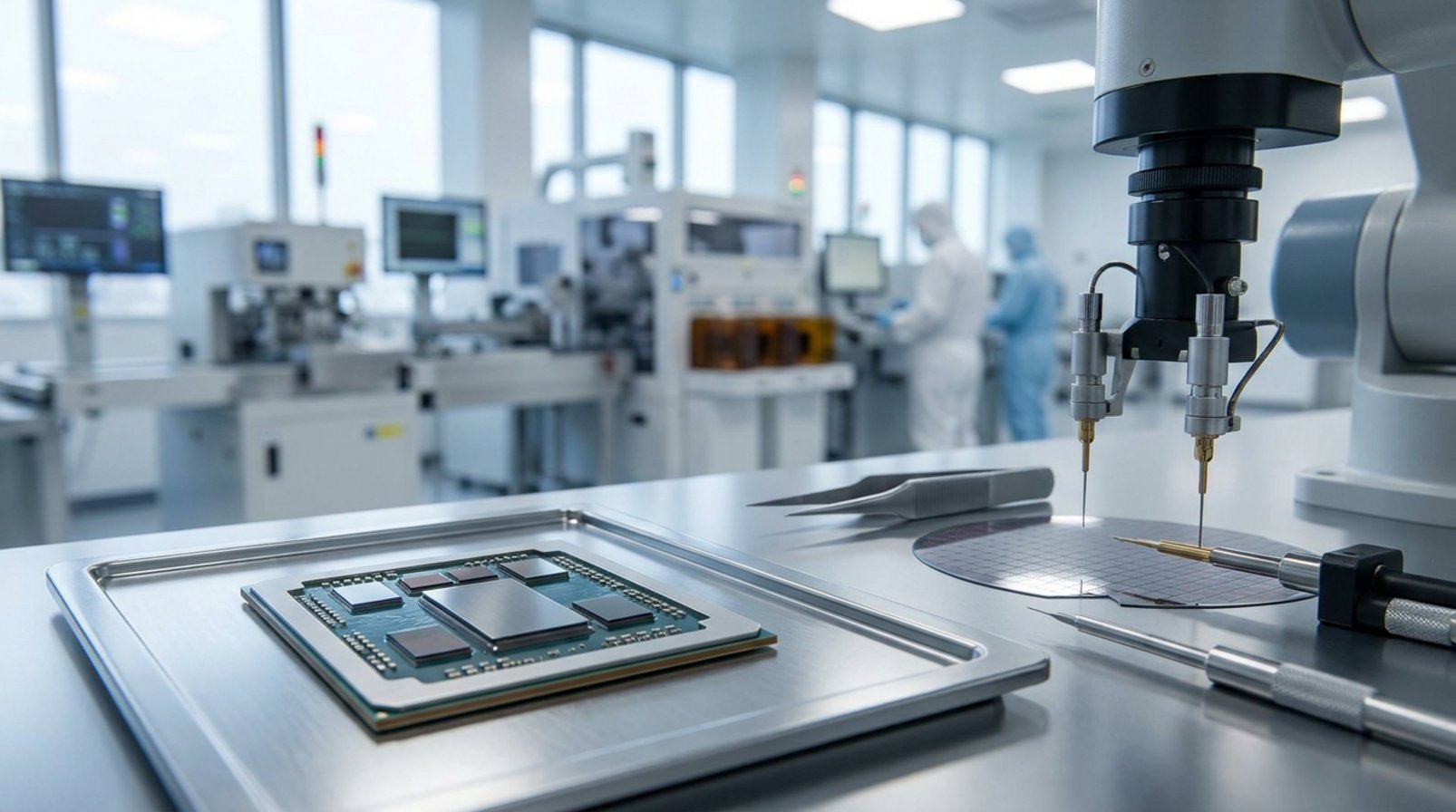
This is a classic example of how AI is not only for content generation or chatbots, but is also moving deep into the core technical workflows of the semiconductor industry. If they watch this trend, B2B marketers in Vietnam can spot opportunities in AI solutions that support engineering, DevOps, operational optimization, and technical documentation automation. Source: Jukan (@jukan05)
Samsung speeds up with foldables and smart glasses powered by Gemini
Samsung was mentioned for launching a new wide-format foldable phone with several upgrades such as a silicon-carbon battery, anti-reflective inner display, 7 years of OS updates, and Gemini Intelligence integration. At the same time, the company also introduced new smart glasses at Galaxy Unpacked with Snapdragon AR1 Gen 1, Gemini AI, live translation, POV camera, AI notes, message summaries, and navigation support.
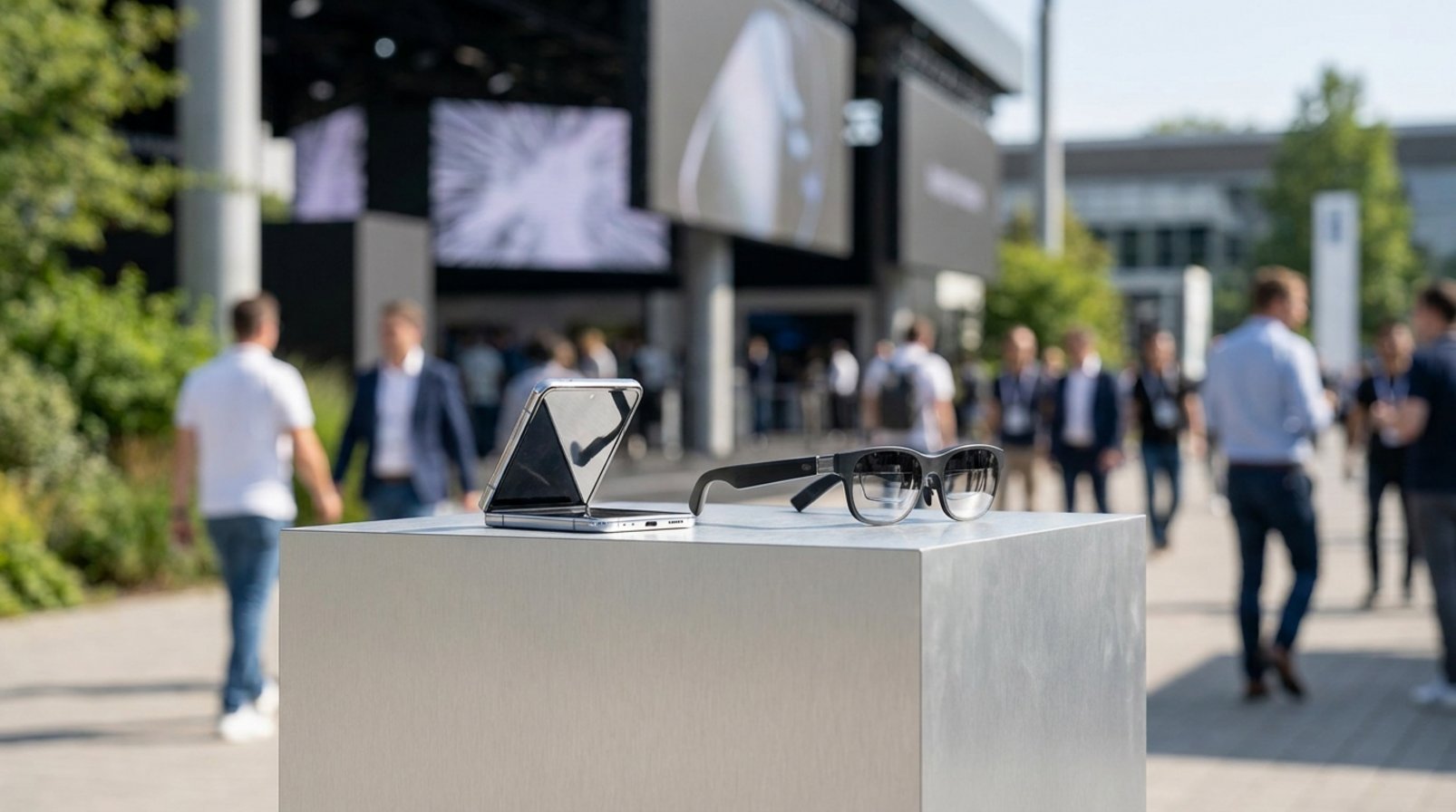
The notable point is that AI is being “packaged” into consumer devices in increasingly natural ways. This opens up opportunities for content, e-commerce, and customer experiences built around voice, AR, and personal assistants. Source: Beebom (@beebomco); Prasadtechintelugu (@iamprasadtech)
Grok Imagine is used to create a cinematic trailer, signaling AI’s deeper move into creativity
A trailer for Mel Gibson’s “The Odyssey” project was shared as having been made with Grok Imagine. While the production details should be viewed cautiously, the information still reflects a major trend: generative AI is moving deeper into pre-production and rough-cut workflows in the creative industry.

For marketers, this is a sign that concept videos, storyboards, mood boards, or ad drafts can be produced much faster. Competition will not only be about ideas, but also about testing speed. Source: Damin Toell (@damintoell)
X API is positioned as a layer of “real-time intelligence” for businesses
Another notable highlight is how X API is described as a tool that helps businesses build agents with real-time context: tracking brand mentions, customer feedback, competitors, service incidents, sentiment trends, and even industry news. The core idea is that instead of staff manually opening multiple tabs and scanning social media, agents can continuously filter important signals.

For marketers, this is a very close model to next-generation social listening: not just listening, but also suggesting actions. If implemented properly, businesses can respond faster to crises, product insights, and sudden market changes. Source: X Freeze (@XFreeze)
Qwen 3.8 Max shows growing strength in generating complex web apps
Qwen 3.8 Max preview was recently tested on a task to generate a 3D flight simulator running in the browser with relatively complete graphics, smooth flight physics, and an experience similar to lightweight versions of Microsoft Flight Simulator or FlightGear. Although the test was a single demo, it shows that newer models are moving closer to creating complex interactive products rather than just answering text prompts.

For product marketers, this means prototypes for landing pages, interactive demos, or branded mini-games can be built much faster. Source: Build Fast with AI (@BuildFastWithAI)
Claude Opus 5 is expected to launch, and the benchmark race remains hot
Many posts suggest that Claude Opus 5 could launch on Thursday in many time zones, although there is still no official confirmation and delays remain possible. Some predictions say benchmark performance will come close to Fable 5 but may not surpass it.
Even if it is only a release-date rumor, it still reflects something familiar in today’s AI industry: users, developers, and businesses all watch launch schedules the way they watch iPhone release dates. That expectation directly affects product strategy, pricing, and marketing messaging. Source: Rishabh gupta; Pankaj Kumar
Binance offers a reward for trading agents, heating up the agentic finance market
A competition worth 60,000 USDG is said to have been launched by Binance for the best AI trading agent, running on Robinhood Crypto Chain through Virtuals. The accompanying description says the agents will be deployed, allowed to trade for one week, and the highest PnL will win the prize.

Although the numbers and surrounding ecosystem should be read as part of a fast-developing picture, the core point is this: agents are no longer just question-answering assistants, but are becoming acting entities in digital finance. This could drive demand for risk monitoring, digital identity, and UI/UX for humans managing agents. Source: Rifat Ahmed (@Rifat_EE)
OpenAI is reportedly about to bring GPT-5.6 Sol to Cerebras infrastructure
Another rumor says OpenAI is preparing to bring GPT-5.6 Sol to Cerebras infrastructure, tied to an earlier claim that processing speed could reach 750 tokens per second. If it happens, this would strongly emphasize ultra-fast inference, which is becoming increasingly important for real-time user experiences.

For marketers and product teams, speed is not just a technical metric. It affects the perceived “naturalness” of chatbots, sales agents, creative tools, and every touchpoint that needs near-instant response. Source: Token Gremlin (@TokenGremlin)
The debate over blocking Kimi reflects the global AI policy challenge
A series of comments argue that if the U.S. blocks Kimi, it may not significantly reduce the model’s commercial impact in the U.S., but it could create a political backlash, making Kimi look like a leading AI symbol in China. The argument also says restrictions could raise AI costs for U.S. companies and slow the adoption of agentic AI.

This topic shows that AI is no longer a purely technological race, but is closely tied to geopolitics, supply chains, and public policy. For Vietnamese businesses, the practical consequence is that the fragmentation of model and infrastructure ecosystems may become increasingly visible. Source: Xiaoyin Qu (@quxiaoyin)
Questions over whether Kimi K3 was “distilled” from Fable: an unresolved debate
Also around Kimi K3, there are rebuttals arguing that the distillation accusations from Fable are unreasonable because training a large model usually takes many months, while the model in question only existed for a very short time. The counterargument emphasizes that K3 has publicly disclosed architectural innovations, and distillation only transfers outputs rather than copying internal structure.

This is an important debate for the AI industry: the line between legitimate learning, reuse of output signals, and technology theft still has many gray areas. Source: Xiaoyin Qu (@quxiaoyin); Arnaud Bertrand (@RnaudBertrand)
Robinhood Chain turns wallets into a workplace for AI agents
Robinhood is described as having rolled out multiple new layers of functionality for USDG and ETH: private transfers with three security levels, payments via @username, pay links, encrypted balances using FHE, and an Agents tab that lets users register AI agents with spending limits and revocable access. Notably, the AI Terminal lets users talk to the wallet in natural language, while AI does not move money directly but only suggests actions for the user to approve.

For marketers, this is a UX model worth watching: AI does not fully replace user decisions, but it greatly reduces friction in execution. These principles could be applied to payments, loyalty, and digital product onboarding. Source: HoodUSDP (@HoodUSDP)
Claude Opus 5 is still rumored to be “on schedule,” but there is no confirmation
Another repeated update on Claude Opus 5 says the model could be released on Thursday across most time zones, barring a last-minute delay. The post also repeats the prediction that the model’s benchmark results will compete with Fable 5 but are unlikely to surpass it.

The fact that multiple sources are mentioning the same time frame shows that market expectations are converging on an important release. However, for content creators or product investors, caution with unconfirmed information remains a must. Source: Pankaj Kumar (@pankajkumar_dev)
Cursor Router shows the trend toward “model orchestration” rather than choosing just one model
Cursor is mentioned with Router, a system that automatically selects the right model for each task and is promoted as delivering frontier-quality results at 60% lower cost. From a product perspective, this is an important step: instead of forcing everything through one model, the system balances cost, speed, and accuracy based on each request.

This is a direction that many marketing and product teams should pay attention to, because it allows broader AI deployment without exploding costs. In practice, drafting, summarization, classification, and coding tasks may each require different models. Source: Cursor AI
Tesla shifts its focus strongly toward AI infrastructure, robots, and autonomy
In its Q2/2026 earnings call, Tesla was described as having officially shifted from a car company to large-scale AI infrastructure, autonomous vehicles, and humanoid robots. The source summary shows the company has started production of Cybercab and Tesla Semi, is about to produce Optimus and Megapack 3, and is expanding into batteries, lithium, cathode, and LFP.
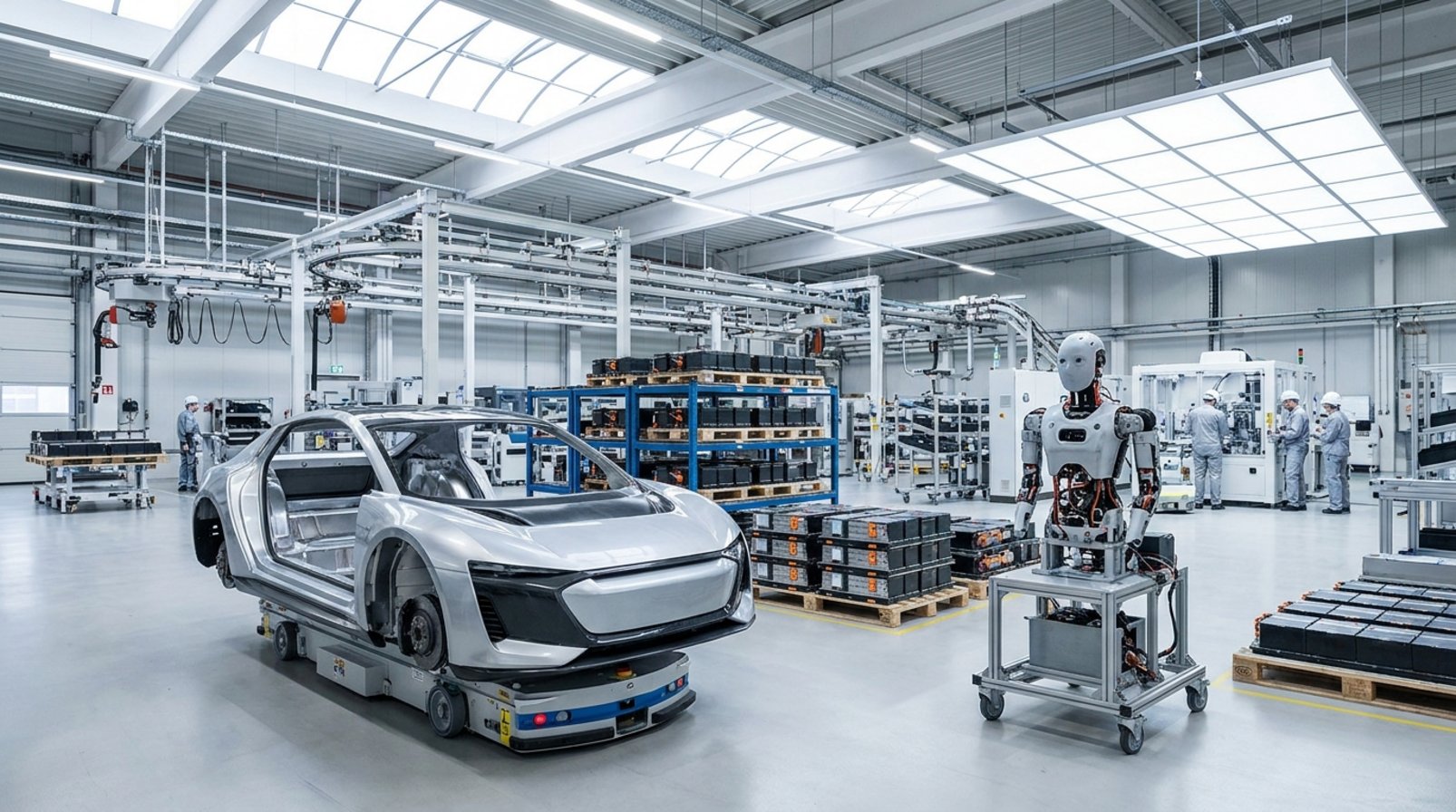
The big message here is that AI is no longer just in software, but is driving a race in factories, energy, semiconductors, and robotics. For marketers tracking technology trends, Tesla remains a classic example of repositioning a brand around AI to expand the growth story. Source: Ming (@tslaming)
AI is no longer just a content tool: three things Vietnamese businesses should do now
For Vietnamese businesses and marketers, these 19 stories point to three very clear actions. First, do not view AI as a standalone “content creation tool”; treat it as an infrastructure layer that can enter products, customer service, social listening, payments, and internal operations. Second, the market is moving quickly toward multi-model and agent-based systems, so integration capability, model routing, and cost control will become competitive advantages. Third, demand for Vietnamese localization, Vietnamese context, and Vietnamese business workflows remains very large — this is a gap for teams that can ship fast, solve the right pain points, and distribute well.

In short, the AI race is no longer just about who has the stronger model, but who can turn a model into an experience and revenue faster.
See more marketing news and guides at https://marketing365.vn.
Follow more updates from Marketing365 to stay on top of the latest marketing trends.
Read more articles in the same category AI Developments.
This article focuses on the latest AI news with a perspective for the Vietnamese market.
References
- Qwen (@Alibaba_Qwen)
- Haider. (@haider1)
- Okara (@askOkara)
- Jukan (@jukan05)
- Beebom (@beebomco)
- Damin Toell (@damintoell)
- X Freeze (@XFreeze)
- Build Fast with AI (@BuildFastWithAI)
- Rishabh gupta (@ExplorerRishabh)
- Rifat Ahmed (@Rifat_EE)
- Token Gremlin (@TokenGremlin)
- Xiaoyin Qu (@quxiaoyin)
- Arnaud Bertrand (@RnaudBertrand)
- HoodUSDP (@HoodUSDP)
- Pankaj Kumar (@pankajkumar_dev)
- Cursor AI
- Ming (@tslaming)