
Contents
- MIT raises a bigger question about AI: social impact matters as much as performance
- U.S. Congress discusses making “whoever uses AI pay the electricity bill” for data centers
- Americans are still not eager to use AI to read the news
- AI can be a tool against misinformation, but it must be deployed correctly
- AI in content marketing must improve quality, not just output
- References
AI continues to change how brands produce, distribute, and measure content, but the latest picture shows the game is shifting from “using AI fast” to “using AI responsibly, with infrastructure and trust.” For Vietnamese marketers, this is not just a technology story, but also one about cost, content credibility, and how to build lasting relationships with readers.
Below are 4 notable signals from the latest international sources, compiled from a useful angle for those working in content marketing.
MIT raises a bigger question about AI: social impact matters as much as performance
At the “AI and Society” forum organized by MIT, researchers and experts discussed the impact of AI technology on the labor market, the nature of work, public debate, election governance, and many other social topics. The event featured not only research presentations and panel discussions, but also an artistic performance exploring how generative AI enters creative life.
The key point for content professionals is that MIT is placing AI in a broader frame: not simply as a speed-boosting tool, but as a force shaping social behavior and public norms. This reminds brands that applying AI to content marketing should not be measured only by publishing speed, but also by accuracy, transparency, and the long-term impact on trust.
Source: MIT News, “Exploring the societal impacts of AI”.
U.S. Congress discusses making “whoever uses AI pay the electricity bill” for data centers
According to CNBC, a bill moving through the U.S. Congress could require tech companies to bear the energy costs associated with data centers serving AI. This is a detail worth watching because it shows the hidden costs of AI are gradually moving out of the background and becoming a public policy issue.
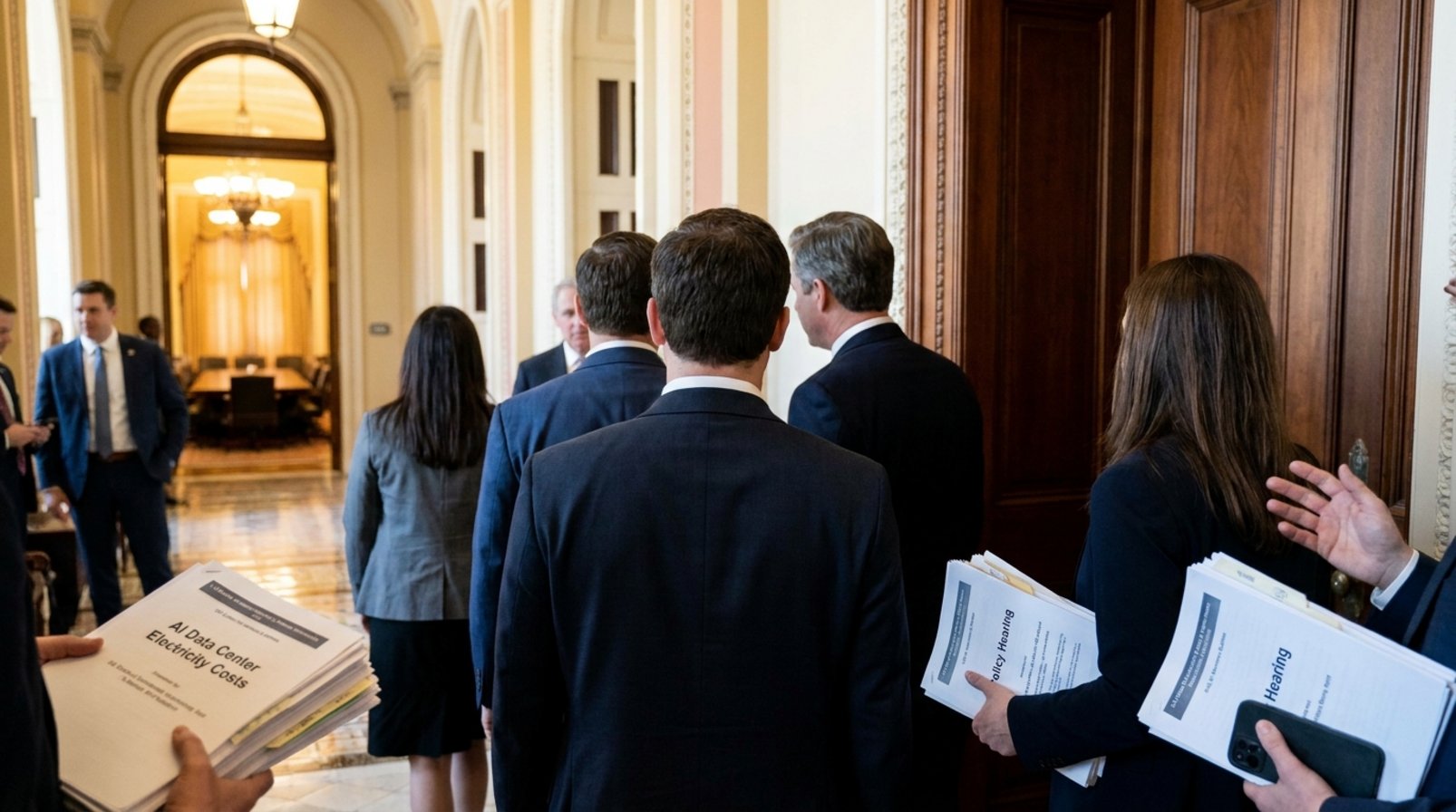
For content marketing teams, the message here is that AI infrastructure is no longer “free” or invisible. As the volume of data processing, content creation, and personalization increases, operating costs, energy consumption, and system optimization requirements rise as well. Businesses looking to deploy AI in marketing therefore need to factor in both content efficiency and operational economics, rather than focusing only on the ability to generate text quickly.
Source: CNBC, “Tech companies would have to pay AI data center energy costs under bill moving in Congress”.
Americans are still not eager to use AI to read the news
A Gallup survey shows that using AI to access news in the U.S. is still very rare. In other words, even though AI has become familiar in many workflows, readers still do not see it as a natural or trustworthy news channel to replace traditional journalism sources.

This is an extremely important signal for content publishers and brands doing content marketing. It shows that the biggest barrier is not technology, but trust: readers want to know who is behind the content, how it is verified, and why they should believe it. In a context where AI helps write, summarize, or recommend content, the roles of editing, verification, and brand voice must be kept firmly in place.
Source: Gallup News, “Use of AI to Get News in U.S. Is Rare”.
Read more: AI in Marketing Grows Up: Balancing Speed, Cost, and Complexity
Read more: NotebookLM Rename and AI Search: Why Vietnamese SEO Must Re-control Its Content Infrastructure
AI can be a tool against misinformation, but it must be deployed correctly
Knowable Magazine shows AI is being seen as a tool with potential to support the fight against misinformation. Although the original article could not be fully accessed due to technical limitations, the theme it points to is very clear: AI does not only create content, but can also help detect, cross-check, and warn about signs of distortion in digital spaces.

For content professionals, this is an important glimpse into the future of editorial work: AI can help screen facts, detect anomalies, and speed up fact-checking workflows. However, if decision-making is handed over entirely to machines, the risk of errors remains. The most suitable model is therefore “AI assists, humans remain ultimately responsible.”
Source: Knowable Magazine, “AI shows promise in the fight against fake news”.
AI in content marketing must improve quality, not just output
These four signals show that AI in content marketing is entering a more mature phase. In Vietnam, where businesses often prioritize speed, cost, and short-term efficiency, the key lesson is not to treat AI as an “automatic article machine,” but as infrastructure that supports content strategy.

- Prioritize reliability: If using AI to write, summarize, or distribute content, there must be a clear review process and source verification.
- Count operating costs too: AI efficiency is not just about how many pieces are produced, but also about tool costs, data, editorial staff, and digital infrastructure.
- Build trust with readers: Content with professional expertise, Vietnamese context, and a distinct brand voice will last longer than mass-produced machine-generated content.
- Use AI to improve quality, not just output: The best applications are topic research, logic checks, headline suggestions, SEO optimization, and fact-check support.
In a context where readers are increasingly sensitive to shallow or unverified content, Vietnamese marketers who use AI to improve editorial quality first will have a long-term advantage over those who only chase volume.
Explore more marketing analysis & guides at https://marketing365.vn.
Follow more analysis from Marketing365 to stay updated on marketing trends.
Read more articles in the Digital Trends category.
References
- MIT News – Exploring the societal impacts of AI
- CNBC – Tech companies would have to pay AI data center energy costs under bill moving in Congress
- Gallup News – Use of AI to Get News in U.S. Is Rare
- Knowable Magazine – AI shows promise in the fight against fake news