
Contents
AI is not only changing how content is created, but also how people gather data, make decisions, and execute creative workflows. For Vietnamese marketers, the three stories below point to a clear trend: AI is moving from a support tool to a “teammate” in work that demands speed, systems thinking, and the ability to process complex knowledge.
Key points
- AI is being used to speed up decision-making in environments that demand accuracy and rapid response.
- Even beginners can build AI applications if they have the right guidance process and supporting tools.
- In biomedical research, AI is shifting from chatbot to “co-scientist” that can participate in the entire workflow.
- For content marketing, AI’s greatest value lies in research speed, idea structuring, and content personalization.
AI and decision-making speed: lessons from battlefield intelligence
Federal News Network shows that AI is being viewed as a tool to expand information-processing speed in the context of battlefield intelligence. The key point is not only that AI can read data faster than humans, but that it can shorten the time from signal collection to action.
For content marketers, the significance of this story lies in operational thinking: if AI can help teams respond faster to complex data, then in marketing it can also help businesses identify emerging topics early, categorize insights from customer feedback, and recognize market signals that are valuable for content.
In other words, AI does not replace content strategy, but it can narrow the gap between data and creative decisions. What marketers need is a clear review process to ensure accuracy, especially when content involves sensitive information or requires a high level of trust. Source: Federal News Network.
Beginners can build AI too: a suggestion for non-technical content teams
From MIT News, the notable story is how people without a deep technical background can still develop AI programs for military applications if they are supported by the right learning model, mentorship, and tools. The focus here is not on turning everyone into programmers, but on lowering the barrier so AI can be built and tested by people who are “non-experts” in the traditional sense.

This is a signal that is very close to the reality of today’s content marketing teams. Not every team has a data scientist or AI engineer, but marketers can absolutely learn how to ask the right questions, write strong prompts, check outputs, and connect AI tools to the real needs of a campaign. In that case, AI becomes an organizational capability, not just content-generation software.
The key lesson for brands is to invest in AI literacy for content teams, rather than only buying tools. Without a guiding framework, people can easily use AI in a trial-and-error way, leading to inconsistent content or distorted messaging. Source: MIT News.
Stanford’s Biomni: when AI moves closer to a research “colleague”
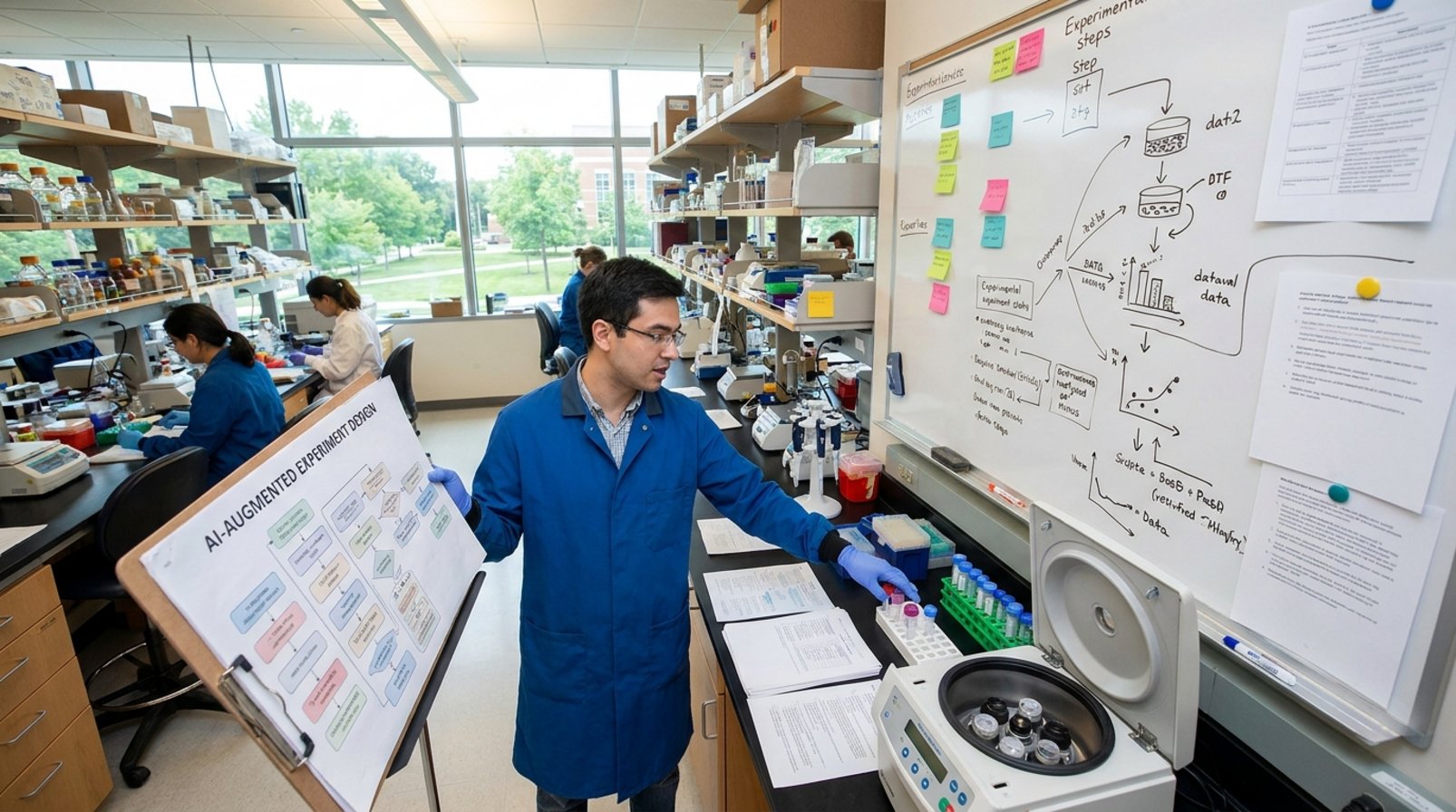
Stanford Report introduces Biomni as an AI-powered biomedical co-scientist, meaning a “co-scientist” that can participate in the entire biomedical research process. According to Stanford’s description, the system does not just answer questions like a chatbot, but can help design research workflows, handle natural-language requests, and reduce repetitive tasks.
Read more: Employee Content and AI-Driven Distribution: Two Directions Reshaping Content Marketing in 2026
What stands out is that Biomni has been used in more than 10,000 laboratories, showing that real demand for specialized AI agents is growing quickly. For content marketers, this reflects a major shift in AI: from generating standalone content to participating in end-to-end knowledge workflows.
In marketing, a similar future could see AI supporting everything from customer persona research and message drafting to article structure recommendations and content optimization for each audience segment. Still, the final value remains with people: the ability to verify, brand thinking, and an understanding of cultural context. Source: Stanford Report.
Use AI in a controlled content workflow with a distinct brand voice
These three stories all meet at one point: AI is shifting from a standalone tool to a system that accelerates knowledge and decision-making. For Vietnamese businesses, especially in content marketing, this has three implications.

First, AI should be seen as a new layer of content infrastructure, not just a tool for writing articles faster. Second, content teams should be trained to work with AI through a clear workflow: research – outline – source checking – editing – publishing. Third, brands must keep their role as the “gatekeeper” to ensure accuracy, tone, and relevance for Vietnamese readers.
In an increasingly competitive content landscape, the advantage does not lie in using AI more or less, but in using it systematically, with control, and with a distinct identity. This is also the most suitable direction for brands that want to improve content marketing quality while maintaining trust.
See more marketing news and guides at https://marketing365.vn.
Follow more updates from Marketing365 to stay up to date with the latest marketing trends.
Read more articles in the Digital Trends category.
References
- Federal News Network — AI in battlefield intelligence: Expanding the speed of decision-making
- MIT News — How novice coders can develop AI programs for military applications
- Stanford Report — Meet Biomni – an AI-powered biomedical co-scientist