Contents
AI in games is no longer seen as just a simple speed-up trick. Two recent developments show that as soon as AI touches the feeling of “replacing real people” or blurs the line between human-made and machine-assisted work, communities can react very quickly; on the other hand, one studio that openly says it avoids generative AI has turned that stance into a trust advantage. For Vietnamese marketers, this is a notable signal because with the same technology, the way it is announced and the way choice is preserved can completely change market reaction.
- Key point:
- AI in games is being judged not only by performance but by whether it feels like it is replacing a real person’s role.
- Transparency and choice are becoming part of brand value, no longer a side issue.
- Any studio or brand that clearly states its AI boundaries will be more likely to maintain trust than one that leaves users to guess.
- Vietnamese marketers need to think of AI as a decision about messaging, process, and accountability, not just a production tool.
AI in games: why the same tool can be seen as an advantage or a risk
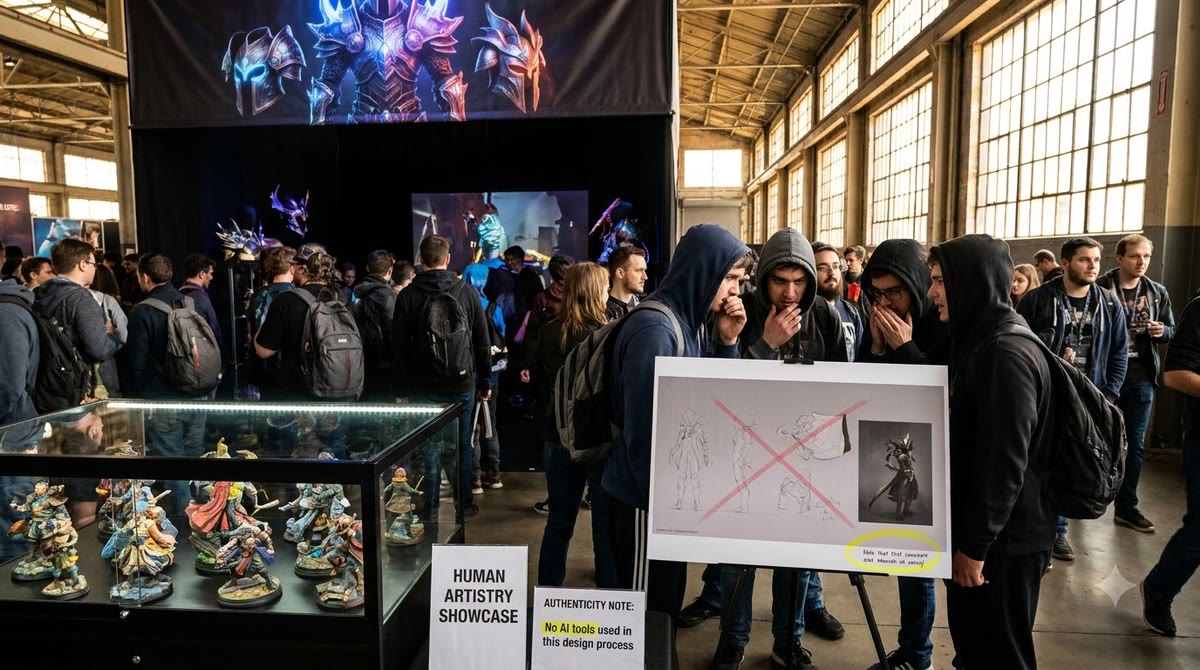
PC Gamer noted an indie game that drew backlash simply because even a tiny AI trace was enough for some players to label it “slop” and question both the quality and the developer’s attitude toward making games. In the opposite direction, VPEsports told the story of Digital Extremes, the studio behind Warframe and Soulframe, which publicly maintains a no generative AI stance in content production and even treats that as part of its development identity. Together, these two developments say the same thing: the market no longer sees AI as a neutral layer of technology. It is read as a signal of how much respect a brand has for real human work, how tightly it controls quality, and how it stands in the face of controversy.
What matters for marketers is that the boundary around “using AI” is no longer the tool itself. It lies in how users perceive whether that tool is replacing someone, hiding a step, or obscuring traces of labor. When that perception turns negative, the reaction can come before the product is even judged on features.
Choice, transparency, and trust: what is changing in the AI game market
The market is showing a fairly clear mechanism: a studio’s bargaining power with players increasingly depends on its ability to give them choice and explain things clearly. In PC Gamer’s account, the negative reaction erupted when viewers felt AI appeared as a sign of cutting corners or taking shortcuts. With VPEsports, Digital Extremes chose the exact opposite path: stating an “AI-free” position in advance to frame community expectations. These two approaches differ not only in philosophy; they differ in how trust is handled. One leaves users to infer meaning and therefore carries interpretation risk. The other actively sets boundaries and reduces room for suspicion.
A small AI trace: trust costs rise faster than production costs
When a work is suspected of using AI, even at a very light level, the price does not stop at online debate. It brings suspicion about quality, originality, and attitudes toward creative labor. PC Gamer captures that feeling well: even a single AI dot is enough to trigger backlash. For marketers, the lesson is that the cost of trust can be greater than the savings gained from the tool. If AI makes users feel something is “not real,” the brand has to spend more to explain, prove, and put doubts out.
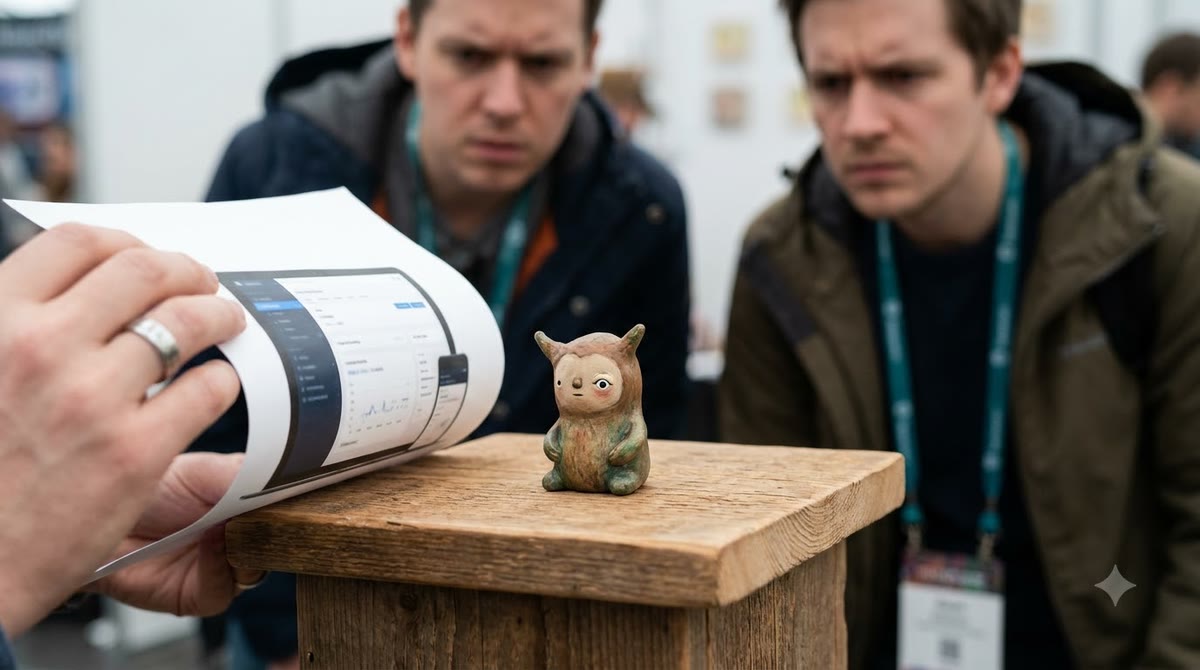
VPEsports shows a different path: saying no to generative AI does not make a studio weaker; it can help it maintain a clear position in the eyes of the community. This is a very practical advantage in markets where buyers treat consistency as a quality standard.
The AI-free stance: clear boundaries help a brand keep bargaining power
Digital Extremes is not just choosing a different tool. It is choosing a different positioning strategy. By saying there are “no neural networks in the game,” the studio turns a technical limitation into a brand promise: the content is made by people, responsibility stays with humans, and the experience is controlled to a standard the community can understand. From a marketing perspective, this is an example of turning a constraint into a trust asset.

PC Gamer shows that if there are no clear boundaries, the community will set them for you. At that point, the brand loses the right to tell the story first and has to chase the story users have already formed in their heads.
AI in creative content: buyers have the right to know and the right to choose
Both sources point to a new standard: buyers do not just want the product to work, they want to know how it was made and how much AI was involved. That is a very basic right to choose. If marketers ignore that right, they put themselves in a position of being pressed for answers after the product has already launched.
In the game market, that choice may be “do I accept AI or not.” In the broader Vietnamese market, it may be “which stage is AI used in, is there human review, and does it affect quality or user rights.”
How AI in games will be scrutinized in Vietnam
For Vietnamese businesses, this story is very close to home. Games, apps, short videos, ad content, and even services that use AI to speed things up can all face the same test: do users feel deceived, information is being hidden, or humans are being replaced too much? In a context where Vietnamese users react quickly to a lack of transparency, a vague introduction like “AI-assisted” is not enough if the product actually depends heavily on machines. On the other hand, overhyping “AI” can also backfire if what lies underneath is only very basic operations.
What is notable is that the Vietnamese market does not just buy products. It also buys trust, especially in sectors with strong communities such as gaming, education, personal finance, and e-commerce. So any brand using AI should be ready to explain three things: what AI does, where humans review it, and whether users can choose not to use AI if it affects their experience.
What to do about AI in games and creative content
- State clearly which stage AI is used in, so users do not have to guess and react on your behalf.
- Set an internal boundary: which steps must be reviewed by humans, and which steps can be supported by AI.
- If you want to build trust, make transparency part of the product message, not just a small note.
- Before expanding AI, check whether the savings are greater than the cost of explanation and the risk of losing trust.
Seen more broadly, AI in games is foreshadowing a new standard for many marketing industries: technology only has value when it does not make buyers feel replaced, misled, or stripped of choice. Whoever solves those three points will find it easier to keep trust.
See more marketing analysis and how-to guides at https://marketing365.vn.
Follow more analysis from Marketing365 to stay updated on the latest marketing trends.
Read more articles in the Digital Trends category.
References
- PC Gamer — A touch of AI is all it takes to trigger backlash, as a promising new indie falls afoul of slop skeptics
- VPEsports — Generative AI in game dev 2026: why Warframe chose humans