
Contents
- SEO in the AI search era: control is tilting toward the platforms
- What has changed in AI search, tracking, and Google tools — and why SEO has to work differently
- AI Mode with link carousels: content has to be ready to be chosen as a source
- AI tools are cross-citing sources: brands have to think beyond traffic to their own site
- google.com/goto and the new intermediary layer: tracking, scraping, and attribution all get harder
- Google Ads API Developer Assistant: SEO is getting closer to data operations work
- Control over sources, copyright, and measurement is deciding SEO value
- What pressure will SEO in Vietnam face as AI search and tracking change the rules?
- Doing SEO so its value can still be measured in an AI environment
- Reference sources
SEO is no longer a game that revolves only around rankings and clicks. As AI search, source-linking mechanisms, and the way Google handles access change, Vietnamese marketers have to treat SEO as a problem of risk control, content transparency, and remeasuring the real value of traffic.
What stands out is that the recent developments are not saying the same thing, but they are all pushing in the same direction: control over the flow of information is shifting. Any business that still optimizes by old habits will easily end up with visibility but little ability to prove value.
Key points
- AI search is making the question “where are you seen?” almost as important as “how high do you rank?”
- Google is tightening access and adding more intermediary layers, so SEO now has to account for data risk, scraping, and measurement traces.
- Source transparency, content structure, and the ability to be cited by AI/Google will directly affect SEO performance.
- In Vietnam, the biggest challenge is for marketing teams to connect SEO with tracking, data rights, and business reporting.
SEO in the AI search era: control is tilting toward the platforms
Signals from Google AI Mode, AI tools, and access-tracking mechanisms show that SEO is being pulled away from the old model of “optimize pages to rank” and into a new model of “optimize so you are still surfaced, cited, and measured.” Search Engine Land says Google is adding link carousels in AI Mode for developing topics, while Search Engine Journal reports data showing that AI tools can recommend one brand but cite a different website. These two things meet at one point: users no longer move in a straight line from query to your website, but may receive an answer in an intermediary layer and only then decide whether to click.
At the same time, Search Engine Roundtable says Google Search is rolling out google.com/goto as an intermediary URL to help prevent scraping of search results. Even if the technical goal is to protect the system, the consequence for marketers is clear: the path of traffic and measurement signals is becoming more layered. SEO is therefore not just about optimizing content, but also about optimizing whether your content can still be “seen” and “credited” when the platform stands between the user and the source.
What has changed in AI search, tracking, and Google tools — and why SEO has to work differently
This section looks only at what has been verified in the sources, because this is the part that directly affects the daily work of SEO and content teams.
AI Mode with link carousels: content has to be ready to be chosen as a source
Search Engine Land describes Google as adding link carousels for developing topics in AI Mode. That means Google is no longer just returning a flat list of results as before, but is experimenting with guiding users through contextual clusters of links. For marketers, this is a signal that content structure, the clarity of answer paragraphs, and topical relevance will matter more than keyword stuffing. If an article is not selected by AI or the system as a reference point, it may still exist on the site but lose the chance to appear in the new display layer.

Source: Search Engine Land
AI tools are cross-citing sources: brands have to think beyond traffic to their own site
Search Engine Journal shows cases where an AI tool recommends a brand but cites a different site. This is an important SEO issue because it blurs the line between “being mentioned” and “being credited.” A business may appear in an AI answer, but the source link may flow elsewhere. In that case, content strategy cannot focus only on driving clicks; it also has to account for building source traces, credibility, and consistency between original content and external signals.

Source: Search Engine Journal
google.com/goto and the new intermediary layer: tracking, scraping, and attribution all get harder
Search Engine Roundtable reports that Google is using google.com/goto as an intermediary layer in search results to limit scraping. For SEO, this is not just a technical Google story but a warning about data cleanliness. If part of the path is obscured by an intermediary layer, marketing teams will have a harder time reading traffic sources, comparing behavior, and explaining why a query has visibility but does not produce matching conversions.
This reality forces businesses to revisit the entire analytics system, how UTM parameters are attached, how landing pages are tracked, and how the value of organic traffic is read. SEO cannot be separated from measurement.
Source: Search Engine Roundtable
Google Ads API Developer Assistant: SEO is getting closer to data operations work
Search Engine Land says the Google Ads API Developer Assistant has been upgraded into a more powerful AI agent. Although this is not a pure SEO feature, it reflects a broader trend: advertising tools and search tools are increasingly automating data-handling tasks. For SEO teams, this means the ability to read dashboards, verify data, and work with dev/analytics will become part of the job, rather than just a side task for the technical team.

As the Google ecosystem adds more agents and automation layers, businesses need to standardize reporting so they do not depend on gut feeling. SEO has to connect to business metrics, not just platform metrics.
Source: Search Engine Land
Control over sources, copyright, and measurement is deciding SEO value
The common thread across these developments is not “Google changed the interface” or “AI added features.” The common thread is that control over value is shifting from a company’s site to the platform and intermediary AI layers. At that point, three things become critical: whether the content source is trustworthy, whether the data is still readable, and whether the business can explain why SEO creates business value.
Content origin and the right to be cited: SEO has to make the real source clear
When AI tools can mention one brand but cite another site, the question is no longer “does the article rank?” but “which article actually creates the original signal?” This is where copyright, citation rights, and content transparency meet SEO. If a business produces valuable content but lacks clear structure, entity signals, or a way to verify the source, intermediary systems may use it in ways that do not benefit the brand proportionally.
For marketers, the task is to build content with a clear topic, clear original information, a clear author, and a clear relationship to the brand. That is how you increase the odds of being chosen as a source when AI or search systems have to decide what to cite.
Post-click measurement: SEO has to connect to behavior after users leave search results
Search Engine Land has a separate piece on the “SEO blind spot” after the click, and that is where many marketing teams are weakest. When AI search and intermediary layers make the path more complex, CTR is no longer enough to reflect performance. Fewer clicks do not necessarily mean SEO is worse; it may simply mean users got enough information in the layer before the click. If businesses look only at traffic, they will misjudge the true contribution of SEO.

That is why SEO reporting needs to connect with leads, assisted conversions, branded search, selective time on site, and session quality. When the story shifts from clicks to post-click effectiveness, SEO can keep its place in budget allocation discussions.
Trust in AI and in the brand: transparency is becoming the condition for selection
Data on AI tools, AI Mode, and tracking shows that trust is no longer a soft value. It has become an operating mechanism. Vague content, sites without sources, weak brand signals, or hard-to-understand structures will be at a disadvantage in an environment where the platform must decide what is worth showing, worth citing, and worth sending the user onward to.
Any business that wants more durable SEO needs to invest in verifiable credibility: authors, citations, content updates, schema, and consistency between the website and other channels. SEO at this point is a measurable trust problem, not just on-page technique.
What pressure will SEO in Vietnam face as AI search and tracking change the rules?
The Vietnamese market often lags the U.S. by a few beats in tools, but it feels operational impact very quickly. Many businesses are still reporting SEO with organic sessions and keyword rankings, while AI search has already begun changing how users encounter information. The biggest risk is not losing all traffic immediately, but still seeing attractive numbers without understanding how much those numbers still represent real demand.
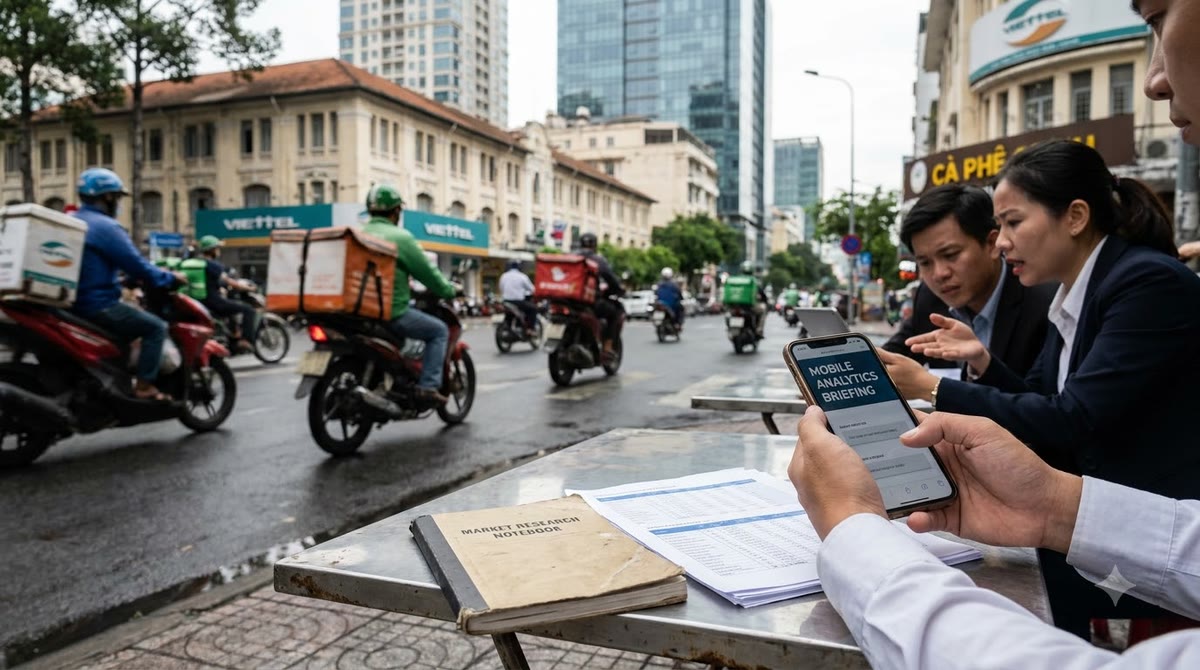
For Vietnamese businesses, three things should be reviewed soon: how SEO is tied into proper tracking, how content is built so it can be cited clearly, and how SEO is explained through business metrics rather than vanity metrics. Any marketing team that still treats SEO as “ranking higher” will struggle to answer leadership when traffic falls but the pipeline does not fall accordingly, or vice versa.
Doing SEO so its value can still be measured in an AI environment
- Review the SEO dashboard: separate organic traffic, branded search, assisted conversions, and post-click signals.
- Standardize content so it is easier for AI and Google to choose as a source: clear author, clear citations, clear structure, and regular updates.
- Recheck tracking, UTM parameters, and landing pages to reduce data blind spots as platforms add intermediary layers.
- Link SEO to business KPIs, not just visibility KPIs, to protect budget as search behavior changes.
SEO has not lost its role. But its role is changing from “winning placement” to “keeping the right to be credited.” In the context of AI search, anyone who only optimizes for position will increasingly struggle to prove effectiveness. Anyone who optimizes for source, trust, and measurement will have a better chance of keeping budget over the long term.
See more marketing analysis and how-to content at https://marketing365.vn.
Follow more analysis from Marketing365 to stay up to date with the latest marketing trends.
Read more articles in the Digital Trends category.
Reference sources
- Search Engine Journal — AI Tools Recommend Brands But Cite Other Sites, Data Shows via @sejournal, @MattGSouthern
- Search Engine Roundtable — Confirmed: Google Search Rolling Out google.com/goto Tracking Parameters
- Search Engine Land — Google adds link carousels for developing topics in AI Mode
- Search Engine Land — The SEO blind spot is what happens after the click
- Search Engine Land — Google Ads API Developer Assistant gets major AI agent upgrade