
Contents
- The US–China AI race is narrowing faster than expected
- OpenAI faces heavy pressure as rivals are seen as more stable and trustworthy
- A “universal jailbreak” warning brings AI safety back into focus
- The AI safety debate heats up again as new models keep rolling out
- AI agents are moving into personal finance and automated trading
- The “designed and built in India” mindset is becoming a new AI and deeptech ambition
- AI is moving into pop culture and content creation workflows
- AI infrastructure enters the era of rack-scale, open stacks, and performance optimization
- AI marketing needs safety controls and the right workflow
- References
The global AI race is shifting from “who can talk better” to “who can run longer, cheaper, and more reliably.” For Vietnamese marketers, that affects not only content and ad tools, but also operating costs, automation, brand safety, and how businesses choose AI platforms to deploy.
Key points
- The AI race between the US and China is narrowing much faster than many people think.
- The AI model market continues to split across performance, reliability, cost, and long-term viability.
- AI safety and jailbreaks remain hot issues as models get more powerful and more closely scrutinized.
- AI infrastructure, autonomous agents, and open hardware ecosystems are becoming the new competitive front.
The US–China AI race is narrowing faster than expected
The biggest story in this latest batch of news is the shifting balance of global technology power. If the US once held a clear advantage thanks to its leading AI ecosystem and control of the chip supply chain, China has now closed the gap in a striking way. Source data shows that just a few years after ChatGPT exploded, China accelerated strongly enough to move close to the US lead in the technology race.
For businesses and marketers, this is a sign that the AI market will become increasingly fragmented by region. Choosing tools, models, and platforms will depend not only on quality, but also on integration capabilities, access costs, and geopolitical context. In other words, a brand’s AI strategy now needs to account for the risk of relying on a single ecosystem.
OpenAI faces heavy pressure as rivals are seen as more stable and trustworthy
The second source reflects an important trend in the enterprise AI market: users no longer care only about which model is “smartest,” but about which one is dependable in real work. According to the source, Claude is being favored by many developer and enterprise teams because it feels safer, more stable, and more effective for long-term work. Meanwhile, OpenAI is under pressure to compete on features and price, but may not necessarily regain the edge in overall quality.

What stands out is that the race is no longer about launching a new model once and generating media buzz. Instead, it is about real-world usage: token efficiency, stability, agent behavior, and the ability to keep costs reasonable at scale. This is what marketers need to care about if they are building AI workflows for content, CRM, automation, or sales enablement.
A “universal jailbreak” warning brings AI safety back into focus
Jailbreak researcher Pliny the Liberator claims to have found a way to bypass safeguards that could work across many frontier AI models. While this is still a claim that needs expert verification, it underscores a reality: the more powerful models become, the larger the attack surface grows, and safety cannot be taken lightly.
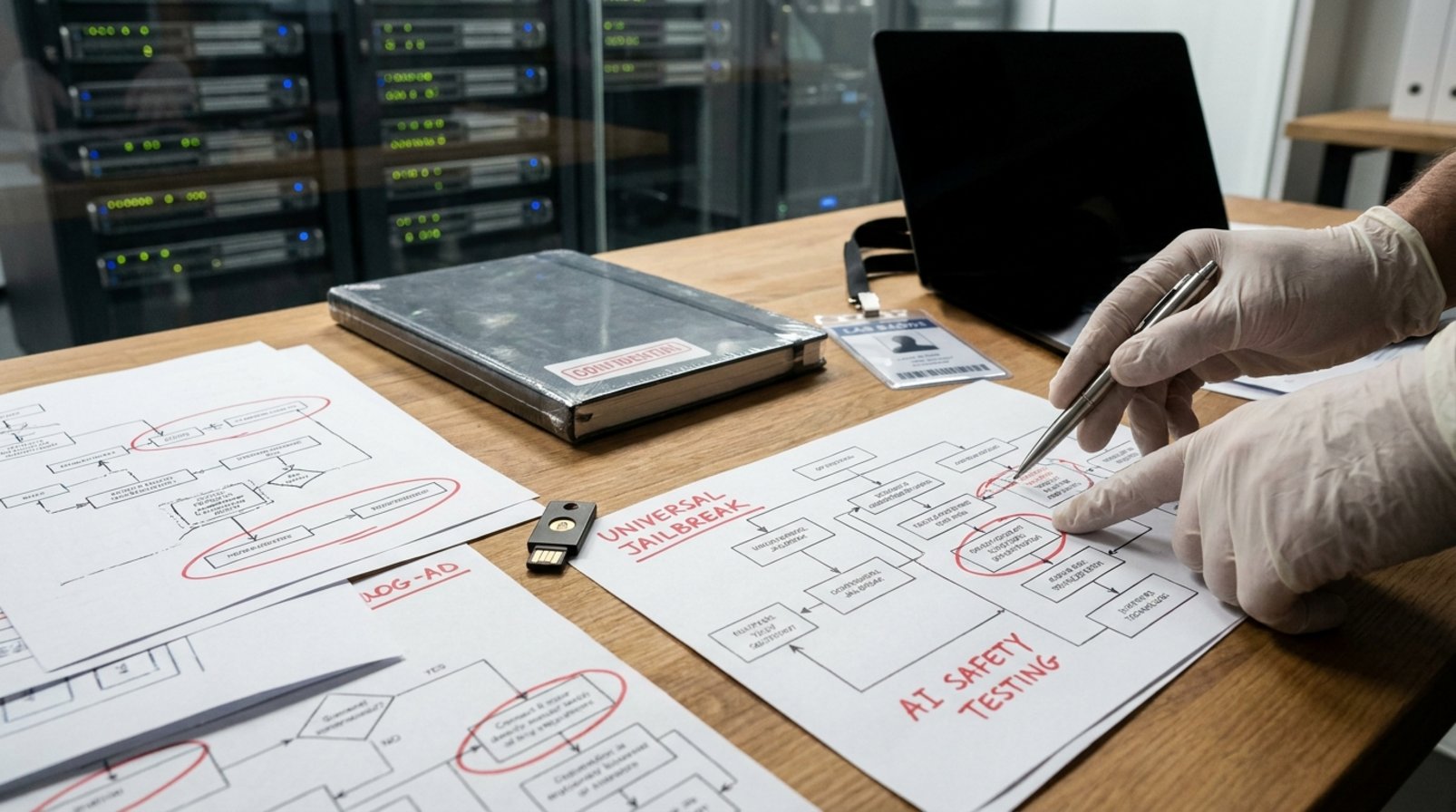
For businesses, this is not just a lab-side technical issue. If a brand uses AI to help write content, support customers, or automate actions, a jailbreak vulnerability could create risks around data, misinformation, or uncontrolled behavior. Any marketing team deploying AI at real scale needs rules for input moderation, output monitoring, and response procedures when a model behaves outside expectations.
The AI safety debate heats up again as new models keep rolling out
The set of sources shows a familiar paradox: when the market is slower, AI companies often emphasize caution and safety; but when competition speeds up, product launches accelerate too. The source raises the question of why some models once seen as too risky to release are followed by even stronger versions, as the race between labs intensifies.

This reflects the reality of today’s AI industry: safety does not disappear, but the way it is prioritized changes under market pressure. For marketers, the lesson is not to stop at launch announcements. You need to assess how well AI fits internal data, legal constraints, and the level of risk your brand can accept.
AI agents are moving into personal finance and automated trading
Robinhood was recently mentioned with an agentic trading MCP model that allows AI to connect to live portfolios. While the implementation details need careful review before real use, the broader trend is clear: AI is no longer limited to “suggesting” and is beginning to move deeper into the action layer, where models can assist with or directly operate systems.

For marketers, this is an important signal about the future of automation. AI agents will not only write emails, summarize reports, or analyze campaign data; they will gradually take part in higher-stakes workflows. Businesses will need access controls, action logs, multi-step approvals, and task limits to avoid cascading mistakes.
The “designed and built in India” mindset is becoming a new AI and deeptech ambition
Another source is not about a single product, but about ecosystem ambition: the expectation that Indian companies will create frontier models, domestic chips, humanoid robots, satellites, launch services, and energy infrastructure for advanced technology. The message is a desire for the label “Designed and Built in India” to become normal rather than exceptional.
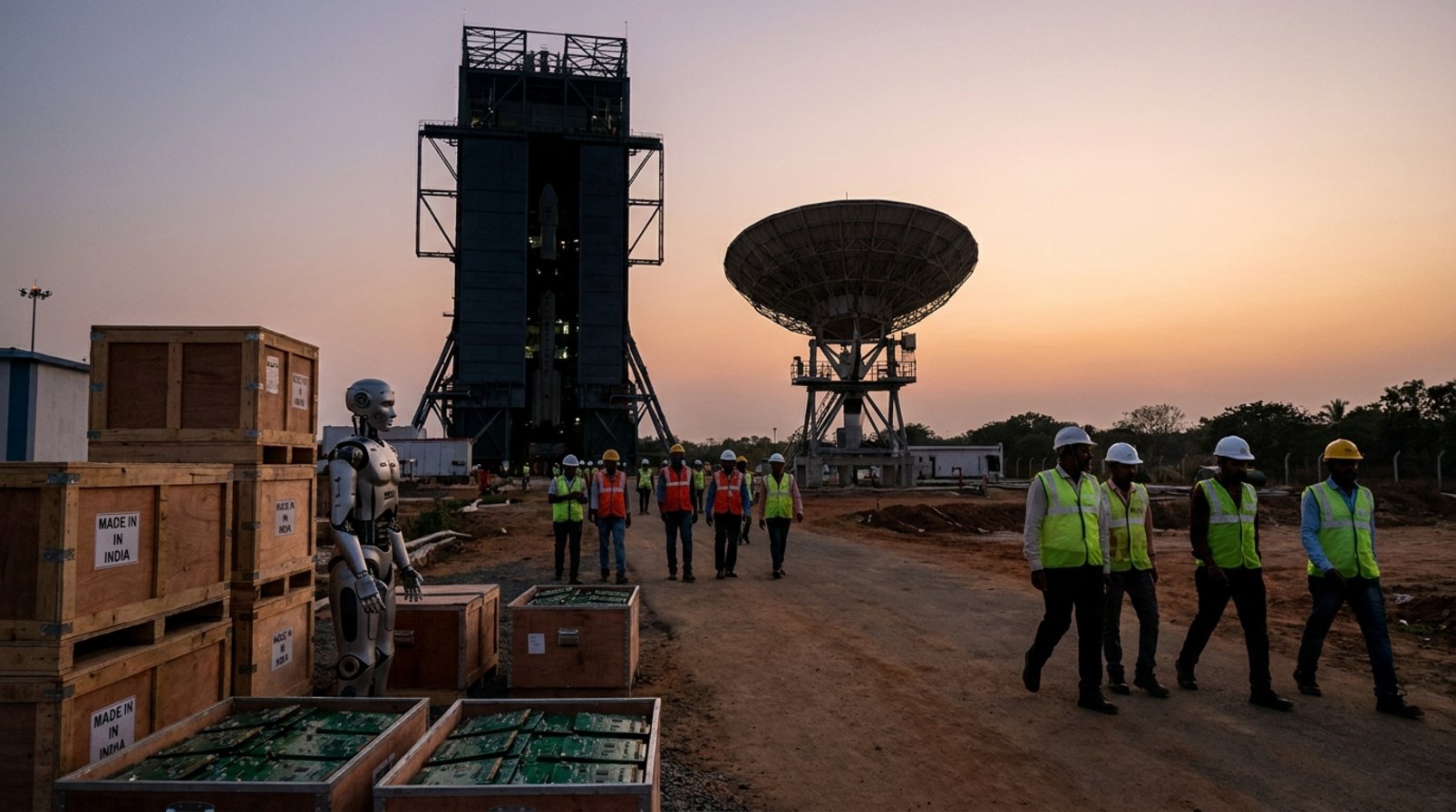
Strategically, this shows how AI is pulling an entire new value chain with it, from hardware and energy to remote sensing, robotics, and industrial automation. For Vietnamese businesses, the lesson is not to view AI only as a SaaS tool at the application layer. Long-term competitiveness will come from an integrated ecosystem, self-reliance, and the ability to build products tied to specific industries.
AI is moving into pop culture and content creation workflows
The source on film, gaming, and concept art directly mentions ChatGPT in the creative ideation process, showing that AI has moved from research labs into mainstream content production workflows. While the source data is more observational than formally analytical, it still reflects a familiar reality: AI is appearing more and more in storyboards, design, drafting, and idea testing.

The real question is not only what AI can do, but how the creative process changes when AI becomes a co-author. For marketers, this is an opportunity to speed up creative production, but also a reminder about brand consistency, copyright, and the risk of everything starting to look the same when too many teams rely on similar model prompts.
AI infrastructure enters the era of rack-scale, open stacks, and performance optimization
From AMD and its partners’ event, one clear trend emerges: frontier AI is no longer a race at the software layer alone, but an infrastructure race. Discussions around rack-scale systems, ROCm, models running on laptops, more efficient inference, and open architectures show that the market is trying to lower deployment costs while maintaining speed.

For businesses, this means choosing an AI platform will increasingly resemble building core technology systems. Whoever controls infrastructure, optimizes inference costs, and integrates smoothly with real workflows will have a clear advantage. This is also why marketing teams need to work more closely with IT, data, and operations as they scale AI adoption.
AI marketing needs safety controls and the right workflow
For Vietnam, these stories send three clear messages. First, businesses should not depend on a single model, because the AI race is changing too quickly. Second, AI use in marketing must come with safety controls, especially when it is used for customer content, automation, or sensitive data. Third, long-term advantage does not come from “using AI for the sake of it,” but from designing workflows, data, and infrastructure that fit business goals.
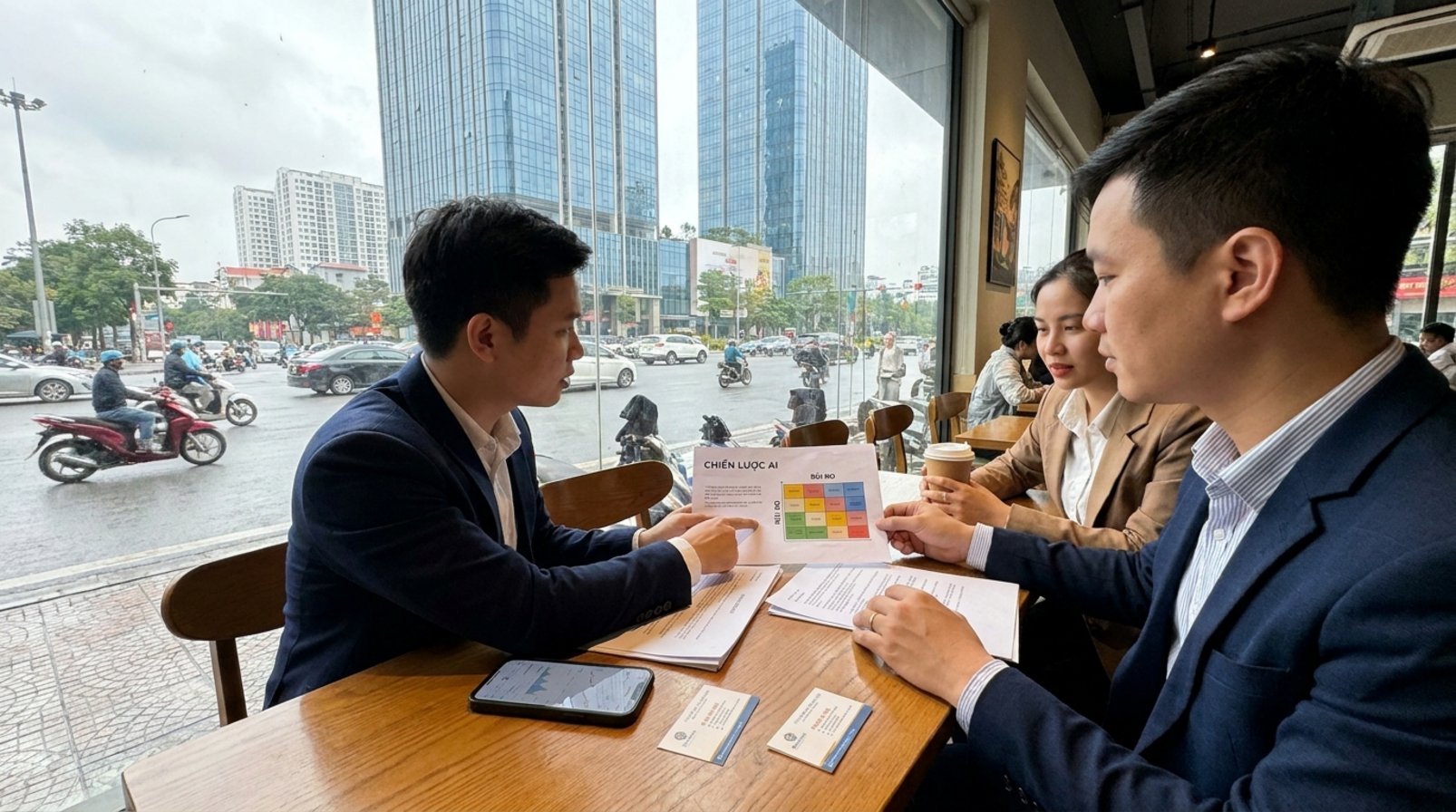
In short, AI is entering a more mature phase: less flashy, but more practical. This is exactly when Vietnamese brands need to move from scattered experiments to a controlled, measurable, and scalable AI adoption strategy.
See more marketing news and guides at https://marketing365.vn.
Follow more updates from Marketing365 to stay on top of the latest marketing trends.
Read more articles in the AI developments category.
This article focuses on AI news with a perspective for the Vietnamese market.
References
- The Telegraph – post on US-China AI tech race
- Da7em – post on OpenAI, Claude and enterprise AI competition
- Coin Bureau – post on Pliny the Liberator and universal AI jailbreak claims
- Ashutosh Shrivastava – post on AI safety debate and model releases
- Miles Deutscher – post on Robinhood agentic trading MCP
- kshitij vaze – post on India deeptech, frontier models and local AI ecosystem
- Braxeo – post referencing ChatGPT in creative production and concept art
- MTS – post on AMD Advancing AI 2026, Helios, ROCm AI and Anthropic partnership