Contents
Google Zero is forcing many marketers to rethink how they create content and run advertising: users can get answers directly on the search results page without clicking through to a website. For the Vietnamese market, where businesses still depend heavily on search traffic and content-driven conversions, this is a sign that a strategy focused only on “ranking on Google” is no longer enough. The article below summarizes the latest perspective from WordStream and reframes it in a practical way for Vietnamese marketers.
Key points
- Many search queries are now ending directly on the results page because of AI Overviews, local packs, and zero-click search.
- Content should not be optimized only for traffic, but also for awareness, conversion, and multi-channel distribution.
- Businesses need to build content that can live across multiple surfaces such as search, social, email, communities, and AI answers.
- Vietnamese marketers should prepare for a “fewer clicks” era by measuring beyond organic traffic.
Google Zero is changing the rules of search content
WordStream says many businesses are not losing traffic because they are doing SEO wrong, but because they built content for a single goal: ranking on Google. The old model worked well when search results sent users to websites, where content both generated visits and fed the conversion funnel.
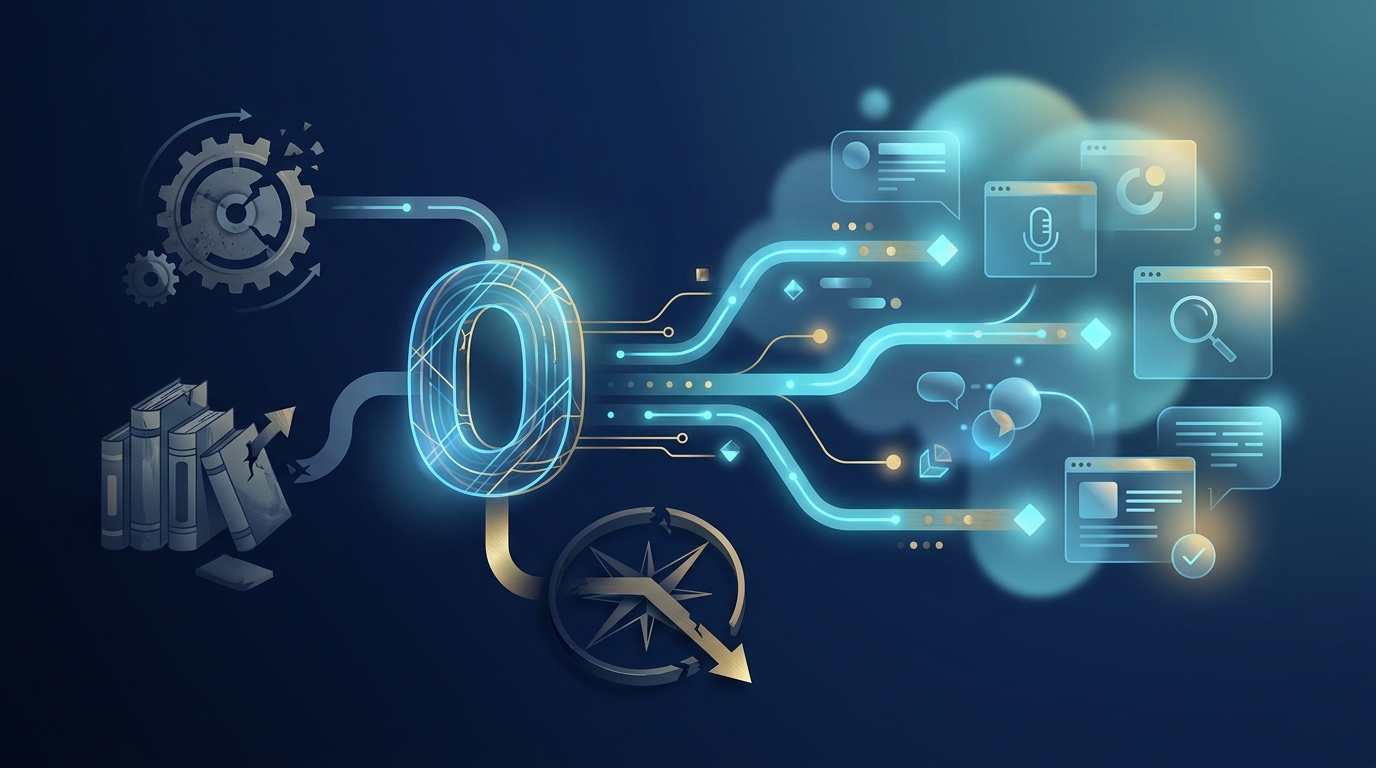
But as AI Overviews, local packs, and question-and-answer tools like ChatGPT grow rapidly, search behavior is changing clearly. Users are increasingly getting answers right on the results page, reducing clicks and shortening the “touchpoints” with websites. According to the article, AI Overviews are mentioned as a factor that significantly reduces clicks; this phenomenon is often called Google Zero. Source: WordStream, “How to Future-Proof Your Content Against Google Zero” (07/07/2026).
For marketers, the important question is not only “are we visible on Google or not,” but whether the content has enough value to be cited, summarized, or distributed by the search and AI ecosystem.
From a “traffic acquisition” strategy to a “value retention” strategy
Read more: Who Will Adapt Best in the AI Era: Lessons for Vietnamese Marketers
The core point WordStream emphasizes is that future content must be designed for multiple purposes at once. Instead of simply trying to drive clicks back to the website, businesses need to think about where the content will be used, how it will be used, and whether it can build trust or drive conversion even if the reader does not click.
This is especially important for advertising, services, B2B, and retail industries, where the buying journey is often long and users compare many touchpoints before making a decision. A good article today is not just one that ranks highly, but one that is clear enough for AI to “understand,” useful enough to be shared, and persuasive enough to support sales at multiple stages.
In practice, businesses should prioritize content with a clear structure, direct answers to questions, real expertise, and data or genuine experience. This is how to increase the chances that content can survive in a lower-click search environment.
Marketers need to broaden how they measure content performance
Another consequence of Google Zero is that familiar metrics such as organic clicks no longer fully reflect content value. If users have already seen the brand in an AI Overview, read information on the SERP, or returned through another channel later, the content’s impact still exists even without a direct click.
Therefore, businesses should consider looking more broadly at metrics such as branded search, direct traffic, conversion rates at post-search touchpoints, sharing across other channels, and revenue contribution rather than stopping at page visits. This is not about abandoning SEO, but about elevating SEO into part of a multi-channel content distribution strategy.
In a context where paid advertising is becoming increasingly competitive, content must support both brand awareness and demand generation, helping reduce dependence on a single traffic source.
Content must still work even when users do not click through to the website
In Vietnam, many small and medium-sized businesses still rely heavily on SEO content, blogs, and landing pages to generate leads. As users begin to get answers directly on the search results page, pressure on traffic performance will increase, especially in industries with simple informational queries such as pricing, comparisons, how-to guides, locations, or common services.
Read more: SEO in the AI Era: What Vietnamese Marketers Should Prepare For
The first thing Vietnamese marketers should do is review their content portfolio across three layers: content to be found, content to be trusted, and content to convert. Articles that only “target keywords” but lack expertise, real-world experience, or a distinctive point of view will be more easily reduced in value by AI and search results pages.
For Vietnamese businesses, this is also the time to combine SEO, social, email, community, and paid advertising into a unified content system. When clicks are no longer the only destination, the brands that can maintain a consistent presence across multiple channels will have the advantage.
In other words, Google Zero is not the end of search content, but a reminder that content marketing must be designed to perform well even when users do not click through to the website.
See more marketing news and guides at https://marketing365.vn.
Follow more updates from Marketing365 to stay up to date with the latest marketing trends.
Read more articles in the same category Digital Trends.