
Contents
As of July 2026, two international developments — GEO following the same path as early SEO, and programmatic advertising moving toward full visibility of a bid request — point Vietnamese marketers to one lesson: improving performance in the AI era depends not only on stronger visibility but also on a clearer grasp of distribution mechanisms and data transparency. Read together, they show that being “seen the right way” and “measured the right way” are becoming the real competitive edge.
GEO is repeating the trajectory of early SEO
According to MarTech, generative engine optimization (GEO) is becoming a major priority for marketing teams as users increasingly receive direct answers from AI tools instead of only traditional lists of links. That is forcing brands to think differently about “search presence”: not just ranking at the top of results, but also being mentioned in AI-generated answers.
The analysis highlights a reality that is quite familiar to long-time SEO practitioners: in the early stages, effective techniques often create a major advantage for early movers. GEO is in a similar position now, with competition still relatively low and proactive businesses already securing a place in AI answers, thereby driving business growth.
However, MarTech notes that SEO success should not be assumed to automatically translate into GEO success. SEO can be a useful reference foundation, but the two “playing fields” are not entirely the same. The bigger question is sustainability: many techniques that once delivered strong results in SEO history later lost effectiveness or were constrained by algorithm and policy changes. GEO may go through a similar cycle as well.
For marketers, the lesson here is not just to “follow AI,” but to experiment in a controlled way, track visibility in AI answers, and assess whether current advantages are temporary or can be sustained over the long term.
Source: MarTech — “GEO is following the same path as early SEO”
Bid request transparency: a new step forward for programmatic advertising
In another story, MarTech reports that IAB Tech Lab is proposing an update to the OpenRTB SupplyChain Object, or schain, to make both the commercial and technical journey of a bid request clearer. If adopted, the new standard could help advertisers see not only who receives revenue in the transaction, but also who has touched the data along the way.
Read more: Trust Is Becoming the Real Competitive Advantage in AI-Era Marketing

The notable point is that the current schain mainly shows the participation chain from a cash-flow perspective. But in an increasingly complex programmatic ecosystem, an impression opportunity can pass through multiple intermediaries such as ad servers, Prebid, SDKs, or server-side processing mechanisms before reaching the buyer. Not being able to see all of these links makes supply path optimization and quality control more difficult.
The proposed SupplyChain v1.1 is open for public comment until 21/8/2026. Although still at the proposal stage, the move reflects a growing market need: more transparency to reduce blind spots, improve transaction quality, and help advertisers assess the effectiveness of each supply path more accurately.
For performance marketers, this is a signal worth watching because it could directly affect how supply sources are audited, budgets are allocated, and the true value of each impression is evaluated.
Read more: Why Social Commerce Is Becoming Vietnam’s New Competitive Edge
Source: MarTech — “Advertisers may finally see who really touches their bid requests”
Marketing in the age of AI and automation
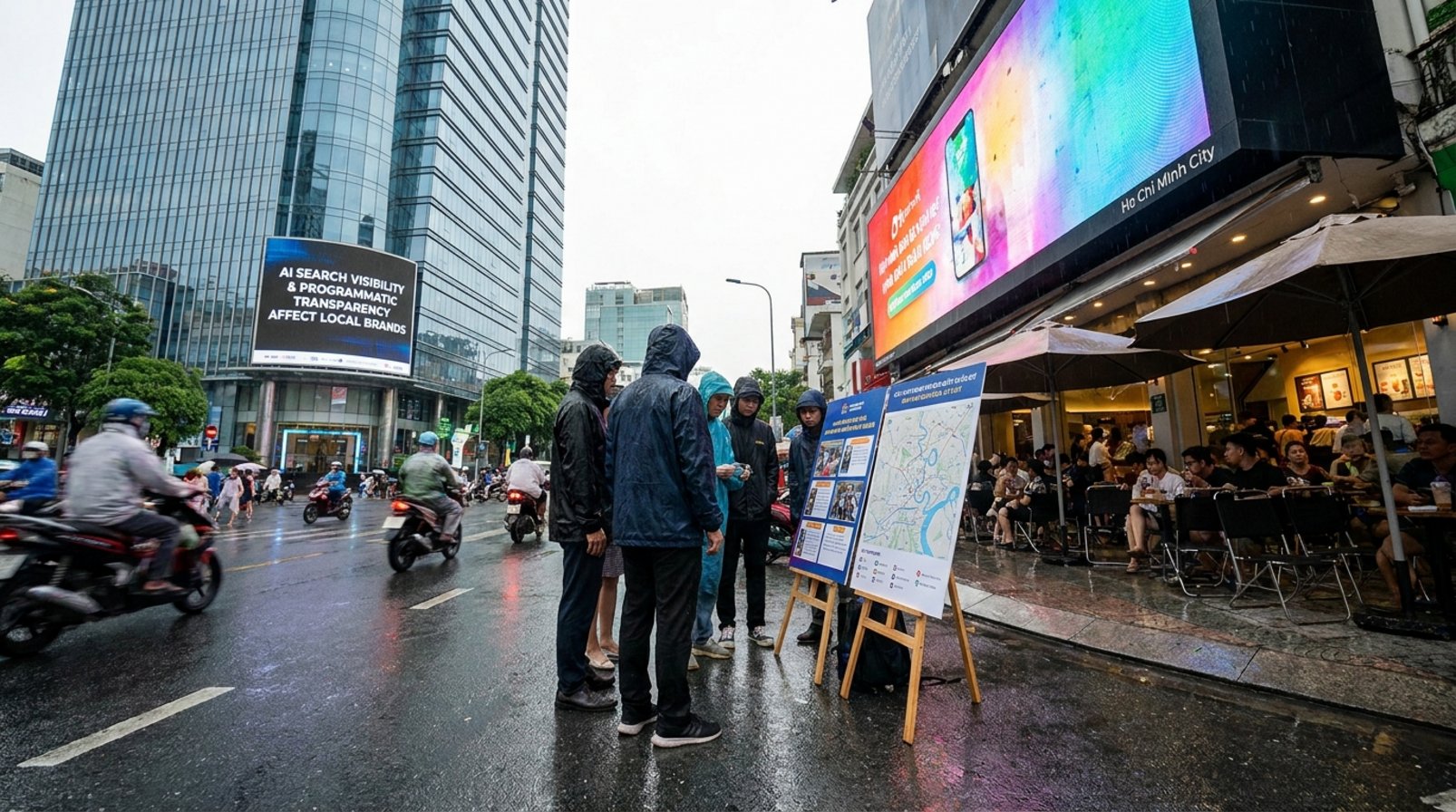
Together, these two stories point to a common trend: marketing in the AI and automation era will increasingly depend on being “seen the right way” and “measured the right way.” With GEO, Vietnamese brands need to start testing content, data structure, and source credibility early to see whether they are mentioned by AI. With programmatic advertising, media buyers should pay more attention to supply path transparency, because budget efficiency depends not only on CPM or CTR, but also on the quality of the data path.
Read more: How AI, Transparency and Visible Metrics Are Reshaping Social Media for Marketers
In a context where content and media competition is becoming more complex, the advantage no longer lies in doing more, but in understanding exactly how the system works. Businesses that adapt early to AI search and advertising transparency will gain an added edge in optimizing sustainable growth.
Explore more marketing analysis & guides at Marketing365.
Follow more updates from Marketing365 to stay up to date with the latest marketing trends.
Read more articles in the same category at Digital Trends.
This article focuses on AI marketing with a perspective for the Vietnamese market.
References
- GEO is following the same path as early SEO
- Advertisers may finally see who really touches their bid requests