
Contents
- OpenAI wants AI to be “useful and safe” even when tasks get longer and harder
- OpenAI and medicine: model reasoning is opening the door to medical progress
- New controversy over Grok and AI’s role in warfare
- The debate over history, politics, and how AI amplifies information
- Moody’s upgrades SpaceX, highlighting both Starlink and AI
- Ethereum pushes a “for shipping” message with 25 updates in one month
- Bernie Sanders wants Americans to decide AI’s future
- Open-source AI continues to narrow the gap with major labs
- GPT-5.6 Pro is rumored to be coming soon, with stronger image and reasoning capabilities
- Starlink becomes a backup option for mobile base stations
- OpenAI upgrades ChatGPT for health-related questions
- GPT-5.5 Instant is being prioritized for free users
- Claude Code adds Artifacts to turn sessions into shareable pages
- GPT-5.6 Pro is said to be under stealth testing
- Anthropic brings a robot dog into the Frontier Red Team test
- OpenAI and Harvard/Boston Children’s help find more diagnoses for rare cases
- GLM-5.2 is temporarily free via Hugging Face and multiple providers
- Elon Musk continues to be seen as a symbol of the AI and digital infrastructure era
- Grok enters Databricks Agent Bricks
- Ukraine’s AI drones are upgraded to fly farther and carry more
- Apple warns that rising memory costs from AI could push product prices up
- Midjourney is said to have moved into medical hardware
- New OpenAI medical research continues to reinforce the story that “AI helps find answers”
- The Atlantic launches a tool to check whether music was used to train AI
- Infina introduces a “hands-free” AI voice tool for macOS
- Ripple brings its XRP Ledger AI Starter Kit to financial television
- 4chan, Ofcom, and the clash between UK law and American internet culture
- Alibaba launches “AI brains for robots”
- A practical perspective: AI is changing how coding and project management work
- AI music is once again controversial because it uses data without permission
- AI is shifting from content generation to a business capability that must be controlled
- References
As of mid-2026, AI has spread well beyond a race among a few major labs — into healthcare, telecom, defense, robotics, finance, and content-copyright disputes. For Vietnamese marketers, the throughline across these signals is that AI is shifting from “capability demos” to real deployment, reshaping products, business models, and how brands communicate with customers.
OpenAI wants AI to be “useful and safe” even when tasks get longer and harder
OpenAI says it is researching how to train models to maintain helpful and safe behavior when they move beyond familiar tasks into new and more demanding contexts. This is a very important topic, because when AI is assigned long-running work, small mistakes can accumulate into major risks.

For marketers, this is a reminder that AI does not just need to “write content well” — it also has to be reliable in workflows involving brand, legal, customer support, and operational automation. Source: OpenAI.
OpenAI and medicine: model reasoning is opening the door to medical progress
Greg Brockman highlighted a very notable direction: reasoning models are not only useful for office work, but can also drive medical progress for humanity. This is the clearest reflection of the shift from AI that merely “answers” to AI that “reasons.”

The key takeaway for marketers is that when AI proves effective in sensitive settings like healthcare, public trust in AI across other industries also rises. Source: Greg Brockman / OpenAI.
New controversy over Grok and AI’s role in warfare
Some accounts on X cited a Pentagon AI official, claiming that xAI’s Grok helped U.S. forces deploy more than 2,000 types of munitions within 96 hours amid tensions with Iran. This is sensitive information and should be read cautiously, as it mainly appears in the form of viral social media posts.

While it cannot yet be treated as an official conclusion, the story shows AI being brought into environments with extremely high political and ethical risk. For businesses, it is a reminder that transparency in AI communications is mandatory. Source: Polymarket / posts on X.
The debate over history, politics, and how AI amplifies information
A long post discussing Israel, U.S. aid, and the history of the state’s formation is spreading online. While not directly an AI story, it appears in the same stream of discussion about the tech ecosystem and shows a reality: AI and digital platforms are dramatically increasing the speed at which political arguments spread.

For brands, the lesson is to check context before using AI to summarize or recreate sensitive issues related to history, religion, or geopolitics. Source: posts on X.
Moody’s upgrades SpaceX, highlighting both Starlink and AI
SpaceX has just received a Baa1 credit rating from Moody’s, slightly above Tesla’s level. The reasons cited include its leadership in orbital launches, Starlink growth, and even the ability to monetize AI infrastructure.

This is an important signal because AI is becoming part of the corporate valuation story, not just a software product. Ecosystems with strong infrastructure, data, and distribution will have a major advantage. Source: Sawyer Merritt citing Moody’s.
Ethereum pushes a “for shipping” message with 25 updates in one month
Ethereum announced a series of new ecosystem activities: a security grant fund, the migration of a major gaming network to Ethereum L2, the Clear Signing standard, risk and compliance standards, a Base upgrade, and expanded stablecoin payments via Mastercard.

For marketers tracking Web3, this shows the blockchain market shifting from storytelling to real infrastructure deployment. AI in this ecosystem will increasingly be tied to payments, security, and user experience. Source: Ethereum.
Bernie Sanders wants Americans to decide AI’s future
Senator Bernie Sanders proposed the U.S. AI Sovereign Wealth Fund Act, arguing that AI’s future should not be decided behind closed doors by billionaires. This is a clear sign that AI has become a public policy issue, not just a technology issue.

From a communications perspective, AI companies will need to prepare for pressure around transparency, fair competition, and tighter oversight. Source: Bernie Sanders.
Open-source AI continues to narrow the gap with major labs
The founder of zAI said a “Mythos-class” model will launch before Q1/2027, suggesting that open source may catch up with leading labs faster than previously expected. This is a notable signal for the open-source AI community.

For businesses, this race means AI experimentation costs will keep falling, while customization capabilities will keep rising. Source: a post on X about zAI / GLM-5.2.
GPT-5.6 Pro is rumored to be coming soon, with stronger image and reasoning capabilities
Early reviews on social media suggest GPT-5.6 Pro may be arriving soon, with significant improvements in SVG generation, 3D SVG, image understanding, and design recognition, along with better reasoning than the previous version. However, this is still based on early sources and has not been officially announced.

The important point is that market expectations are shifting from “chatbots” to “multimodal creative tools” for design, content, and image analysis. Source: posts on X.
Starlink becomes a backup option for mobile base stations
Elon Musk emphasized that Starlink can serve as a backup connection for mobile base stations when ground infrastructure fails. One shared example was Flow Cayman using Starlink to keep the network running during hurricane season.

For marketers, this is a clear example of how AI and satellites are becoming tightly linked to digital infrastructure resilience. When connectivity is unstable, customer experience and digital services are directly affected. Source: Elon Musk and related posts.
OpenAI upgrades ChatGPT for health-related questions
OpenAI says it worked with hundreds of doctors across 60 countries, 49 languages, and 26 specialties to improve responses to health-related questions. GPT-5.5 Instant is now described as matching the company’s top reasoning models in this area.

The notable point is that the model has been improved in recognizing when urgent medical care is needed, asking for more context, and explaining uncertainty. Source: OpenAI / Greg Brockman.
GPT-5.5 Instant is being prioritized for free users
Improving health-related answers on the free tier shows that major AI companies are trying to bring premium capabilities to a broader user base. This has major implications for expanding access to digital knowledge, but it also increases the need to control misinformation risks.

For health, beauty, wellness, and insurance brands, AI is no longer just an internal support tool — it now directly affects the customer research journey. Source: OpenAI.
Claude Code adds Artifacts to turn sessions into shareable pages
Claude Code has launched Artifacts in beta for Team and Enterprise, allowing users to create interactive pages from a session, such as a pull request walkthrough or a live project dashboard. This is an interesting step in how AI is packaged as a collaboration product.

For marketing and product teams, this opens up the possibility of turning conversations with AI into documents, reports, or internal presentations that can be shared immediately. Source: Claude.
GPT-5.6 Pro is said to be under stealth testing
Some users on X claim GPT-5.6 Pro is being “stealth tested” in ChatGPT when selecting GPT-5.5 Pro on certain Pro accounts. There are also predictions that it will launch next week.

Although there is no independent confirmation yet, the story shows that the AI market is always operating in anticipation of new updates, and product cycles are getting shorter. Source: posts on X.
Anthropic brings a robot dog into the Frontier Red Team test
Anthropic announced phase 2 of Project Fetch, in which Claude is tested on its ability to program a robot dog. According to the company, Opus 4.7 is about 20 times faster than last year’s best human team with help from Opus 4.1.

This is a very clear illustration of the AI agent trend: not just answering, but controlling tools and physical systems. Source: Anthropic.
OpenAI and Harvard/Boston Children’s help find more diagnoses for rare cases
OpenAI says research in NEJM AI with Boston Children’s Hospital and Harvard helped doctors review unsolved rare pediatric cases, leading to 18 additional diagnoses in 376 cases. This is one of the most convincing examples of AI’s real-world value in healthcare.

For the Vietnamese market, this is especially important because trust in AI rises very quickly when AI proves its value in the real world, rather than just being “a content-writing tool.” Source: OpenAI.
GLM-5.2 is temporarily free via Hugging Face and multiple providers
Read more: When AI Meets Crypto: What Venice’s $65M Round Signals for Marketers
Z.ai announced that GLM-5.2 is available free for a short period through Hugging Face Inference Providers, and then more broadly through providers such as Together AI, Novita, Fireworks, and DeepInfra.

This strategy shows open source competing through accessibility and lower experimentation costs. For product teams in Vietnam, it is a good opportunity to test new models with a lower barrier to entry. Source: Z.ai.
Elon Musk continues to be seen as a symbol of the AI and digital infrastructure era
A long post on X describes Elon Musk’s business journey, from Tesla and SpaceX to Starlink, X, and xAI. While celebratory in tone, it reflects how the market sees Musk as a “human ecosystem” tied to electric vehicles, space, and AI.

The key takeaway for marketers is the power of personal storytelling in technology positioning. In the AI era, the founder remains an important part of the brand. Source: a post on X.
Grok enters Databricks Agent Bricks
xAI says Grok models are now available on Databricks Agent Bricks, targeting enterprise customers who want to build AI agents on their own data. This is a clear sign that AI models are being sold as a layer of enterprise infrastructure.

For B2B marketers, this is a trend worth watching because enterprise AI buying decisions will increasingly be tied to private data, security, and integration capabilities. Source: xAI.
Ukraine’s AI drones are upgraded to fly farther and carry more
Ukraine’s Fire Point introduced upgraded FP-1 and FP-2 systems in Paris, adding longer range, larger payloads, and AI systems. The source article cites heavier warheads and significantly expanded operational range.

This is an example of AI penetrating deeply into defense systems, especially in navigation and mission optimization. Source: NOELREPORTS.
Apple warns that rising memory costs from AI could push product prices up
Apple’s CEO was quoted as saying the AI wave is driving memory costs up so sharply that price increases may become unavoidable. Although no product has been announced as affected yet, the impact could appear before the next iPhone cycle.

For the marketing industry, this is a reminder that AI does not just increase productivity — it also changes hardware cost structures and consumer buying behavior. Source: Dexerto citing Apple remarks.
Midjourney is said to have moved into medical hardware
A cardiologist on X described a Midjourney full-body scanner prototype using ultrasound, with no radiation, no magnetic field, and AI-generated real-time 3D imaging. This is a striking claim, but it still needs further confirmation from official sources.

If this direction becomes real, the line between creative AI and medical hardware AI will blur very quickly. That opens up a completely new market for preventive care and early diagnosis. Source: a post on X.
New OpenAI medical research continues to reinforce the story that “AI helps find answers”
OpenAI and academic partners continue to emphasize the value of o3 Deep Research in reviewing rare cases that still lack a diagnosis. This is a signal that AI can support not only doctors, but also clinical research systems.

For marketers in healthcare, this type of content is especially valuable because it is much stronger social proof than generic claims about “smart AI.” Source: OpenAI.
The Atlantic launches a tool to check whether music was used to train AI
The Atlantic has released a tool that lets users check whether their music was collected for AI training purposes. The reaction from the artist community shows that concerns over training data are growing rapidly.

For creative businesses, this is a reminder that copyright and data-use permissions will be a core part of any AI strategy. Source: Ed Newton-Rex.
Infina introduces a “hands-free” AI voice tool for macOS
Infina describes itself as an AI voice tool that lets users control a Mac without touching the keyboard to switch apps, type, or send prompts. This is a clear trend in AI interfaces: from typing to speaking and natural-language control.

For marketers building digital products, the lesson is that hands-free experiences will change how users multitask. Source: Shubham Saurav.
Ripple brings its XRP Ledger AI Starter Kit to financial television
Ripple is said to have launched an AI starter kit for the XRP Ledger on Fox Business. This is another example of crypto trying new language to tell the story of AI use cases within digital asset ecosystems.

For Vietnamese readers, the important message is not which token it is, but the trend: blockchain platforms are trying to attach AI to real use cases to convince investors and developers. Source: Crypto Dyl News.
4chan, Ofcom, and the clash between UK law and American internet culture
The dispute between 4chan and the UK regulator shows how global platforms are facing increasing legal pressure, from social media safety to AI chatbots. The story spread further because of the legal side’s sharply ironic response.

For digital brands, this is a reminder that content, data, and AI regulations will differ by market, so a single global standard cannot be applied everywhere. Source: posts on X.
Alibaba launches “AI brains for robots”
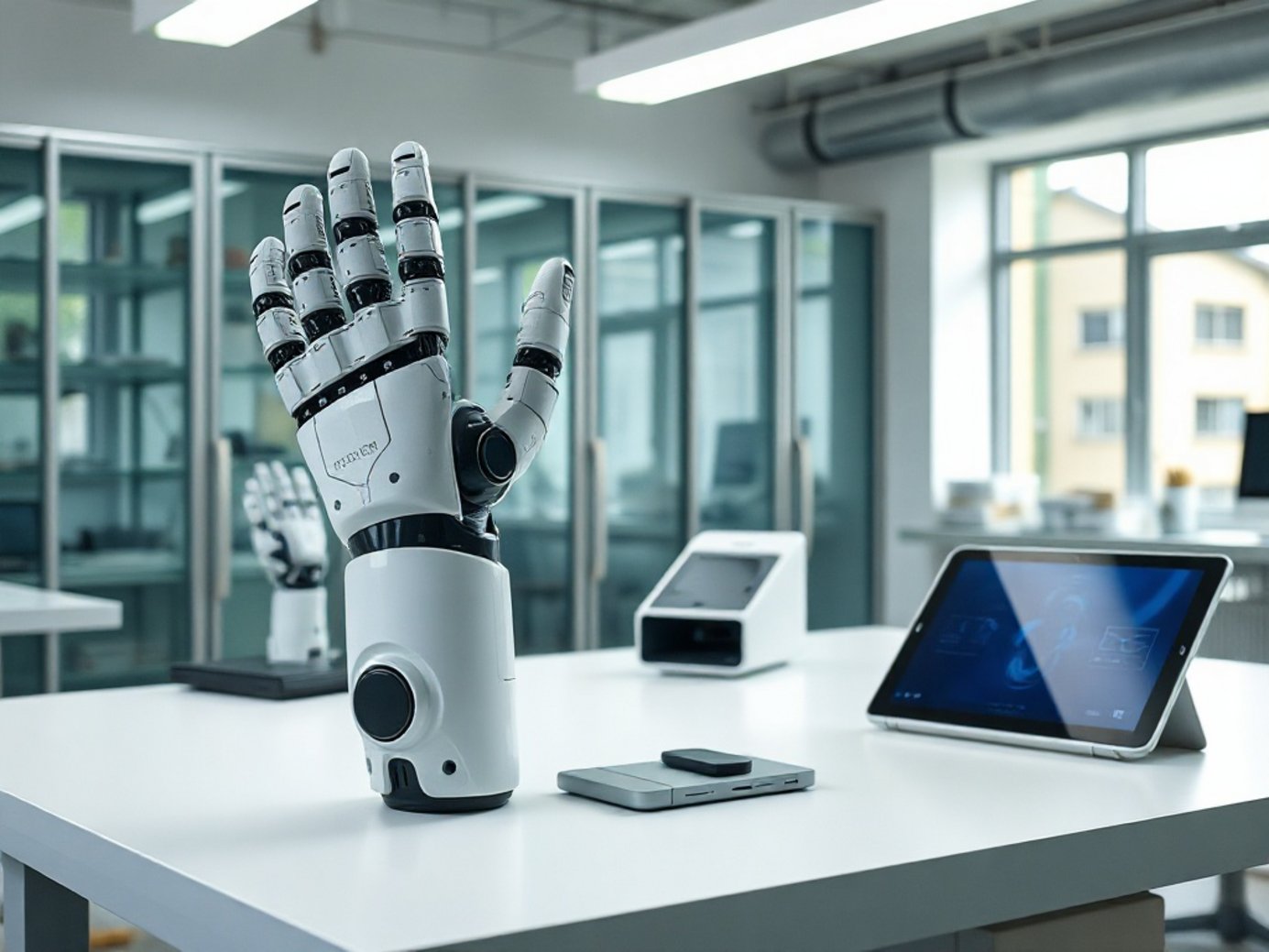
Alibaba announced a new direction around “AI brains for robots,” showing that major Asian conglomerates are also betting on the intersection of AI and physical automation. This is an important piece in the race for intelligent robotics.

For marketers, this is an indicator that robots and AI are no longer just lab stories, but large-scale product strategies. Source: Kalshi.
A practical perspective: AI is changing how coding and project management work
A long post from a user who works extensively with AI describes two major risks of relying on AI at work: Git/GitHub is not suitable for large agent teams, and harnesses like Claude Code require models to be trained very deeply on the workflow. This is a rare practical perspective from a professional user.
For Vietnamese businesses, the lesson is that deploying AI cannot stop at “buying a tool” — it requires redesigning workflows, work environments, and version management. Source: a post on X.
AI music is once again controversial because it uses data without permission
An artist said an AI music-generation tool had been trained on their work, including songs that had never been released. The strong reaction shows that the input-data issue in generative AI remains a major point of conflict.

For content brands, this is a clear warning: if you want to use AI safely and sustainably, you need data permission workflows, source verification, and copyright risk management from the start. Source: Rishie-P.
AI is shifting from content generation to a business capability that must be controlled
The 30 stories above show AI moving beyond the “try it and see” stage and into real-world problems: healthcare, digital services, telecom, robotics, defense, payments, copyright, and enterprise infrastructure. For the Vietnamese market, this is the moment for marketers, founders, and operations teams to see AI as a layer of business capability, not just a content-generation tool.
Three practical priorities should come first:
- Check reliability: The more AI is used in important decisions, the more businesses need clear verification and approval processes.
- Redesign workflows: Using AI effectively is not just about prompting well, but about reorganizing processes, data, and access rights.
- Prepare for legal and copyright issues: Disputes over training data, music, content, and usage rights will soon affect Vietnamese businesses directly.
In short, AI is moving from “impressive” to “infrastructure.” Those who understand that sooner will have a clearer competitive advantage over the next 12–24 months.
Explore more marketing analysis & guides at Marketing365.
Read more articles in the AI Moves category.
This article focuses on the latest AI news with a perspective for the Vietnamese market.
References
- OpenAI status on broadly and persistently beneficial models
- Greg Brockman on reasoning paradigm and medical progress
- Polymarket post on Pentagon AI chief and Grok
- X post on Israel history discussion
- Sawyer Merritt on SpaceX Moody’s Baa1 rating
- Ethereum ecosystem monthly roundup
- Bernie Sanders on AI Sovereign Wealth Fund Act
- X post on zAI and Mythos-class model
- Pankaj Kumar on GPT-5.6 Pro early reviews
- Elon Musk on Starlink backup connectivity
- Greg Brockman on ChatGPT health questions collaboration
- OpenAI on GPT-5.5 Instant for health-related questions
- Claude on Artifacts in Claude Code
- X post on GPT-5.6 Pro stealth testing
- Anthropic on Project Fetch Phase 2
- Greg Brockman on rare pediatric disease diagnoses
- Z.ai on GLM-5.2 free access via Hugging Face
- X post on Elon Musk profile and AI race
- xAI on Grok models in Databricks Agent Bricks
- NOELREPORTS on Ukraine Fire Point upgraded drones
- Dexerto on Apple CEO and memory costs
- Afshine Emrani on Midjourney Scanner prototype
- OpenAI study on NEJM AI rare pediatric cases
- Ed Newton-Rex on The Atlantic music scraping tool
- Shubham Saurav on infina voice engine for macOS
- Crypto Dyl News on Ripple XRP Ledger AI Starter Kit
- Cyber Razz on 4chan and Ofcom fines
- Kalshi on Alibaba AI brains for robots
- X post on AI workflows, Git and Claude Code
- Rishie-P on AI music generation and unauthorized training