
Contents
- Google Ads may change how Demand Gen is billed on some Discover campaigns
- Microsoft Ads expands LinkedIn targeting with job seniority filters
- AI is blurring the line between paid and organic visibility
- Agentic commerce: smaller in the spec, bigger in the platform you use
- AI can help build hreflang XML sitemaps at scale
- “Next-question intent” becomes a new measure of visibility in AI Search
- Schema and “evidence” in GEO can be easily overinterpreted by AI
- Google reminds us that markdown cannot replace HTML elements that matter for SEO and AI
- SEO is now a race to be chosen by AI
- References
SEO in 2026 is being redrawn as the boundaries between traditional search, paid advertising, and AI-driven answers blur together. For Vietnamese marketers, the developments across Google Ads billing, LinkedIn targeting, agentic commerce, and AI Search point to one shift: the goal is moving from “ranking on Google” to being chosen for visibility inside AI’s decision-making ecosystem, which changes how content, schema, and budgets should be organized.
Google Ads may change how Demand Gen is billed on some Discover campaigns
Search Engine Land says Google Ads is shifting some Demand Gen campaigns on Discover to a CPM model instead of the previous billing method. The notable point is not only the technical change in billing, but also that Google continues to test new ways to monetize content discovery surfaces.

For marketers, this change is a reminder that campaigns within the Google ecosystem are becoming increasingly flexible by format. When billing changes, optimization criteria change too: it is no longer just about clicks or direct conversions, but also about reach, touch frequency, and the quality of the audience segment at the discovery stage. Source: Search Engine Land.
Microsoft Ads expands LinkedIn targeting with job seniority filters
Search Engine Land says Microsoft Ads has expanded LinkedIn targeting capabilities with seniority filters, meaning filters based on job level and tenure. This is a fitting move in a B2B advertising landscape that increasingly needs more precise behavioral and professional signals.

In practical terms, B2B advertisers now have another tool to refine messaging by decision-making role rather than relying only on broad industries or job titles. For businesses selling solutions with long buying cycles, combining LinkedIn signals with conversion data will help qualify leads better and reduce wasted budget. Source: Search Engine Land.
AI is blurring the line between paid and organic visibility
An analysis on Search Engine Land argues that AI is not “killing” advertising; instead, ads are shifting along the same surfaces that AI is opening up: search, assistants, work tools, and transactions. More importantly, paid and organic are no longer two separate channels as before, but increasingly two different ways of influencing the same AI system.

For SEO marketers, this is highly significant. If paid and SEO teams could previously operate on separate rhythms, then in the new AI environment, content signals, page structure, and ad performance may influence one another more strongly. The optimization mindset needs to shift from “winning rankings” to “winning visibility within AI’s decision-making ecosystem.” Source: Search Engine Land.
Agentic commerce: smaller in the spec, bigger in the platform you use
Search Engine Journal emphasizes that for small businesses, the question of “which AI transaction standard should be implemented” is not about which spec to read first, but about the e-commerce platform they are using. Protocols such as ACP from OpenAI and Stripe or UCP from Google and Shopify are open standards, but for small merchants, the decisive part is often handled by the platform first.
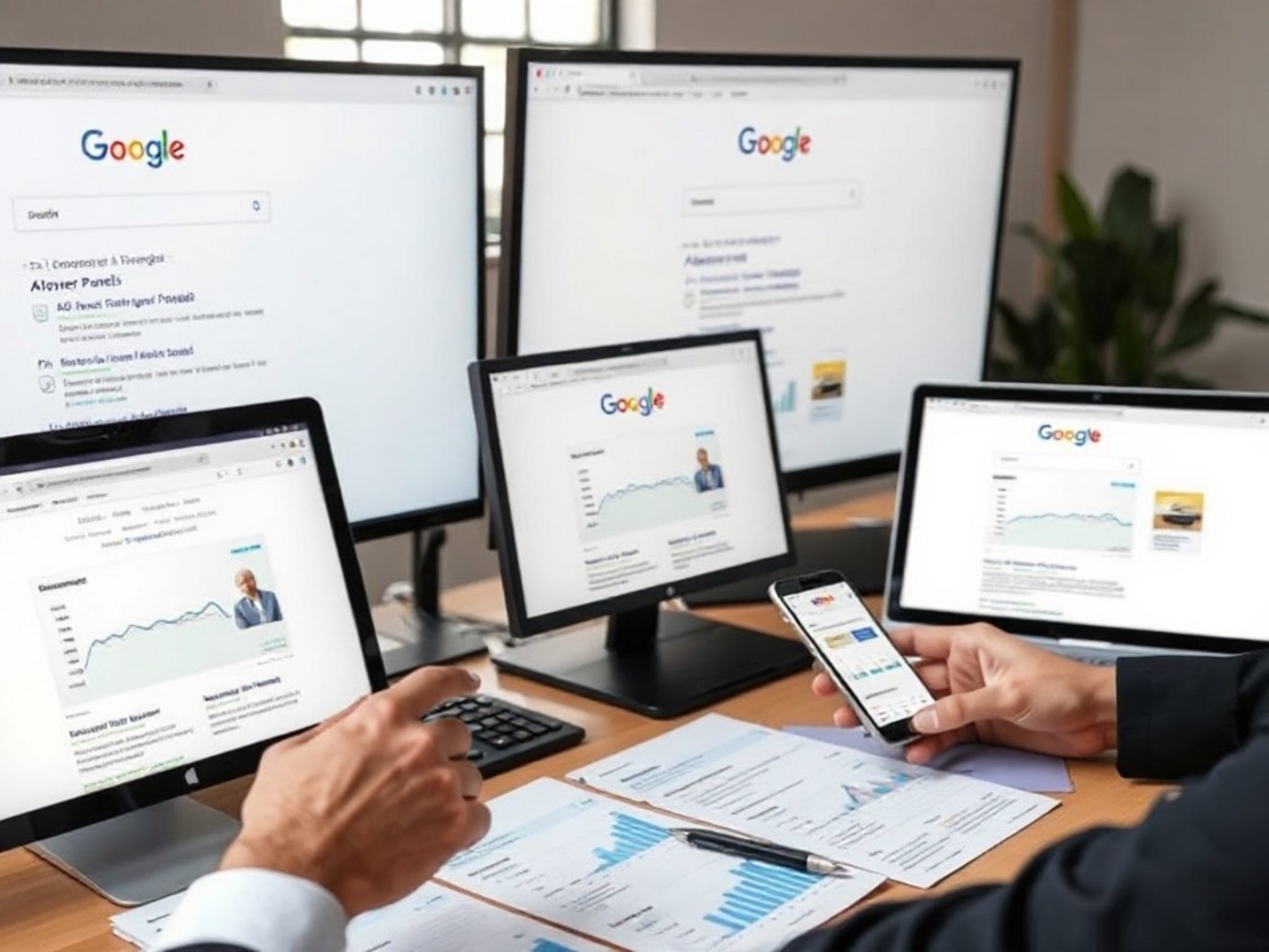
The message here is not to get lost in terminology if you do not need low-level customization. Instead, check how much your platform already supports agentic commerce, whether any features need to be enabled, and whether your product/cart/checkout data flow is ready for AI-assisted transactions. Source: Search Engine Journal.
AI can help build hreflang XML sitemaps at scale
A case study on Search Engine Land shows that AI is most useful when solving real problems and saving time, such as automating the process of building hreflang XML sitemaps for multiple websites, multiple language regions, and multiple country domains. Instead of spending many days handling it manually in spreadsheets, the author used Google Gemini to help write a custom Python script.

The key point is not that “AI replaces people,” but that AI speeds up technical SEO tasks that are prone to errors and time-consuming. For multilingual websites, even a small mapping mistake can lead to indexing issues, signal distribution problems, and a poor user experience. Source: Search Engine Land.
“Next-question intent” becomes a new measure of visibility in AI Search
Read more: How SEO Is Becoming AI-Cited and AI-Recommended
Search Engine Land suggests that in the AI Search era, a page must not only answer the initial query but also be deep enough to support the user’s next question. This is a major difference from the traditional search model, where users scan the results list themselves and piece together information on their own.

For SEO content, this means articles should anticipate follow-up questions, comparisons, barriers, and decision criteria after the first query. If a page is only “keyword-correct” but lacks enough context for AI to summarize, compare, or cite it, its visibility in AI results will weaken. Source: Search Engine Land.
Schema and “evidence” in GEO can be easily overinterpreted by AI
Search Engine Journal recounts a small experiment to test whether language models truly read schema markup or merely “nod politely” at structured data. The result suggests that models may rely on structured data as a meaningful source of information, even though it was only a single test.

The takeaway for marketers is that schema remains very important, but it should not be treated as a magic wand. Structured data needs to be paired with content that is clearly visible, consistent, and trustworthy. In the context of GEO and AI Search, the authenticity of on-page data must be built through both markup and user-readable content. Source: Search Engine Journal.
Google reminds us that markdown cannot replace HTML elements that matter for SEO and AI
According to Search Engine Journal, on the Search Off the Record podcast, John Mueller and Martin Splitt pushed back against the idea that a content-only or “lean” markdown version would be better optimized for AI Search. Their argument is that many elements outside plain text in HTML still have value for both SEO and the search system’s ability to understand a page.

This is an important reminder for both content and technical teams: do not rush to ignore headings, HTML semantics, presentation structure, and elements that help machines understand context. Optimizing for AI does not mean removing everything beyond text; on the contrary, it requires keeping a structure that is clear, useful, and readable for both humans and machines. Source: Search Engine Journal.
SEO is now a race to be chosen by AI
For Vietnamese marketers, these 8 developments point to a common trend: SEO is moving closer to the question of “being chosen by AI systems for visibility” rather than simply “ranking on Google.” That requires content to answer more deeply, structured data to be better organized, and tighter coordination between SEO, paid media, and e-commerce.
In the short term, Vietnamese businesses should prioritize three things: review content structure around users’ follow-up questions; check schema, hreflang, and the technical platform on multilingual sites; and monitor how advertising platforms are changing measurement and targeting to avoid falling out of step with new search behavior.
In other words, SEO 2026 is no longer a game of content or technical work alone, but a comprehensive operating capability across search, advertising, and AI.
See more marketing news and guides at https://marketing365.vn.
Read more articles in the same category Digital Trends.
This article focuses on SEO and AI Search with a perspective for the Vietnamese market.
References
- Google Ads shifts Demand Gen billing to CPM for some Discover campaigns
- Microsoft Ads expands LinkedIn targeting with job seniority filters
- How AI is merging paid and organic visibility
- Agentic Commerce For Small Merchants: Which Protocol Spec Actually Matters For Your Website
- How AI helped build hreflang XML sitemaps at scale
- Why next-question intent matters for AI search visibility
- Schema, LLMs & The Low Bar For ‘Evidence’ In GEO
- Google Says Markdown For AI SEO Strips Away The Parts That Matter