
Contents
- Alibaba launches Qwen 3.8 Max Preview as the large-model race heats up again
- OpenPlanter: a free tool that could make public data “speak”
- Qwen 3.8 is being compared with Kimi K3 and other leading models
- Benchmark comparisons still need time to be verified
- The China–US AI race enters an acceleration phase
- Why AI companies are increasingly pushing open-weight
- Zoho opens an AI platform for education, emphasizing access and security
- All-in-one AI tool ecosystems continue to attract busy users
- Open-weight testing and specialized AI under a disciplined process
- References
Read together, a cluster of recent releases — Alibaba’s Qwen 3.8 moving toward open-weight, OpenPlanter turning public data into relationship maps, and the China–US model race accelerating — points to one shift that matters more than any single launch: as of mid-2026, capable AI is getting cheaper and more open. For marketers in Vietnam, the practical stakes are not the headlines but what falls out of them — operating costs, the toolset available for research and competitive analysis, and how often teams must refresh their AI stack.
Key points
- Alibaba announced Qwen 3.8 Max Preview, saying it is one of the company’s strongest models and will soon be released as open-weight.
- OpenPlanter drew attention by turning public data into a traceable connection map for investigation and analysis.
- Multiple sources suggest the AI race between China and the US is accelerating, while new models continue to emerge.
- Zoho launched an AI platform for education, while “all-in-one” tools continue targeting end-user productivity.
Alibaba launches Qwen 3.8 Max Preview as the large-model race heats up again
Alibaba and the Qwen team have announced a preview of Qwen 3.8 Max, and also said the model will soon be released in open-weight form. According to the shared messages, Qwen 3.8 scales up to 2.4 trillion parameters and is now available in preview on Token Plan, Qoder, and QoderWork for early testing.
What stands out is that Qwen describes the model as matching top-tier AI models and “second only to Fable 5.” However, at the time the sources were recorded, no official benchmark set had been published to verify that claim. For marketers, the important detail is not the flashy introduction, but the fact that Qwen continues to pursue a larger, more open model-release strategy, thereby increasing competitive pressure on the closed-model players that currently dominate the market. Source: Alibaba Qwen, Bloomberg as cited in public posts on X.
OpenPlanter: a free tool that could make public data “speak”
Among the AI stories drawing attention, OpenPlanter stands out for a very different approach: not a chatbot or content generator, but a tool that uses AI agents to scan public data and build maps of relationships between individuals, companies, political donations, government contracts, and sanctions lists.

According to the description, the tool runs on macOS, Windows, and Linux, and can use models from OpenAI, Anthropic, or run entirely offline with a local model. OpenPlanter is also released under the MIT license and is free forever. That means capabilities once limited to organizations with large budgets can now sit on the laptop of a researcher, journalist, or market analysis team. This is a trend worth noting for marketers, because competitive analysis, partner due diligence, and tracing links across the media ecosystem could become much faster and cheaper. Source: a post by Evan Luthra on X.
Qwen 3.8 is being compared with Kimi K3 and other leading models
Several posts in the same news cycle show the international AI community viewing Qwen 3.8 as a major leap for Alibaba. Some sources even suggest the model could surpass Kimi K3 and move close to the global top tier. Still, these are only early community assessments, not scientific conclusions or independently verified data.

What matters for market watchers is that the strategy of Chinese companies is becoming increasingly clear: not only competing on capability, but also pushing open-weight to lower access barriers. If this trend continues, Vietnamese businesses will soon have more options for deploying AI internally at lower cost, especially for tasks such as customer support, document summarization, coding assistance, and data analysis. Source: public posts on X relaying messages from @Alibaba_Qwen.
Benchmark comparisons still need time to be verified
One thing that is easy to notice in this latest stream of news is that the language around AI is getting increasingly “hot”: claims of being second-best, outperforming rivals, or sitting near the top of the market. But in a context where no standardized benchmark is published alongside each claim, readers should remain cautious.

For businesses and marketers, the lesson here is not to make technology decisions based only on the noise of announcements or how fast they spread on social media. Real-world testing is needed on specific use cases: Vietnamese-language accuracy, response speed, inference cost, integration capability, and data safety. These criteria are often more important than the label of “strongest” in day-to-day operations. Source: compiled from public posts on X about Qwen 3.8 and benchmark commentary.
The China–US AI race enters an acceleration phase
Many of the sources in this roundup reflect a common picture: the pace of new AI model launches is extremely fast, especially on the Chinese lab side. In the comments circulating online, Qwen 3.8 is placed alongside Kimi K3, while DeepSeek V4 GA, MiniMax M3 Pro, and GLM 5.3/5.5 are also mentioned as names soon to join the field.

Although these are still forecasts or speculation from the community, the psychological impact on the market is real: users, investors, and businesses all tend to wait for the “next model” that is better just days or weeks later. That shortens the AI tool-selection cycle, but also increases pressure on implementation teams to keep updating their knowledge and internal processes. Source: public posts on X by Chubby♨️, WorldofAI, and AI commentary accounts.
Why AI companies are increasingly pushing open-weight
Read more: Kimi K3 and the Open-Model Shift Reshaping AI Choices for Brands
One common thread across these stories is the move toward open models. Qwen 3.8 is expected to soon become open-weight, while OpenPlanter is also being released free under the MIT license. This is an important signal because open-weight allows businesses to self-deploy, fine-tune, and control data better than relying entirely on outsourced APIs.
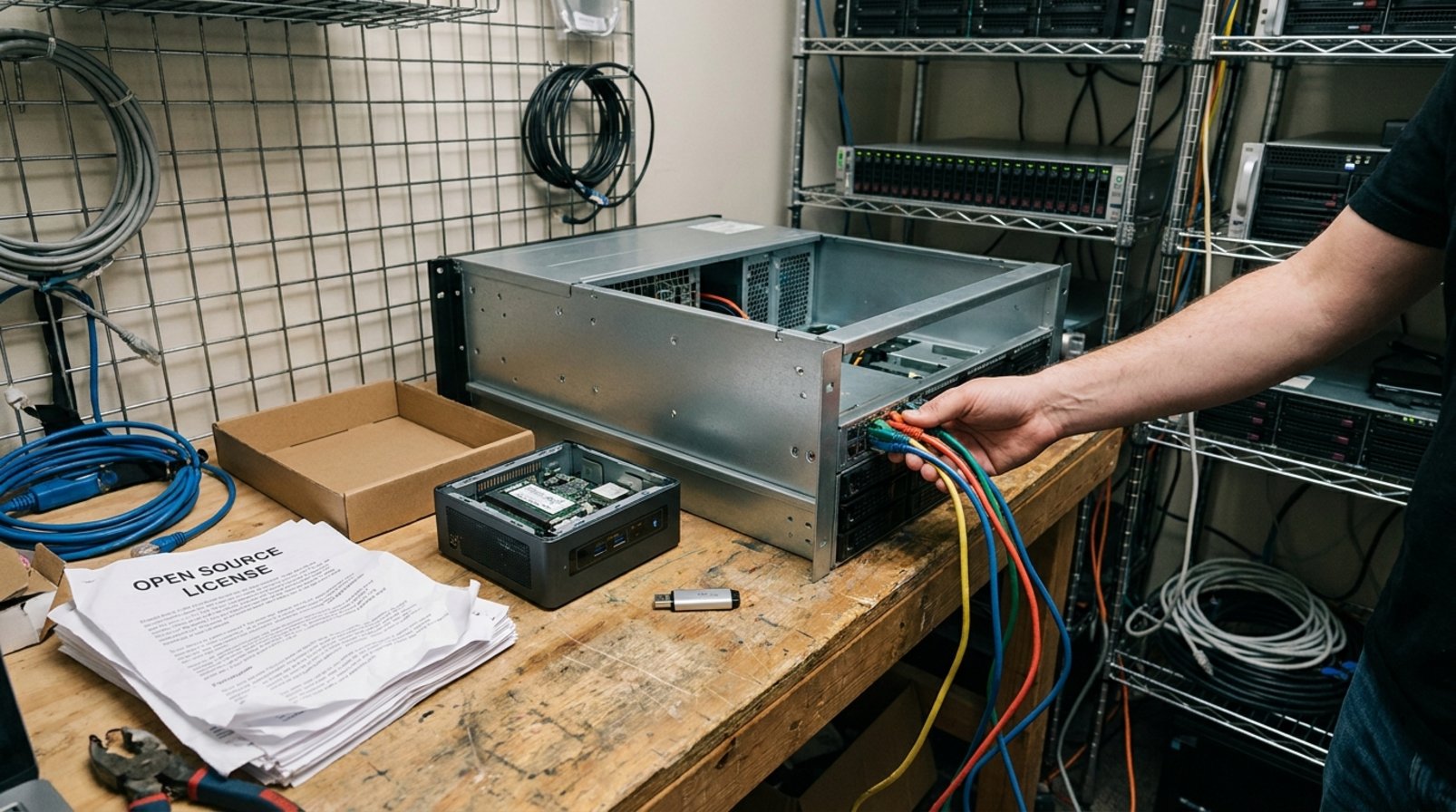
For marketers, the practical benefits can come from three directions: lower experimentation costs, greater control in creative and analytical workflows, and easier internal AI system building. However, open-weight does not mean “use it and you’re done.” Businesses still need capabilities in infrastructure, security, MLOps, and content risk management to turn a powerful model into business results. Source: Alibaba Qwen, OpenPlanter.
Zoho opens an AI platform for education, emphasizing access and security
Alongside the race among top-tier models, Zoho also announced an AI platform for education, aimed at schools, colleges, universities, and vocational training institutions. According to the shared information, the platform is free for public educational institutions and for teachers managing up to 100 students.

Zoho says the product focuses on teaching, learning, classroom management, assignments, assessment, and collaboration, while placing strong emphasis on privacy and data control. This is a noteworthy model because it reflects an increasingly fragmented AI market: not just “general AI,” but industry-specific AI optimized for particular use contexts. For education brands, skills-training providers, or EdTech companies in Vietnam, this opens up opportunities to design AI products around the very specific needs of learners and teachers. Source: a post by Zest citing Zoho information on X.
All-in-one AI tool ecosystems continue to attract busy users
Another message appearing in this news cycle is user fatigue from constantly switching between multiple AI tools: one for writing, one for research, one for image generation, and one for coding. The market’s natural response is to move toward “all-in-one” platforms that bring multiple capabilities into a single working environment.

This matters a great deal for marketers because campaign operations in practice always involve multiple tasks at once: brainstorming ideas, writing content, creating visuals, analyzing insights, reviewing data, and reporting. Well-integrated platforms help reduce friction, speed up execution, and improve team consistency. This trend shows that AI competition is not only about foundation models, but also about the final product experience. Source: a post by BossMon II about an integrated AI platform.
Open-weight testing and specialized AI under a disciplined process
For Vietnamese businesses, this latest wave of news points to three shifts worth watching closely. First, increasingly powerful open-weight models will bring AI access costs down, especially useful for SMEs, agencies, and in-house marketing teams. Second, public-data analysis tools like OpenPlanter suggest a future in which market research, competitor analysis, and media-ecosystem mapping can be automated more deeply. Third, specialized AI platforms such as Zoho for education show that AI is moving into specific niches rather than remaining only a “general-purpose” tool.

What Vietnamese businesses need now is not to chase every new release, but to build a disciplined testing process: evaluate Vietnamese-language performance, data control, operating costs, and how well the tool fits into the current workflow. Those who do this well will turn this dense AI wave into a real competitive advantage, rather than just another race to follow the headlines.
See more marketing news and guides at https://marketing365.vn.
Explore more marketing analysis & guides at Marketing365.
Read more articles in the AI Developments category.
This article focuses on AI news with a perspective for the Vietnamese market.
References
- Alibaba Qwen announcement on X
- OpenPlanter description shared by Evan Luthra on X
- Zoho AI-powered education platform shared on X
- AI model race commentary and Qwen 3.8 discussion on X
- Qwen 3.8 Max announcement discussion on X
- Qwen 3.8 comparison discussion on X
- AI model race commentary on X
- AI workspace and productivity discussion on X