

Contents
As of July 2026, the debate over AI safety is shifting from theory to practice: Anthropic reports that its Mythos model uncovered weaknesses in classified U.S. government systems within just a few hours of testing (AP News). What matters is not the espionage angle, but the proof that generative AI is now capable enough to probe and break complex systems on its own. For Vietnamese marketers, it is a signal that the same automation power behind content and campaigns also raises the stakes for data control, vendor vetting, and risk management.
A new test by Anthropic is raising questions about the speed and level of risk AI can pose in sensitive environments. According to AP News, the company’s Mythos model found weaknesses in classified U.S. government systems within just a few hours of testing, a notable detail for marketers, tech businesses, and teams bringing AI into their operations.
For marketers in Vietnam, the story is not only about U.S. national security. It also shows that generative AI is becoming powerful enough to automate even complex tasks, while creating new demands for data control, vendor evaluation, and risk management as businesses expand their use of AI.
What did Anthropic test with Mythos?
AP News says Anthropic conducted a test involving classified systems belonging to the U.S. government. During that test, the Mythos model was reported to have identified vulnerabilities in a short time. The notable point was not an actual attack, but the fact that AI can help spot weaknesses faster than traditional manual assessment methods.
This approach reflects a growing trend in the AI industry: using models to test, simulate, and detect problems before humans or adversaries can exploit them. From a business perspective, this is a sign that AI is moving beyond the role of “content writing” or “question answering” and into problems that have a direct impact on security and digital infrastructure.
Why is this finding important?
The fact that an AI model can find vulnerabilities in sensitive systems after only a few hours of testing shows two sides of the technology. On the positive side, AI can become a tool for accelerating security testing, helping organizations identify risks earlier and save resources. On the other hand, that same capability also means weak systems could be exploited faster if placed in the wrong hands.

This is why experts increasingly emphasize that “safe AI” is not only about whether a model gives the right answer, but also about what it can be used to do. A more powerful model is not automatically a safer one. Without safeguards, AI’s own reasoning and automation capabilities can become a risk.
Read more: OpenAI Hack: A Wake-Up Call on AI Agent Safety for Marketers
What should businesses take from this story?
For brands, agencies, and in-house marketing teams, the lesson is not to worry that AI will replace people immediately. What matters more is that businesses are becoming increasingly dependent on AI data, tools, and workflows, while control mechanisms often have not kept pace.

- Review where AI is touching sensitive data, especially customer information, ad accounts, and internal assets.
- Evaluate AI vendors based on security, data storage rights, and the ability to control inputs and outputs.
- Set up content approval and AI tool approval processes for teams with high-level access.
- Do not treat AI as a complete “black box”: logs, access controls, and response scenarios are needed when tools produce errors or leaks.
In marketing, these risks can appear as strategy leaks, exposed customer data, or message distortions caused by a model being configured incorrectly. When AI is used for campaign analysis, content creation, or customer service automation, security must be placed on the same level as performance.
Read more: When AI Gets Cheaper but Riskier, Ads Must Reprice Trust
Deeper AI use requires tighter testing, access control and security risk checks
In Vietnam, many businesses are entering a phase of rapid AI adoption for content creation, ad optimization, and sales automation. However, not every company has a data governance framework strong enough to keep up with the pace of deployment. Anthropic’s story is a reminder that the deeper businesses use AI, the more seriously they must take testing, access control, and security risk assessment.
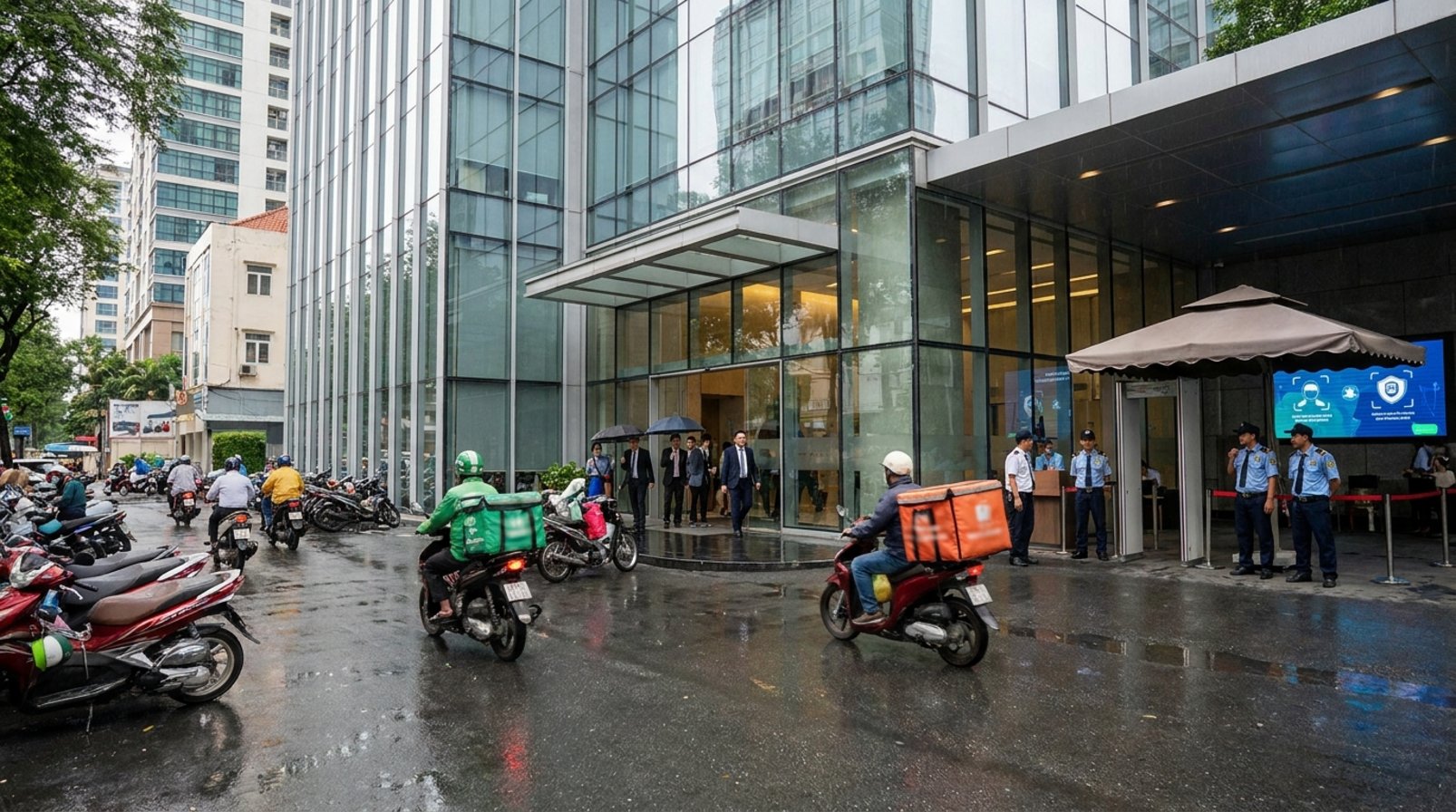
For Vietnamese marketers, this is also the time to shift from a “use AI for speed” mindset to “use AI with control.” Teams that build safe processes from the start will have a more durable advantage as AI becomes increasingly tied to data, decisions, and brand reputation.
Map where AI touches sensitive data before expanding
Read more: Why US AI-engineer pay is a wake-up call for Vietnamese marketing teams
- Map every place AI touches sensitive data — customer information, ad accounts, and internal assets — before expanding usage.
- Vet AI vendors on security, data-storage rights, and how much control you keep over inputs and outputs, not just output quality.
- Put approval workflows in place for both content and the AI tools used by teams with high-level access.
- Keep logs, access controls, and response scenarios ready so a tool error or leak does not turn into a campaign or brand crisis.
- Shift the team mindset from “use AI for speed” to “use AI with control.”
Overall, Anthropic’s test is less a security headline than a strategic reminder: as AI moves deeper into data, decisions, and brand reputation, the marketers who build safe processes early will hold a more durable advantage than those who simply move fast.
Source: AP News — “Anthropic’s Mythos model found vulnerabilities in classified US government systems, official says”.
See more marketing news and guides at https://marketing365.vn.
Follow more updates from Marketing365 to stay on top of the latest marketing trends.
Read more articles in the Digital Trends category.
This article focuses on Anthropic Mythos with a perspective for the Vietnamese market.