
Contents
- Claude Fable 5: AI moves from chatbot to “digital colleague”
- For developers, AI is no longer “autocomplete” but a collaboration system
- Beginners with Claude Fable 5 need to learn how to “set the problem” instead of just asking
- The path to becoming an AI engineer: technical foundations, real projects, and continuous learning
- AI in practice: from learning the trade to system-building thinking
- AI is moving from a testing tool to a marketing operations layer
- References
From a marketing perspective, the recent updates around Claude Fable 5 in July 2026 point to a notable shift: AI is moving away from answering questions and toward operating work at the process level. For Vietnamese marketers, the key question is no longer whether to use AI, but how to organize content, data, and workflows so AI creates real value instead of just increasing output.
Claude Fable 5: AI moves from chatbot to “digital colleague”
An article from Blockchain Council describes Claude Fable 5 as a turning point in how businesses design and manage generative AI workflows. The notable point is not that the model answers better, but that it can plan, execute, delegate to sub-agents, and self-check results across complex workflows.
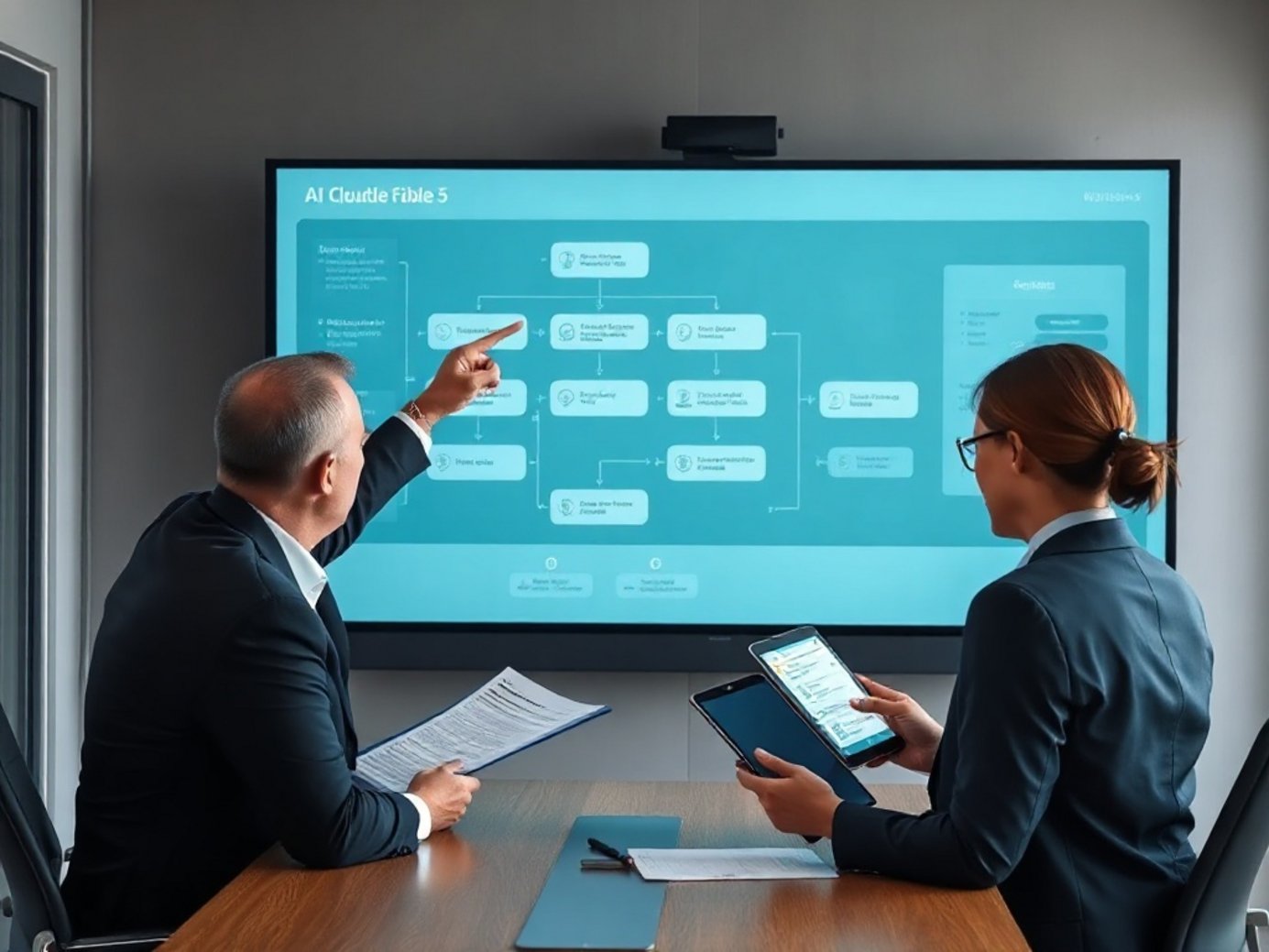
According to this source, Claude Fable 5 is positioned as the first widely released Mythos-class model, with a very large context window, long-duration autonomous operation, and high-level coding and reasoning capabilities. For businesses, this suggests a new working model: AI participates at the project level, while humans retain oversight and final decision-making.
In other words, this signals that marketing, product, and operations teams may soon shift from using AI for individual tasks to using AI as a layer that coordinates work. Source: Blockchain Council.
For developers, AI is no longer “autocomplete” but a collaboration system
In its article for developers, Blockchain Council emphasizes that Claude Fable 5 significantly expands the ceiling of applied AI capabilities: from coding assistants and analysis copilots to multimodal agents that can use external tools to handle long chains of tasks.

The important message here is that AI product design will change. Instead of building a simple question-and-answer interface, technical teams need to think about workflows with cross-checks, task decomposition, output verification steps, and safety mechanisms for high-risk contexts.
For marketers working closely with product and tech teams, this means AI briefs must also change. It is not enough to write a short prompt; you need to describe the goal, output criteria, data boundaries, and quality-check steps. Source: Blockchain Council.
Beginners with Claude Fable 5 need to learn how to “set the problem” instead of just asking
Blockchain Council’s beginner guide highlights a very important skill: to use AI effectively, users need to write a clear project brief so the model can plan, execute, review, and refine results on its own. The way AI is used is therefore shifting from short commands to a task-based working model.

This source also places Claude Fable 5 in the context of long-horizon knowledge work such as coding, research, document analysis, and business automation. For new marketers, that means instead of only learning how to write “good prompts,” they need to learn how to standardize requirements, control input data, and evaluate outputs against business goals.
This is also a reminder that AI effectiveness does not come from asking more, but from structuring the problem better. Source: Blockchain Council.
The path to becoming an AI engineer: technical foundations, real projects, and continuous learning
In Simplilearn’s article, the path to becoming an AI engineer is described as a combination of foundational education, core technical skills, and hands-on experience. The content emphasizes areas such as Python, machine learning, deep learning, mathematics, and AI frameworks, alongside a project portfolio, internships, certifications, and a commitment to continuous learning.
Read more: Meta Is Hiring Across AI While Claude Fable Leads Long-Form Reasoning

One notable point is that this source also opens up multiple pathways, not just for people who studied the right major from the start. That reflects the reality of today’s AI market: demand for talent is rising, but businesses still need people who can turn knowledge into working products, not just understand theory.
For marketers interested in AI, this is a reminder that understanding tools is not enough. The deeper AI is used, the more teams need people who can connect data, technology, and communication goals. Source: Simplilearn.
AI in practice: from learning the trade to system-building thinking
The two remaining articles from Blockchain Council and Simplilearn together show a common pattern: AI is moving from an individual skill to a system capability. Beginners need to know how to learn and apply it; developers need to know how to build safe products that can coordinate multiple tools; businesses need to know how to operate AI at the workflow level, not just the task level.

This is especially relevant for content, performance, CRM, and automation marketing teams. If AI can support research, drafting, checking, analysis, and continuous optimization, competitive advantage will no longer lie in whether a business uses AI, but in which workflows it can make run better with AI.
More broadly, this trend also shows that AI careers are becoming more clearly differentiated: those who only use tools will quickly be replaced by people who know how to build workflows; those who understand how to design systems can open up new roles.
AI is moving from a testing tool to a marketing operations layer
For Vietnamese businesses, the message from this set of news is clear: AI is no longer an experimental utility but is becoming a new operational layer. In marketing, that can start with very practical use cases such as brainstorming ideas, summarizing documents, analyzing customer feedback, drafting content variations, and supporting customer service.
However, the important lesson is not to chase the “newness” of the model while ignoring workflows, data, and quality control. To make AI create real value, businesses need to standardize briefs, define permissions clearly, check outputs, and train employees to collaborate with AI.
For the talent market, demand will not stop at people who know how to use tools; it will grow strongly for those who can connect AI with business goals, data, and customer experience. This could be a major opportunity for Vietnamese marketers if they proactively upgrade their capabilities now.
References: Blockchain Council, Simplilearn.
See more marketing analysis and guides at Marketing365.
Read more articles in the same category Digital Trends.
References
- How Claude Fable 5 Could Transform Generative AI Workflows for Businesses
- How to Become an AI Engineer: Skills, Roles, and Career Guide
- Claude Fable 5 for Developers: Building Smarter AI Applications and Assistants
- Getting Started with Claude Fable 5: A Beginner’s Guide to AI-Powered Productivity
- 65 Spring Boot Interview Questions and Answers (2026)