
Contents
The developments around Meta and Anthropic show that the AI race is shifting from model experimentation to deployment in products, infrastructure, and real-world workflows, and this is something Vietnamese marketers should read more closely than treat as just another tech story. As Meta’s AI hiring wave leans toward the ability to put models into operation, while the comparison between Claude Fable and other large language models confirms that no tool wins outright, the challenge for content and marketing ops teams is no longer whether to use AI, but which model to choose for which objective. As of mid-2026, that is the difference between treating AI as a new gimmick and seeing it as a long-term operational capability.
AI career opportunities at Meta are expanding in many directions
According to information from Blockchain Council, Meta is expanding AI-related roles across areas such as machine learning engineers, AI research, infrastructure, product, and generative AI application teams. The notable point is that Meta is not only hiring highly credentialed researchers; many execution-focused roles lean toward software engineering and the ability to put models into stable operation in a large-user environment.

This reflects a familiar but increasingly clear trend: the value of AI does not lie in the model on paper, but in the ability to deploy it, optimize latency, control output quality, and ensure the system can handle load well. For marketers tracking the tech talent market, this is a sign that companies will prioritize people with product thinking, data understanding, and the ability to work with engineering teams to apply AI in real operations.
In terms of skills, the original content emphasizes that working with systems like Meta AI or Llama cannot be limited to surface-level prompt knowledge. Programming foundations, machine learning knowledge, product-building thinking, and the ability to evaluate models in real user contexts are becoming more important than ever.
Meta AI operates as a product layer built on Llama and multimodal systems
In the second article, Blockchain Council describes Meta AI as a product assistant layer built on Meta’s Llama model family, combined with multimodal components, information retrieval, safety filters, and product integrations. This allows Meta AI to appear directly inside familiar apps such as Facebook, Instagram, WhatsApp, and even its own web interface.

The key lesson here is how Meta moves from a language model for research into a system that can be used in practice, capable of supporting chat, search, content writing, coding, and interaction with diverse data. In other words, the value no longer lies in a single model, but in the overall architecture: the core model, orchestration layer, tool-calling capability, safety protections, and context-based integration.
For marketers, this is an important cue when evaluating AI tools used for content, customer care, or campaign automation. A good AI platform does not just need to “write well”; it also has to fit the workflow, connect to data, and maintain brand consistency when used in real-world environments.
Claude Fable stands out in long-form reasoning and agent tasks, but it is not the only choice
The third source places Claude Fable alongside other models such as GPT 5.5, Gemini, Llama, and DeepSeek. The main conclusion is quite clear: no model wins outright in every situation. Claude Fable is seen as better suited for complex reasoning, long context, coding, and agent-style tasks, while other options may be more suitable if the priority is low latency, low cost, multimodal experience, or self-hosting capability.
Read more: Claude Reflects and Meta Enters AI Coding: Where the AI Race Is Heading
Read more: Claude Fable 5 and the AI Agent Wave: Rethinking Marketing Workflows
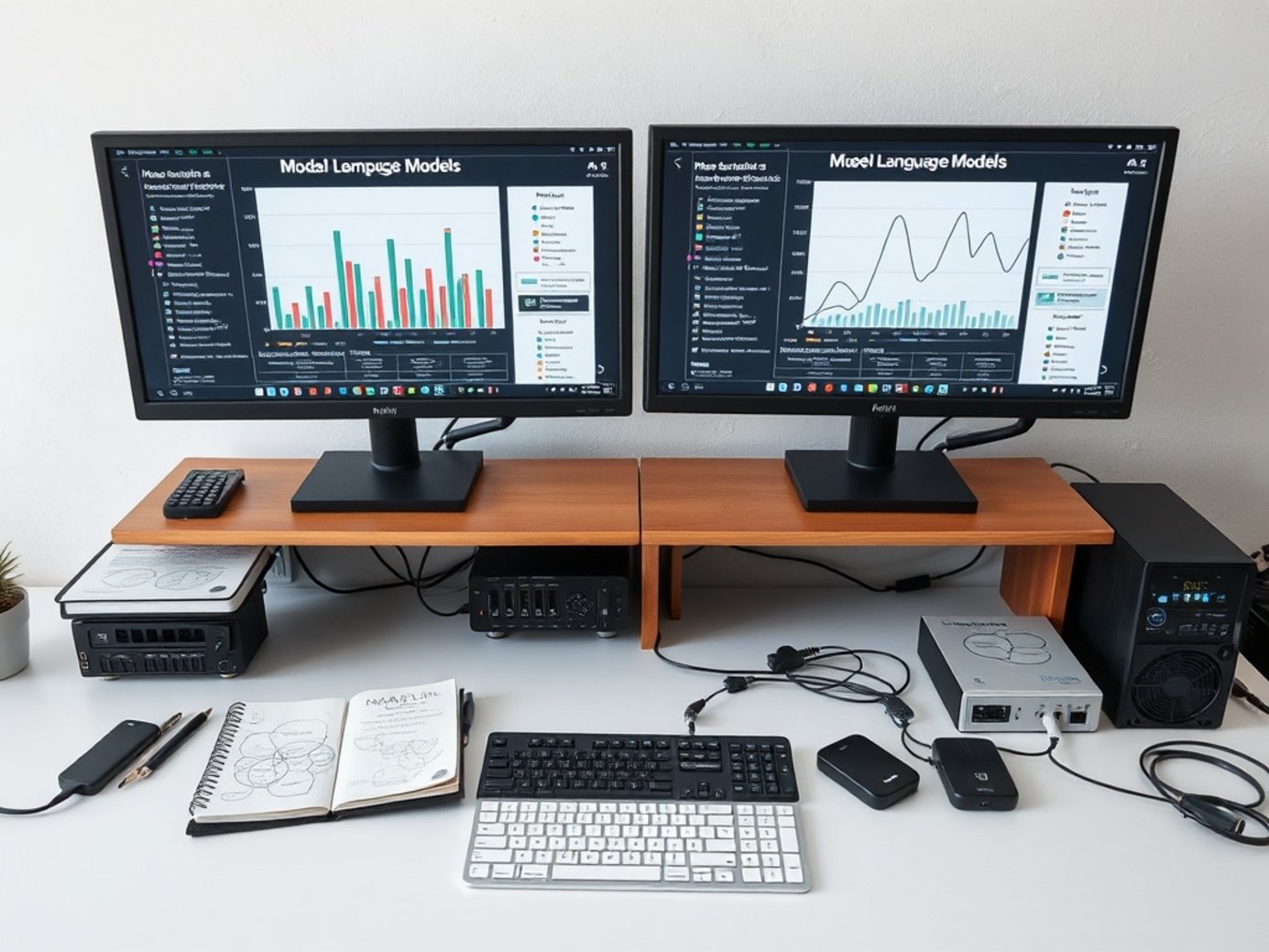
This approach is especially noteworthy because it reflects the reality of today’s AI market: businesses should not ask “which model is the strongest” in a general sense, but rather “which model best fits my business goals, budget, level of control, and data.” For projects such as research assistants, coding support systems, or long-document processing tools, the criteria for choosing a model will be completely different from those for a customer service chatbot or a fast content-generation tool.
The original analysis also shows that the LLM race is becoming more differentiated: some models are optimized for performance, some for safety, some for internal deployment, and some for specialized tasks. This is a signal that content, marketing ops, and product marketing teams need to understand the characteristics of each type of AI rather than defaulting to one tool for every need.
Businesses must choose systems, skills and processes for AI
These three stories show that AI in Vietnam is no longer a “try a new tool” story, but is moving toward a stage of choosing systems, choosing skills, and choosing processes. Vietnamese businesses that want to use AI effectively need to prioritize three things: building clean data foundations, training teams to understand how models work, and designing output review processes instead of handing everything over to AI.
For marketers, the opportunity lies in combining AI with market research, content production, customer insight analysis, and campaign operations optimization. But to do that, marketers need to understand the limits of each model, choose tools that fit the objective, and especially preserve brand voice and information accuracy.
In short, AI is expanding job opportunities, changing how products are built, and making model-selection criteria clearer. Vietnamese businesses that move early with the right mindset will have a major advantage in this transition period.
See more marketing analysis & guides at Marketing365.
Read more articles in the same category Digital Trends.
This article focuses on AI news with a perspective for the Vietnamese market.
References
- Meta AI Career Opportunities: Skills for Generative AI and Machine Learning Roles
- Claude Fable vs Other LLMs: Features, Performance, and Use Cases Compared
- How Meta AI Works: Llama Models, Multimodal AI, and Generative Tools