
Contents
The controversy around Clair Obscur: Expedition 33 is more than a dispute in the gaming industry. It is also a clear reminder for marketers, content creators, and brands in Vietnam: when generative AI enters the production process, transparency is no longer a choice but a matter of survival. A tool can accelerate creativity, but without clear disclosure, the price may be reputation and trust.
From a market perspective, this story reflects a bigger trend: the creative industry is gradually setting new boundaries for the use of AI. From gaming and advertising to digital content, the question is no longer “whether to use AI” but “how to use it, how to disclose it, and where the acceptable limits are.”
Clair Obscur stripped of two major awards over AI controversy
According to a report from TOY PEOPLE citing PC Gamer, the 2025 Independent Game Awards decided to revoke two major honors previously given to Clair Obscur: Expedition 33, including “Game of the Year” and “Best Debut Game.” The reason given was that the use of generative AI during development violated the awards’ judging principles.
Notably, the organizers said Sandfall Interactive initially claimed it did not use generative AI when submitting its awards entry, but later, on the day of the ceremony, admitted that AI had been used in production. This change in position was seen as the factor that led the panel to remove the title from the winners’ list.
For the indie game community, this is a very strong precedent. It shows that awards and creative ecosystems are not only concerned with product quality, but also evaluate the process behind how that product is made.
Public suspicion began as soon as the game launched
The controversy did not appear out of nowhere. The original article says that right after the game’s release, some players suspected that certain texture assets showed signs of being AI-generated. Although those details were later removed in a subsequent update and described as “placeholder material,” questions about the origin of the assets never fully disappeared.
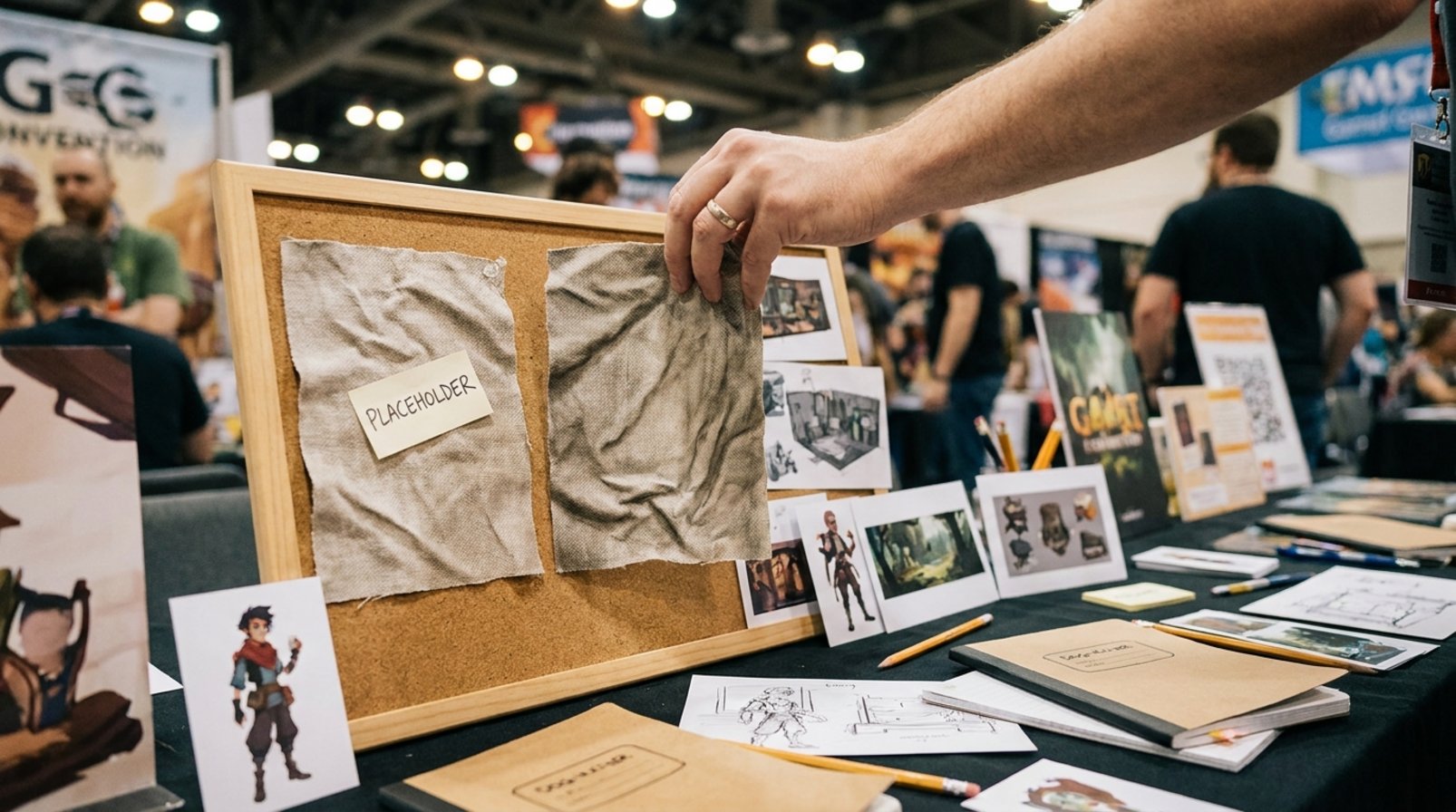
This shows that in today’s digital environment, communities can quickly spot unusual signs in visuals, materials, and style. For brands, the lesson is this: if AI is used at any stage, preparing an explanation that is early, clear, and consistent is extremely important.
In a context where users are increasingly sensitive to authenticity, a small transparency mistake can turn into a much larger communications crisis than the short-term value AI creates.
Read more: SEO Loses Ground as Trust and AI Citations Become the New Standard
The indie industry is drawing a line around generative AI
The removal of Clair Obscur’s awards is not only about handling a specific case, but is also seen as a systemic statement: the indie game community wants to draw a clearer line around generative AI. The original article describes this as a “landmark case,” meaning a milestone event, because it shows that independent game creators do not fully accept generative AI entering the workflow without transparency principles.

More importantly, in the same stream of discussion, other names such as the Divinity series and major publisher Ubisoft have also admitted to experimenting with AI in their development pipelines. This shows that the controversy is not limited to a small indie group, but is a broader industry-wide issue.
From a brand management perspective, this is a sign that internal AI standards will become increasingly important. Companies that do not establish rules for disclosure, review, and classification of AI content from the outset will easily find themselves on the defensive when challenged by the community.
Why “game-like” content is exploding faster than ever
Read more: AI Speeds Content, but Demands Verification and Transparency
In a related development reported by TOY PEOPLE from GamesRadar+, Mike Rose – founder of indie publisher No More Robots – said generative AI has opened “Pandora’s Box” and that the trend is almost impossible to reverse. He believes that no matter how many people oppose it, the tool will continue to be used because it shortens content production time.

Rose also noted that competitive pressure is rising sharply as the number of games on Steam is already very large. He said that at a recent Steam Next Fest event, about one-third of the demos had visuals or content generated by AI. According to him, this makes the market even more saturated with products that “look like games,” intensifying the battle for attention.
This is an important warning for every creative industry: when production tools become cheaper and faster, barriers to market entry fall, but at the same time average quality and information noise can rise sharply. At that point, the real advantage is no longer speed, but the ability to create credible differentiation.
AI transparency and moderation are critical to the brand
Read more: Hideo Kojima and the Lesson of Small Teams in AI Gaming
For Vietnamese marketers and businesses, this case offers three practical lessons.

- First, transparency about AI should be treated as part of brand strategy. If AI is used in visuals, copy, video, or ideas, define clearly the extent of its use and how it will be disclosed.
- Second, there must be a content review process before publication. The Clair Obscur story shows that controversy can start from a small detail but spread very quickly.
- Third, AI should be a support tool, not a shield for creative carelessness. Vietnamese users are increasingly concerned with authenticity, distinctiveness, and brand responsibility.
In a context where generative AI is being tested across many industries, companies that know how to balance speed, cost, and transparency will have the chance to get ahead. But if AI is treated as a “magic trick” to completely replace humans, the biggest risk is not technical failure, but losing public trust.
Reference source: TOY PEOPLE citing PC Gamer and GamesRadar+.
See more marketing news and guides at https://marketing365.vn.
Follow more updates from Marketing365 to stay up to date with the latest marketing trends.
Read more articles in the same category Digital Trends.
References
- TOY PEOPLE – ‘Clair Obscur: Expedition 33’ Rocked by Generative AI Controversy; 2025 Independent Game Awards Revokes Two Major Honors, Sending Shockwaves Through Industry
- PC Gamer – Indie Game Awards pulls two awards from Clair Obscur over generative AI use
- GamesRadar+ – Video games are cooked: publisher head says it doesn’t matter how many of us hate gen AI, ‘Pandora’s Box’ has opened and it’s gonna get used now