
Contents
As of July 2026, Google has just brought AI visibility reporting into Search Console, a move that could change how the SEO community thinks about measuring search performance. For Vietnamese marketers, what stands out is not only the addition of a new report, but also how Google is defining the boundary between traditional SEO and concepts like GEO or AEO.
Key points
- Google has placed the AI visibility report directly inside Search Console instead of creating a separate tool.
- The data currently shows impressions, not clicks, so it should be read as visibility recognition rather than conversion performance.
- This move suggests Google sees AI visibility as part of search visibility, not as a separate field.
- Vietnamese marketers should adjust how they track brand and content performance in an AI-powered search environment.
Google “puts AI into the SEO tool” and the message behind it
According to Search Engine Journal, Google has added reporting on visibility in AI-powered search experiences to Search Console. The notable point is that Google did not create a new platform with a separate AI-specific name; instead, it placed this feature inside the tool SEO professionals already use to track rankings, indexing, and search performance.
From a product perspective, this is a fairly clear choice: Google is saying that visibility in AI does not sit outside SEO, but is part of the overall search journey. For those expecting a separate “Generative Console” or a distinct measurement system for GEO, this decision feels like a definitive answer from the platform itself.
From a strategic angle, this move also shows that Google wants to keep AI visibility within the same framework as traditional search. That means SEO, content, and analytics teams should not treat AI as a completely new side channel, but rather track it as an additional layer of search visibility.
Source: Search Engine Journal.
The reports currently show impressions, not clicks
The key technical point in Google’s announcement is that AI visibility data currently focuses on impressions. In other words, the tool shows how many times your content has appeared across AI-powered search surfaces, but it does not yet fully reflect whether users clicked.

This is especially important for marketers because it is a reminder that appearing in AI Overview or AI Mode does not automatically equal a quality visit. If businesses look only at appearance frequency, they may overestimate the real impact on traffic or revenue.
That is why, when reading this report, it should be viewed alongside familiar metrics such as clicks, CTR, branded search, and post-click behavior. Only by comparing multiple layers of data can marketing teams understand where AI visibility is truly affecting the funnel.
Source: Search Engine Journal.
SEO, GEO, or AEO: which interpretation is Google leaning toward?
The Search Engine Journal article highlights a debate that has continued throughout the past year: does optimizing for AI create a separate discipline such as GEO or AEO, or is it simply an extension of SEO? By placing AI visibility reporting inside Search Console, Google appears to side with the latter view.
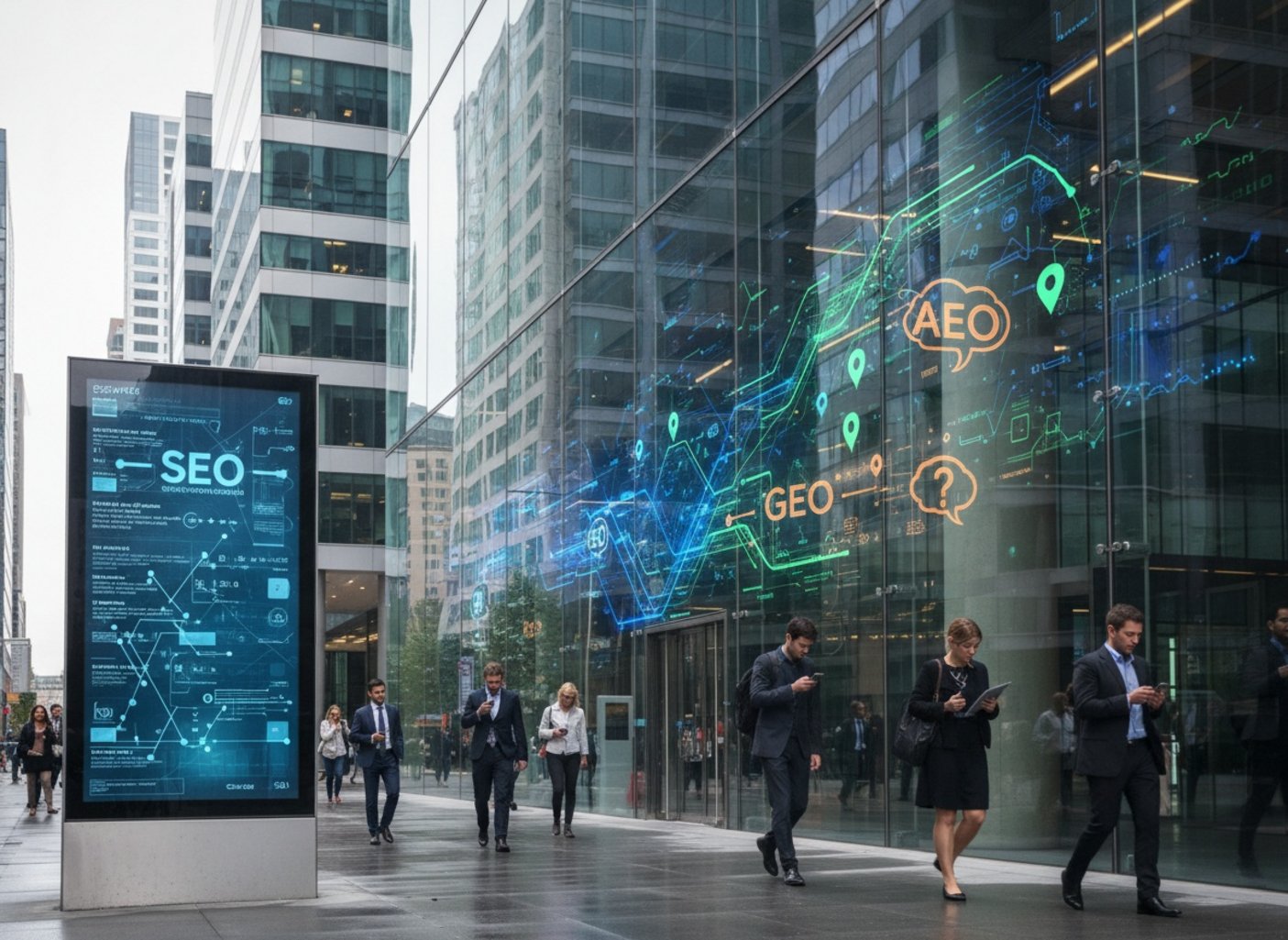
The message hidden behind this choice is: if users are still searching within a search ecosystem, then appearing in AI-generated answers still falls within the scope of search optimization. That does not deny the need for better-structured, more semantically clear, and more useful content; but it does push back against the idea that a completely separate toolset is required.
Read more: Google Pushes AI Deeper into Search: How SEO and Measurement Must Adapt
For brands and agencies, this is a moment to be cautious about overly dramatic claims of an “AI optimization revolution.” Rather than chasing a new label, it may be more useful to review content quality, brand entity signals, source credibility, and the ability to be cited in AI answer contexts.
Source: Search Engine Journal.
AI search means SEO must watch brand visibility signals
For Vietnamese businesses, this change could directly affect how SEO performance is evaluated over the next year. Many marketing teams have long been used to tracking only organic traffic and keyword rankings, but when AI enters the search journey, part of brand awareness may happen before users even visit the website.

This requires local content and SEO teams to pay closer attention to article structure, clarity of information, signs of expertise, and brand trustworthiness. Short, context-rich answers with references and clear explanations often have an advantage in AI-assisted search environments.
More importantly, Vietnamese businesses should see this as the time to update internal reporting: beyond clicks and sessions, they need to start tracking indicators of brand visibility in new search experiences. Even if the measurement framework is still evolving, preparing early will help teams avoid being caught off guard as AI search becomes more widespread.
Add AI visibility to reporting, but read it as impressions
- Add the Search Console AI visibility report to your regular SEO reporting, but read it as impressions, not clicks.
- Cross-check AI visibility against clicks, CTR, and branded search before drawing conclusions about traffic.
- Stop treating GEO or AEO as a separate budget line; fold it into existing SEO and content workflows.
- Strengthen content structure, entity signals, and source credibility to earn citations in AI answers.
- Update internal KPIs to track brand visibility that happens before the click.
For Vietnamese marketing teams, AI visibility is not a new discipline to chase but a new layer to measure. Teams that adjust their reporting early will read the AI-search shift far more clearly than those waiting for a perfect framework.
See more marketing news and guides at https://marketing365.vn.
Follow more updates from Marketing365 to stay on top of the latest marketing trends.
Read more articles in the same category at Digital Trends.
This article focuses on AI visibility in Search Console with a perspective for the Vietnamese market.