
Contents
- Understand what an attention-grabbing title really is and why it should not be confused with “clickbait”
- Core principles for writing attention-grabbing titles that still protect the brand
- How to write attention-grabbing article titles for different purposes
- Title formulas you can apply right away
- A self-check process for refining titles before publishing
- Common title-writing mistakes and how to avoid them
- Frequently asked questions about how to write attention-grabbing article titles
When an article has strong content but a weak title, CTR often drops right from the first round, and the piece is less likely to be read further. In marketing, a title needs to do three things well: attract attention in the right context, accurately reflect the content, and stay short enough to work across multiple channels.
If a title is wordy, overpromises, or drifts off topic, readers will scroll past it even if the body copy is solid. This section focuses on how to write attention-grabbing article titles in a practical way: identifying weak titles, choosing the right title style for the context, and avoiding mistakes that reduce content distribution performance.
Understand what an attention-grabbing title really is and why it should not be confused with “clickbait”
An attention-grabbing title helps readers quickly understand what the article is about, see a clear benefit, and still feel curious enough to click through. Unlike clickbait, it does not try to hide the real content; it simply chooses a shorter, more specific, and more expectation-aligned way to say it.
An attention-grabbing article title usually balances 3 elements: clarity, a hook, and no misleading claims. For example, “7 ways to write sales article titles to increase open rates” tells readers exactly what they will get. By contrast, “This is the secret 90% of title writers miss” creates strong curiosity, but if the content is only basic tips, readers will feel misled.

This difference is especially clear across channels. For blogs, the title needs to accurately describe the content to maintain trust and support SEO. For landing pages, the title must stay close to the main benefit because readers usually decide quickly. For social posts, the title can be shorter and more open-ended, but it still has to keep its promise. How to write attention-grabbing article titles effectively means making readers think, “This is exactly what I need,” not “I have no idea what this is about, but it looks strange.”
Signs a title is “attention-grabbing in the right way”
A title that grabs attention the right way is one that readers understand immediately, know what the article is about, and have a reason to keep reading. It does not need to be flashy, but it must be clear enough that readers do not feel let down.
You can check it yourself using these 4 signs:
- You understand the main topic after one read.
- It includes a specific benefit or expected result.
- It has just enough difference to stand out.
- It fits the publishing channel, from blogs to social posts.
For example, “5 mistakes that make attention-grabbing article titles less effective” is clearer than “Surprising mistakes few people notice.” The first tells readers what they will get; the second only creates vagueness. For SEO title writing, clarity is often more important than novelty.
When a title starts to become clickbait
A title starts to become clickbait when it overpromises, leaves out the core information, or tries to create curiosity by being deliberately vague. This is when curiosity-driven title writing goes too far.
Three easy-to-spot signs are:
- Using overly strong words while the content is only basic.
- Hiding the real topic to force readers to click.
- Exaggerating benefits as if results will happen immediately.
For example, “A clickbait title formula that makes every post explode” sounds eye-catching but is very risky if the content is only general tips. It is better to keep the promise moderate, such as “A concise but memorable title formula for blogs and social posts.” This kind of open-ended title is still safe if the content delivers on expectations.
Core principles for writing attention-grabbing titles that still protect the brand
A brand-safe title is clear enough for readers to understand the value right away, but it does not exaggerate, mislead, or drift away from the channel context. To quickly check before publishing, review it against 6 criteria: concise, distinctive, context-appropriate, benefit- or problem-led, easy to scan, and not keyword-stuffed.

- Concise: people scrolling a feed only read the first few words. For example, “7 ways to write attention-grabbing article titles” is easier to scan than “A compilation of optimization methods to help you create appealing titles for every type of content.”
- Distinctive: add a specific angle, data point, situation, or result. For example, “5 mistakes that make ad titles lose points” is clearer than “Tips for writing good titles.”
- Context-appropriate: titles for email, SEO, Facebook, or landing pages need to be different. A line that works for SEO may not work for ads.
- Reflects the main benefit or problem: readers should know what they will get. For example, “How to write curiosity-driven titles that still protect the brand” clearly states both the goal and the limit.
- Easy to read, not forced: if you can read it aloud without stumbling, that is a good sign. If the sentence has too many commas or quotation marks, trim it down.
- No keyword stuffing: one main keyword is enough. Repeating “how to write attention-grabbing article titles” too many times usually makes the title feel unnatural and less trustworthy.
Quick checklist before finalizing:
- Can readers understand what this article is about in 3 seconds?
- What makes it different from the 10 other titles on the results page?
- Does it fit the publishing channel?
- Does it promise only what the content can actually deliver?
- Will it read well on mobile?
How long should a title be?
The right title length is long enough to show the full idea on the channel being used, usually prioritizing the beginning of the title for the main topic and benefit. For SEO, keep it short so it does not get cut off in search results; for Facebook or email, it can be longer if you need more context or a stronger click trigger. For example, “How to write attention-grabbing article titles” is more concise than “How to write attention-grabbing article titles to increase readership and maintain brand image.”
What should a strong title include?
A strong title usually includes the main topic, a benefit-focused highlight, and a detail that makes it more specific. When using numbers, use them to increase clarity, such as “5 title-writing criteria” instead of “many criteria.” When you want to spark curiosity, use a question or an opening phrase like “Why…,” but only if the content truly answers it within the article. For sales titles, keep the main keyword at or near the beginning so readers can recognize the topic quickly.
How to write attention-grabbing article titles for different purposes
An effective title has to change based on the display channel, the reading purpose, and how quickly the viewer makes a decision. For the same message, SEO blogs need clear search intent; social posts need to be concise and easy to scan; ads need benefits; and sales content needs to reduce ambiguity and build trust.
What should SEO titles balance?
A good SEO title contains the right topic, matches search intent, and still reads naturally on the search results page. When working on how to write attention-grabbing article titles, do not stuff keywords; prioritize one main phrase, one clear benefit, and one specific signal such as a number or a question if appropriate.
A quick test is to read the title as if you were the searcher. Does it show the exact problem they need, or does it just sound mechanically optimized? For the topic “how to write attractive content titles,” a title like “How to write attractive content titles for blogs, Facebook, and ads” is usually clearer than one that repeats the keyword many times. If the article is a guide, the title should show the scope right from the start.

Short checklist for SEO titles:
- Includes the main keyword or a close variant.
- Accurately reflects the content and level of detail.
- Is not too long, avoiding a stiff sentence.
- Can include a number, benefit, or question when it feels natural.
How are Facebook, ad, and sales content titles different?
Titles on Facebook, in ads, and on sales pages differ in reading speed, attention competition, and conversion goals. On Facebook, the title needs to be short, clear, and easy to scan; in ads, it must state the benefit or problem immediately; in sales content, it should reduce the feeling of exaggeration and increase trust.
For example, how to write Facebook titles that drive engagement often leans toward situations, questions, or just enough of a hook to stand out, such as “3 mistakes that make your title get scrolled past in 2 seconds.” Meanwhile, how to write ad titles that attract clicks should state the result or pain point directly, without beating around the bush. If it is about how to write titles for sales articles, prioritize clarity: what the product is, what it solves, and who it is for. A vague title may pull clicks, but it can also make readers leave immediately on the first line.
When choosing a title by channel, remember 3 principles:
- Social: short and easy to understand at a glance.
- Ads: the benefit should appear in the first few words.
- Sales: less sensational, more evidence and context.
Title formulas you can apply right away
The most effective title formula is one that helps the writer lock in the benefit, create just enough curiosity, and present a clear number or order. With how to write attention-grabbing article titles, the goal is not to make the wording louder, but to help readers immediately understand what they will get and why they should open the article.
Direct benefit formula
This formula works well when readers care about a clear result, especially for guides, SEO articles, or conversion-focused content. The easiest structure to use is: state the problem + lock in the benefit + add a specific context.
For example, instead of writing “How to write good titles,” you could write “How to write attention-grabbing article titles to increase open rates.” For sales content, you could shift the context to “How to write appealing titles to increase clicks from comparison shoppers.” The strength of this good title template is that it is very clear about the purpose, less vague, and easy to adapt by industry.
Read more: What Are Spelling and Grammar Errors in Content?
When applying it, check 3 things: does the title state the result, does it name the right audience, and does it avoid overpromising? If the sentence is too general, add context such as “for blog posts,” “for landing pages,” or “for Facebook ads.”
Curiosity formula without misleading readers
This formula is used when you want to create an information gap that makes readers want to continue, but it still has to be answered clearly in the body copy. Curiosity-driven title writing usually relies on questions, contrasts, or a situation that makes readers feel, “That is exactly what I’m dealing with.”
For example: “Why can a very short title get more clicks than a long one?” or “One small mistake, and even a good title gets ignored.” This is a safer form of clickbait because the content itself must explain the reason rather than tricking expectations.
When using this style, avoid overly vague phrases like “the secret everyone misses.” Instead, open with a concrete signal: a common mistake, a different approach, or a situation that goes against the usual habit of writing attractive content titles.
Formula with numbers, lists, or order
This formula is suitable when you need readers to scan quickly and know the content length in advance. Numbers, lists, and order make titles more specific, especially for how-to or roundup content.
For example: “5 easy-to-apply clickbait title formulas for blog posts” or “3 mistakes that make attention-grabbing article titles less effective.” If you do not have verified data, use numbers only as a structural frame, not invented figures to make the title sound stronger.
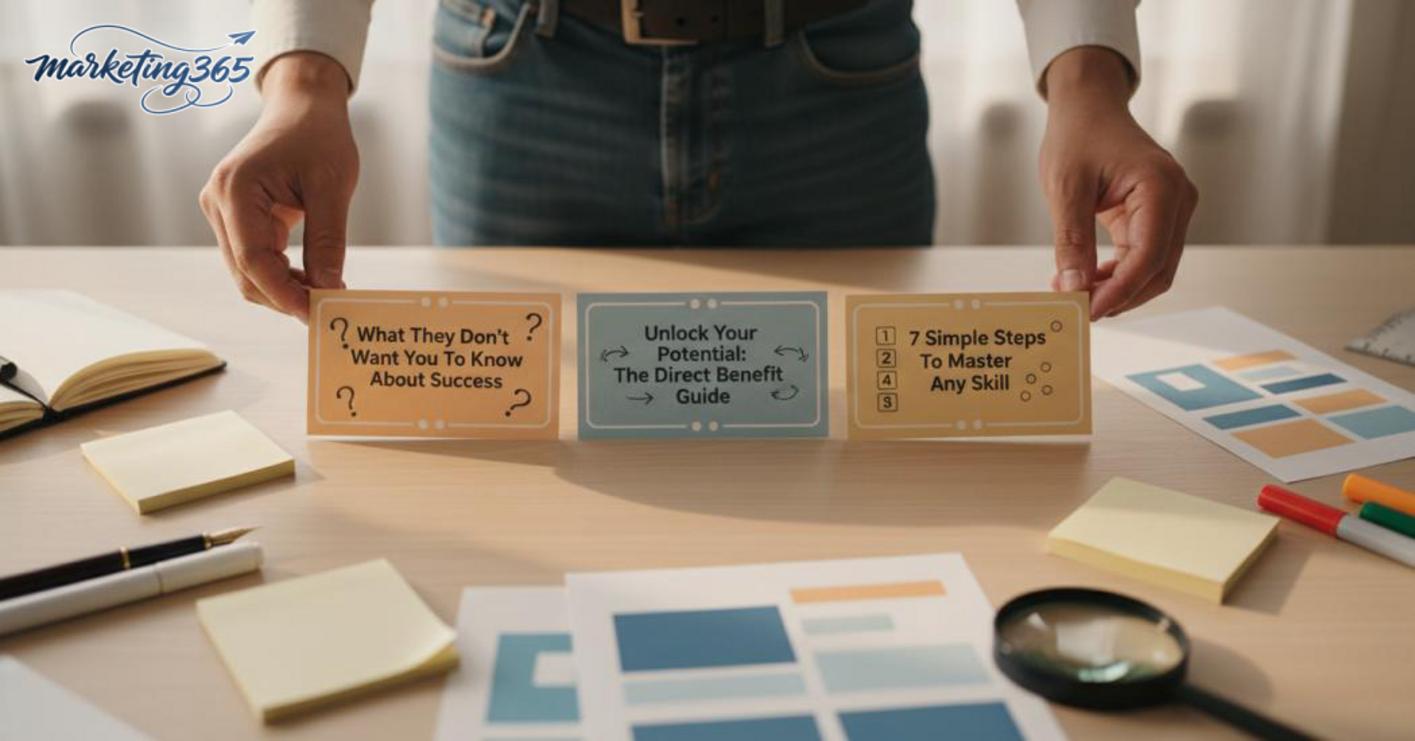
One tip for writing a concise but memorable title is to keep the number of items reasonable, usually 3, 5, or 7, and then add the application context. This works especially well for attention-grabbing article titles because it shows the content is organized, not rambling.
A self-check process for refining titles before publishing
A good title should pass 5 filters before publishing: right goal, right context, clear enough, short enough, and aligned with the brand voice. With how to write attention-grabbing article titles, even one wrong filter can make the title drift off message or hurt CTR.

5-step title review checklist before finalizing
- Does the title accurately reflect the main content, or is it promising more than the body delivers?
- Does the title fit the target reader, or is it using language that is too general or too technical?
- Can someone scrolling for 3 seconds immediately understand the benefit, audience, or result?
- Can you trim unnecessary words, repeated phrases, or long explanations?
- Does the title voice match the brand: serious, practical, or friendly and action-oriented?
When you review in this order, it becomes easier to write SEO-friendly titles because the title is fixed at the root, not just polished on the surface.
Examples of turning a weak title into a stronger one
- “Good tips for marketing” → “7 tips for writing attractive content titles for sales blogs”: the second version is clearer about the topic, includes a number, and gives usage context.
- “Increase effectiveness immediately” → “How to write appealing titles to increase CTR for ad posts”: the second version is more specific, less clickbait-like, and shows a direct benefit.
- “Title for an article” → “Good title templates for service articles: short, clear, easy to click”: the second version targets the right audience and explains the criteria directly in the sentence.
If a title still feels vague after trimming, remove extra adjectives first, keep one main benefit, and keep one content signal. That is often the best way to write a concise but memorable title.
Common title-writing mistakes and how to avoid them
A good title needs to avoid mistakes that reduce CTR, weaken trust, and make the article harder to notice in the feed or on SERP. When revising a title, prioritize the errors that directly affect click behavior first, then refine sharpness, context, and credibility.
Mistakes that make a title lose credibility
A title loses credibility when it exaggerates, overpromises, or is more sensational than the actual content. A clickbait title like “guaranteed to increase sales 10x” often makes readers hesitate to click, and if the content does not match, bounce rates rise quickly.
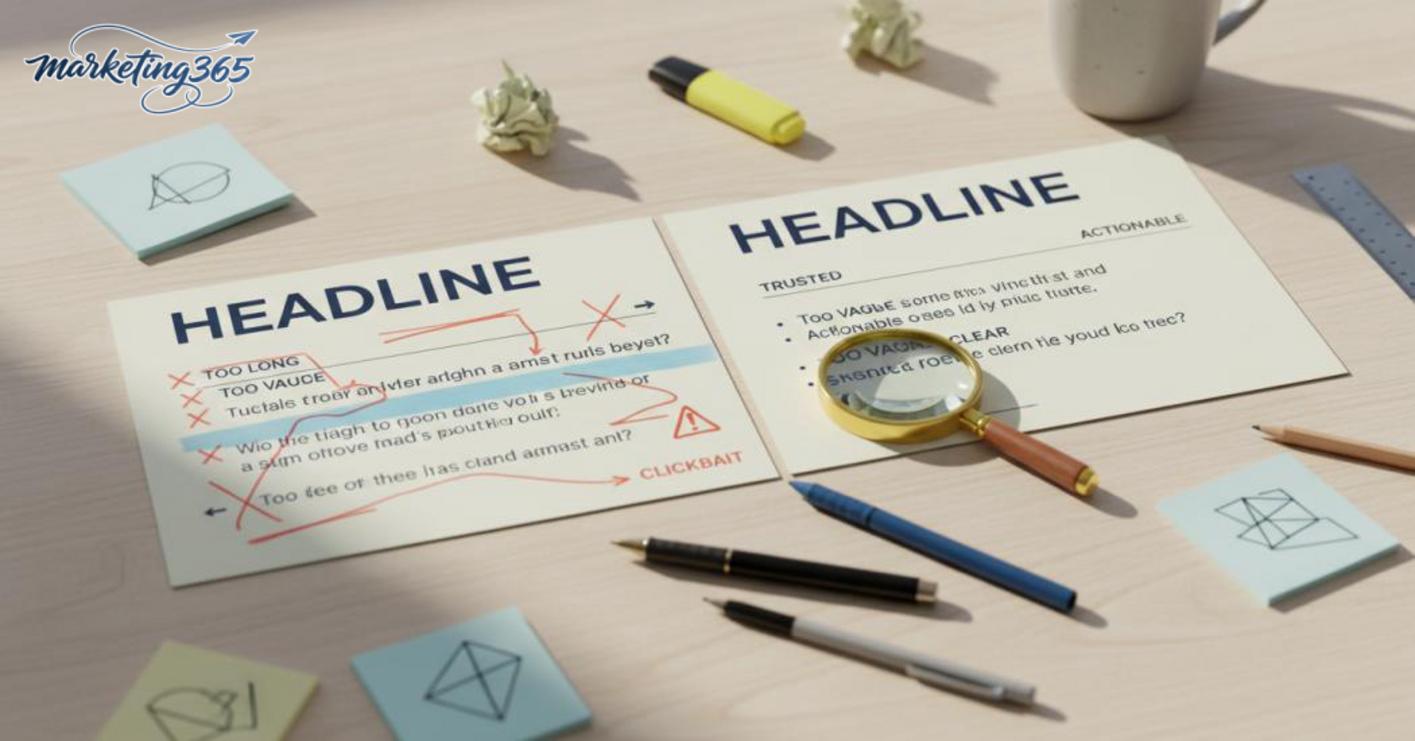
Easy-to-spot signs include titles that promise absolute results, use overly strong words like “immediately,” “guaranteed,” or “super effective” without context. The way to avoid this is to keep expectations realistic, clearly state what readers will get, and stay close to the actual content. For example, instead of “The secret to writing clickbait titles that explode engagement,” use “how to write attention-grabbing article titles for specific goals.”
Quick fix checklist:
- Remove absolute promise words if there is no evidence.
- Check whether the title promises exactly what the article develops.
- Prioritize clear wording over trying to shock readers.
Mistakes that make a title hard to surface or hard to notice
Titles that are hard to notice are usually too long, too generic, or not distinctive enough to stand out in a list of articles. When a title becomes diluted, readers scroll past without remembering it; on SERP, it also struggles to send a clear signal about the main topic.
A common mistake is cramming too many ideas into one line, which makes the title heavy and disrupts the reading rhythm. Another mistake is writing something vague like “Good tips for content,” because it does not show a specific benefit. With how to write attractive content titles, keep one main thread, add just enough context, and use the keyword naturally.
How to fix it, in order:
- Reduce the title to one main idea.
- Add a point of difference, such as the audience, goal, or use case.
- Review the keyword so the title still fits SEO context without sounding forced.
- Test it on a phone screen; if it is not clear at a glance, keep revising.
Frequently asked questions about how to write attention-grabbing article titles
The most effective article title is usually around 45–65 characters or 6–12 words. This range is often clear enough and still easy to scan quickly on the search results page. When a title is too long, readers are more likely to skip it; when it is too short, it lacks context and is harder to make interesting.
Yes, you should use numbers when the content has a list, steps, or a clear comparison. For example, “5 ways to write attention-grabbing article titles” immediately tells readers the structure, while “7 mistakes that make titles less appealing” feels more specific. Do not add numbers just to make the title sound clickbaity.

Yes, question-style titles work well if they match the exact question readers are searching for. For explanatory articles, questions help draw attention. For how-to articles, a title like “How to write attention-grabbing article titles” is usually more direct and easier to summarize.
Write your title in 3 clear steps. Step 1: identify the reader’s search intent, for example “how to write attention-grabbing article titles” fits someone who needs guidance. Step 2: place the main keyword near the beginning, such as “How to write attention-grabbing article titles for sales blogs.” Step 3: trim the extra words and check whether the title feels natural, is short enough, and won’t get cut off on a phone screen.
You can self-check a title with a short list. A good title usually meets 3 criteria: matches search intent, reads naturally, and does not stuff multiple keyword variations. For example, “How to write attention-grabbing article titles for startups” sounds clearer than “How to write attention-grabbing article titles, optimize titles, create appealing titles for startup blogs.”
If you need a quick edit, prioritize in this order: keep the main idea first, add a number or question only when it truly fits, then remove repetition and unnecessary words. This approach makes the title tighter while preserving appeal and clarity.
For the latest official guidance, you can also refer to resources from HubSpot Blog.
You can also find more practical marketing guides at https://marketing365.vn.
Content from marketing365 is created for SMEs, online shop owners, and new marketers.
You can read more articles on the same topic in the Content Marketing category.