
Contents
- Search is not disappearing, it is becoming layered
- Why the advantage is shifting toward ecosystems rather than individual pages
- Postponed standardization compounds into rework
- System SEO in Vietnam: the issue is not whether to do it, but how to organize it
- Cut overlapping search intent across categories and locations
- References
SEO is no longer just a game of keywords or a few on-page tricks. Recent developments from AI search, multi-location site structures, and commerce infrastructure point to a clearer conclusion: businesses that can build a robust ecosystem of content, data, and experience will have a more durable advantage in search.
This is especially important for Vietnamese marketers, where many brands are expanding quickly but their website structure, data, and operational capabilities are lagging behind business growth. As the search landscape changes, SEO is no longer just about rankings; it is about preserving the ability to be found, understood correctly, and chosen.
Key points
- AI search has not replaced Google; it is adding a new layer to the search journey.
- Familiar brands and consistent content and data systems are gaining a clearer advantage.
- Sustainable SEO is shifting from optimizing individual pages to optimizing structure, infrastructure, and scalability.
- Vietnamese businesses need to treat SEO as an operational capability, not just a content production task.
Search is not disappearing, it is becoming layered
New signals from the SEO industry are telling the same story: search is not disappearing, but the way users and platforms access information is becoming more layered. Similarweb, according to an analysis by Search Engine Journal, shows that AI search is not replacing Google but is becoming an additional layer on top of existing search behavior. That means SEO is no longer about optimizing for a single touchpoint; it now has to account for a journey in which users may start on Google, move to an AI assistant, and then return to a familiar brand.
On another front, Search Engine Land says AI models tend to favor brands people already know. Even as display formats and reasoning methods change, brand recognition and brand signals remain a hard-to-ignore foundation. At the same time, Google continues to test and update components related to structured data and commercial search experiences, showing that the game is increasingly about delivering information that is clear, consistent, and machine-readable.
In that context, stories like WP Engine partnering with BigCommerce to help WordPress stores scale without disrupting SEO or the user experience are also worth noting. They reflect a real need: growth must not come at the cost of lost traffic, broken URL structures, weakened SEO signals, or a disrupted user journey.
Why the advantage is shifting toward ecosystems rather than individual pages
The common thread across these developments is the growing penalty for a patchwork approach to SEO. When businesses expand into many local pages, many categories, and many content versions without a sensible structure, Search Engine Land warns that internal competition, diluted authority, and maintenance burdens will emerge. In other words, more pages do not necessarily mean more opportunities.

By contrast, signals from AI search and structured data show that machines need clearer context to understand correctly. If Google and AI systems rely more heavily on data consistency, page structure, and brand signals, then SEO cannot stop at optimizing a single article. It has to be designed as a system: content hierarchy, internal linking, schema, metadata, page experience, and brand logic all need to align.
This is also why platforms like WP Engine and BigCommerce talk about scaling without breaking SEO. The issue is not whether you add more features or more pages, but how you expand without damaging the structure that made you discoverable in the first place. For marketers, this is a major mindset shift: growth is no longer about “adding more,” but about “expanding while keeping order.”
Postponed standardization compounds into rework
Many marketing teams still tend to delay foundational work such as standardizing category structures, consolidating pages with overlapping intent, cleaning up structured data, or redesigning internal linking systems because these tasks do not feel like they deliver “immediate results.” But as AI search and information retrieval systems place more weight on clear data, the cost of delay will be higher than before.

The lesson from Search Engine Land on multi-location SEO is especially relevant: if you simply duplicate URLs based on the number of branches or regions without a strategy, you create a content maze for yourself. And when Search Engine Journal emphasizes that AI search is layering on top of Google rather than replacing it, the implication is that brands must serve multiple access layers at once: users, traditional search engines, and AI systems.
In addition, articles about AI-generated descriptions in Shopping ads or Search Console data show that Google is still experimenting aggressively with display and measurement. That means if a business relies on just one metric or one type of traffic, it will quickly become reactive. Modern SEO does not reward luck; it rewards systems that are strong enough to adapt when platforms change how attention is distributed.
System SEO in Vietnam: the issue is not whether to do it, but how to organize it
For Vietnamese businesses, the question is not whether SEO should still be done, but how SEO should be organized. Many local brands are expanding rapidly across provinces, product groups, sales channels, and content versions, yet their website systems lack a strong enough architecture to absorb that growth. When that happens, every content effort is dragged down by a weak structure.
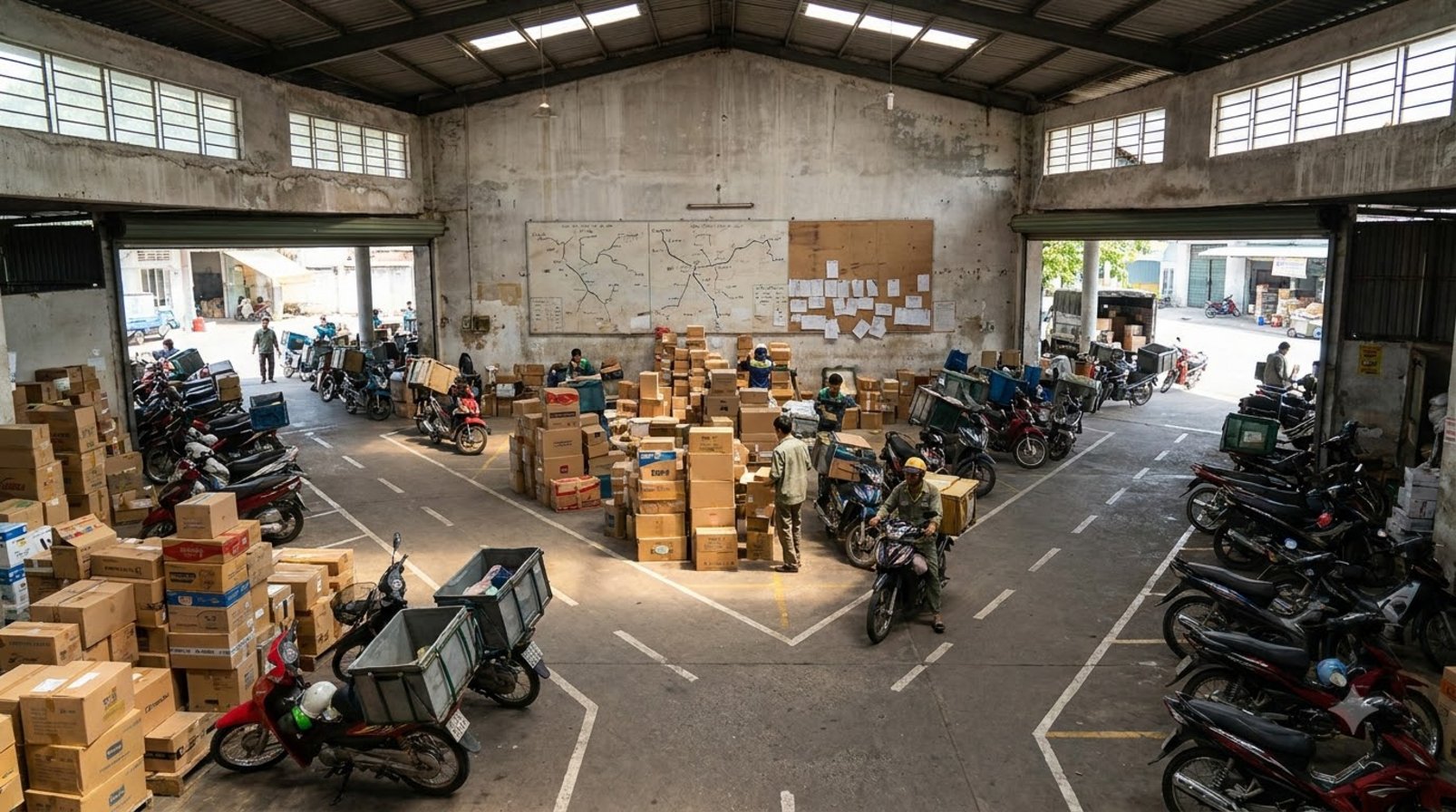
The Vietnamese market also has a specific characteristic: SEO resources are often split between content, ads, tech, and e-commerce. So if there is no ecosystem mindset, SEO is easily seen as just a content-writing task. Meanwhile, trends from international sources show that the real advantage comes from the ability to operate content, data, brand, and platform in sync.
This is even more important for businesses selling across multiple channels or operating a network of stores. If localization structure is handled poorly, a brand can lose both discoverability and consistency. If done well, SEO becomes an infrastructure layer that helps the brand scale without sacrificing performance.
Cut overlapping search intent across categories and locations

- Review the website structure to reduce overlapping search intent, especially on category pages, location pages, and product variants.
- Standardize structured data, internal links, and brand information so both Google and AI systems understand the context correctly.
- Treat SEO as a controlled growth problem: every expansion in content, geography, or commerce must include a plan to preserve search signals.
- Build dashboards that track multiple layers of performance at once, not just traffic, but also brand visibility, conversions, and stability after technical changes.
The short conclusion is: SEO is shifting from page optimization to ecosystem optimization. Those who build a foundation that is clear, consistent, and flexible enough will not only adapt to AI search, but also use it as a new amplification layer for the brand.
See more marketing analysis and guides at https://marketing365.vn.
Follow more analysis from Marketing365 to stay updated on the latest marketing trends.
Read more articles in the same category Digital Trends.
This article focuses on SEO ecosystem with a perspective for the Vietnamese market.
References
- Search Engine Journal — WP Engine Partners With BigCommerce To Scale WordPress Stores via @sejournal, @martinibuster
- Search Engine Journal — AI Search Isn’t Replacing Google, It’s Layering On Top – Similarweb Data via @sejournal, @gregjarboe
- Search Engine Land — AI models favor familiar brands in search: Study
- Search Engine Land — Google launches Structured Data Files v10.1 for Display & Video 360
- Search Engine Land — Multi-location SEO: How to structure geographic pages at scale