
Contents
- Social media and the challenge of evidence-based measurement
- What has changed in social media — and how marketing teams must work differently
- Which metrics still matter, and which should matter less
- What social media teams in Vietnam need to change in how they work and report
- To keep social media useful, marketing teams should do these 4 things
- Reference sources
Social media is no longer a place where marketers can simply push reach and wait for results. As platforms, AI, and user behavior make content paths harder to predict, marketers must rethink how they prove effectiveness: which content builds trust, which channels sustain real engagement, and which reports still have enough power to drive decisions.
The key point for Vietnamese marketers is this: the game is shifting from “lots of views” to “can be justified in terms of impact.” Changes in eCommerce operations, AI in retail, and the way large enterprises organize eCommerce all show that social media does not stand alone; it increasingly has to connect with data, conversion, and control processes.
Key takeaways
- Social media is being pulled away from intuition-based measurement and toward questions of evidence and accountability.
- AI and eCommerce are tying content, distribution, and conversion more tightly together; marketers can no longer rely on a single metric.
- Businesses need to rethink social reporting: from reach to quality signals, from likes to real impact.
- In Vietnam, the advantage will go to teams that can connect social with sales data, content, and operations.
Social media and the challenge of evidence-based measurement
The story of social media today is no longer about whether you “post consistently,” but about what proves the content. When Kroger appointed Nate Faust to lead eCommerce, and StockTitan highlighted his background from Jet.com, Walmart U.S. eCommerce, and delivery-chain operations, what stands out is not just personnel. It signals that major retail businesses are moving digital operations and execution speed closer to the center of decision-making.
At the same time, Digital Commerce 360 shows that online retailers have had to prepare early for the 2026 holiday season, with decisions tied to marketing, fulfillment, and AI. That means social media can no longer be evaluated as a standalone distribution channel. It has to contribute signals to the broader picture of revenue, inventory, delivery, and seasonal demand.
MarketScale also describes Kohl’s bringing the Gemini shopping assistant into operations and ShipBob integrating Claude into its fulfillment toolkit. As AI enters these stages, social content becomes even harder to measure only by impression or engagement rate. It has to be considered alongside data on buying behavior, customer support, and conversion efficiency.
What has changed in social media — and how marketing teams must work differently
The most notable changes are not happening in a single social platform, but in the way social intersects with retail, AI, and operations. That is why this section looks only at what can be verified from public sources, to show what marketers need to change in how they work and report.
New eCommerce leadership: social is no longer outside the revenue equation
Kroger’s move to put Nate Faust in charge of eCommerce, along with StockTitan’s description of his experience at Jet.com and Walmart U.S. eCommerce, shows that retail companies see digital channels as areas that require deep operational capability, not just communications. Reference links: PR Newswire and StockTitan.

For social media, this means softer metrics like engagement need to be placed alongside harder ones: is the traffic high quality, does it support conversion, and does the content align with sales goals? A post that creates noise but does not drive the next action will be hard to keep in the budget.
Peak-season planning: social has to connect with fulfillment
Digital Commerce 360 makes it clear that retailers are preparing for the 2026 year-end shopping season through decisions about marketing, fulfillment, and AI. When peak season is planned this far ahead, social content cannot be separated from delivery and supply capabilities. Reference link: Digital Commerce 360.
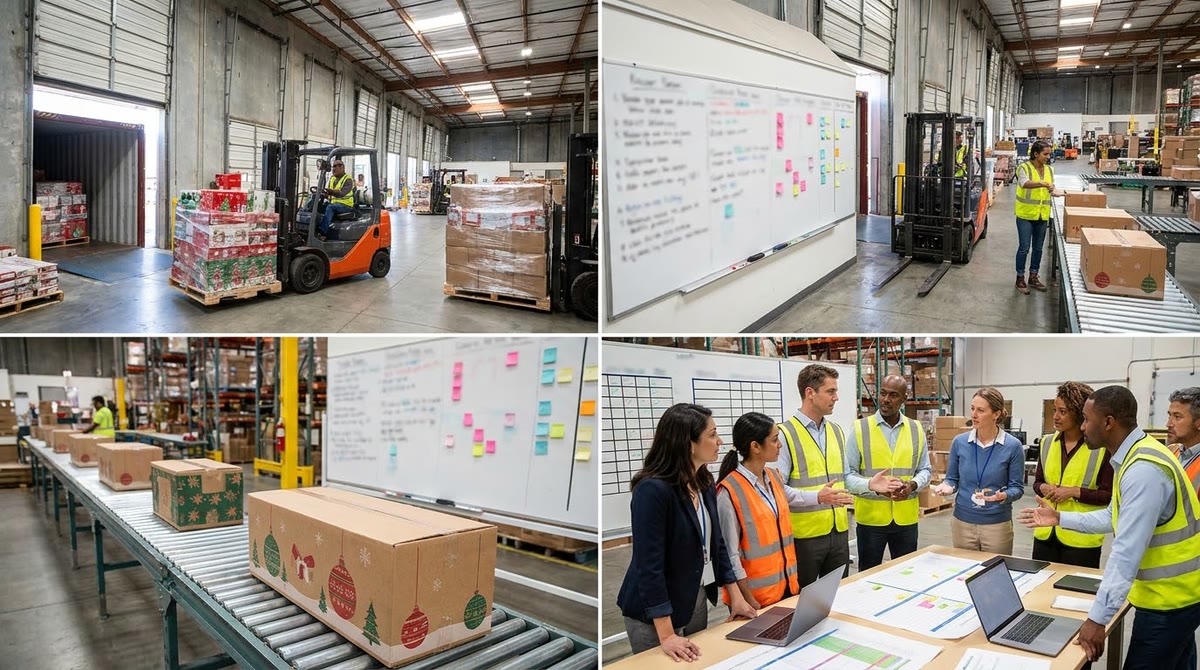
This forces marketing teams to read social in an operational context. A campaign that creates strong demand but cannot match inventory, order-processing speed, or delivery capacity will produce pretty dashboard results but weak real-world value.
AI in retail: social content needs clearer signals to avoid getting buried
MarketScale describes Kohl’s using the Gemini shopping assistant and ShipBob using Claude in its fulfillment suite. As AI begins to participate in shopping support and order handling, social media has to compete with more layers of automation throughout the customer journey. Reference link: MarketScale.
The implication for marketers is that social content needs a clearer purpose: building awareness, driving consideration, or supporting conversion. If that role is not clearly defined, social can easily get pulled into vague reporting, where everything looks good but nothing is strong enough to prove impact.
Which metrics still matter, and which should matter less
Read more: When Trust Wavers, Social Media Forces Brands to Verify Before Amplifying
The turning point in social media is measurement. As social becomes more closely tied to eCommerce and AI, familiar metrics such as reach, likes, and comments are still useful, but they are no longer enough to serve as the sole decision-making standard. Marketers need to move toward a metric set linked to real behavior.
Reach is no longer the final answer
Reach tells you how far content has traveled, but not whether people trusted it, remembered it, or took the next action. The peak-season context described by Digital Commerce 360, combined with eCommerce being pushed deeper into operations at Kroger and the AI applications in retail at Kohl’s and ShipBob, shows that social must be read as part of the sales journey, not as a simple awareness report. Sources: Digital Commerce 360, PR Newswire, MarketScale.

So reach should only be the starting metric. Behind it, there need to be behavioral metrics such as quality clicks, time on site, return visits, or contribution to orders. Without that layer, a social report may look good but be weak when decisions need to be made.
Quality signals are what belong in the dashboard
For businesses that treat eCommerce, fulfillment, and AI as one operating cluster, the social dashboard should prioritize quality signals. That could mean which traffic source brings better customers, which content drives visits with purchase intent, or which post helps retain customers. The developments from Kroger, Digital Commerce 360, and MarketScale all point in the same direction: social has to prove which part of the buying process it affects, not just prove that it exists. Sources: PR Newswire, Digital Commerce 360, MarketScale.
The practical approach is to cut back on metrics that exist only to “make the report look good,” and consolidate into a smaller set that stays tied to revenue, conversion, and audience quality.
What social media teams in Vietnam need to change in how they work and report
In Vietnam, social media is often used as a very strong demand-generation channel, but measurement still tends to focus on surface-level engagement. Looking at the developments above, Vietnamese marketers should see this as the moment to shift the focus toward proving real effectiveness. Especially in retail, FMCG, fashion, electronics, and services, social only has lasting value when it is tied to sales data or lead data.

The local reality is similar to the global one in one key way: marketing teams are often asked “how many views did that post get” before they are asked “what did it create?” But as businesses increasingly use AI for operations and need to prepare for peak seasons earlier, that way of asking will gradually lose strength. Social practitioners in Vietnam should be ready with two layers of reporting: one for content performance, and one for business impact.
In short, social media in Vietnam will not lose its role. It will only lose the right to be judged by gut feeling.
To keep social media useful, marketing teams should do these 4 things
- Link social metrics with sales or lead metrics instead of reporting only reach and engagement.
- Assign each content group a clear role: awareness, consideration, or conversion.
- Review social content by sales season, especially when fulfillment and inventory affect results.
- Reduce the number of pretty dashboards that do not drive decisions; keep a short, focused metric set tied to real behavior.
See more marketing analysis and how-to content at https://marketing365.vn.
Follow more analysis from Marketing365 to stay updated on the latest marketing trends.
Read more articles in the Digital Trends category.
Reference sources
- PR Newswire — Kroger names Nate Faust Executive Vice President and Chief eCommerce Officer
- Stock Titan — Jet.com Co-Founder Nate Faust Set to Become Kroger eCommerce Chief
- Digital Commerce 360 — Ecommerce Trends: 3 ways online retailers are preparing for the 2026 holiday season
- MarketScale — Kohl’s and ShipBob bring generative AI into retail operations as ecommerce tops $4 trillion globally