
Contents
- Instagram 2026 and the behavior of seeking purchase inspiration on social media
- What is changing on Instagram — and how marketing teams must change with it
- The content verification process on social media is changing the marketing team’s role
- Social media in Vietnam: a problem of trust, posting rhythm, and budget efficiency
- What to do with social media so content still delivers results
- References
Instagram is showing marketers one thing very clearly: if you want content to deliver results, you can’t optimize for views alone. The real challenge now lies in trust, posting consistency, and how you use advertising to amplify what has already proven effective.
For Vietnamese marketers, this signal matters because it directly affects how content is made, how it is reviewed, and how budgets are allocated. As the behavior of seeking purchase inspiration remains strongly tied to social media, especially in lifestyle, travel, retail, and services, marketing teams need a leaner, less emotional operating system.
Key points
- Instagram 2026 no longer rewards content just for being “there”; it prioritizes content that feels authentic and holds attention.
- Sustainable posting rhythm and hook testing through trial reels become part of the process, not side tasks.
- Meta ads work better when they sit behind content that has already shown organic response.
- In Vietnam, social media should be read as a channel for building trust and triggering action, not just for pushing reach.
Instagram 2026 and the behavior of seeking purchase inspiration on social media
The notable point in the 2026 picture is that Instagram is no longer just a place to post beautiful content. Social Media Examiner’s article makes it clear that the algorithm has shifted toward valuing deeper content, signs that it was created by real people, and the ability to keep viewers engaged longer. The site also highlights trial reels as a space to test hooks, wording, and format before putting full effort into an official reel: https://www.socialmediaexaminer.com/a-proven-instagram-strategy-for-business-growth/.
From a market perspective, this aligns with how Statista describes travel inspiration behavior: users do not look in just one place, but compare multiple sources before deciding. On social media, every time content is viewed, the brand has to answer the question, “Why should people trust this and save it?” This approach pushes marketers away from mass production and waiting for luck.
Both sources point in the same direction: social media is increasingly becoming a layer that filters intent. Users are not persuaded by posting frequency. They respond to useful content, signs of authenticity, and content that helps them decide faster.
What is changing on Instagram — and how marketing teams must change with it
This section looks only at what the sources describe clearly, separating it from speculation. Social Media Examiner discusses trial reels, authentic content, a sustainable posting system, and using Meta paid ads in a more streamlined way. Statista adds behavioral context: social media remains where users seek inspiration and compare options before choosing.
Trial reels: testing the hook before committing a large budget
Trial reels are a mechanism for testing hook, wording, and format variations before committing to a full reel. For content teams, this is no longer just a creative trick. It is a testing step that reduces the risk of producing a video that viewers swipe past in the first few seconds. Social Media Examiner’s source describes very clearly how trial reels can be used as a place to A/B test openings and storytelling approaches: https://www.socialmediaexaminer.com/a-proven-instagram-strategy-for-business-growth/.

When combined with Statista’s observation about inspiration-seeking behavior, trial reels do more than save production costs. They help marketing teams learn faster what makes users stop, save, or keep watching. In practice, that is a content performance problem, not a “post enough” problem.
Sustainable posting rhythm: shifting from output to an operating system
Social Media Examiner places sustainable posting rhythm at the center of its 2026 strategy. The point is not to post as much as possible, but to maintain a system that can be repeated: with process, with ownership, and with a production method that does not burn out the team. Combined with Statista’s context of inspiration competition, a sustainable posting rhythm helps a brand avoid disappearing from view during the period when users are still considering.
Read more: AI Speeds Content, but Demands Verification and Transparency

For marketers, this is as much a staffing change as a content change. Social media people do not just write captions or edit videos. They need to build a review framework, divide roles between strategy, creativity, and performance, and keep that flow running for many consecutive weeks. Without an operating system, even good content can easily lose momentum.
Meta paid ads: using ads to amplify what has already been proven
The Social Media Examiner article describes a streamlined approach to Meta paid ads: ads are not there to rescue weak content, but to amplify content that has already shown strong organic signals. This is highly practical for marketing budgets: instead of “pouring” money into every idea from the start, marketing teams should look at natural response first and then scale.
As users become accustomed to using social media to seek inspiration, the most effective ads are usually the ones that do not disrupt the experience. They come after content that is trustworthy enough and clear enough. So the team’s responsibility does not stop at media buying. It lies in deciding which content deserves additional spend.
The content verification process on social media is changing the marketing team’s role
The main argument here is: social media is not only changing tools, it is changing how teams have to work together. One source talks about trial reels as a testing step. The other shows users seeking inspiration across multiple touchpoints before deciding. Put together, the social workflow must shift from “produce and publish” to “test small, read signals, then scale.”
The role of the content strategist: reading signals instead of just generating ideas
In the old model, content strategists were usually asked to come up with topics. In the new model, they must be able to read the response to each hook, each opening, and each format. Trial reels from Social Media Examiner make this very concrete: anyone can post, but not everyone knows how to extract signals from views, saves, pauses, or skips. https://www.socialmediaexaminer.com/a-proven-instagram-strategy-for-business-growth/.

Statista makes another point clear: users do not seek inspiration in a straight line. They scroll, compare, and cross-check. So strategists need to see social media as a chain of small decisions, not a single post. The question is no longer “Is this content good or not?” but “What step does it help the viewer take next?”
The role of the paid team: buying amplification, not buying trust
In the new approach, Meta ads are not seen as a replacement for weak content. They should only amplify what has already shown good signals. This is a major shift for ad teams, because they need to work much more closely with the content team from the start instead of receiving assets and spending budget based on instinct.
Operationally, this brings social and paid KPIs closer together. The paid team needs to know how to read content, while the content team needs to understand what is strong enough to be amplified. When social media is both a place to seek inspiration and a place to create social proof, ads are only truly effective when they sit on top of content with a certain level of trust.
Read more: Search Console Now Reports Instagram, TikTok, X and YouTube
Social media in Vietnam: a problem of trust, posting rhythm, and budget efficiency
In Vietnam, this effect is even more visible because social media often sits very close to the purchase decision. From F&B, beauty, and travel to education and local services, users often move from a short video to the comments, then to the brand page, and only then message or place an order. In other words, social media in Vietnam does not just build awareness. It creates the stepping stone to conversion.
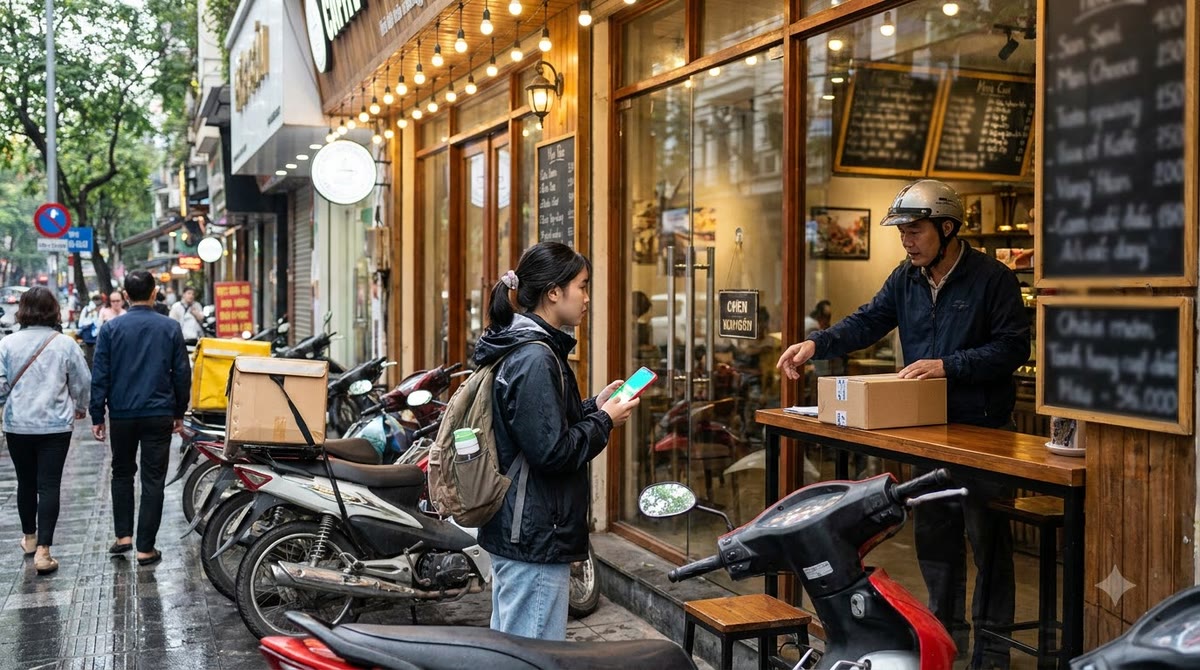
That makes three things more important. First, content review has to be stricter, especially as AI-generated content becomes more common. Second, posting rhythm has to be stable so the brand does not lose visibility during the consideration phase. Third, ad budgets must follow organic signals, instead of running as if every post were equal.
For Vietnamese marketers, the lesson is not “do more Instagram.” The lesson is to organize social media as a verification pipeline: which content holds attention, which content builds trust, and which content is good enough to spend money on.
What to do with social media so content still delivers results
- Design a trial reel process for each major campaign before increasing ad spend.
- Standardize posting rhythm with a production calendar that can stay consistent for at least several weeks, instead of working by inspiration.
- Clearly divide roles between the idea generator, the reviewer, the data reader, and the media buyer.
- Only scale paid distribution for content that has already shown strong enough organic signals, instead of spreading budget evenly across every post.
In short, social media is moving from being a place to publish content to being a place to verify content. Those who do verification well will save money, maintain rhythm, and create more durable conversions.
See more marketing analysis and guides at https://marketing365.vn.
Follow more analysis from Marketing365 to stay updated on the latest marketing trends.
Read more articles in the same category Digital Trends.
References
- Social Media Examiner — A Proven Instagram Strategy for Business Growth
- Statista — Where Travelers Look for Trip Inspiration