

Contents
As of July 2026, AI is a familiar tool in content production, yet for many marketers the real-world results are far from the polished demos online. A recent Social Media Examiner piece makes a key point: getting AI images and video to work for marketing requires a guided workflow, not a magic button. For Vietnamese marketers, this matters as demand for fast, multi-platform, and cost-efficient content keeps rising.
This message is especially relevant as the demand for fast, multi-platform, and cost-efficient content continues to grow. The roundup below summarizes the main perspective from the international source and draws practical implications for application.
Don’t expect AI to create “ad-ready” assets on its own
According to the Social Media Examiner article, the most common mistake when working with AI for images and video is assuming that a single prompt will instantly produce a product good enough for a major campaign. In reality, the polished videos or images often seen in AI tool demos are usually created by people with professional content production backgrounds, time for refinement, and often team support.
The message here is not that AI is ineffective, but that AI still needs direction. Without clear creative guidance, the tool will only produce generic output, lacking consistency and making it difficult to use for brand goals.
In other words, AI is an accelerator, not a button that replaces the entire creative process.
Build a workflow instead of creating isolated assets
The article emphasizes that AI image and video should be integrated into a structured workflow. This helps marketers better control quality, visual tone, consistency, and the output goals of each piece of content.

In practice, a workflow may include steps such as defining the content objective, choosing a concept, creating prompts for each variation, reviewing drafts, and refining before publishing. When everything is standardized, the marketing team can repeat success more easily instead of having to “bet” on each content generation.
- Set the objective before opening the AI tool.
- Standardize prompts by content type.
- Check brand fit before use.
- See AI as one link in the workflow, not the entire workflow.
Read more: The Real Martech Problem Is Not Technology
AI works best with clear creative direction
According to the original article, a good workflow does not start with the tool but with the creative idea. That means marketers need to answer first: who is this content for, what emotion should it convey, what message needs to be delivered, and what should the image/video standard be?

When creative direction is clear, AI can better support tasks such as generating multiple visual options, simulating settings, testing several short video versions, or helping expand content assets for social media. Conversely, if the brief is vague, the output is more likely to miss expectations and require extra editing time.
This is especially relevant for content and performance marketing teams: the same idea can be developed into multiple variations, but it still needs a creative backbone to maintain consistency.
Read more: How AI Is Changing Social Media Marketing Sales
AI works best when there is clear creative direction
For Vietnamese businesses, AI-generated images and videos can help reduce the pressure of producing social media content, especially during periods when posts need to go out quickly, multiple concepts need to be tested, or short-term campaigns are being run. However, without a review process and brand direction, content can easily become generic, undifferentiated, and harder to build trust.
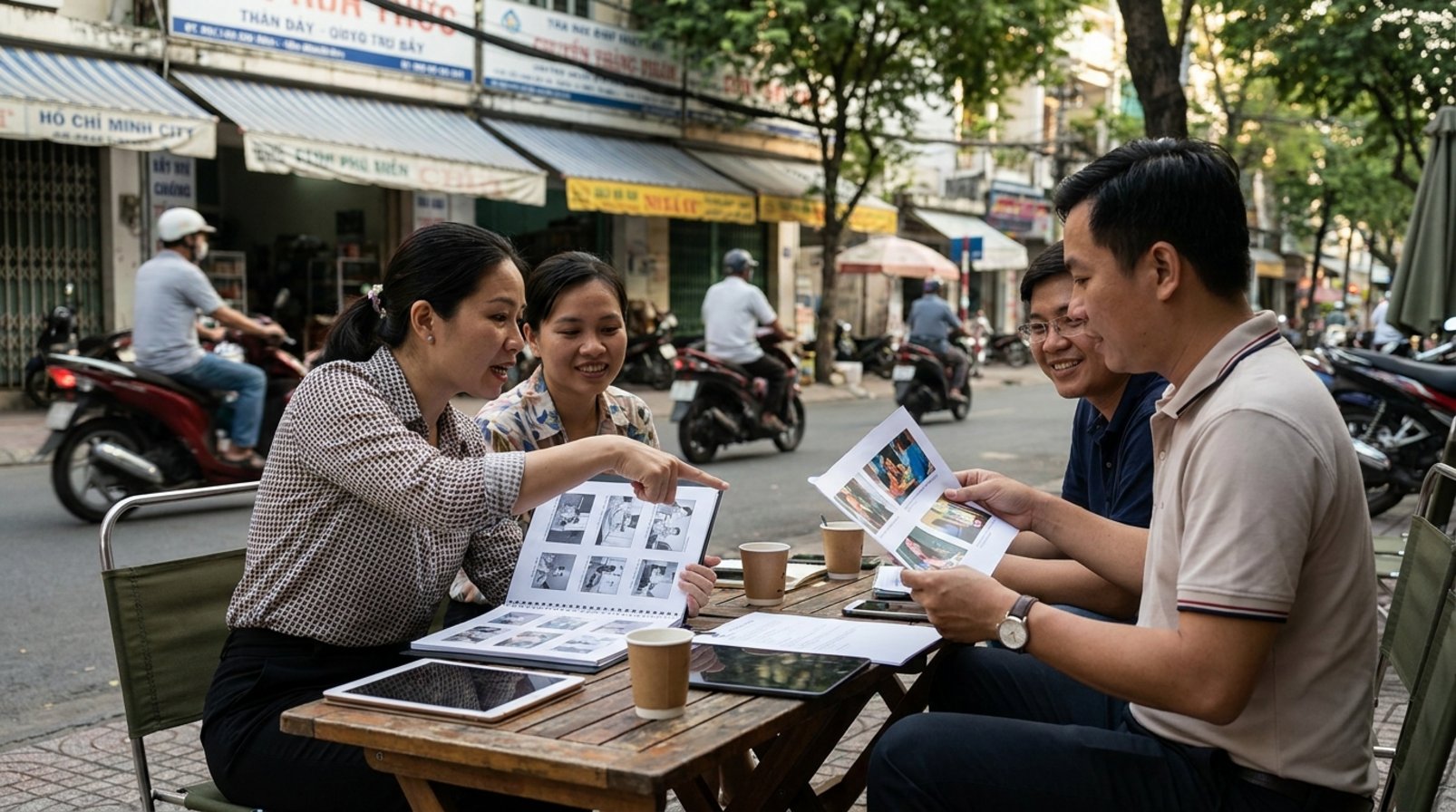
The priority should be to build an internal framework that includes a style guide, prompt rules, an image/video review checklist, and a person ultimately responsible for quality. With this approach, AI becomes a productivity tool rather than something that lowers brand standards.
In short, the lesson from the international source is: Vietnamese marketers should invest in process before investing in more tools. A good tool only delivers value when the creative strategy is clear enough.
Read more: Why AI Is Becoming a Path Choice, Not a Brand Choice
Reference source: Social Media Examiner.
Brief first, prompt second, review always
- Set the objective and creative brief before opening the AI tool.
- Standardize prompts by content type and build a review checklist for brand fit.
- Treat AI as one link in the workflow, with a person accountable for final quality.
- Invest in process and a style guide before adding more tools.
Overall, the lesson from the international source is clear: invest in process before more tools. For marketers, a good tool only pays off when the creative strategy and review layer behind it are strong enough.
See more marketing news and guides at https://marketing365.vn.
Follow more updates from Marketing365 to stay up to date with the latest marketing trends.
Read more articles in the same category Digital Trends.
This article focuses on AI image and video workflow with a perspective for the Vietnamese market.



