

Contents
- Claude course and GPT-6 Astra: model names matter only when they enter the workflow
- The AI engineering course: free material that changes how teams learn and test models
- Test new models by verification cost, not by launch noise
- GPT-6 Astra is still unconfirmed: what are readers asking about this model?
- New model budgets in Vietnam must pass through data and approval rights
- Put Claude and new models into workflows before increasing budget
- References
The value of a new AI model is not in its name or AGI promises, but in whether a marketing team can turn it into a workflow that can be tested and costed. For Vietnamese marketers, that lens helps avoid buying tools for launch-day hype and shift budget toward data, testing, training, and output review.
Key points
- Anthropic’s free AI engineering course shows that effectiveness depends on prompts, context, and how work is organized.
- Posts about the new GPT-6 Astra are only unverified signals and are not enough to justify buying a tool.
- AI budgets should be calculated by completed tasks and verification costs, not just model price.
- Vietnamese businesses need to test on small workflows before putting a model into high-risk marketing operations.
Claude course and GPT-6 Astra: model names matter only when they enter the workflow
The developments in the data do not form a verified product-launch sequence. What can be confirmed is a free AI engineering course from Anthropic, focused on prompts, context, how Claude handles code, and how to build a working loop with AI. The rest revolves around personal posts linking GPT-6 Astra to OpenAI and the view that AGI has already arrived, but no official documentation is included in the source provided.
Putting those two sets of signals side by side makes one point clear: marketing should not treat a new model as a standalone purchase. Value appears only when the model completes a task, reduces working time, and still preserves review steps, approval rights, and the ability to explain the result.
The AI engineering course: free material that changes how teams learn and test models
The update block below keeps only what can be directly verified in the source: a training resource with specific content. Unconfirmed product claims are separated into their own section.
A 4-hour AI engineering course: marketing teams need to learn how to assign work to models
The course is presented as a free 4-hour resource covering how to write prompts for Claude, why the model performs worse on code when context is missing, how Anthropic engineers use Claude, and one way to tune the model so it handles work better. This is directly relevant to marketing because a prompt is not a one-off question. It is a description of the goal, input data, success criteria, and limits the model must follow. Jay Bisen describes these topics in a post about Anthropic’s AI engineering course.

Content teams can apply that structure to briefs, emails, landing pages, or query analysis. Instead of simply asking the model to “write an article,” marketers need to provide the persona, approved messaging, product data, forbidden items, and a self-check method. Training spend can therefore be smaller than the cost of constantly switching tools without building a process.
Test new models by verification cost, not by launch noise
Context and prompts determine error-fixing costs more than model names
The Claude material emphasizes how to provide context and organize loops so AI can handle technical tasks. Meanwhile, the GPT-6 Astra posts create a different signal: product names and AGI stories can attract attention before marketers even know which tasks the model does well. Put the two sources side by side, and the cost to track is not only the model usage fee but also the time spent writing briefs, preparing data, checking errors, and fixing output. The workflow approach is described in the material introduced by Jay Bisen, while the GPT-6 Astra and AGI claims appear in a post by CryptoSavingExpert.

For a content task, a business should record three costs: input preparation time, model cost, and human review time. If the model is cheap but creates many brand or factual errors, the real total still rises. That is why scores or names cannot replace testing on real data.
Model branding draws attention, but measurable output decides the budget
Another post notes that the name “GPT Astra” helped the launch feel more compelling. That signal may be true from a branding angle, but it does not prove marketing usefulness. Compared with Anthropic’s course, the difference is that one side explains how to build skills and workflows, while the other stops at the impression created by the name. The two sources are the comment on the GPT Astra name and the AI engineering course content.
Budgets should be opened up by task: ad variant generation, customer feedback classification, research summarization, or SEO support. Each task needs an output template, acceptance criteria, and an approver. Without those three things, changing models only changes the interface of the problem.
GPT-6 Astra is still unconfirmed: what are readers asking about this model?
Should GPT-6 Astra be treated as an immediate buying signal?
There are personal posts saying that OpenAI launched GPT-6 Astra and that Jensen Huang said AGI has arrived. This is content posted by social accounts, not official confirmation material in this dataset; it should therefore be labeled as an unverified claim, not as a product announcement.

What can be used: marketing teams can build a list of capabilities to test, such as reading briefs, maintaining brand voice, citing data, and publishing under approval rights. Only add a model to the shopping list when there is a product page, terms of use, pricing, and test results on the business’s own data.
New model budgets in Vietnam must pass through data and approval rights
Vietnamese businesses often face practical constraints: scattered data, inconsistent briefs, approval processes that depend on a few people, and different security requirements across industries. As a result, a highly capable model may still fail to deliver if the team has not prepared context or does not know who is responsible for the output.
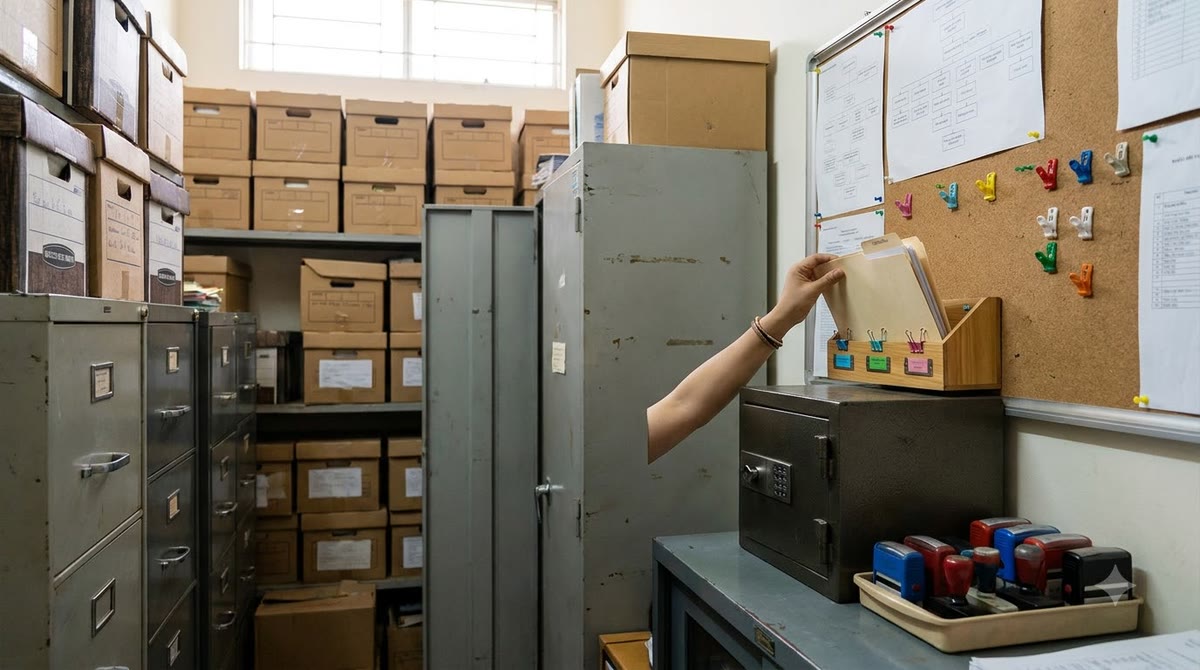
The right approach is to start with a narrow workflow that uses data already allowed for use. For example, an SEO team can try generating outlines from an internal keyword set; a CRM team can classify responses with personal information removed. The result should be compared with the current method by completion time, number of revision rounds, and the approval rate of the output. “The model feels smarter” should not be the main metric.
Put Claude and new models into workflows before increasing budget
- Choose one task with clear inputs and outputs; record the manual time before testing AI.
- Use a prompt structure with goal, context, limits, and verification criteria; save versions so the team can compare them.
- Separate model fees from data preparation, error correction, and content approval time when measuring efficiency.
- Expand the budget only after the workflow produces standard-compliant results across multiple tests and has a responsible approver.
New AI models can still expand marketing capabilities, but the advantage does not come from a launch by itself. Businesses capture value when they turn that capability into a repeatable process with metrics and human control.
See more marketing analysis and guides at https://marketing365.vn.
Follow more analysis from Marketing365 to stay updated on the latest marketing trends.
Read more articles in the same category AI Developments.
References
- Anthropic just released a FREE 4-hour course on AI engineering. And honestly, it might be one of the best… — Jay Bisen
- Nvidia CEO Jensen Huang says “AGI has arrived” as OpenAI unveils GPT-6 Astra. — CryptoSavingExpert
- Whoever came up with the name GPT Astra deserves a raise. — richard



