Contents
- Key points
- Detailed definition of lookalike audience
- Why lookalike audience matters for advertising
- How lookalike audience works
- Real-world example in Vietnam
- Common mistakes when using lookalike audience
- Frequently asked questions
- How many people does a source audience need to create a lookalike audience?
- Should you choose a 1% or 5% lookalike?
- How is lookalike audience different from remarketing?
- Is lookalike audience still effective when privacy restrictions tighten?
- What is a lookalike audience and when should it be used?
- How do you create a lookalike audience?
- How is lookalike audience different from custom audience?
- References
- Related reading
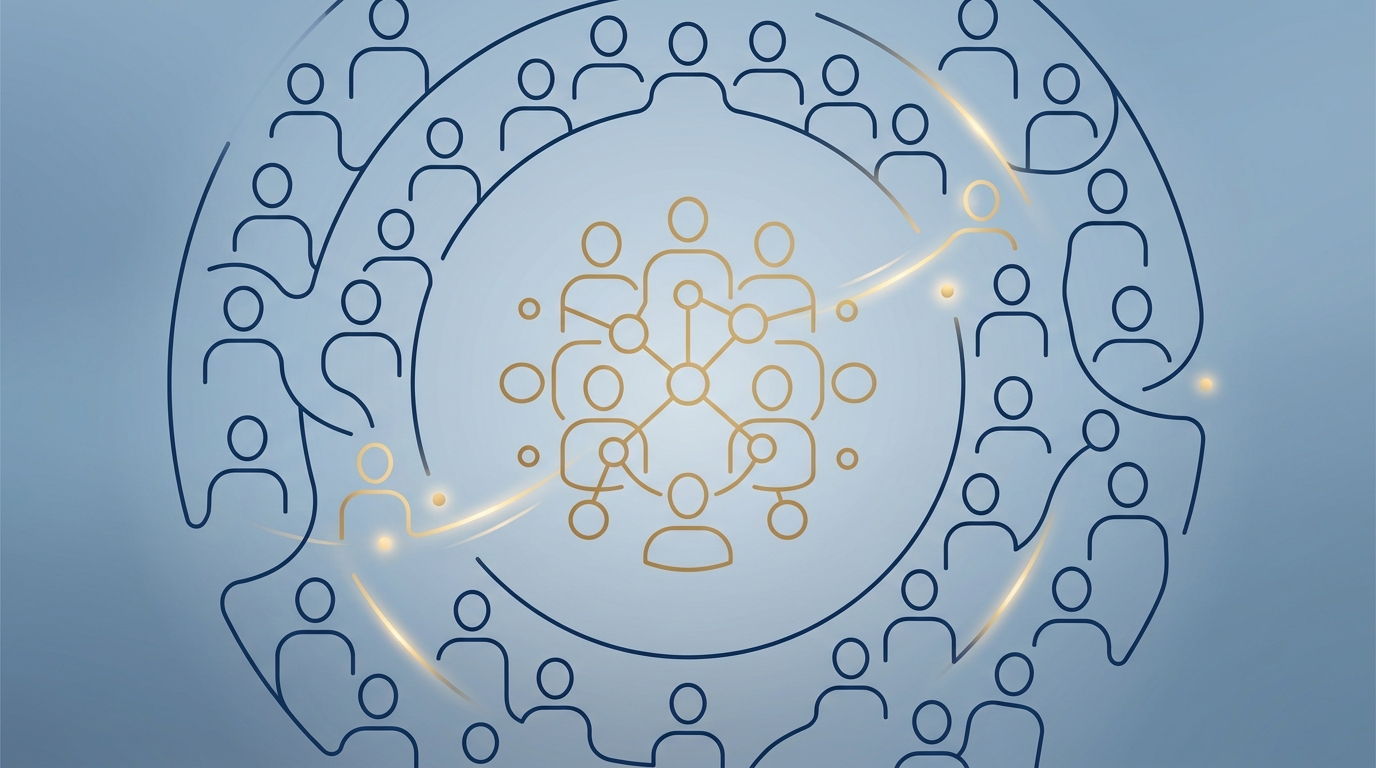
Lookalike audience is a new group of users that ad platforms (Facebook, Google, TikTok…) automatically identify based on characteristics similar to an existing source audience of yours, such as customers who have already purchased or people who follow your page. In short, it helps you reach people who do not know your brand yet but have behaviors similar to your best current customers.
Key points
- The algorithm analyzes hundreds of signals from the source audience (age, interests, buying behavior) to find people with the closest possible profile — you do not have to guess demographics yourself.
- The source audience should have at least 100 people, ideally 1,000–5,000 people; the quality of the source audience determines the quality of the lookalike.
- Similarity of 1%–10% is the most important parameter: a 1% audience is narrow but closest in profile, while a 5%–10% audience is broader but less precise.
- Lookalike is a scaling tool that goes beyond warm audiences and leverages first-party data as third-party cookies are tightened.
- When running it, exclude existing customers and remarketing audiences to avoid overlap, and seed the source audience with high-value users to get better customers.
What is a lookalike audience? A lookalike audience is a new group of users that ad platforms (Facebook, Google, TikTok…) automatically identify based on characteristics similar to an existing source audience of yours, for example customers who have already purchased or people who follow your page. In short, a lookalike audience helps you reach people who have never heard of your brand but have behaviors and characteristics similar to your best current customers.
Detailed definition of lookalike audience
Lookalike audience (sometimes called “similar audience” on Google Ads) is a type of audience segment created by an algorithm. You provide a source audience — for example, a customer email list, people who added products to cart, or pixel data that recorded purchase behavior. The platform then analyzes hundreds of signals from this group (age, interests, engagement behavior, devices, shopping habits…) and looks through its user database for individuals with the closest possible profile.

The core difference is that you do not have to guess demographics or interests. Instead, you let real customer data “teach” the algorithm who is worth reaching. That is why lookalike audience often performs better than manual interest targeting, especially when the source audience is high quality.
Why lookalike audience matters for advertising
As advertising costs continue to rise and existing customer pools gradually saturate, lookalike audience is one of the most reliable scaling tools. Its value lies in several points:

- Expand beyond warm audiences: Remarketing only reaches people who already know you, and eventually it runs out. Lookalike lets you find new customers at scale while maintaining relevance.
- Leverage first-party data: As third-party cookies are tightened, your own customer data (email, purchase events) becomes an important asset for creating similar audiences.
- Reduce wasted budget: Because the audience has already been filtered by similarity, the rate of reaching the right people is often higher than with broad targeting.
- Easier to control input quality: The more “valuable” the source audience (repeat buyers, high order value customers), the more likely the resulting lookalike is to contain good customers.
How lookalike audience works
The process of creating and running a lookalike audience on popular platforms (using Facebook/Meta as the standard) usually includes these steps:

- Prepare the source audience: This can be a Custom Audience from a customer list, page engagers, video viewers, or pixel events (Purchase, AddToCart). The source audience should have at least 100 people, ideally 1,000–5,000 people so the algorithm has enough signals.
- Select the geographic location: Lookalike is created by country or region. You need to choose the correct target market, for example Vietnam.
- Choose similarity (1%–10%): This is the most important parameter. A 1% audience includes about 1% of the platform’s population that is most similar to the source audience — narrow but high quality. A 5%–10% audience is broader, with decreasing similarity but greater reach.
- Delivery and optimization: After launch, the system learns from conversion results to refine delivery within the audience.
In terms of how it is “calculated,” the similarity percentage reflects the breadth of the audience relative to the total users in that country, not the absolute degree of similarity. A 1% audience is always the group closest to the source profile; as the percentage increases, you trade precision for scale.
Real-world example in Vietnam
Suppose an online cosmetics brand in Vietnam has 3,000 customers who purchased in the past 6 months. They upload the email/phone list to Meta to create a Custom Audience, then create a 1% Lookalike Audience in Vietnam from this source.

A common and safe implementation approach:
- Segment the audience: Create 1%, 1–3%, and 3–5% lookalikes in parallel so each ad group targets a separate layer, making performance easier to compare.
- Prioritize high-value source audiences: Instead of using all customers, they create lookalikes from customers who purchased at least twice or have high order values — the “good customer” profile is clearer.
- Exclude existing audiences: When running lookalikes, they exclude past buyers and people already in remarketing to avoid overlap and save budget.
- Combine with local content: Ad creatives use language, visuals, and offers that fit Vietnamese preferences to increase conversion rates on cold audiences.
This model applies similarly to e-commerce, online courses, or local services — what determines success is not a “secret trick” but the quality of the source audience and rigorous measurement.
Common mistakes when using lookalike audience
- Using a poor-quality source audience: A list that is too small, outdated data, or mixed-in “junk” customers will cause the algorithm to learn the wrong profile. Good input leads to good output.
- Focusing only on the 1% audience: A 1% audience is high quality but may be too narrow to scale. You should test broader tiers instead of defaulting to one setup.
- Not excluding existing audiences: Forgetting to exclude past customers and remarketing audiences can cause overlap, drive up costs, and distort metrics.
- Expecting results immediately: Lookalike is a cold audience and needs time to learn, plus enough budget to exit the learning phase. Turning it off too early often leads to the wrong conclusion.
- Ignoring content quality: The right audience with weak creative still will not convert. Audience and creative must work together.
- Not refreshing the source audience: Customer behavior changes over time; the source audience should be updated regularly so the lookalike does not become outdated.

Frequently asked questions
How many people does a source audience need to create a lookalike audience?
Meta requires at least 100 people in the same country, but for the algorithm to have enough signals, you should have at least 1,000–5,000 people in the source audience. The larger and higher quality the source audience, the more reliable the resulting lookalike.
Should you choose a 1% or 5% lookalike?
A 1% audience is closest to the source profile, making it suitable when you prioritize quality and conversions. A 3%–5% audience is broader and better when you need to scale. In practice, you should test both in separate ad groups and let the data decide.
How is lookalike audience different from remarketing?
Remarketing reaches people who have already interacted with you (warm audiences), while lookalike reaches new people who do not know you yet but resemble your current customers (cold audiences). The two strategies complement each other: remarketing closes sales, lookalike expands the customer base.
Is lookalike audience still effective when privacy restrictions tighten?
Yes, it is still effective, and even more important. As third-party data becomes limited, first-party data (your customer lists and conversion events) becomes the foundation for creating similar audiences. Businesses that invest in collecting and managing compliant customer data will have a clear advantage.
📚 See overview: Social Media category
What is a lookalike audience and when should it be used?
A lookalike audience is a new group of people identified by an ad platform based on characteristics similar to your existing customer audience. You should use it when you want to expand reach to people who do not know your brand yet but behave similarly to customers who have already purchased, helping increase the chance of conversions.
How do you create a lookalike audience?
First, you need a high-quality source audience such as a list of past buyers, engagers, or website visitors tracked by Pixel, then ask the platform to create a similar audience based on that source. The cleaner and larger the source audience, the more accurate the lookalike, so prioritize high-value customers as the seed.
How is lookalike audience different from custom audience?
A custom audience consists of people who have already interacted with or purchased from you, used for re-engagement; a lookalike audience is made up of new people with similar characteristics, used for expansion. In other words, custom audiences help nurture existing customers, while lookalike audiences help find new potential customers.
References
Related reading
- What Is Engagement? Social Media Interaction
- How to Manage a Fanpage Without Missing Messages
- Easy One-Month Fanpage Content Ideas