
Contents
- Pi Core Team and the ambition to build an “AI economy” within its own ecosystem
- Bankr launches a major reward program tied to $BNKR and LLM credits
- Research on AI agents: multi-loop workflows are proving more reliable
- The debate around Chinese models: new benchmarks keep challenging early claims
- Moonshot AI and the challenge of building powerful models at a reasonable cost
- A secret Qwen model may be being tested on LMArena
- A secret Qwen model may be under test on LMArena
- Build the loop: trigger, plan, execute, verify, remember
- References
As of July 2026, the AI market is entering a new phase: from chatbots that answer questions to AI agents that can act on behalf of users, and from a model race to a race for deployment efficiency and operating costs. For Vietnamese marketers, this is not just a technology story, but also a signal about how search, content distribution, service operations, and digital product building will evolve in the near future.
Key points
- Many AI ecosystems are shifting toward an “agent” model that can execute tasks on behalf of users.
- The AI model race, especially in China, is emphasizing technical efficiency and competitiveness with closed systems.
- Benchmarks and real-world evaluation remain important measures for verifying AI claims.
- For Vietnamese businesses, the opportunity lies in automation, personalization, and designing processes suited to AI agents.
Pi Core Team and the ambition to build an “AI economy” within its own ecosystem
In content shared by Pi Town, Pi Core Team is described as going beyond a typical dApp platform to move toward a self-governing “AI economy.” The scenario is laid out clearly: instead of users searching the Internet themselves, comparing prices, checking trustworthiness, and paying manually, they only need to assign the task to Hermes — an AI agent — to find courses, filter suitable applications within the Pi ecosystem, prioritize dApps that have gone Mainnet, and verified domains.
The notable point here is not the “chat assistant” aspect, but execution capability. If this model succeeds, AI will not only answer questions but also act as an intermediary that coordinates transactions, assesses credibility, reads community feedback, and helps users make decisions within a closed ecosystem. For marketers, this is a signal that optimizing presence in an “AI-driven marketplace” will be just as important as traditional SEO.
Source: Pi Town (@pitown89) on X
Bankr launches a major reward program tied to $BNKR and LLM credits
Bankr announced a new rewards program with a total scale of 250 million $BNKR and about 80,000 USD in LLM credits over 90 days. According to the post, rewards are accumulated daily, credits expire after 180 days, and the first distribution has already been rolled out, including more than 19.3 million $BNKR for the first week and 1,130 USD in LLM credits for the top group.
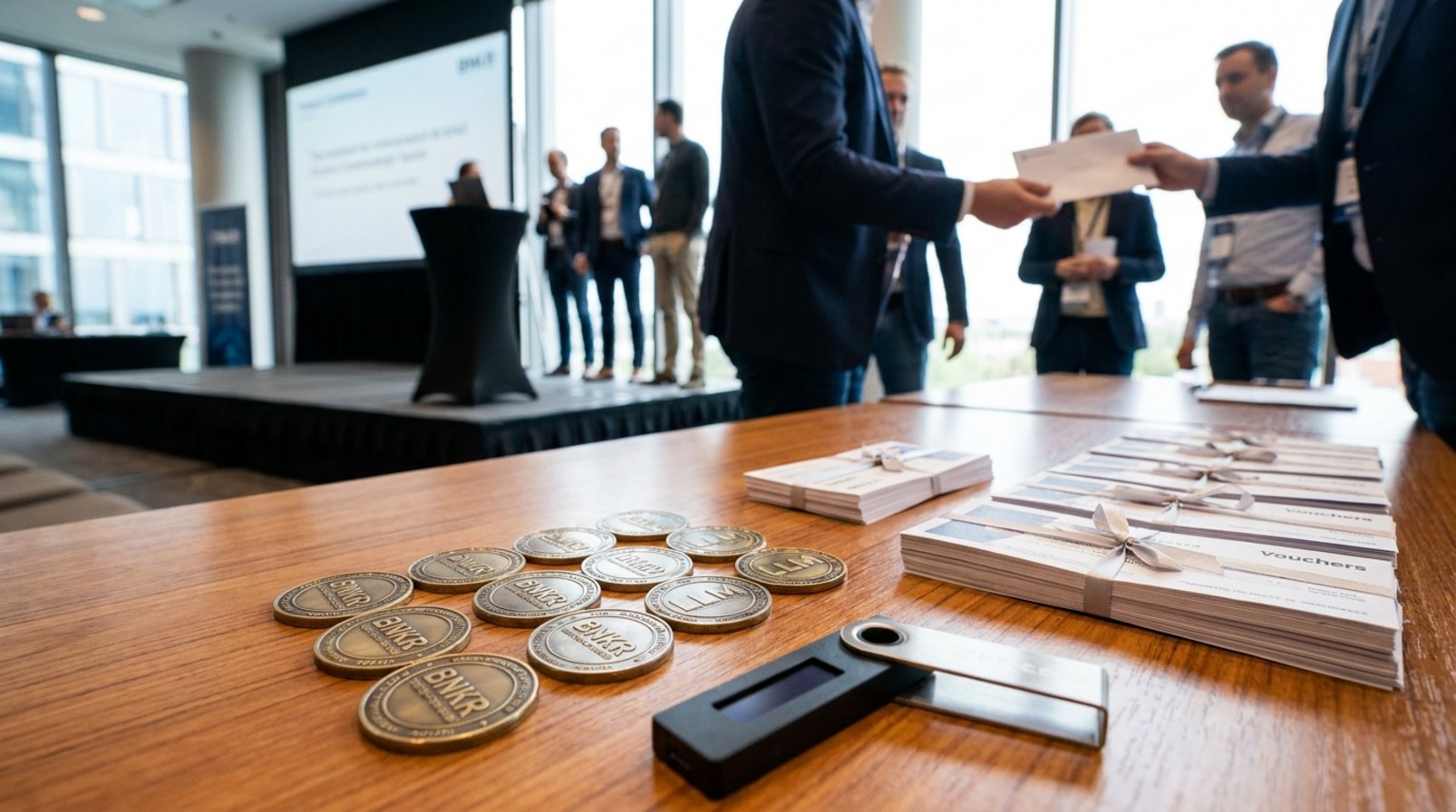
From a product perspective, this is a typical example of how AI platforms are linking user growth to reward mechanisms and leaderboard competition. This structure encourages users not only to “try” the product, but also to maintain engagement, create content, transact, and contribute to the ecosystem. For brands, the lesson is: if AI is to truly drive growth, it must combine experience, motivation, and a clear recognition mechanism.
Source: Bankr (@bankrbot) on X
Research on AI agents: multi-loop workflows are proving more reliable
A quote from Noisy’s compiled content says Oxford tracked 1,000 AI agents over 180 days and found that a structured loop model delivered superior performance. The article outlines the core steps as Trigger → Plan → Execute → Verify → Memory → Adapt, and also claims that loop-based agents are 3.7 times more reliable and can reach near-expert level after 90 iterations.

Although this is an interpretation of a social media post rather than a full academic publication, the trend it reflects is very clear: effective AI agents depend not only on whether the model is large or small, but also on the operating architecture. For businesses, this is especially important when designing automation for customer service, content creation, lead classification, or sales support. A good agent needs to verify its output and learn from feedback, rather than simply generating text once.
Source: Noisy (@noisyb0y1) on X
The debate around Chinese models: new benchmarks keep challenging early claims
Igor Kotenkov revisited his experience tracking models such as Kimi K2 Thinking and DeepSeek v4 Pro, emphasizing that post-launch benchmark results often do not fully preserve the advantage seen in launch announcements. According to the post, Kimi K2 Thinking was once considered China’s leading open-source model, but across 16 new benchmarks after launch, it lost 13 and had a gap of more than 10 percentage points in 7 benchmarks. For DeepSeek v4 Pro, the situation is described as even harsher across many new tests.
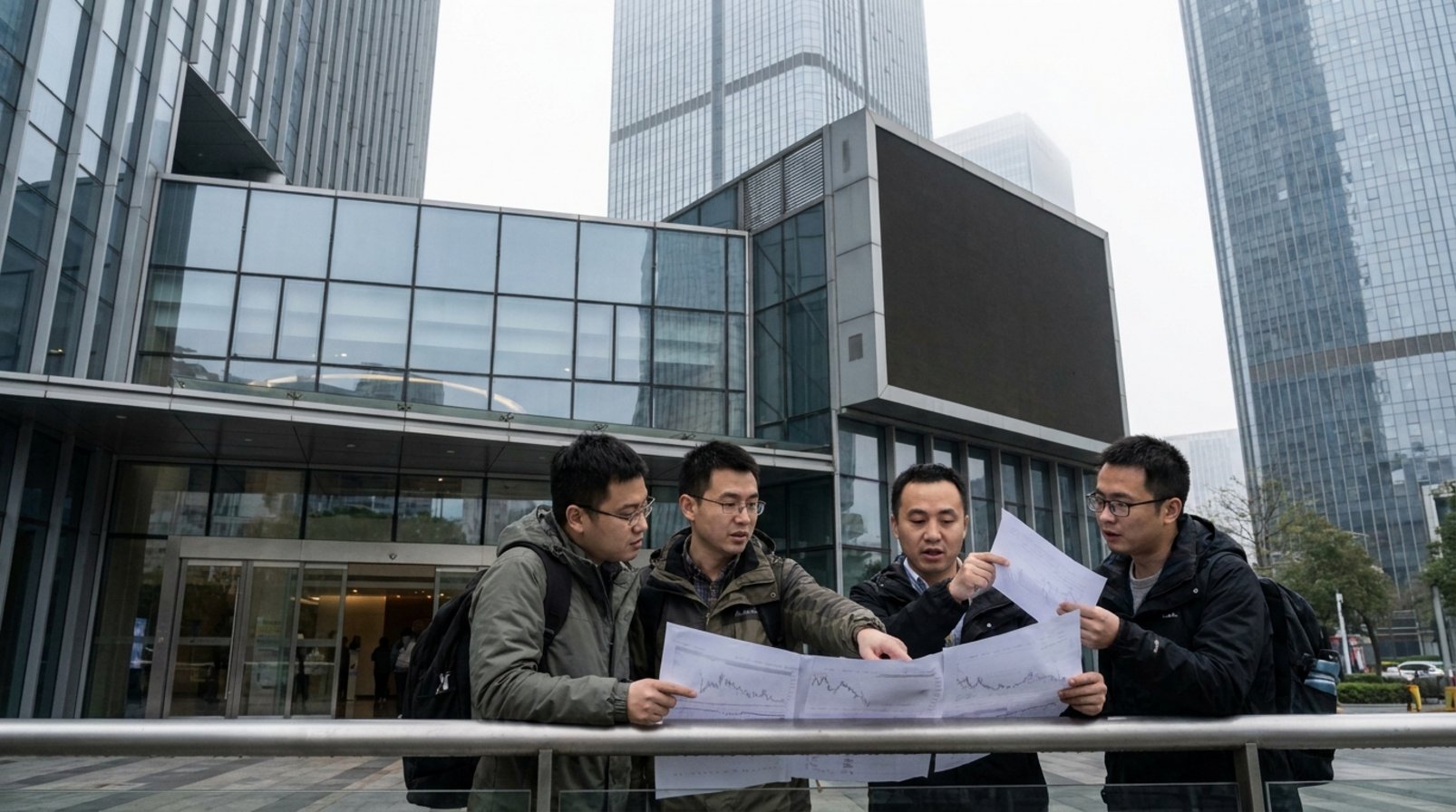
The key message here is that benchmarks are not a permanent snapshot of a model’s capability. As the benchmark ecosystem expands, what retains long-term value is not just the ranking at launch, but the ability to remain stable across many new tasks. For AI product teams, this is a reminder to continuously test on real-world data rather than relying only on the initial media campaign.
Source: Igor Kotenkov (@stalkermustang) on X
Moonshot AI and the challenge of building powerful models at a reasonable cost
According to Linas Beliūnas, Yang Zhilin — founder of Moonshot AI — recently shared a 40-minute talk about the company’s development progress and how they are building cost-efficient models that are still competitive with leading systems. The context is the emergence of Kimi K3, a model described as having up to 2.8 trillion parameters and capable of competing with large closed AI systems.
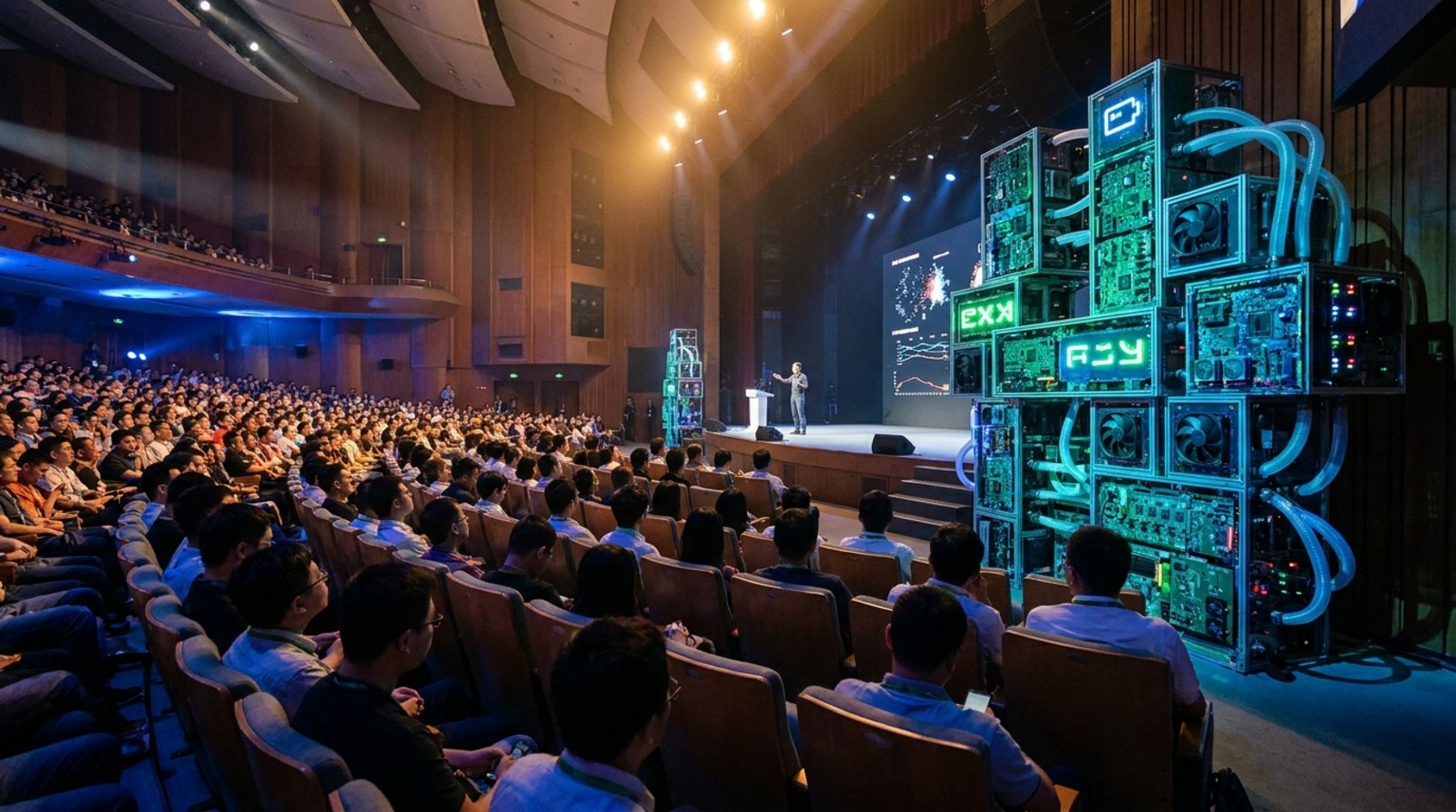
What stands out for AI watchers is not only the parameter scale, but how Chinese teams are optimizing architecture and workflows to achieve high performance at lower cost. This has direct implications for businesses: in real-world deployment, inference cost, response speed, and integration capability are often just as important as absolute output quality.
Source: Linas Beliūnas (@linasbeliunas) on X
A secret Qwen model may be being tested on LMArena
Lentils says a new model from the Qwen family, possibly version 3.8 or 4, has appeared on LMArena under the alias “Kaleb.” According to the description, the model even claims to be Claude, but users believe it can be identified through characteristic Qwen output signals. The Chinese origin signal is further reinforced when the model gives responses to political questions.

Since there has been no official confirmation, this detail should be treated as a testing signal rather than a final conclusion. Still, it shows that the model race continues in a fairly common state of “strategic anonymity”: labs constantly test on public leaderboards to gauge real-world capability before making official announcements. For marketers and businesses, the lesson is that the AI market is moving too fast to wait for a single absolute winner; instead, continuous monitoring and early experimentation are needed.
Source: Lentils (@Lentils80) on X
A secret Qwen model may be under test on LMArena
The common thread across this week’s news is the shift from “AI as a content creation tool” to “AI as a layer for coordinating actions.” That opens up three major opportunities for Vietnamese businesses: building AI agent workflows for customer service and sales; designing content, data, and feedback ecosystems that are clean enough for AI to trust; and preparing product strategies for platforms where AI will automatically search, compare, and recommend services on behalf of users.

For marketers, the short-term priorities should be: standardize product data, update business information on platforms that AI can read, and test controlled automation scenarios. The AI race is no longer just about who can speak better, but about who can turn AI into a genuinely useful operating layer for end users.
Build the loop: trigger, plan, execute, verify, remember
- Start building AI-agent workflows for customer service and sales using a Trigger → Plan → Execute → Verify → Memory loop rather than one-shot generation.
- Clean and standardize product data and business information so AI can read and trust it.
- Optimize presence inside “AI-driven marketplaces,” treating it as seriously as traditional SEO.
- Test controlled automation scenarios and keep monitoring models on real-world data, not launch-day benchmarks.
- Weigh inference cost, speed, and integration, not just output quality, when choosing AI tools.
Overall, the market is shifting from who builds the best model to who turns AI into a genuinely useful operating layer; for Vietnamese marketers, preparing data, workflows, and agent-ready processes now is how to stay ahead of a fast-moving race.
See more marketing news and guides at https://marketing365.vn.
Follow more updates from Marketing365 to stay on top of the latest marketing trends.
Read more articles in the same category AI Developments.
This article focuses on AI news with a perspective for the Vietnamese market.
References
- Pi Town (@pitown89)
- Bankr (@bankrbot)
- Noisy (@noisyb0y1)
- Igor Kotenkov (@stalkermustang)
- Linas Beliūnas (@linasbeliunas)
- Lentils (@Lentils80)