Contents
The AI market is rapidly changing focus: it is no longer just about which model is smarter, but which one is better embedded in real-world workflows. For Vietnamese marketers, that means competitive advantage will come from the ability to choose the right platform, the right integrations, and the right deployment approach, rather than simply chasing the “top-ranked model.”
At the same time, signals from abroad show that AI is entering a deeper productization phase: multimodality, automatic routing, agent workflows, and distribution infrastructure. This is the moment when businesses should not ask, “Which AI is the best?” but rather, “Which AI creates real efficiency in operations, content, and customer experience?”
Key points
- AI is shifting from a benchmark race to a race of ecosystems, integrations, and distribution.
- Multimodal, full-duplex, and agentic workflows show that real value lies in how AI is used inside products.
- For marketers, the advantage is no longer trying new tools, but designing workflows with routing, cost control, and faster content production.
- Vietnamese businesses need to prioritize deployment capability over chasing model names.
Models are judged by how far they reach into products
Looking at recent developments, AI is entering a very different phase: models are no longer judged only by how “smart” they are, but by their ability to move into products, handle multimodality, and serve end users. ByteDance’s release of SeedRealtime, a full-duplex real-time listen-see-speak model, shows AI moving closer to natural, real conversational interaction rather than just chatbot-style turn-by-turn replies [2]. On another front, Qwen continues to push image generation and image-to-webdev with Qwen-Image-3.0-Pro and Qwen3.8-Max, showing that the race has expanded into content production and interface building, no longer limited to text [12][16][17].
What stands out is that the market is beginning to reward products that create a complete workflow. Framer AI agent climbed rapidly on the OpenRouter rankings in just 7 weeks [6], while poolside recorded a sharp increase in token consumption and made the question of “where it is used” just as important as “where it is integrated” [5]. At the same time, intermediary platforms like OpenRouter, Cloudflare, or routing systems such as Auto Mode Beta show that users increasingly want systems to choose the right model automatically instead of doing it manually themselves [9][19].
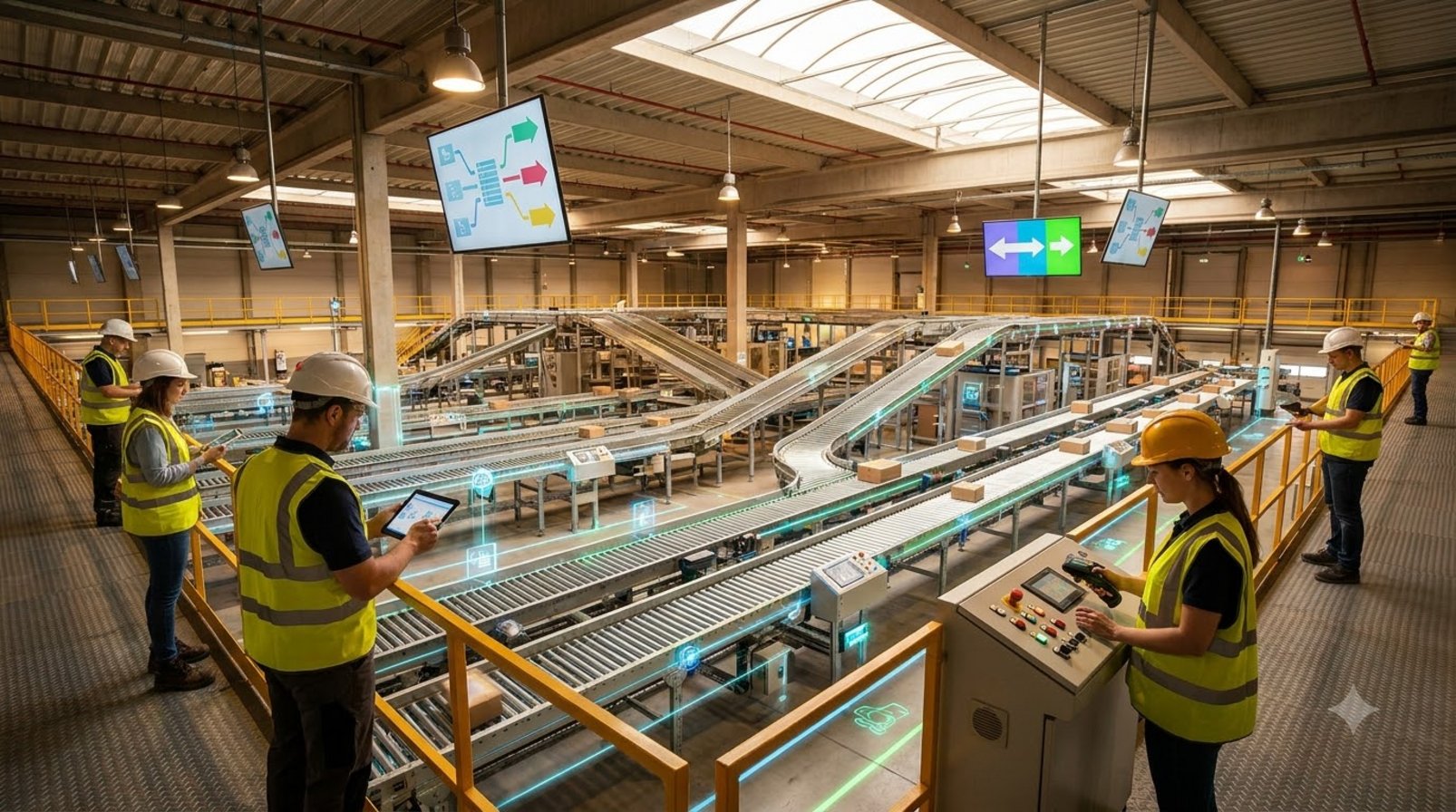
In other words, AI is becoming less like a contest to find the “best model” and more like a competition of ecosystems: whoever integrates more deeply, reduces steps more effectively, and delivers results faster with less friction will have a clearer advantage.
Why the advantage is shifting toward integration and routing
Examples from the market show that the biggest barrier is no longer “whether there is AI,” but “whether that AI is placed in the right part of the workflow.” Web3prof describes this trend very clearly: users are no longer short of tools; they are short of smarter ways to use them, so platforms with auto-routing, cost optimization, and simplified experiences will become increasingly valuable [9]. The same logic applies to Injective, where a routing layer can combine many previously separate steps into a single workflow [22].
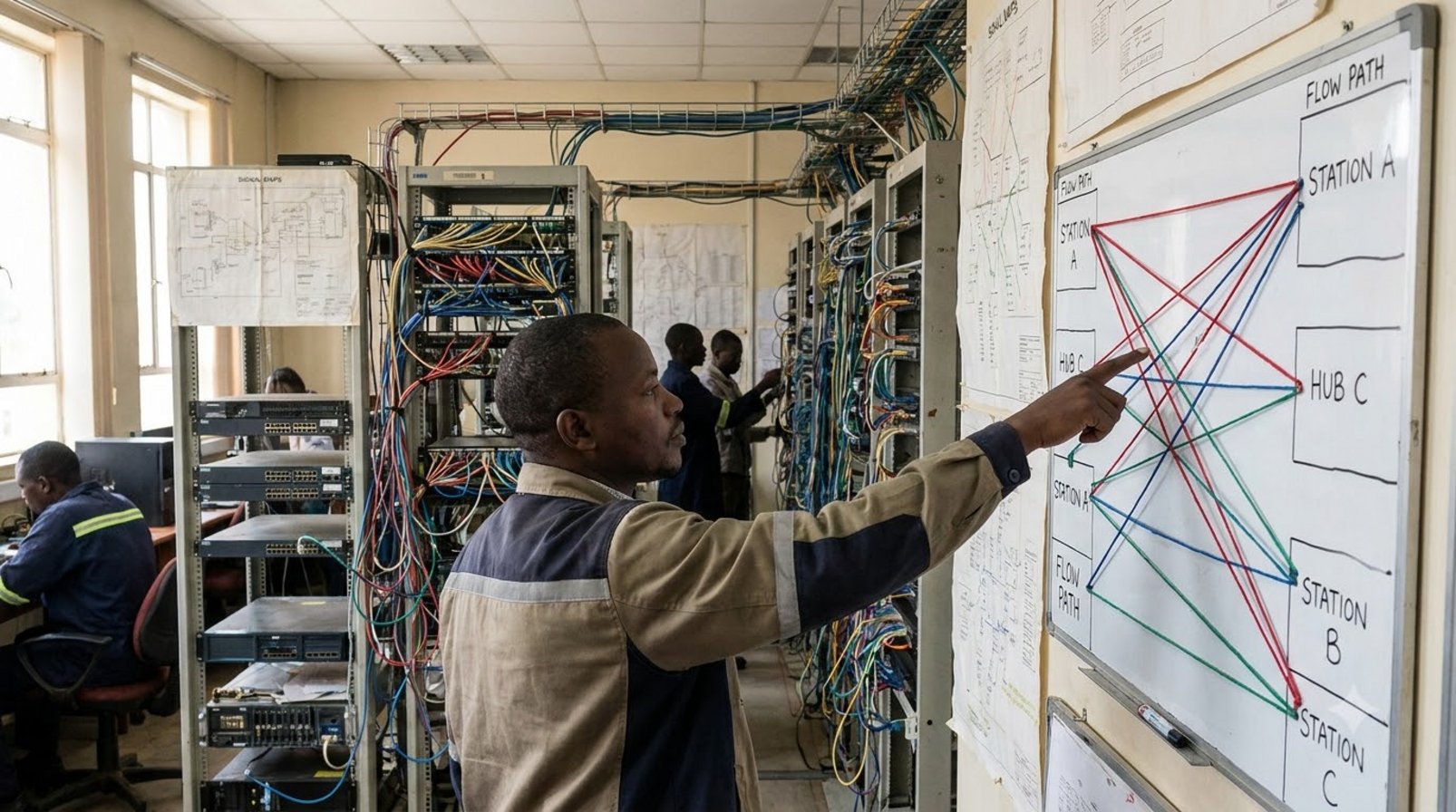
In an AI environment, routing is not just about optimizing models by price or speed. It is also a way to reduce the “cognitive cost” for marketing teams: instead of each person needing to know which model is best for images, which is best for writing, and which is best for agents, the platform automatically makes the best choice. This is also why OpenRouter, Qwen Cloud, and AI distribution platforms are becoming attractive: they turn technical selection into an operational advantage [9][17].
From a business perspective, this is a shift from “buying access to AI” to “designing a decision-making system with AI.” Marketers who still use AI as a standalone tool will struggle to keep up with teams that have turned it into an infrastructure layer for content production, customer care, and lead generation.
Deployment speed is becoming the metric that matters
One common thread across many sources is that deployment speed is becoming an important metric. OpenAI is mentioned with its Student Collective program to build AI skills early [8], Stanford has released a free course explaining how LLMs work from the ground up [15], and Rishi emphasizes that a “real” agent must be built in multiple stages, from design and connection to grounding, deployment, and monitoring [11]. These signals all point to the same conclusion: those who understand the technology more deeply and deploy it more systematically will be more sustainable.

At the market level, Anthropic, OpenAI, and other names continue to appear in rumors, internal checkpoints, or community feedback [1][21][23]. But strategically, the important thing is not waiting for the next “best” model, but building the capacity to absorb technology. The reality around the MiniMax community shows that immediately after a release, the open-source ecosystem quickly produced tools, trainers, workflows, and performance optimizations [14]. When a technology is good enough, an ecosystem erupts around it; when the ecosystem erupts, value lies not only in the base model but in the application chain built on top of it.
Read more: Capability, Serving Infrastructure and Safety Are Now Judged Together
For marketers, the “real cost” of slow adaptation has three layers: slower experimentation, slower automation, and slower learning in quality control. In a market where new models, new interfaces, and new usage patterns appear continuously, organizations that do not standardize their processes will lose their edge very quickly.
How AI will be used differently in Vietnam
In Vietnam, many businesses still see AI as a support tool for individual tasks. But the signals above suggest a more effective direction is to build an “AI stack” for marketing: a content generation layer, a moderation layer, a model routing layer, a measurement layer, and a layer integrated into CRM/automation. As better models become cheaper and easier to access, the advantage will belong to teams that know how to organize workflows, not teams that only know how to try new features.

This is especially true for small and medium-sized businesses. They do not need to chase benchmarks, but they do need to use AI to reduce production time, speed up creative testing, personalize messaging, and respond to customers faster. Without a workflow, AI only creates more fragmented content; with a workflow, AI can improve margins even on a limited budget.
For Vietnamese marketers, the biggest lesson is: do not ask which AI is trending, ask which AI can get the job done inside your system. The game is shifting from “owning a powerful model” to “owning strong deployment capability.”
Find 3-5 steps to automate, then set model-selection rules

- Review the entire marketing workflow and identify 3–5 points that can be automated with AI right away, such as drafting, summarization, lead classification, or FAQ responses.
- Design model-selection rules by task: which model for text, which for images, which for agents, and when to use automatic routing.
- Build a dedicated AI measurement set: time saved, cost per output, manual edit rate, and impact on conversion.
- Train the team not only to use prompts, but to understand how AI works at a basic level so they can collaborate better with tools and vendors.
See more marketing analysis and guides at https://marketing365.vn.
Follow more analysis from Marketing365 to stay updated on the latest marketing trends.
Read more articles in the same category AI Developments.
This article focuses on the AI race shifting to ecosystems with a perspective for the Vietnamese market.
References
- Fable 5 vs Opus 5 discussion
- ByteDance launched SeedRealtime
- Qwen-Image-3.0-Pro on fal
- Qwen3.8-Max in Image-to-WebDev Arena
- Qwen-Image-3.0-Pro live on Qwen Cloud
- Framer AI agent climbing OpenRouter ranks
- Model Partnerships at poolsideai
- Auto Mode Beta and routing platform update
- Cloudflare Wallets for the AI Agent era
- OpenAI Student Collective
- 7 Stages of Building a Production-Ready AI Agent
- Stanford free course on how LLMs work
- Community response to MiniMax release
- OpenAI internal checkpoint naming leak
- Anthropic Mythos 6 leak update
- QwenCloud image model announcement