

Contents
The AI race is leaving the stage of “who has the stronger model” and moving into a more practical question: who can build a deep enough ecosystem to retain users, retain developers, and optimize costs best. For Vietnamese marketers, this is not just a technology story, but a signal that AI tools will increasingly be embedded into workflows, assistants, advertising, e-commerce, and data analysis.
What is notable is that competition is no longer happening on a single front. It is running simultaneously across multiple layers: API prices are falling fast, open models are getting stronger, major platforms are streamlining products, and companies are pouring in more capital to lock in infrastructure advantages. When all layers move at once, a business’s ability to adapt becomes just as important as its ability to choose a model.
Key points
- AI is shifting from a single-performance race to an ecosystem race, where integration and cost matter more than technology slogans.
- Open models and low-cost models are lowering expectations across the board, forcing major platforms to optimize pricing and experience.
- Infrastructure, compute, and long-term operational capability are becoming strategic advantages, not just technical costs.
- Vietnamese businesses should prepare with a multi-model approach, rapid experimentation, and flexible workflows to avoid dependence on a single vendor.
AI is being industrialized at speed
The overall picture is that AI is being industrialized very quickly. OpenAI has just adjusted its product lineup, cut the price of GPT-5.6 Luna to a level far below its launch price while keeping the premium segment unchanged; at the same time, some GPT-5.4 versions will be discontinued for logged-in ChatGPT users, even though they remain available on the API and Codex. On the experience side, OpenAI continues to add work orchestration layers such as Activity view in the desktop app, showing that AI is no longer standing alone as a “chat box” but is moving into everyday workflows [5][7][8].
At the same time, DeepSeek is showing that the pace of open models has changed. V4 Flash 0731 was announced with open weights, an MIT license, and local-running capability, while third parties quickly brought it to platforms, APIs, and local runtimes [2][4][18][22]. This is an important signal: open models are no longer a side option for people who like to experiment, but are moving closer to production readiness for cost-efficient tasks.
On the infrastructure and ecosystem side, Amazon is said to have completed a $50 billion investment in OpenAI under a multi-stage structure; Google has unified AI Studio with Gemini to simplify its product line; and platforms such as Dot are building a “model council” that lets users compare multiple models on the same prompt [1][6][16]. At the same time, reports on hyperscaler AI spending show that the market is no longer debating whether demand is real, but is shifting to who will own the infrastructure layer and the AI user experience [15].
Why price and speed are pushing competition toward the ecosystem layer
What is happening with pricing is a strategic signal, not just a short-term promotion. OpenAI sharply reduced pricing for GPT-5.6 Luna and said clearly that the model had self-optimized its serving code to lower running costs; meanwhile, DeepSeek V4 Flash 0731 was introduced as a more efficient option for long workflows and lower API spending [8][18][22]. When input costs fall, the barrier to experimentation falls with them, and businesses will tend to try more tasks, not just use AI for the most “expensive” ones.
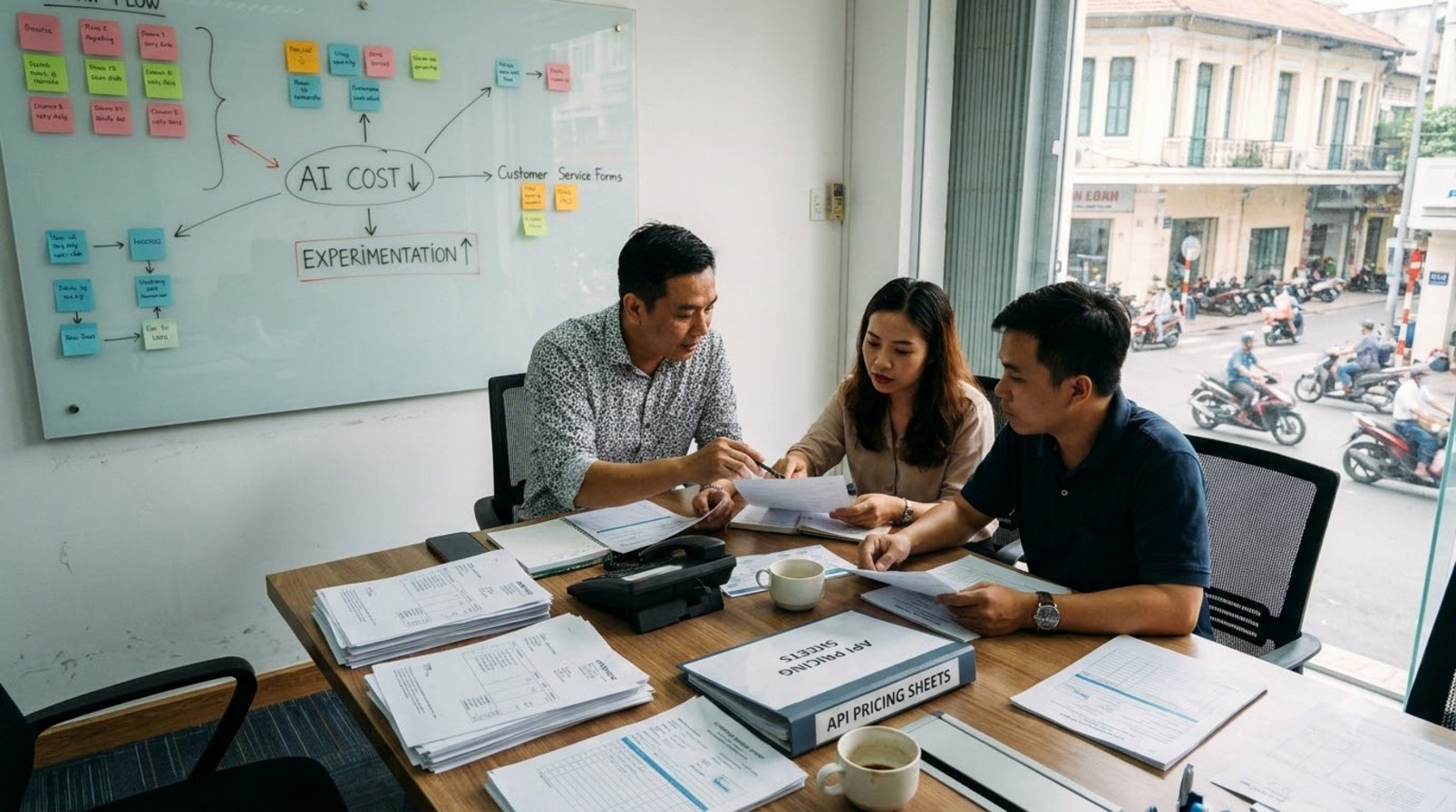
At the same time, speed and integration are becoming the new competitive criteria. Google is unifying AI Studio and Gemini to remove product confusion; OpenAI is adding Activity view to consolidate tasks that need attention; Dot allows multiple models to be used in parallel for cross-checking instead of trusting a single answer absolutely [6][7][16]. This shows that professional users no longer need one model that is “right about everything,” but a system that helps them work faster, with less risk, and with the ability to compare results.
For marketers, the key point is that AI increasingly looks more like a work infrastructure layer than a standalone application. As platforms simultaneously clean up products, lower prices, and embed AI deeply into workflows, the advantage will tilt toward whichever side keeps users longer, gets used more often, and can expand into more use cases. In other words, price is only the door; the ecosystem is what keeps users in.
Compute, open weights, and the battle for control
DeepSeek V4 Flash 0731 and Kimi K3 show an important reality: the power of frontier AI no longer lies only in algorithms, but also in the ability to mobilize large-scale compute and organize flexible deployment. DeepSeek is pushing open weights; Moonshot/Kimi K3 is mentioned with a cluster of 20,000 Nvidia chips, while Alibaba is seen as a significant source of compute and cloud support [4][11][18][22]. In another layer, Amazon is said to have continued pouring major capital into OpenAI, while earnings reports emphasize that hyperscalers are increasing AI investment with more confidence than before [1][15].
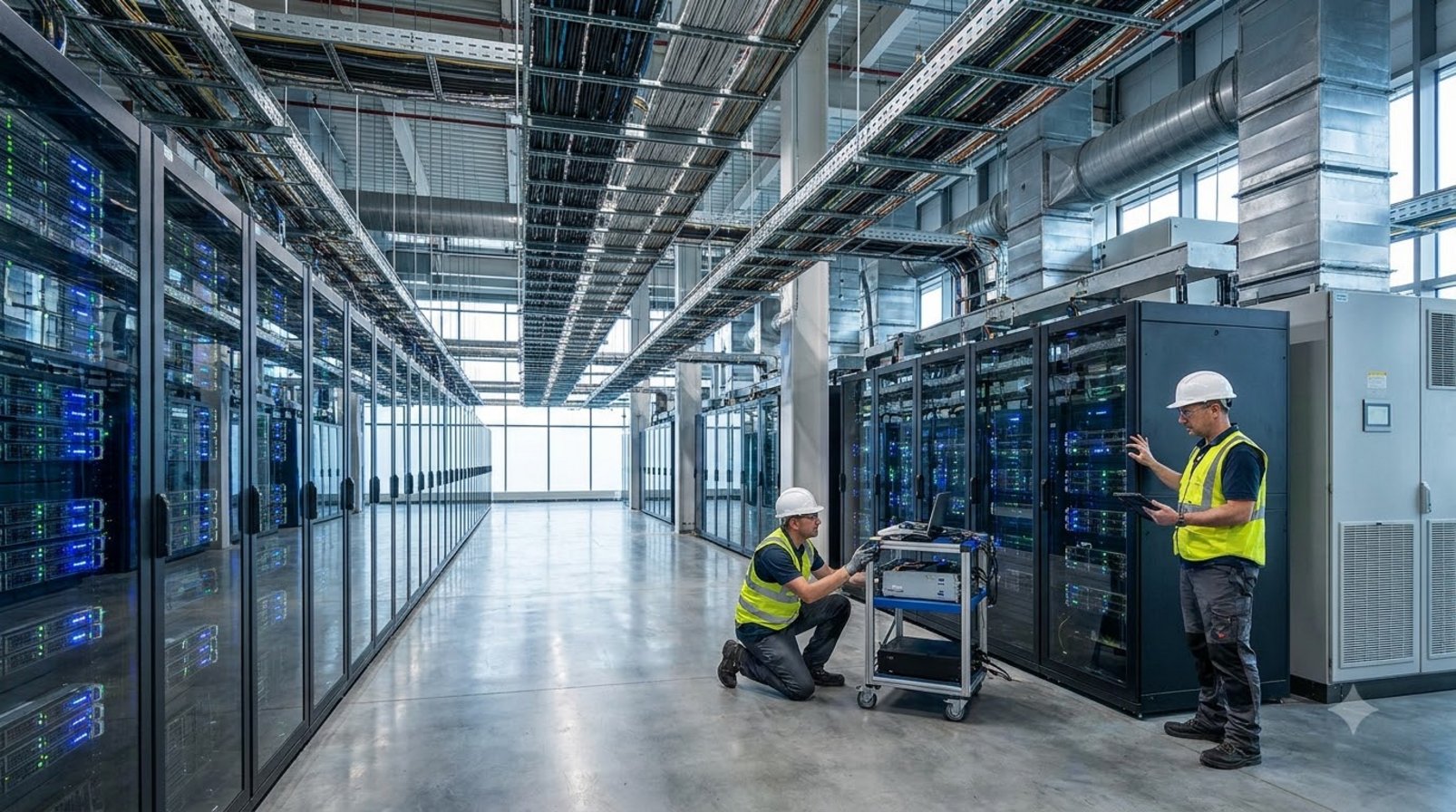
The message here is not “whoever spends more will win,” but who turns spending into ecosystem control. Large compute helps create better models, but it also helps keep users inside a loop of products, APIs, cloud, and deployment tools. As Amazon, Google, OpenAI, and Chinese labs all expand infrastructure, the game is no longer just about benchmarks; it is about the power to shape the working standards of the entire market [1][6][11][15].
Read more: The Open-Weights Debate Is Really a Fight Over Control
Read more: Qwen 3.8, OpenPlanter and the New Price Floor for AI Tools
That is why the wave of low-cost open models should not be understood simply as “cheaper wins.” What is increasing in value is choice: businesses can combine open models for frequent tasks, premium models for complex tasks, and integrated platforms for work management. This shift reduces dependence on a single vendor and forces companies to prove value at the workflow layer, not just the model layer.
A view for the Vietnamese market
For Vietnam, the biggest impact is that the cost of AI experimentation is falling quickly while options are increasing. That is good for small and medium-sized businesses, because they do not need to bet everything on an expensive platform before getting started. They can begin with specific use cases: customer service, content writing, document summarization, sales assistants, feedback analysis, and support for media teams. Open models such as DeepSeek V4 Flash 0731 or low-cost packages from major ecosystems will open up more room for experimentation [4][8][18].

However, opportunity comes with the risk of dependence. If a marketing team only knows one tool, it will easily become passive when the provider changes prices, retires a model, or changes the workflow interface. Google’s product unification, OpenAI’s portfolio restructuring, and the rise of multi-model platforms all show that the market will remain highly volatile [5][6][16]. Therefore, Vietnamese businesses should prepare a multi-model strategy, standardize prompts, and build result-evaluation processes so they can switch providers without starting from scratch.
Route tasks by speed, accuracy and cost across models

- Review all AI use cases in marketing and classify them by importance: which tasks need speed, which need accuracy, and which need low cost.
- Design a multi-model workflow: use cheaper models for high-volume work, stronger models for difficult tasks, and always include a cross-check step before publishing or making decisions.
- Standardize a prompt library, error-checking checklists, and output evaluation criteria to reduce dependence on any single platform.
- Closely track API pricing, model lineup changes, and product policies from major platforms, because these will directly affect operating costs.
See more marketing analysis and guides at https://marketing365.vn.
Follow more analysis articles from Marketing365 to stay updated on the latest marketing trends.
Read more articles in the same category AI developments.
This article focuses on the AI race shifting to ecosystems with a perspective for the Vietnamese market.
References
- OpenAI Developers — GPT-5.4 and GPT-5.4 mini availability change
- OpenAI Developers — Activity view in ChatGPT desktop app
- OpenAI — GPT-5.6 price reduction announcement (via quoted post)
- DeepSeek V4 Flash 0731 open weights announcement
- TestingCatalog — DeepSeek-V4-Flash live on ZenMux
- DeepSeek V4 Flash 0731 local running note
- Google AI Studio and Gemini unification note
- Dot Council multi-model intelligence layer
- Amazon completes a $50B investment in OpenAI (via quoted post)
- M TMT earnings and AI CapEx commentary
- Moonshot Kimi K3 compute report
- OpenAI preparing Astra model family