
Contents
As of July 2026, two developments involving Anthropic — the easing of restrictions on its new models and its CEO’s view on AI’s early impact in biotech — show the AI race moving from a feature contest to questions of trust, compliance, and applied value. For Vietnamese marketers, this is a signal worth watching because it directly affects how companies position AI products, communicate safety, and tell industry-specific application stories.
Key points
- Anthropic is drawing attention not only for its new AI models but also for their potential impact on specialized fields such as biotech.
- The Trump administration has lifted some restrictions on Anthropic’s new AI models, paving the way for broader deployment.
- In an interview with STAT, Anthropic’s CEO emphasized that AI could have an early and practical impact in biotech, even if much of the current hype may still be overstated.
- For the Vietnamese market, the story shows AI is shifting from “experimentation” to questions of application, risk management, and value communication.
Anthropic gets some barriers removed for its new AI models
The Hill reported that the Trump administration has loosened or removed some restrictions on Anthropic’s new AI models. The move is a notable signal in a context where artificial intelligence models are facing increasing scrutiny from regulators, especially as their capabilities and range of applications expand.
From a market perspective, easing restrictions often means companies have more “runway” to test, commercialize, and scale. At the same time, it also raises the bar for transparency, safety controls, and a clear explanation of the technology’s real value — factors AI brands must communicate consistently if they want to build trust with customers, partners, and investors. Source: The Hill.
AI could affect biotech early, not just as a future promise
In an interview with STAT, Anthropic’s CEO said that even if the biggest claims about AI in biotech remain somewhat exaggerated, the technology could still create immediate impact for the industry. This is important because biotech is a field that requires complex data, high precision, and long research timelines — where AI can support analysis, screening, and the acceleration of certain processes.
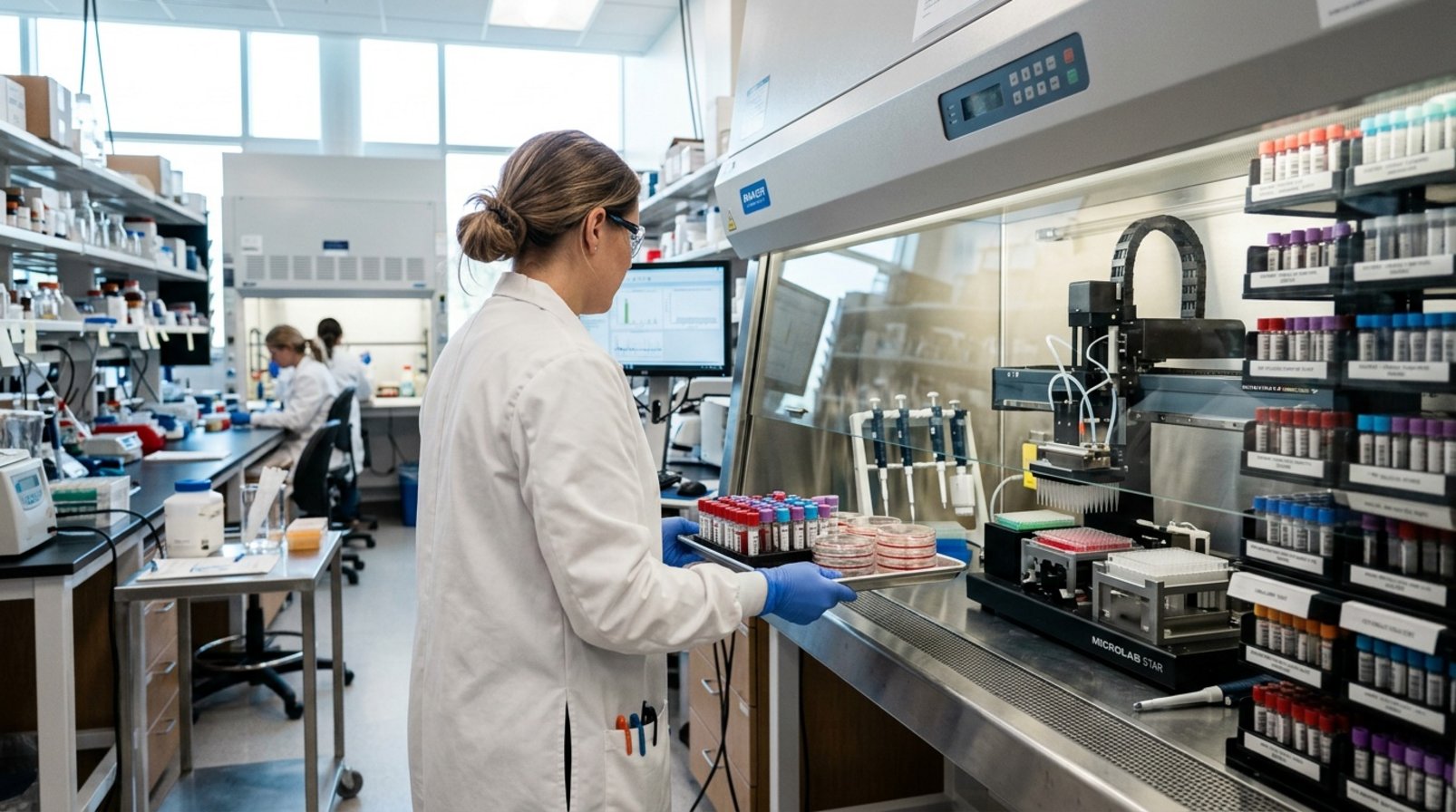
The key message here is not that AI will completely “replace” scientific processes, but that it can become a productivity tool and expand data-processing capabilities. For marketing communications, this is a reminder that technology and healthcare-tech brands should avoid overpromising; instead, they should focus on specific use cases, verifiable evidence, and clear operational benefits. Source: STAT.
AI earns trust only with real cases and clear data messaging
These two stories show that AI is entering a phase of “trust formation,” not just a race on features. In Vietnam, this is the time for businesses to do three things well: clearly explain what AI does for customers, prove effectiveness with real cases, and prepare messaging around security, data safety, and compliance.

Read more: Safe AI for Teens: Why Trust Now Decides the AI Brand Race
Read more: AI Is Distorting How Marketing Measures Itself. Control Comes First.
For marketers, the big lesson is not to communicate AI as a vague slogan. Instead, shift to industry-context storytelling: AI supports R&D, optimizes operations, reduces processing time, or improves decision-making quality. This approach aligns with global trends while helping Vietnamese brands build lasting credibility in a market that is increasingly sensitive to technology claims.
Sell AI through industry use cases, not slogans
- Communicate AI through concrete industry use cases (R&D, operations, faster processing) instead of vague slogans.
- Prove effectiveness with real cases and verifiable data, avoiding overpromises like “AI replaces everything.”
- Prepare clear messaging on security, data safety, and compliance before scaling AI in customer-facing work.
- When choosing an AI platform, evaluate transparency and data-use terms, not just features.
Overall, the next phase of AI will be measured less by raw model capability and more by the trust it earns. For marketers, brands that explain value clearly and manage risk well will go further in a market increasingly sensitive to technology claims.
See more marketing news and guides at https://marketing365.vn.
Follow more updates from Marketing365 to stay on top of the latest marketing trends.
Read more articles in the same category Digital Trends.
This article focuses on AI and biotech with a perspective for the Vietnamese market.
References
- STAT — I spoke to Anthropic’s CEO about how AI may affect biotech. Here’s what I learned
- The Hill — Trump administration lifts limits on Anthropic’s new AI models